- English
- French
- German
- Portuguese
- Spanish
- Russian
- Japanese
- Korean
- Arabic
- Greek
- German
- Turkish
- Italian
- Danish
- Romanian
- Indonesian
- Czech
- Afrikaans
- Swedish
- Polish
- Basque
- Catalan
- Esperanto
- Hindi
- Lao
- Albanian
- Amharic
- Armenian
- Azerbaijani
- Belarusian
- Bengali
- Bosnian
- Bulgarian
- Cebuano
- Chichewa
- Corsican
- Croatian
- Dutch
- Estonian
- Filipino
- Finnish
- Frisian
- Galician
- Georgian
- Gujarati
- Haitian
- Hausa
- Hawaiian
- Hebrew
- Hmong
- Hungarian
- Icelandic
- Igbo
- Javanese
- Kannada
- Kazakh
- Khmer
- Kurdish
- Kyrgyz
- Latin
- Latvian
- Lithuanian
- Luxembou..
- Macedonian
- Malagasy
- Malay
- Malayalam
- Maltese
- Maori
- Marathi
- Mongolian
- Burmese
- Nepali
- Norwegian
- Pashto
- Persian
- Punjabi
- Serbian
- Sesotho
- Sinhala
- Slovak
- Slovenian
- Somali
- Samoan
- Scots Gaelic
- Shona
- Sindhi
- Sundanese
- Swahili
- Tajik
- Tamil
- Telugu
- Thai
- Ukrainian
- Urdu
- Uzbek
- Vietnamese
- Welsh
- Xhosa
- Yiddish
- Yoruba
- Zulu
Are titanium nuts strong?
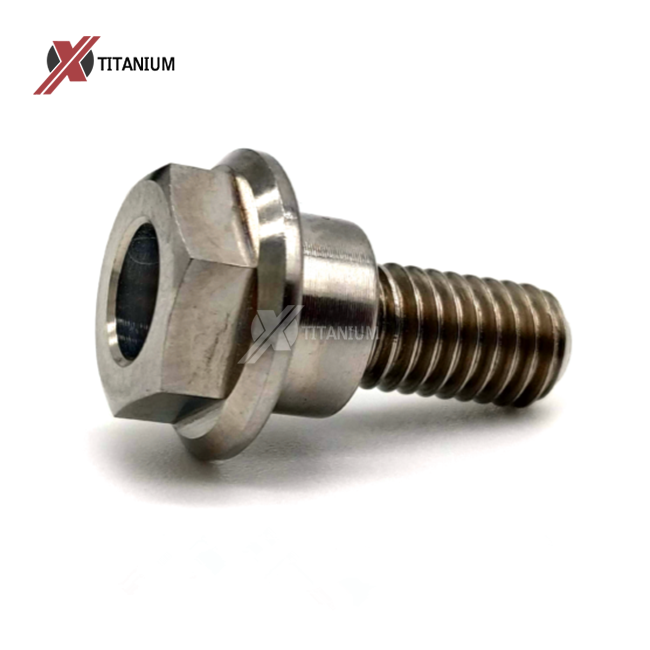
Absolutely, titanium nuts are exceptionally strong and represent one of the most advanced fastening solutions available in industrial applications. When examining strength characteristics, a titanium flange nut manufactured from Grade 5 titanium alloy (Ti-6Al-4V) delivers tensile strength exceeding 895 MPa while maintaining only 60% of steel's weight. This remarkable strength-to-weight ratio, combined with superior corrosion resistance and temperature stability, makes titanium nuts the preferred choice for aerospace, medical, marine, and high-performance automotive applications where reliability cannot be compromised.

Understanding Titanium Nuts and Their Strength
Material Composition and Strength Properties
Titanium nuts infer their uncommon quality from carefully controlled amalgam compositions. Review 5 titanium, the most commonly utilized combination for auxiliary clasp, contains 6% aluminum and 4% vanadium, making a fabric with surrender quality coming to 828 MPa. This composition gives mechanical properties that outperform numerous steel reciprocals whereas advertising critical weight advantages. The nuclear structure of titanium contributes to its interesting quality characteristics. Not at all like steel, which depends on carbon substance for hardness, titanium's hexagonal close-packed precious stone structure actually gives amazing quality and adaptability. This basic advantage permits titanium latches to keep up judgment beneath both inactive and energetic stacking conditions.
Temperature Performance and Environmental Resistance
Temperature steadiness speaks to another basic quality figure in titanium nuts. These components keep up their mechanical properties over extraordinary temperature ranges, from cryogenic applications down to -196°C up to persistent benefit at 400°C. This temperature versatility guarantees steady clamping constrain and basic astuteness in applications where warm cycling would compromise ordinary fasteners. Corrosion resistance includes another measurement to titanium's quality profile. The characteristic oxide layer that shapes on titanium surfaces gives insusceptibility to saltwater, chlorides, and most mechanical chemicals. This resistance implies titanium nuts keep up their basic properties all through their benefit life, not at all like steel clasp that may lose quality due to erosion damage.
Fatigue Resistance and Longevity
Fatigue quality speaks to a significant thought in energetic applications. Titanium nuts illustrate prevalent weariness life compared to steel options, especially when made with rolled strings. The lower modulus of versatility in titanium permits way better stack dispersion over locked in strings, lessening push concentrations that ordinarily start weariness disappointments in ordinary fasteners.
Titanium Flange Nut vs. Other Nut Materials: A Comparative Analysis
Strength Comparison with Steel and Stainless Steel
When comparing titanium nuts to steel counterparts, the strength-to-weight ratio clearly favors titanium. A Grade 8.8 steel nut provides adequate strength for many applications but weighs 65% more than an equivalent titanium flange nut. This weight penalty becomes critical in applications where every gram matters, such as aerospace components or high-performance racing applications.
Stainless steel offers erosion resistance but ordinarily gives lower quality than both titanium and carbon steel choices. Sort 316 stainless steel, commonly utilized in marine applications, conveys ductile quality around 580 MPa compared to titanium's 895 MPa. Moreover, stainless steel remains vulnerable to chloride push erosion breaking in unforgiving situations where titanium thrives.
Performance Against Aluminum and Brass Alternatives
Aluminum nuts, whereas lightweight, cannot coordinate titanium's quality characteristics. Indeed high-strength aluminum amalgams like 7075-T6 give malleable quality around 570 MPa, essentially lower than titanium's capabilities. Aluminum too endures from galvanic erosion when combined with different metals, a issue that titanium's position in the galvanic arrangement makes a difference minimize. Brass latches offer great machinability and erosion resistance in particular situations but need the quality required for auxiliary applications. With malleable quality regularly underneath 400 MPa, brass nuts serve enriching or low-stress applications but cannot compete with titanium in requesting mechanical environments.
Total Cost of Ownership Analysis
While titanium nuts command higher introductory buy costs, their lifecycle costs frequently demonstrate favorable in requesting applications. The combination of amplified benefit life, decreased support prerequisites, and weight reserve funds makes operational benefits that counterbalanced the premium fabric costs. Businesses requiring certified latches with recorded traceability discover titanium's solidness and unwavering quality especially valuable.
Practical Applications and Benefits of Titanium Flange Nuts in B2B Procurement
Aerospace and Defense Applications
Aerospace applications grandstand titanium nuts at their top execution. Airplane producers depend on these latches for motor components, landing adapt congregations, and auxiliary joints where quality, weight, and erosion resistance are foremost. The Government Flying Administration's exacting certification prerequisites make titanium's steady properties and traceability basic for compliance. Defense applications essentially advantage from titanium's special properties. Maritime vessels working in saltwater situations require clasp that stand up to erosion without relinquishing quality. Titanium nuts kill the upkeep cycles related with defensive coatings whereas giving solid execution all through amplified deployments.
Medical and Biotechnology Industries
Medical device manufacturing represents another critical application area where titanium flange nut components excel. Biocompatibility requirements eliminate many alternative materials, while the precision demanded in surgical instruments requires fasteners that maintain their properties through repeated sterilization cycles. Titanium's inert nature and strength stability make it ideal for these demanding applications.
Implant producers especially esteem titanium's osseointegration properties, which permit bone tissue to bond straightforwardly with the metal surface. This organic compatibility, combined with mechanical quality, makes titanium clasp basic for orthopedic inserts and dental applications.
Chemical Processing and Marine Engineering
Chemical preparing offices advantage from titanium's remarkable erosion resistance in forceful situations. Conventional steel clasp require standard substitution due to chemical assault, whereas titanium nuts keep up their astuteness in contact with acids, bases, and mechanical solvents. This solidness diminishes support shutdowns and progresses generally plant reliability. Marine building applications uncover clasp to saltwater, mugginess, and temperature varieties that rapidly corrupt customary materials. Seaward stages, desalination plants, and maritime vessels depend on titanium clasp to keep up basic keenness in these cruel conditions.
The advantages of implementing titanium nuts in industrial applications extend beyond basic mechanical properties:
• Extended Service Life: Titanium nuts typically outlast steel alternatives by 300-500% in corrosive environments, reducing replacement frequency and associated labor costs
• Weight Reduction Benefits: The 45% weight savings compared to steel creates cumulative advantages in mobile applications, improving fuel efficiency and payload capacity
• Maintenance Cost Reduction: Eliminated coating requirements and extended replacement intervals significantly reduce total ownership costs over equipment lifecycles
• Temperature Stability: Consistent mechanical properties across extreme temperature ranges ensure reliable performance in applications from cryogenic storage to high-temperature processing
These operational advantages translate directly into improved equipment reliability and reduced lifecycle costs, making titanium nuts an intelligent procurement choice for demanding industrial applications.
Buying Guide: Where and How to Source High-Quality Titanium Flange Nuts?
Supplier Qualification and Certification Requirements
Procurement groups must assess providers based on comprehensive capability criteria. AS9100 certification demonstrates aviation industry compliance, whereas ISO 9001 illustrates common quality administration competence. Therapeutic applications require providers with ISO 13485 certification, guaranteeing biocompatibility guidelines are met all through the fabricating process. Material certifications speak to another basic assessment figure. Legitimate providers give process test certificates archiving chemical composition, mechanical properties, and traceability back to the unique titanium ingot. This documentation demonstrates fundamental for applications requiring certified materials and administrative compliance.
Manufacturing Capability Assessment
Advanced fabricating capabilities recognize quality providers from product merchants. Computer numerical control machining centers guarantee dimensional exactness and surface wrap up consistency. Providers with in-house testing capabilities, counting pliable testing and metallurgical examination, give more noteworthy quality confirmation and speedier reaction times for custom requirements. Thread rolling capabilities offer noteworthy preferences over cut strings, especially for fatigue-critical applications. Rolled strings give predominant surface wrap up and dispense with stretch concentrations that can start weakness breaks. Providers advertising this fabricating alternative provide upgraded item performance.
Pricing Strategies and Volume Considerations
Titanium nut estimating reflects both crude fabric costs and fabricating complexity. Spot titanium costs change based on worldwide supply and request, making long-term supply assentions useful for budget arranging. Volume acquiring frequently gives noteworthy fetched points of interest, especially for standard details with unsurprising request patterns. Custom fabricating choices permit optimization for particular applications but regularly require least arrange amounts to legitimize tooling costs. Obtainment groups ought to adjust customization benefits against volume prerequisites and conveyance timeframes when creating sourcing strategies.
Installation and Maintenance of Titanium Flange Nuts
Proper Installation Techniques and Torque Specifications
Successful titanium nut establishment requires understanding the material's interesting characteristics. Rankling avoidance speaks to the essential establishment concern, as titanium's inclination to cold-weld can cause string seizure. High-quality anti-seize compounds or specialized coatings like diamond-like carbon dispense with this hazard whereas guaranteeing steady torque values. Torque details for titanium contrast essentially from steel reciprocals due to distinctive contact coefficients and flexible properties. Standard steel torque charts do not apply to titanium latches. Appropriate torque values ought to calculate based on 70-80% of the fastener's confirmation stack, balanced for the particular grease utilized amid installation.
Routine Maintenance and Inspection Procedures
Titanium's erosion resistance essentially decreases support prerequisites compared to ordinary clasp. Visual assessments center on string condition and rib keenness or maybe than erosion harm. Occasional torque confirmation guarantees legitimate clamping drive, especially in applications subject to warm cycling or vibration. Documentation of establishment torques and review comes about gives important information for support arranging and administrative compliance. This recordkeeping demonstrates especially critical in aviation and restorative applications where traceability prerequisites command point by point support histories.
Troubleshooting Common Installation Issues
Thread galling represents the most common installation problem with titanium fasteners. Proper lubrication and controlled installation speeds prevent this issue. If galling occurs, immediate disassembly prevents permanent thread damage. Replacement with properly lubricated fasteners typically resolves the problem.
Cross-threading can occur if titanium flange nut components are forced during installation. Titanium's strength makes thread repair difficult, emphasizing the importance of careful initial threading. Starting threads by hand ensures proper engagement before applying installation tools.
Conclusion
Titanium nuts demonstrate exceptional strength characteristics that make them indispensable for demanding industrial applications. The combination of high tensile strength, superior corrosion resistance, and significant weight advantages provides compelling performance benefits across aerospace, medical, marine, and chemical processing industries. While initial costs exceed conventional alternatives, the total cost of ownership typically favors titanium due to extended service life and reduced maintenance requirements. Proper supplier selection, installation techniques, and maintenance procedures ensure optimal performance throughout the fastener's service life, especially when partnering with a reliable titanium flange nut OEM that can guarantee consistent manufacturing quality and precise specifications.
FAQ
Are titanium nuts stronger than steel nuts?
Titanium nuts provide superior strength-to-weight ratios compared to steel alternatives. Grade 5 titanium offers tensile strength exceeding 895 MPa while weighing 45% less than equivalent steel fasteners. This combination of strength and weight reduction makes titanium nuts ideal for applications where both properties are critical.
How do I prevent galling when installing titanium nuts?
Galling prevention requires proper lubrication with high-quality anti-seize compounds or specialized coatings. Diamond-like carbon or molybdenum disulfide coatings eliminate metal-to-metal contact that causes cold welding. Controlled installation speeds and proper torque procedures also minimize galling risks.
Can titanium nuts be used with carbon fiber components?
Titanium nuts are highly compatible with carbon fiber assemblies due to their similar positions in the galvanic series. This compatibility minimizes galvanic corrosion risks that would destroy aluminum fasteners in similar applications. The titanium flange nut design provides excellent load distribution across carbon fiber surfaces.
What torque specifications should I use for titanium nuts?
Standard steel torque specifications do not apply to titanium fasteners. Proper torque values should calculate based on 70-80% of the fastener's proof load, considering the specific lubricant used. Professional engineering consultation ensures appropriate torque specifications for critical applications.
How long do titanium nuts last compared to steel alternatives?
Titanium nuts typically outlast steel alternatives by 300-500% in corrosive environments. The natural oxide layer provides immunity to saltwater, chlorides, and most industrial chemicals. This extended service life significantly reduces replacement frequency and associated maintenance costs.
Partner with Chuanglian for Premium Titanium Flange Nut Solutions
Chuanglian stands as a leading titanium flange nut manufacturer with over a decade of specialized experience in titanium processing and precision manufacturing. Located in Baoji City, the renowned "City of Titanium," our facility combines advanced CNC machining capabilities with rigorous quality control systems including ASTM B348 certification and dimensional tolerances adhering to ISO 2768-m standards. Our comprehensive testing capabilities and traceable production processes ensure every titanium flange nut meets the exacting requirements of aerospace, medical, and industrial applications. Contact our technical team at info@cltifastener.com or djy6580@aliyun.com to discuss your specific fastener requirements and discover how our custom manufacturing solutions can optimize your next project.
References
1. American Society for Testing and Materials. "Standard Specification for Titanium and Titanium Alloy Bars and Billets." ASTM B348-19, West Conshohocken, PA, 2019.
2. Boyer, Rodney, Gerhard Welsch, and E.W. Collings. "Materials Properties Handbook: Titanium Alloys." ASM International, Materials Park, OH, 1994.
3. Peters, Manfred, Christoph Leyens, Ulrich Schulz, and Wolfgang A. Kaysser. "Titanium and Titanium Alloys: Fundamentals and Applications." Wiley-VCH, Weinheim, Germany, 2003.
4. Schutz, R.W. "Titanium Fasteners for Marine and Offshore Applications." Journal of Materials Engineering and Performance, Vol. 15, No. 1, 2006.
5. Donachie, Matthew J. "Titanium: A Technical Guide, 2nd Edition." ASM International, Materials Park, OH, 2000.
6. Lutjering, Gerd and James C. Williams. "Titanium: Engineering Materials and Processes." Springer-Verlag, Berlin, Germany, 2007.
Learn about our latest products and discounts through SMS or email