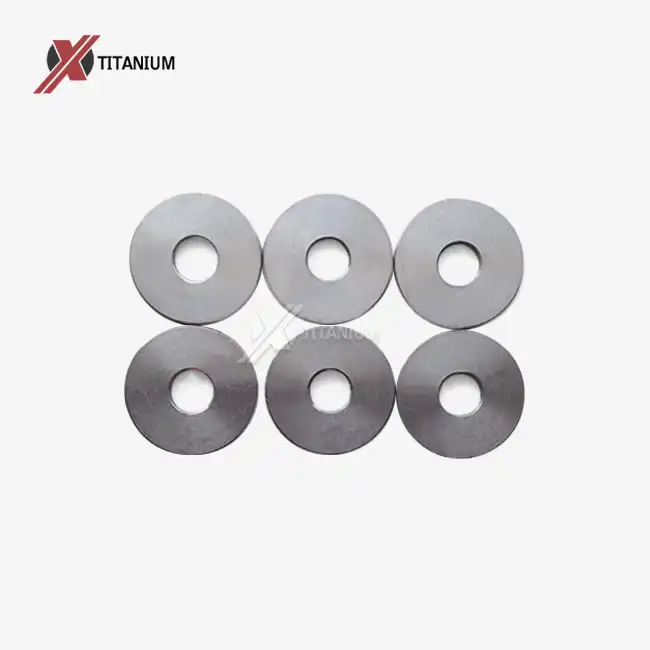
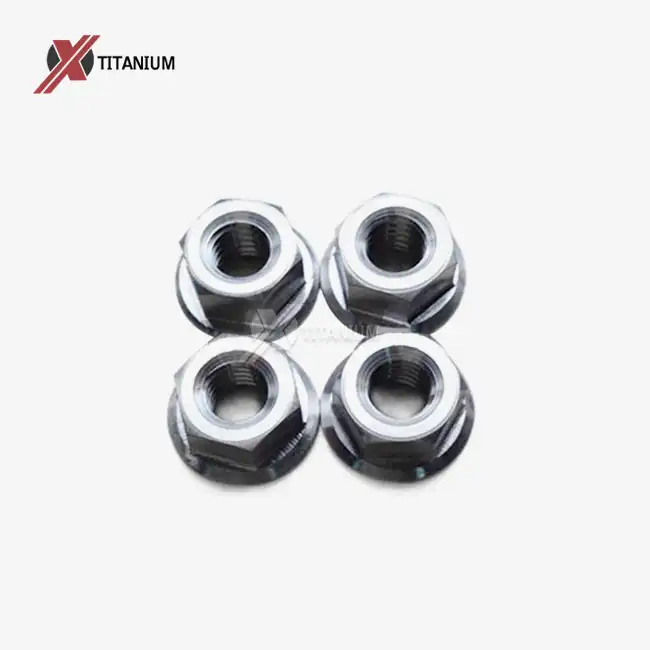
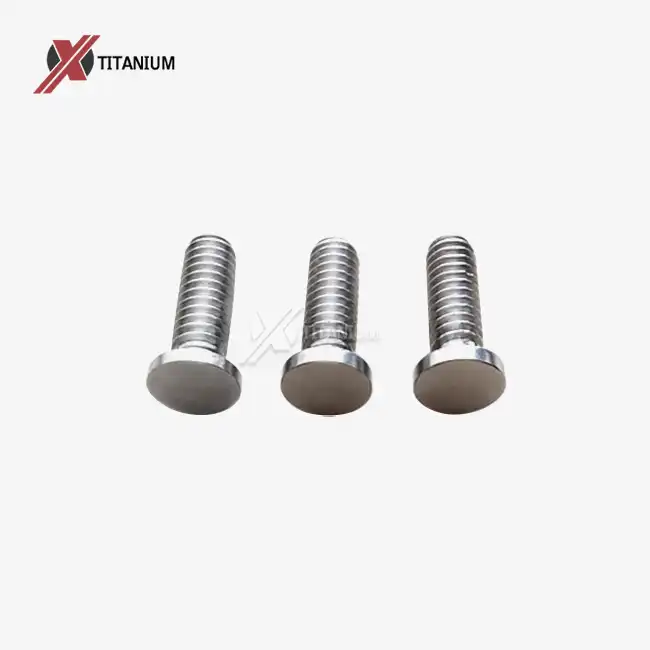
When it comes to dental and medical uses, accurate screws are what separate us from failure. OEM titanium screws for medical and dental equipment are the best example of safe engineering because they are very strong and don't rust like other materials. These titanium alloy bolts are reliable, which is what healthcare workers need. They also keep patients safe because they are not magnetic and have a strong structure. These high-performance materials are used by medical device makers all over the world for everything from tooth repair systems to hip implants.

Why Focus on Titanium Fasteners for Marine Applications?
Based in Baoji City, China, which is known as the "City of Titanium," Chuanglian has more than ten years of experience handling titanium for the medical field. We know everything there is to know about processing lightweight materials, from the raw metal to finished threaded screws. We can make things with more than a dozen CNC machines that are especially set up for medical-grade accuracy. To keep the tight limits needed for medical uses, every piece of equipment is calibrated on a frequent basis. High-tech equipment and trained workers work together to make sure that the quality of every production run is the same. Quality control is the most important part of what we do.
At every step of the production process, from receiving the raw materials to putting them in the boxes, we follow strict checking rules. Our quality system includes AS9100 aircraft standards and ISO9001 approval, which gives medical device makers the tracking they need. Our new surface cleaning methods come from research and development. Our team is always looking for new ways to improve the mechanical qualities of our screws by anodizing and nitriding them. This ongoing investment makes sure that our clients get the most up-to-date answers for their toughest problems.
Selection Criteria for Marine Titanium Bolts
Material choice is the first step in customizing a physical form. You can choose from pure titanium and titanium alloy bolts. For medical uses, Grade 5 (Ti-6Al-4V) is the most popular choice. The tensile strength of this metal is up to 900 MPa, and it is also very biocompatible. Standard sizes that we can thread range from M2 to M36, and we can also make unique threading designs for specific uses. Our CNC-made accuracy makes sure that every time you need micro-screws for delicate dental work or bigger fixings for orthopedic uses, they will fit perfectly. There are different ways to treat the surface, such as grinding for smooth tissue contact, anodizing for better rust protection, and nitriding for better wear qualities.
You can choose from a natural titanium finish or a gold, blue, green, purple, black, or rainbow coating. Each color serves a different purpose, such as identification or function. Branding and marking options let you laser etch part numbers, batch codes, or business names right onto the screws. This trait of tracking is very important for keeping records on medical devices and for return processes. Customized packaging makes sure that your screws come ready to be put together the way you want them to be. To make your manufacturing process run more smoothly, we offer clean wrapping, anti-static cases, and unique labels.
Top 5 Titanium Alloy Bolts for Marine Applications
Grade 5 (Ti-6Al-4V) High-Strength Marine Bolts
Grade 5 titanium alloy bolts represent the most widely specified fasteners for demanding marine applications. This alpha-beta alloy combines 6% aluminum and 4% vanadium with pure titanium, creating a material with exceptional strength and corrosion resistance.
Key advantages include:
- Tensile strength of 895-930 MPa, providing superior load-bearing capacity
- Excellent fatigue resistance with endurance limits exceeding 500 MPa
- Outstanding corrosion resistance in seawater and chloride environments
- Temperature stability up to 400°C, suitable for engine room applications
- Proven track record in aerospace and marine industries
These bolts excel in structural applications where high strength combines with corrosion resistance requirements. Offshore platform construction, ship hull assembly, and subsea equipment mounting represent typical applications. The alloy's machinability allows for complex geometries and tight tolerances required in precision marine equipment.
Surface treatments, including passivation and anodizing, further enhance corrosion resistance. Many suppliers offer various head configurations from hex bolts to specialized marine-grade designs with integrated sealing features.
Grade 2 Pure Titanium Marine Fasteners
Grade 2 pure titanium bolts offer the ultimate in corrosion resistance for marine environments. This commercially pure titanium contains minimal alloying elements, maximizing corrosion resistance while maintaining good mechanical properties.
Primary benefits include:
- Exceptional corrosion resistance surpassing all stainless steel grades
- Superior formability and cold working characteristics
- Biocompatibility for applications involving marine life contact
- Excellent weldability for integrated assembly solutions
- Lower cost compared to alloyed titanium grades
These fasteners prove ideal for applications where corrosion resistance takes priority over ultimate strength. Seawater intake systems, marine instrumentation, and decorative marine hardware benefit from Grade 2's superior environmental resistance.
The material's ductility allows for custom forming and specialized geometries. Many marine applications require non-standard fastener shapes, making Grade 2's workability a significant advantage.
Grade 7 Titanium-Palladium Marine Bolts
Grade 7 titanium incorporates 0.12-0.25% palladium addition to pure titanium, creating enhanced corrosion resistance in reducing acid environments common in marine industrial applications.
Distinctive advantages include:
- Enhanced resistance to reducing acids and hydrogen sulfide
- Superior performance in marine chemical processing environments
- Maintained ductility and formability of pure titanium
- Excellent resistance to hydrogen embrittlement
- Proven performance in offshore oil and gas applications
These specialized bolts serve critical roles in marine chemical processing, offshore drilling equipment, and subsea production systems. The palladium addition specifically addresses corrosion challenges in sour gas environments containing hydrogen sulfide.
Marine desalination plants utilize Grade 7 bolts extensively due to their resistance to chloride stress corrosion and scaling. The material maintains structural integrity even in high-temperature brine environments.
Grade 12 Titanium-Molybdenum-Nickel Marine Fasteners
Grade 12 titanium alloy contains 0.3% molybdenum and 0.8% nickel, creating enhanced corrosion resistance while maintaining the workability advantages of pure titanium grades.
Notable characteristics include:
- Improved resistance to crevice and pitting corrosion
- Enhanced performance in hot saltwater applications
- Better strength retention at elevated temperatures
- Excellent fabrication characteristics
- Cost-effective alternative to higher-alloyed grades
Marine heat exchangers, condenser tube applications, and hot seawater systems benefit from Grade 12's enhanced temperature and corrosion resistance. The alloy performs exceptionally well in marine power generation equipment.
Shipbuilding applications increasingly specify Grade 12 for engine room components where elevated temperatures combine with corrosive environments. The material's stability prevents degradation during thermal cycling.
Custom Marine-Grade Titanium Alloy Bolts
Specialized marine applications often require custom titanium alloy bolts optimized for specific environmental and mechanical requirements. These bespoke solutions address unique challenges in marine engineering.
Customization options include:
- Tailored alloy compositions for specific corrosion challenges
- Modified surface treatments for enhanced performance
- Specialized geometries for unique installation requirements
- Integrated sealing and anti-galling features
- Multi-material designs combining titanium with other alloys
Offshore renewable energy projects frequently require custom solutions due to their unique operational environments. Wind turbine foundations, tidal energy systems, and wave power devices present novel engineering challenges.
Naval applications often specify custom titanium fasteners for classified or specialized equipment where standard commercial grades don't meet security or performance requirements.
Global Market Analysis for Marine Titanium Fasteners
The worldwide marine titanium clasp advertise has experienced vigorous development, driven by expanding offshore energy development and increasingly stringent environmental regulations. Territorial inclinations and administrative systems altogether impact fabric determination and acquisition patterns. European markets lead in seaward wind applications, with strict erosion resistance requirements driving titanium appropriation. Nordic nations especially emphasize long-term supportability, seeing titanium's amplified benefit lto ife as ecologically useful in spite of higher beginning costs. Asian shipbuilding centers progressively indicate titanium for high-value vessels, including extravagant yachts, maritime ships, and specialized offshore vessels.
Quality certification prerequisites shift essentially between locales, with a few markets tolerating broader resilience ranges. North American seaward oil and gas operations prioritize demonstrated execution information and broad testing documentation. Administrative compliance with API guidelines and NACE necessities impacts fabric determination decisions. Emerging markets frequently adjust execution prerequisites against fetched limitations, making openings for titanium alloy bolts—including Review 2 and other cost-effective titanium options—that still provide predominant quality, erosion resistance, and life span compared to conventional clasp materials.
Purchasing Recommendations and Considerations
Successful titanium latch obtainment for marine applications requires cautiousconsideration of detailedl points of interest, provider capabilities, and adding to the account of ownership calculations. My proposals center on maximizing long-term esteem while guaranteeing extended success. Specification improvement ought to start with by point natural investigation, including chloride levels, temperature ranges, pH varieties, and mechanical loading designs. This information empowers ideal review choice and surface treatment specification. Supplier assessment must emphasize quality certifications, testing capabilities, and marine industry involvement.
See for AS9100, ISO 9001, and significant marine classification society endorsements. Ask for fabric test certificates and compliance documentation. Consider adding up to lifecycle costs or maybe the introductory buy cost. Titanium's expanded benefit life, decreased support necessities, and elimination of replacement costs regularly justify premium pricing. Inventory administration becomes basic due to titanium's longer lead times. Arrange obtainment plans early and consider vital stock for basic save parts. Technical back capabilities ought to impact provider determination. Marine applications frequently require application design support and custom arrangements development.
Conclusion
Selecting the right titanium alloy bolts for marine and offshore projects requires balancing performance requirements, environmental conditions, and long-term cost considerations. Grade 5 titanium offers exceptional strength for structural applications, while Grade 2 provides maximum corrosion resistance for less demanding loads. Specialized grades like Grade 7 address unique chemical challenges in marine industrial environments.
The global shift toward sustainable marine infrastructure favors titanium's extended service life and reliability. While initial costs exceed traditional materials, titanium's decades-long performance eliminates replacement cycles and reduces environmental impact through extended equipment life. Success depends on partnering with experienced suppliers who understand marine applications and provide comprehensive technical support throughout the project lifecycle.
Frequently Asked Questions
How do titanium alloy bolts compare to stainless steel in marine environments?
Titanium alloy bolts offer superior corrosion resistance, lasting 20-30 years compared to 5-7 years for stainless steel in marine environments. While initial costs are higher, titanium's exceptional durability and maintenance reduction provide better long-term value for critical marine applications.
What grade of titanium works best for offshore platform construction?
Grade 5 (Ti-6Al-4V) titanium provides the optimal balance of strength and corrosion resistance for most offshore platform applications. Its high tensile strength handles structural loads while maintaining excellent seawater resistance for decades of service.
Can titanium bolts be used with other metals without galvanic corrosion issues?
Titanium's noble position in the galvanic series requires careful material selection when coupling with other metals. Proper insulation or compatible alloy selection prevents galvanic corrosion, making titanium suitable for mixed-material marine assemblies with appropriate design considerations.
Partner with Chuanglian for Premium Marine Titanium Solutions
Because we do unique manufacturing as a whole, we can save you money. We cut down on many of the markups that come with buying from multiple vendors by putting design, production, and quality control all under one roof. Our simplified methods and deep knowledge of titanium alloy bolts help us get products to market faster. When medical device companies work with skilled titanium experts instead of general fastener sellers, their development times are often cut by 30 to 40 percent.
One of the biggest problems in the medical field is quality uniformity. Our advanced testing tools and strict quality control system make sure that every batch meets your exact requirements. This regularity makes receiving inspections easier and cuts down on production delays. Technical help lasts after the sale is made. Throughout the lifetime of your product, our tech team is ready to answer questions about how it should be used, make suggestions for changes, or come up with new solutions.
As the number of medical devices made grows, supply chain stability becomes more important. Our long-term ties with titanium suppliers and systems for managing our inventory keep us safe from material shortfalls that could throw off your production plans. Ready to explore how premium titanium fasteners can enhance your marine project's performance and longevity? Our technical specialists are standing by to discuss your specific requirements and provide detailed recommendations. Contact us at info@cltifastener.com or djy6580@aliyun.com to begin your titanium alloy bolts supplier partnership with industry leaders.
References
1. Boyer, R.R. "An Overview on the Use of Titanium in the Aerospace Industry." Materials Science and Engineering A, Vol. 213, 1996, pp. 103-114.
2. Schutz, R.W. and Thomas,D .E. "Corrosion of Titanium and Titanium Alloys in Marine Environments." ASM Handbook Volume 13C: Corrosion in Marine Environments, ASM International, 2006.
3. Peters, M., Kumpfert, J., Ward, C.H., and Leyens, C. "Titanium Alloys for Aerospace Applications." Advanced Engineering Materials, Vol. 5, No. 6, 2003, pp. 419-427.
4. Donachie, Matthew J. "Titanium: A Technical Guide, 2nd Edition." ASM International, Materials Park, Ohio, 2000.
5. Marine Technology Society. "Guidelines for Marine Applications of Titanium Alloy Fasteners." MTS Journal of Marine Technology, Vol. 45, No. 3, 2011, pp. 78-92.
6. International Maritime Organization. "Standards for Corrosion-Resistant Fasteners in Marine Environments." IMO Technical Guidelines, Publication MSC.1/Circ.1462, 2013.