- English
- French
- German
- Portuguese
- Spanish
- Russian
- Japanese
- Korean
- Arabic
- Greek
- German
- Turkish
- Italian
- Danish
- Romanian
- Indonesian
- Czech
- Afrikaans
- Swedish
- Polish
- Basque
- Catalan
- Esperanto
- Hindi
- Lao
- Albanian
- Amharic
- Armenian
- Azerbaijani
- Belarusian
- Bengali
- Bosnian
- Bulgarian
- Cebuano
- Chichewa
- Corsican
- Croatian
- Dutch
- Estonian
- Filipino
- Finnish
- Frisian
- Galician
- Georgian
- Gujarati
- Haitian
- Hausa
- Hawaiian
- Hebrew
- Hmong
- Hungarian
- Icelandic
- Igbo
- Javanese
- Kannada
- Kazakh
- Khmer
- Kurdish
- Kyrgyz
- Latin
- Latvian
- Lithuanian
- Luxembou..
- Macedonian
- Malagasy
- Malay
- Malayalam
- Maltese
- Maori
- Marathi
- Mongolian
- Burmese
- Nepali
- Norwegian
- Pashto
- Persian
- Punjabi
- Serbian
- Sesotho
- Sinhala
- Slovak
- Slovenian
- Somali
- Samoan
- Scots Gaelic
- Shona
- Sindhi
- Sundanese
- Swahili
- Tajik
- Tamil
- Telugu
- Thai
- Ukrainian
- Urdu
- Uzbek
- Vietnamese
- Welsh
- Xhosa
- Yiddish
- Yoruba
- Zulu
Best Titanium Flange Fancy Cap Cover Nuts for Harsh Environments
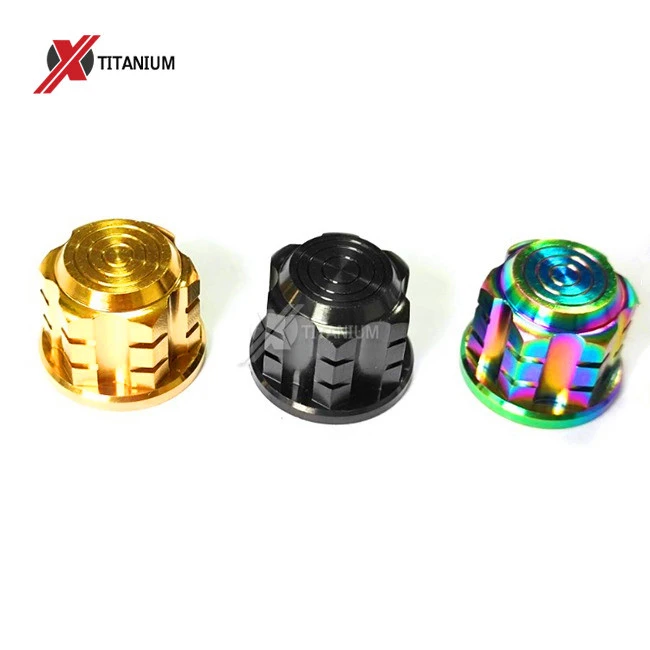
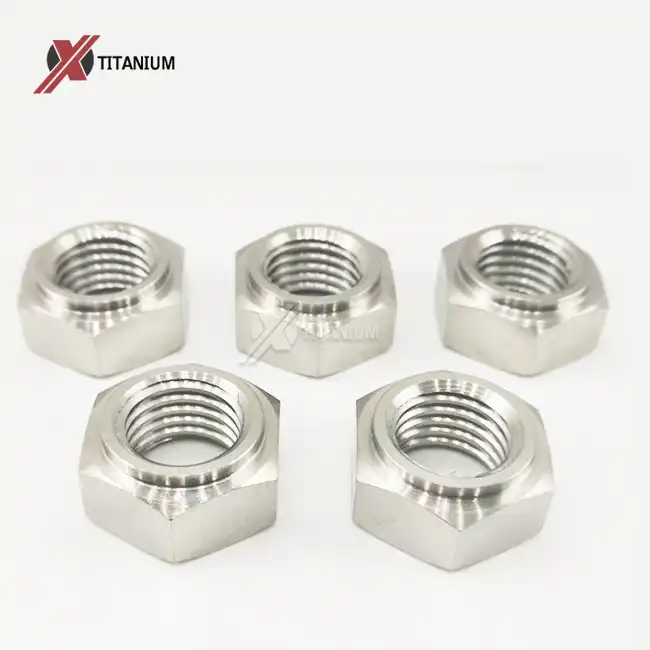
If you're searching for the best titanium flange fancy cap cover nuts for harsh environments, you're in the right place. These precision-engineered fasteners are made from Grade 5 titanium alloy (Ti-6Al-4V), combining a flanged base, a domed cap cover, and standard nut mechanics into one component. They resist saltwater, acids, and extreme temperatures while staying roughly 45% lighter than steel equivalents. Whether you're sourcing for motorsports builds, marine hardware, or motorcycle customization, these anodized titanium cap nuts deliver both technical performance and genuine visual appeal.
Understanding Titanium Flange Fancy Cap Cover Nuts
What Makes These Fasteners Different?
A titanium cap cover nut isn't just a plain nut with a nice finish. They are a "domed cap" that keeps dirt and water away from the visible bolt thread, a "integrated flange" that spreads the clamping load over a larger surface area, and a "precision-threaded bore" that is made to 6H metric standards. With this three-in-one design, you don't need to buy different washers and thread guards. This means that you only need a few parts to put something together.
Key Material Properties
Titanium Grade 5 (Ti-6Al-4V) is used to make these nuts. With only 4.43 g/cm³ of mass, it is lighter and less likely to rust than stainless steel. Its tensile strength is over 895 MPa (130,000 psi). Because of the solid titanium oxide film on top, it doesn't need to be cleaned. It can handle chlorides, metallic salts, and industrial acids. You can make a bolt that works well at temperatures up to 600°C with CNC cutting and a surface roughness average (Ra) of less than 0.8µm.
Threading Standards and Size Coverage
That company makes these screws, which range in size from M5 to M36. Mesh (both fine and normal pitch), UNF, or UNC threads can be on them. A Go/No-Go gage check is done on every batch to make sure that the threads are correct and that the pieces always fit well. For people who sell modifications for bikes and motorbikes, the most-requested sizes—M6, M8, and M10—are all in stock in a range of anodized colors and can be sent to buyers in more than one SKU. Titanium flange fancy cap cover nuts are the SKU where this size and finish range matters most.
Comparing Titanium Flange Cap Nuts with Alternatives
Titanium vs. Stainless Steel
A lot of people use screws made of stainless steel, but they are very heavy. An M10 nut made of 304 stainless steel weighs about 45% more than one made of Grade 5 titanium. In racing and bike builds, this difference adds up over dozens of screws. It's lighter than steel, and if it gets scratched, the passive oxide layer on it will heal itself. In chloride-rich places, stainless steel can rust over time, but not stainless steel.
Titanium vs. Aluminum
It's true that aluminum anodized screws look good in shops, but they don't hold up well when bent or hit. It takes about 310 MPa of force to pull apart 6061-T6 aluminum metal, which is not even a third of the power of Grade 5 titanium. Cap nuts made of aluminum might look good on panels that aren't holding anything up. Titanium is better for parts that have to hold weight, like axle hardware and suspension parts. It's worth the extra money because it will need repairs and maintenance a lot less often.
Cost-Performance Trade-off for B2B Resellers
Online sellers who want to sell motorbike changes in the US and Europe can make a lot of money by selling titanium decorative fasteners. Most of the time, anodized titanium cap nuts sell for four to six times what it costs to make them. This is because of where "premium upgrade" ads are placed on sites like eBay and Amazon. There are cheaper options made of stainless steel, but the bright colors of polished aluminum look better in photos for social media. A lot of people like to change content on Instagram and TikTok so that it has gold, rainbow, or purple finishes.
How to Choose the Right Titanium Cap Cover Nuts for Your Needs?
Before you can find the right product, you need to make sure that your application meets the needs. These are the most important things to think about when making decisions at work and in business:
- Material grade: Always specify Grade 5 (Ti-6Al-4V) for structural applications. Grade 2 commercially pure titanium is softer and better suited to low-stress, purely cosmetic uses.
- Thread size and pitch accuracy: Confirm the thread diameter (M6/M8/M10), pitch (e.g., 1.25mm for M10), and the internal cap depth. If the bolt protrudes too far, it bottoms out before clamping — a common fitment complaint on retail listings.
- Surface treatment selection: Polishing gives a mirror finish for natural titanium. Anodizing produces vivid colors (gold, blue, green, purple, black, rainbow) through electrochemical oxidation — no paint or plating involved. Nitriding adds a hardened surface layer for wear resistance in high-friction environments.
- Color consistency per batch: For e-commerce sellers managing multi-color SKUs, anodizing color uniformity across production runs directly affects customer satisfaction and return rates. Request batch-matched samples before committing to full orders.
- MOQ flexibility: Chuanglian supports orders from 200 to 500 pieces per color per size — practical for small e-commerce stores testing new colorways before scaling.
Please make sure the thread size and pitch are correct. Check the thread width (M6, M8, or M10), pitch (1.25 mm for M10), and the internal cap's depth. A common fitment complaint on store listings is that if the bolt sticks out too far, it bottoms out before it clamps. Titanium flange fancy cap cover nuts are the SKU where this fitment check matters most.
Installation and Maintenance Best Practices
Preventing Galling During Installation
Titanium can galle, which means it can cold weld, if it is installed wrong. Always use an anti-seize lube with molybdenum disulfide before you twist. It is important to follow the torque numbers given by the maker. These are usually between 60 and 70% of the steel equivalent for the same thread size and a calibrated torque wrench. Keep impact guns away from things that can twist too much torque.
Routine Inspection Protocol
A quick look every three to six months is enough for most outdoor uses. Look for small chips or cracks in the anodized layer on the cap's surface. It is very important to do this on motorbike builds that get a lot of road grime on them. If the part is shaking a lot, you should check the thread contact. The measure of elasticity of titanium is low, so high-vibration joints can bend a little without breaking right away. However, they should still be re-torqued every so often.
Packaging and Transport Considerations
If you're selling something across borders, the shape of the domed cap could get broken during shipping. Anodized surface finishes are kept safe by single foam-lined boxes or blister cards with shaped holes. Chuanglian has options for retail-grade packaging that can hold unique brand labels. It's now easier for people who sell things to package them.
Procuring Titanium Flange Cap Nuts: Trusted Sources and Buying Guide
Why Factory-Direct Sourcing Matters
Buying ornamental titanium screws from a CNC machining center is better than buying them from a selling company if you want to sell them. To make things better, you can get data faster, pick out unique colors or designs, and get samples faster. In Chuanglian, it takes 7–14 days to get samples, and 3–4 weeks is when most of the production is shipped.
What to Verify Before Placing an Order
To make sure the material meets ASTM B348 Grade 5 standards, ask for XRF tests to show how it is put together. Check out how the anodized finishes did in the salt spray test according to ASTM B117. Look at the thread gage check records. You shouldn't be afraid to ask for these papers because the law says that every qualified titanium fastener maker needs to have them.
Building a Reliable Replenishment Cycle
It's a good idea to place orders every month if you sell a lot of things on eBay. Because Chuanglian is open in how they make things, you can change the amounts of color and size between orders. Instead of making fixed mix orders, you can move more of your inventory toward the SKUs that sell the most. This makes it less likely that there will be dead stock on lines of products that come in more than one color or size.
Conclusion
For online stores that want to sell parts for customizing bikes and motorcycles, Titanium flange fancy cap cover nuts are a good product category. Technically, grade 5 titanium is better than grade 4 titanium because it doesn't rust, is lighter, and lasts longer. Anodized color choices make it look better, which is what makes people who are just looking at things on social media buy them. It's important to get the specs right, buy from a reputable maker, and make sure that the quality of each batch stays the same if you don't want to have to deal with returns and bad reviews.
FAQ
Can titanium cap cover nuts replace standard steel nuts in structural applications?
Ti-6Al-4V nuts exceed the strength of Grade 8.8 steel and approach Grade 10.9 in most load scenarios. For safety-critical joints, consult an engineer to verify tensile stress area calculations for the specific thread size and application.
How durable is the anodized color finish outdoors?
Anodized titanium color comes from an oxide layer, not paint or plating. It resists UV exposure, moisture, and mild abrasion well. PVD coating offers higher scratch resistance, but standard electrochemical anodizing performs reliably across multiple seasons of outdoor use on motorcycles and bicycles.
What is the minimum order quantity for custom colors?
Chuanglian's standard MOQ is 200–500 pieces per color per size, making it practical for small-batch e-commerce testing before scaling production.
Why does the flange design matter for motorcycle builds?
The integrated flange distributes clamping pressure over a wider contact area, reducing the risk of surface damage on painted or anodized parts. It also eliminates the need for a separate washer, simplifying assembly.
How do I prevent thread damage during installation?
Apply molybdenum disulfide anti-seize paste, use a calibrated torque wrench, and stay within the recommended torque range. Avoid power tools without torque control.
Get Titanium Flange Fancy Cap Cover Nuts from Chuanglian
Grade 5 titanium flange fancy cap cover nuts from Chuanglian come in seven anodized colors and six different sizes, from M5 to M36. You can sell these nuts in retail boxes or with your own label on them. We have been making titanium flange fancy cap cover nuts for a long time. Our factory is in Baoji, which is China's titanium production center. We help small online stores and big suppliers by giving them quick samples, letting them choose the minimum order size, and keeping quality records that can be checked. We can be reached by email at djy6580@aliyun.com or info@cltifastener.com.
References
1. Boyer, R. R. (1996). "An overview on the use of titanium in the aerospace industry." Materials Science and Engineering: A, Elsevier.
2. Donachie, M. J. (2000). Titanium: A Technical Guide (2nd ed.). ASM International.
3. Lutjering, G., & Williams, J. C. (2007). Titanium (2nd ed.). Springer.
4. ASTM International. (2019). ASTM B348: Standard Specification for Titanium and Titanium Alloy Bars and Billets. ASTM International.
5. ASM International. (2015). "Corrosion of Titanium and Titanium Alloys." ASM Handbook, Volume 13B: Corrosion: Materials. ASM International.
6. Schutz, R. W., & Watkins, H. B. (1998). "Recent developments in titanium alloy application in the energy industry." Materials Science and Engineering: A, Elsevier.
Learn about our latest products and discounts through SMS or email