- English
- French
- German
- Portuguese
- Spanish
- Russian
- Japanese
- Korean
- Arabic
- Greek
- German
- Turkish
- Italian
- Danish
- Romanian
- Indonesian
- Czech
- Afrikaans
- Swedish
- Polish
- Basque
- Catalan
- Esperanto
- Hindi
- Lao
- Albanian
- Amharic
- Armenian
- Azerbaijani
- Belarusian
- Bengali
- Bosnian
- Bulgarian
- Cebuano
- Chichewa
- Corsican
- Croatian
- Dutch
- Estonian
- Filipino
- Finnish
- Frisian
- Galician
- Georgian
- Gujarati
- Haitian
- Hausa
- Hawaiian
- Hebrew
- Hmong
- Hungarian
- Icelandic
- Igbo
- Javanese
- Kannada
- Kazakh
- Khmer
- Kurdish
- Kyrgyz
- Latin
- Latvian
- Lithuanian
- Luxembou..
- Macedonian
- Malagasy
- Malay
- Malayalam
- Maltese
- Maori
- Marathi
- Mongolian
- Burmese
- Nepali
- Norwegian
- Pashto
- Persian
- Punjabi
- Serbian
- Sesotho
- Sinhala
- Slovak
- Slovenian
- Somali
- Samoan
- Scots Gaelic
- Shona
- Sindhi
- Sundanese
- Swahili
- Tajik
- Tamil
- Telugu
- Thai
- Ukrainian
- Urdu
- Uzbek
- Vietnamese
- Welsh
- Xhosa
- Yiddish
- Yoruba
- Zulu
How to Verify Medical Titanium OEM Supplier Certifications
Checking the certifications of medical titanium OEM suppliers needs a methodical process that checks for quality control systems, legal compliance, and the ability to track materials. Medical titanium rods are used in medical devices and surgery implants. They need to be carefully certified to meet strict standards like ISO 13485, FDA approval, and ASTM compliance. This testing process keeps buying teams safe from fines, poor quality, and problems in the supply chain. It also makes sure that patients are safe and that products work well in important medical settings.
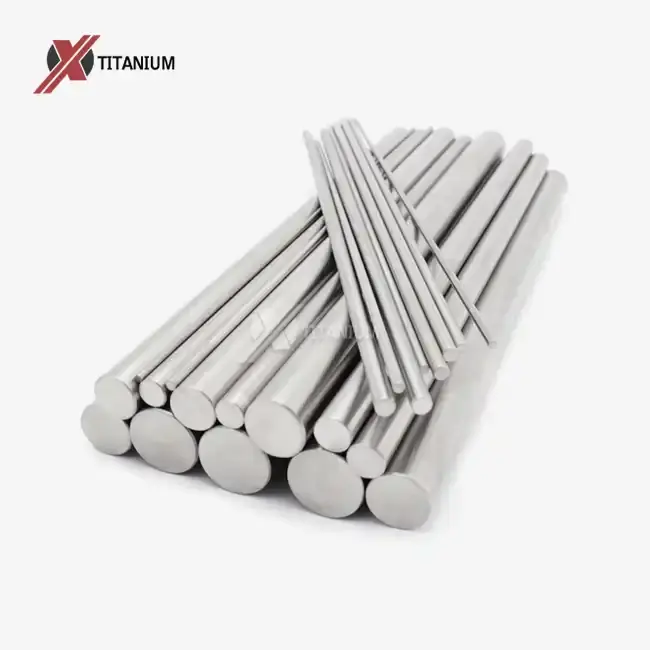
Comprehending the Importance of Medical Titanium OEM Supplier Certifications
Verification of certification is a key part of quality control and legal compliance in the medical device business. When buying titanium parts for medical devices, spinal fusion systems, or surgery implants, the stakes are much higher than in normal business situations. It is very important that medical titanium rods made from Ti-6Al-4V ELI (Grade 23) or CP Titanium (Grade 4) meet strict biocompatibility standards and keep their mechanical traits over time.
Critical Role in Patient Safety
Medical-grade titanium materials come into close contact with human flesh, so verifying certification is essential for patient safety. Titanium can be used for intramedullary nails and spinal fixation systems because it is biocompatible. This is dependent on the exact alloy makeup and production processes. Suppliers who are certified show that they follow the ASTM F136 and ISO 5832-3 standards. These standards set the maximum amount of intermediate elements and microstructural requirements that keep living things from reacting badly.
Regulatory Compliance Requirements
The FDA, the European Medicines Agency, and Health Canada are just a few of the healthcare regulatory groups that require full paperwork for medical device parts, including medical titanium rods. Suppliers who have a valid ISO 13485 license show that they use quality control systems that are meant to make medical devices. This license needs to be checked every year and includes important parts like design controls, risk management, and corrective action procedures
Supply Chain Risk Mitigation
Suppliers who haven't been checked out pose big problems, like using different materials, not being able to track them, and not always making sure the quality is good. When component providers don't have the right certifications, medical device makers could have to return their products, face fines from regulators, or be held legally responsible. Verified sellers give material certificates, proof of heat treatment, and the ability to track batches, all of which help with regulatory submissions and post-market monitoring needs.
Key Certifications and Standards to Verify for Medical Titanium Rod Suppliers
To successfully verify a supplier, you need to know the specific rules and licenses that control the production of medical titanium. These requirements include more than just basic quality management. They also include rules and standards for medical devices and materials.
Essential Quality Management Certifications
Medical gadget suppliers must have ISO 13485 certification as a basic quality control requirement. This standard talks about some of the special things that come up when making medical devices. These include design controls, management duty, and tracking after the device has been sold. Annual surveillance checks and triennial recertification tests are ways for suppliers to show they are always following the rules. The license should cover especially machining titanium and making parts for medical devices.
When companies serving the US healthcare market are registered with the FDA, they are given permission to enter the market. Medical gadget businesses must register every year and keep their license numbers up to date. Certain types of products have listing requirements. For example, Class II and Class III medical equipment need to submit premarket notice or approval forms.
Material Performance Standards
The titanium-6aluminum-4vanadium metal used in medical implants is governed by the ASTM F136 standard. This standard sets limits on chemical makeup, mechanical trait needs, and testing methods. Suppliers must show that they are following the rules by having a third party test the materials and keep a proof of approval for each lot. The standard lists needs for elongation, yield strength, and tensile strength, all of which have a direct effect on how well the implant works.
ISO 5832-3 sets worldwide standards for medical implants made of titanium alloys. This standard talks about the chemical make-up, the mechanical qualities, and the metallographic criteria. To check for compliance, test results on the material, records of the heat treatment, and specs for the surface condition must be looked over.
Environmental and Safety Standards
Following the rules set by REACH (Registration, Evaluation, Authorization, and Restriction of Chemicals) makes sure that chemicals are safe all the way through the European supply chain. Suppliers of medical titanium must give safety data sheets and proof that the material has been registered. This rule talks about how chemicals used in factory processes might affect people's health and the world.
RoHS (Restriction of Hazardous Substances) compliance means that certain dangerous materials can't be used in electrical and computer tools. RoHS compliance checks are mostly needed for electronic parts, but medical products that use electronics also need them.
Step-by-Step Process to Evaluate and Verify Medical Titanium OEM Suppliers
To do a full review of a provider, you need a structured method that checks their technical skills, quality processes, and compliance with regulations. This multi-step process lowers the risk of buying and sets the stage for long-term relationships with suppliers.
Initial Due Diligence Phase
The first step in the evaluation process is to do a lot of background study on the company. This includes looking into its past, financial health, and image in the industry. Suppliers should show that they have been making medical titanium for at least five years and have customer references from well-known medical device makers. As part of the financial stability exam, credit ratings, yearly financial statements, and documents for business continuity plans are looked over.
Instead of depending only on documentation given by the seller, certification verification includes directly checking with the authorities that issued the certificate. ISO certification groups keep files that anyone can access to show the current state and scope of certification. FDA business registration verification checks the agency's web database to see if the registration is still active and to see if the device, such as medical titanium rods, is listed.
On-Site Audit Evaluation
Physical site checks directly confirm the ability to manufacture and the proper use of quality systems. Protocols for audits should cover things like manufacturing tools, environmental controls, and the skills of staff. Some important things to look at in an evaluation are the clean room facilities, the methods for handling materials, and the rules for preventing contamination that are special to making medical devices.
A quality system paperwork review looks at how procedures are carried out, how records are kept, and how well corrective actions work. Auditors should check the internal audit results, staff training records, and calibration programs for measuring tools. As part of the audit process, material traceability systems and seller qualification methods are checked.
Sample Testing and Validation
Through independent lab research, material testing makes sure that the material meets certain mechanical and chemical traits. Tensile testing, chemical composition analysis, and microstructural study should all be part of the test procedures. The number of tests and the factors for acceptance must match what is required by ASTM and ISO standards. The amounts of the samples should be representative of normal production lots and should include materials from more than one batch of production.
Precision measurements of sample parts are used for dimensional proof, which proves the ability to manufacture and control the process. This test includes checking the surface finish, making sure the geometric tolerances are correct, and following eye inspection procedures. Documentation of results helps with the needs for capability studies and process evaluations.
Comparing Medical Titanium OEM Suppliers – What to Look For
To effectively compare suppliers, you need to carefully look at their technical skills, quality performance, and service offers. This study helps people make smart choices and finds the suppliers who can best help with long-term buying goals.
Technical Capability Assessment
A manufacturing capacity review looks at the size and throughput of the building, as well as the production equipment that is used. Suppliers should show that they have enough ability to meet expected demand without lowering the quality of their products or services or missing deadlines. The evaluation of tools includes checking its abilities for CNC machining, heat treatment, and testing. Most modern providers run more than one CNC cutting center with high-tech systems for tools and fixtures.
Alloy grade knowledge is a key thing that sets medical titanium suppliers apart. Some of the best sources offer a wide range of grades, such as Ti-6Al-4V ELI, CP Grade 2, and specialty metals for specific uses. Technical skill includes knowing about metals, how to get the best results from heat treatment, and suggesting materials that are best for a certain job.
Quality Performance Metrics
The past of certification and maintenance shows how committed a seller is to making the quality system work well. Superior quality management is shown by suppliers whose certifications are regularly renewed and whose nonconformance results are few and far between. When they are available, certification body audit records give a thorough look at the strengths and weaknesses of the quality system.
Customer quality performance data includes measures for customer happiness, delivery performance, and the number of defects. Leading providers usually keep failure rates below 100 parts per million and shipping performance above 95% on time. Testimonials and case studies from satisfied customers are more proof of how well a supplier does their job and how good the relationship is.
Service and Support Capabilities
Technical support services set premium providers apart by offering engineering advice, helping with application creation, and assisting with problem-solving. Suppliers that give design for manufacturability advice, process optimization, and regulatory support services are helpful to companies that make medical devices, including those that produce medical titanium rods. These skills are especially useful when making new products and increasing the number of products made
Logistics planning, inventory management, and area service support are all parts of global supply chain management. Multinational customers benefit from suppliers with operations in more than one country because they offer better supply security and lower transportation costs. Regional stocking programs, emergency supply services, and full logistics tracking systems are some of the things that a distribution network can do.
Best Practices for Ongoing Certification Monitoring and Supplier Relationship Management
To keep a relationship with a seller going, you need to keep an eye on it and handle it proactively after the initial qualification. These practices make sure that rules are followed and find ways to improve partnerships.
Continuous Monitoring Systems
Periodic renewal checks keep you up to date on changes to a supplier's certification status and scope. Protocols for annual verification should include proof of license renewal, review of scope, and assessment of regulatory updates. Automated tracking systems can send notifications when a supplier's certifications expire or when rules change that could affect their ability to comply.
Performance tracking tools keep an eye on important metrics like quality performance, delivery reliability, and the clarity of communication. Dashboard monitoring lets you see how a supplier's performance is changing over time and lets you take action before performance gets worse. Regular performance reviews help people work together to plan ways to improve and build relationships, especially when sourcing products like medical titanium rods.
Collaborative Partnership Development
Through making goals and planning for improvements together, joint quality planning efforts make sure that the supplier's skills match the needs of the customer. These programs focus on quality goals, lowering costs, and finding ways to make technology better. Regular reviews of a business give people a chance to make plans for the future and build relationships.
Digital quality management systems, real-time inventory access, and automated document sharing are all examples of technologies that can be used together. Modern sellers offer electronic data exchange and quality management systems that work together to make the buying process easier and make the supply chain more visible.
Communication standards make it clear what is expected for everyday interactions, how to handle emergencies, and how to escalate problems. Regular progress reports, proactive issue notification, and collaborative problem-solving are all parts of good communication. Digital communication tools make it easier to share information and keep track of documents.
Conclusion
To check the certificates of medical titanium rods OEM suppliers, you need to do a thorough analysis that includes technical skills, quality management systems, and legal compliance. The verification method keeps medical device makers safe from legal risks and makes sure the safety and quality of the products they make. Structured evaluation processes, ongoing tracking systems, and collaborative provider partnerships are all things that successful procurement teams do. In the tough medical device market, these steps make the supply chain more stable and help businesses reach their long-term goals.
FAQ
How often should medical titanium supplier certifications be verified?
Proof of certifications should happen at least once a year, and it is recommended that more proof happen before big purchases. Since ISO 13485 licenses need to be audited every year, yearly verification is a good idea and fits with the plan for maintaining the certificate. If sellers say there are problems with certification or if changes to the rules affect compliance standards, emergency verification may be needed.
What documentation should suppliers provide during certification verification?
Suppliers must provide current certificates, audit reports, and regulatory registration documentation. Essential documents include ISO 13485 certificates with defined scope, FDA company registration confirmations, and material compliance certificates. Additional documentation includes calibration certificates, employee training records, and internal audit summaries that demonstrate quality system effectiveness.
How can procurement teams identify counterfeit certifications?
The most reliable way to spot fake documents is to check them directly with the granting agencies. Certification groups keep databases that let people directly check the validity and state of certificates. When you look at a physical certificate, you should look for security features, approved signatures, and correct formatting that meets the standards of the issuing body.
What are the consequences of working with uncertified suppliers?
Medical device companies that use uncertified providers risk governmental penalties, product liability, and quality problems. FDA warning letters, product bans, and limits on market access are all possible outcomes. Failures to comply with regulations can have financial effects such as the cost of fixing problems, legal trouble, and lost business prospects.
Which certifications are mandatory versus optional for medical titanium suppliers?
ISO 13485 certification and FDA registration are standards that all sellers who work with controlled medical device markets must meet. For some uses, material compliance certifications that include ASTM and ISO standards are usually needed. Optional licenses like AS9100 may give you a competitive edge, but they aren't always needed for medical uses.
Partner with Chuanglian for Certified Medical Titanium Solutions
Baoji Chuanglian New Metal Material Co., Ltd. is a reliable medical titanium rods supplier that has been making medical titanium rods for over ten years and has all the necessary certifications. Our factory in Baoji City has strict quality control systems that make sure every medical titanium rod meets international standards like ISO 5832-3 and ASTM F136. We give you full documentation packages that include material certificates, tracking records, and all the paperwork you need to meet legal requirements. Get in touch with our expert team at info@cltifastener.com or djy6580@aliyun.com to talk about how to buy medical titanium rods and get full clearance paperwork.
References
1. American Society for Testing and Materials. "Standard Specification for Wrought Titanium-6Aluminum-4Vanadium ELI Alloy for Surgical Implant Applications." ASTM International, 2020.
2. International Organization for Standardization. "Medical devices — Quality management systems — Requirements for regulatory purposes." ISO 13485:2016, Geneva, Switzerland.
3. U.S. Food and Drug Administration. "Quality System Regulation for Medical Devices." Code of Federal Regulations Title 21, Part 820, 2019.
4. European Medicines Agency. "Guidelines on the qualification and validation of analytical procedures for medical devices." Committee for Medical Devices, 2018.
5. International Organization for Standardization. "Implants for surgery — Metallic materials — Part 3: Wrought titanium 6-aluminium 4-vanadium alloy." ISO 5832-3:2016, Geneva, Switzerland.
6. Medical Device Coordination Group. "Guidance on classification of medical devices and borderline issues under Regulation (EU) 2017/745." European Commission, 2019.
Learn about our latest products and discounts through SMS or email