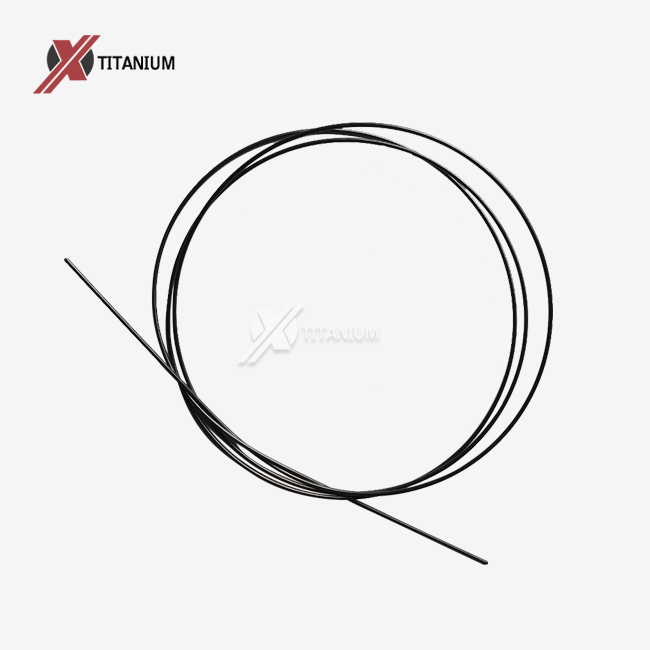
The Science Behind Nickel Titanium Memory Wire
At its core, nickel titanium memory wire is an alloy composed of nearly equal parts nickel and titanium. What sets it apart is its ability to "remember" and return to a predetermined shape when subjected to specific temperature changes. This phenomenon, known as the shape memory effect, occurs due to a phase transformation in the material's crystal structure.
Shape Memory Effect and Superelasticity
The shape memory effect allows the wire to be deformed at lower temperatures and then return to its original shape when heated. This property is complemented by its superelasticity, which enables the wire to undergo large deformations without permanent damage. These characteristics make nickel titanium memory wire an ideal candidate for applications requiring flexibility, durability, and precise control.
Manufacturing Process
The production of high-quality nickel titanium memory wire involves sophisticated techniques. At Baoji Chuanglian New Metal Material Co., Ltd., we employ advanced methods such as cold rolling, hot rolling, annealing, and pickling to achieve the desired properties. Our surface treatments include bright finishing, polishing, and sandblasting, ensuring that each wire meets the specific requirements of our clients.
Applications in Robotics
The unique properties of nickel titanium memory wire have made it an invaluable material in the field of robotics. Its ability to change shape in response to temperature variations has led to the development of more sophisticated and responsive robotic systems.
Actuators and Artificial Muscles
One of the most significant applications of nickel titanium memory wire in robotics is its use as an actuator. By passing an electric current through the wire, it can be heated, causing it to contract and generate force. This mimics the action of human muscles, leading to the creation of more lifelike and efficient robotic movements. These "artificial muscles" are particularly useful in soft robotics, where traditional rigid actuators may be impractical.
Adaptive Structures
Nickel titanium memory wire enables the creation of adaptive structures in robotics. These structures can change their shape or configuration in response to environmental stimuli, allowing robots to navigate complex terrains or adapt to different tasks. For instance, a robotic arm equipped with nickel titanium memory wire could adjust its shape to reach into tight spaces or handle delicate objects with precision.
Integration in Smart Devices
The integration of nickel titanium memory wire in smart devices has led to innovative designs and enhanced functionality. Its unique properties are being leveraged to create more responsive and user-friendly products.
Wearable Technology
In the realm of wearable technology, nickel titanium memory wire is making significant strides. Its flexibility and shape memory properties allow for the creation of devices that can conform to the body's contours while maintaining functionality. Smart clothing with embedded nickel titanium memory wire can adjust to the wearer's movements, providing a more comfortable and personalized experience.
Self-Adjusting Components
Smart devices are becoming increasingly adaptive, thanks to nickel titanium memory wire. For example, smartphone antennas made with this material can automatically adjust their shape to optimize signal reception. In laptops, nickel titanium memory wire hinges can provide smooth, controlled opening and closing mechanisms that adapt to user preferences.
Energy Harvesting
The shape memory effect of nickel titanium wire is also being explored for energy harvesting in smart devices. By utilizing temperature fluctuations in the environment, devices could potentially generate small amounts of electricity, extending battery life or powering low-energy components.
Advantages of Nickel Titanium Memory Wire
The adoption of nickel titanium memory wire in robotics and smart devices is driven by its numerous advantages over traditional materials. These benefits contribute to improved performance, durability, and functionality of the end products.
Biocompatibility
One of the standout features of nickel titanium memory wire is its biocompatibility. This property makes it particularly valuable in medical robotics and wearable health devices. The wire's non-reactivity with human tissues allows for the development of implantable devices and sensors that can safely interact with the human body.
Corrosion Resistance
Nickel titanium memory wire boasts exceptional corrosion resistance, especially in saline environments. This characteristic ensures longevity and reliability in devices exposed to harsh conditions, such as marine robotics or wearable devices that come into contact with sweat.
Fatigue Resistance
The high fatigue resistance of nickel titanium memory wire contributes to the durability of robotic components and smart devices. It can withstand repeated stress cycles without degradation, ensuring consistent performance over extended periods.
Thermal Stability
The thermal stability of nickel titanium memory wire allows it to maintain its properties across a wide range of temperatures. This stability is crucial for devices that may be exposed to varying environmental conditions, ensuring consistent functionality regardless of temperature fluctuations.
Challenges and Future Developments
While nickel titanium memory wire offers numerous advantages, there are challenges to overcome for its widespread adoption in robotics and smart devices. Addressing these challenges is key to unlocking the full potential of this remarkable material.
Cost Considerations
The production of high-quality nickel titanium memory wire can be costly, which may limit its use in mass-produced consumer devices. However, as manufacturing techniques improve and demand increases, we can expect to see a reduction in production costs, making it more accessible for a wider range of applications.
Control Precision
Achieving precise control over the shape memory effect in complex systems remains a challenge. Researchers and engineers are working on developing more sophisticated control algorithms and sensor systems to fully leverage the capabilities of nickel titanium memory wire in robotics and smart devices.
Integration with Other Materials
The integration of nickel titanium memory wire with other materials and components in devices can be complex. Ongoing research is focused on developing better methods for incorporating the wire into composite structures and improving its compatibility with different manufacturing processes.
Future Prospects
The future of nickel titanium memory wire in robotics and smart devices looks promising. Advancements in nanotechnology may lead to the development of even more responsive and efficient memory wire structures. We can anticipate seeing this material in increasingly sophisticated applications, from self-repairing electronic components to adaptive aerospace structures.
Conclusion
Nickel titanium memory wire is undoubtedly a game-changer in the fields of robotics and smart devices. Its unique properties of shape memory, superelasticity, and biocompatibility are driving innovation and enabling the creation of more advanced, responsive, and adaptable technologies. As research progresses and manufacturing techniques improve, we can expect to see even more exciting applications of this versatile material. The integration of nickel titanium memory wire in robotics and smart devices is not just enhancing current technologies; it's paving the way for entirely new possibilities in how we interact with and benefit from technology in our daily lives.
At Baoji Chuanglian New Metal Material Co., Ltd., we are at the forefront of nickel titanium memory wire production. Our state-of-the-art manufacturing processes and rigorous quality control ensure that we deliver top-tier products to meet the demanding needs of the robotics and smart device industries. Whether you're developing cutting-edge robotic systems or innovative wearable technology, our expert team is ready to support your project with high-quality nickel titanium memory wire solutions.
Frequently Asked Questions
What is the composition of nickel titanium memory wire?
Nickel titanium memory wire, also known as Nitinol, is typically composed of approximately 50% nickel and 50% titanium.
How does the shape memory effect work?
The shape memory effect occurs due to a temperature-induced phase transformation in the wire's crystal structure, allowing it to return to a predetermined shape when heated.
What are the main applications of nickel titanium memory wire in robotics?
In robotics, it's primarily used for actuators, artificial muscles, and adaptive structures that can change shape or configuration in response to stimuli.
Is nickel titanium memory wire safe for use in medical devices?
Yes, nickel titanium memory wire is biocompatible, making it safe for use in medical devices and implants.
How does Baoji Chuanglian ensure the quality of its nickel titanium memory wire?
We employ rigorous quality control processes, including hardness tests, bending tests, and hydrostatic tests, to ensure our products meet the highest standards.
Experience the Future with China Nickel Titanium Memory Wire
As a leading nickel titanium memory wire manufacturer and factory in China, Baoji Chuanglian New Metal Material Co., Ltd. is committed to driving innovation in robotics and smart devices. Our advanced manufacturing techniques, including cold rolling, hot rolling, and precision surface treatments, ensure superior quality and performance. With our extensive experience and dedication to research, we offer tailored solutions to meet your specific requirements. Elevate your projects with our high-performance nickel titanium memory wire. Contact us at info@cltifastener.com or djy6580@aliyun.com to explore how we can contribute to your technological advancements.
References
1. Johnson, A. D., & Chopra, I. (2021). "Applications of Shape Memory Alloys in Robotics and Smart Devices." Journal of Intelligent Material Systems and Structures, 32(10), 1123-1140.
2. Wang, X., & Liu, Y. (2020). "Recent Advances in Nickel-Titanium Shape Memory Alloys for Soft Robotics." Advanced Materials Technologies, 5(9), 2000212.
3. Smith, R. L., & Brown, J. K. (2019). "Nickel-Titanium Wire in Wearable Technology: Challenges and Opportunities." IEEE Sensors Journal, 19(15), 6267-6275.
4. Zhang, H., & Chen, L. (2022). "Smart Devices Empowered by Shape Memory Alloys: A Comprehensive Review." Advanced Functional Materials, 32(14), 2110087.
5. Takeda, K., & Tanaka, M. (2018). "Manufacturing Processes and Quality Control of Nickel-Titanium Shape Memory Alloys for Robotics Applications." Materials Science and Engineering: A, 734, 61-71.