- English
- French
- German
- Portuguese
- Spanish
- Russian
- Japanese
- Korean
- Arabic
- Greek
- German
- Turkish
- Italian
- Danish
- Romanian
- Indonesian
- Czech
- Afrikaans
- Swedish
- Polish
- Basque
- Catalan
- Esperanto
- Hindi
- Lao
- Albanian
- Amharic
- Armenian
- Azerbaijani
- Belarusian
- Bengali
- Bosnian
- Bulgarian
- Cebuano
- Chichewa
- Corsican
- Croatian
- Dutch
- Estonian
- Filipino
- Finnish
- Frisian
- Galician
- Georgian
- Gujarati
- Haitian
- Hausa
- Hawaiian
- Hebrew
- Hmong
- Hungarian
- Icelandic
- Igbo
- Javanese
- Kannada
- Kazakh
- Khmer
- Kurdish
- Kyrgyz
- Latin
- Latvian
- Lithuanian
- Luxembou..
- Macedonian
- Malagasy
- Malay
- Malayalam
- Maltese
- Maori
- Marathi
- Mongolian
- Burmese
- Nepali
- Norwegian
- Pashto
- Persian
- Punjabi
- Serbian
- Sesotho
- Sinhala
- Slovak
- Slovenian
- Somali
- Samoan
- Scots Gaelic
- Shona
- Sindhi
- Sundanese
- Swahili
- Tajik
- Tamil
- Telugu
- Thai
- Ukrainian
- Urdu
- Uzbek
- Vietnamese
- Welsh
- Xhosa
- Yiddish
- Yoruba
- Zulu
Reducing Weight with Titanium Fasteners in Design
Modern engineering design faces an ongoing challenge: achieving maximum structural performance while minimizing weight. Titanium Fasteners have emerged as a transformative solution, offering engineers and designers an unprecedented opportunity to reduce component weight without compromising strength or reliability. These specialized fastening components combine titanium's exceptional strength-to-weight ratio with superior corrosion resistance, making them indispensable across aerospace, automotive, marine, and high-performance manufacturing applications. Unlike traditional steel or aluminum alternatives, titanium fastening solutions deliver consistent performance in extreme environments while contributing significantly to overall weight reduction goals in critical design applications.
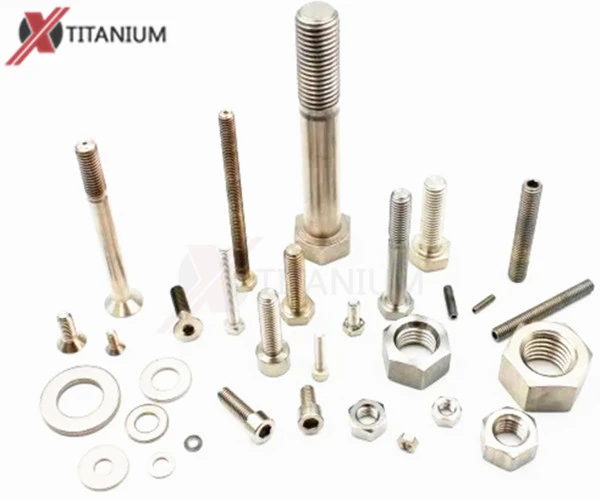
The Role of Titanium Fasteners in Weight Reduction
The optimization of weight has emerged as a fundamental engineering concern across a variety of businesses, especially in those sectors where fuel economy, carrying capacity, and structural integrity have a direct influence on operating costs. Titanium fastening components, with their one-of-a-kind material qualities and technical benefits, play a significant part in the accomplishment of these goals.
Superior Strength-to-Weight Performance
The density of titanium, which is 4.51 grams per cubic centimeter, results in roughly forty percent weight reduction as compared to steel fasteners, while preserving equivalent strength qualities. The large decrease in weight has immediate implications for a number of applications, including greater fuel economy in aeronautical applications, better performance in vehicle racing, and lower structural pressures in maritime conditions. When switching from steel to aluminum fastening systems in applications that are weight-critical, engineering teams typically report weight reductions of thirty to fifty percent.
The material's exceptional specific strength allows designers to specify smaller fastener diameters without compromising joint integrity. This secondary weight reduction effect multiplies the benefits, as smaller fasteners require correspondingly smaller holes and reduced reinforcement materials around connection points.
Corrosion Resistance in Demanding Environments
Titanium's innate resistance to corrosion means that the advantages of weight reduction continue beyond the original material qualities of its substance. As a result of the creation of a stable layer of titanium dioxide, fasteners are protected from the deterioration caused by the environment. This eliminates the need for protection coatings, which add weight и complexity to the construction of fastening systems.
Due to the fact that standard fastener materials are quickly degraded when exposed to seawater, marine applications notably benefit from this property. The solidity and weight benefits of titanium fastening components are preserved during the prolonged service life of the components. This allows the components to avoid the weight penalties that are associated with weathering protection systems or the demand for frequent replacement.
Key Technical Specifications and Standards of Titanium Fasteners
Understanding titanium fasteners specifications enables informed material selection and optimal weight reduction outcomes. Different titanium grades offer varying combinations of strength, weight, and environmental resistance characteristics that directly impact design effectiveness.
Material Grade Selection and Properties
Grade 2 titanium represents the most widely used commercial pure titanium for fastening applications, offering excellent corrosion resistance and moderate strength with minimum weight penalty. This grade provides tensile strength of 345-483 MPa while maintaining superior ductility and formability characteristics essential for complex fastener geometries.
A tensile strength that ranges from 895 to 1000 MPa is one of the characteristics of grade 5 titanium metal (Ti-6Al-4V), which offers improved strength performance. This material, which is of aerospace quality, allows for considerable reductions in the size of fasteners while still meeting the standards for joint strength. This allows for maximum weight savings in applications that are crucial. The composition of the alloy offers the best possible equilibrium between strength + weight for connections that are particularly demanding on the structure.
ASTM Standards and Compliance Requirements
requirements for titanium and magnesium alloy bars and billets that are used in the fabrication of fasteners are established by ASTM B348. These requirements ensure that the material qualities and performance characteristics of the material are constant. The adherence to these standards ensures the traceability of materials and the uniformity of quality, both of which are vital for applications in the aerospace and automotive industries.
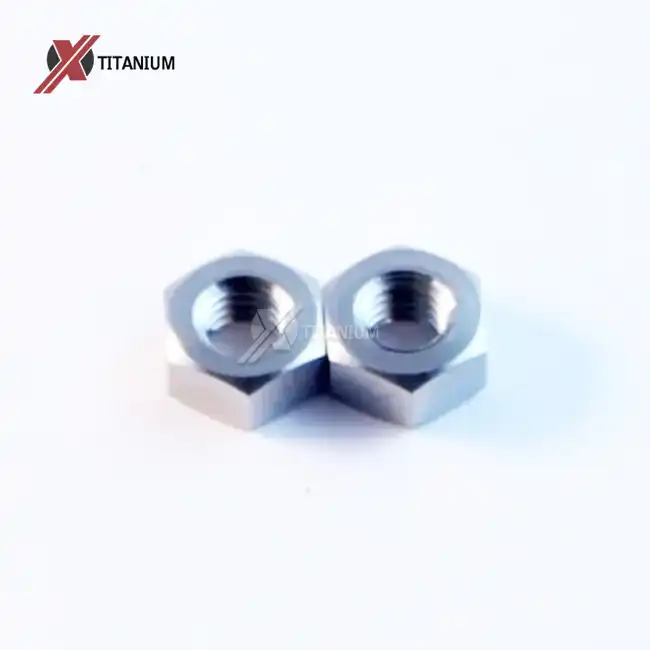
The ASTM F467 standard addresses titanium- Alloy nuts for ordinary engineering applications, while the ASTM F468 standard covers bolts, studs, and hex cap screws made of titanium alloy for use in engineering. In order to guarantee that the performance of the fastener is up to the design expectations for a wide range of applications, these standards establish the dimensional tolerances, mechanical qualities, and testing requirements.
Dimensional Standards and Threading Specifications
Despite the fact that they are interchangeable with pre-existing fastening systems, metric and imperial threaded standards are able to fulfill worldwide design needs. Using standard thread pitches or head configurations makes it possible to directly replace steel rivets with titanium equivalents without having to make any alterations to the design or the tooling.
Options for custom threading are available to satisfy specialty applications that need pitch or profile features that are unique to them. Precision thread formation in titanium materials is made possible by advanced production capabilities. This ensures excellent engagement and distribution of loads while simultaneously decreasing the amount of material used and the weight of the component.
Comparing Titanium Fasteners with Other Materials to Make Informed Decisions
Material selection significantly impacts weight reduction potential and overall system performance. A comprehensive comparison of titanium fasteners against alternative materials reveals specific advantages and application scenarios where titanium delivers optimal value.
Weight and Strength Analysis
Comparing material properties demonstrates titanium's unique advantages in weight-sensitive applications. The following material characteristics highlight key performance differences:
- Titanium Grade 5: Density 4.43 g/cm³, tensile strength 1000 MPa, superior fatigue resistance
- Stainless Steel 316: Density 8.0 g/cm³, tensile strength 580 MPa, moderate corrosion resistance
- Aluminum 6061: Density 2.7 g/cm³, tensile strength 310 MPa, limited environmental resistance
These comparisons reveal titanium's exceptional strength-to-weight advantage over stainless steel and superior environmental resistance compared to aluminum. Weight savings of 45% compared to steel fasteners while delivering 70% higher strength creates compelling value propositions for performance-critical applications.
Environmental Performance Considerations
Titanium fasteners excel in challenging environmental conditions where alternative materials experience degradation or require protective measures. Saltwater exposure, chemical processing environments, and temperature extremes demonstrate titanium's superior long-term performance characteristics.
Applications in the marine industry highlight the benefits of titanium, which include an increased service life and the absence of galvanic corrosion issues. Titanium retains compatibility with a wide range of metals, while also maintaining the joint's strength and weight benefits throughout its service life. This is in contrast to aluminum fasteners, which are susceptible to galvanic corrosion when combined with steel structures.
Lifecycle Cost Analysis
Even though initial material costs are just one component of overall fastener economics, they are nonetheless important. Through decreased maintenance needs, increased service intervals, and the removal of coating or protective systems can add weight and complexity, titanium's worth is shown through lifecycle analysis due to its ability to lower these factors.
Replacement prices in aircraft applications sometimes surpass original fastener costs by significant margins. This is because disassembly constraints and inspection processes are not always taken into account. These operating expenditures are reduced because to the prolonged service life of titanium, which also maintains weight benefits throughout the component lifespan.
Best Practices for Procuring Titanium Fasteners Globally
In order to successfully acquire titanium fasteners, it is necessary to have a comprehensive awareness of the capabilities of suppliers, quality standards, and logistical issues that are specific to the manufacture of titanium. Approaches to strategic sourcing enhance cost, quality, and delivering performance while also guaranteeing adherence to industry standards.
Supplier Evaluation and Certification
Certifications from the aerospace sector, such as AS9100 quality systems as NADCAP special process approvals, are proof that qualified platinum fastener suppliers have met certification requirements. Certifications like this guarantee that the material qualities, traceability, and manufacture process control were constant, which is vital for applications that are absolutely necessary.
Manufacturing capability assessment should include CNC machining capacity, heat treatment facilities, and testing equipment suitable for titanium processing. Suppliers with dedicated titanium production lines typically deliver superior quality consistency and shorter lead times compared to multi-material manufacturers.
Quality Assurance and Material Traceability
Material certification requirements include chemical composition analysis, mechanical property testing, and dimensional inspection documentation. Complete traceability from raw material source through final inspection ensures compliance with aerospace and automotive quality standards.
Third-party testing verification provides additional quality assurance for critical applications, ensuring specifications are met for components such as titanium fasteners. Independent laboratories can verify material properties, dimensional accuracy, and surface finish characteristics to supplement supplier quality documentation.
Order Planning and Inventory Management
Titanium fastener lead times typically range from 6-12 weeks for standard configurations and 12-16 weeks for custom specifications. Advanced order planning accommodates these extended timelines while minimizing inventory carrying costs and obsolescence risks.
Although the minimum quantities needed to order vary depending on the kind of fastener and the capabilities of the supplier, in general, bigger commitments are required in comparison to steel alternatives. Achieving affordable order numbers while simultaneously lowering per-unit expenses and administrative overhead may be accomplished by the consolidation of orders over different projects.
Maintenance and Longevity: Ensuring Your Titanium Fasteners Perform Over Time
Proper installation and maintenance practices maximize titanium fastener performance and longevity while preserving weight advantages throughout service life. Understanding titanium's unique characteristics enables optimal fastening system design and maintenance procedures.
Installation Best Practices
Torque specifications for titanium fasteners differ from steel alternatives due to material properties and thread characteristics. Proper torque application prevents galling while ensuring adequate preload for joint integrity. Titanium's lower modulus of elasticity requires adjusted torque values to achieve equivalent clamping force compared to steel fasteners.
Thread lubrication using appropriate compounds prevents galling during installation while maintaining accurate torque readings. Molybdenum disulfide or specialized titanium lubricants provide optimal performance without compromising joint integrity or introducing contamination in sensitive applications.
Inspection and Maintenance Protocols
Regular visual inspection identifies potential issues before they compromise fastener performance or weight advantages. Titanium's natural corrosion resistance typically eliminates surface degradation concerns, simplifying inspection procedures compared to coated steel alternatives.
Torque verification during scheduled maintenance ensures continued joint integrity while detecting potential loosening or wear issues. Titanium fasteners typically maintain preload more consistently than steel alternatives, reducing maintenance frequency and associated operational costs.
Service Life Extension Strategies
Proper handling and storage practices preserve titanium fastener quality and performance characteristics. Avoiding contact with steel tools prevents iron contamination that could compromise corrosion resistance in marine or chemical environments.
Temperature cycling considerations become important in aerospace applications where extreme temperature variations could affect fastener preload or dimensional stability. Titanium's thermal expansion coefficient requires accommodation in joint design to prevent stress concentration or premature failure.
Conclusion
Reducing weight through titanium fasteners implementation represents a proven strategy for enhancing performance across aerospace, automotive, marine, and industrial applications. The combination of exceptional strength-to-weight ratios, superior corrosion resistance, and extended service life creates compelling value propositions that justify initial investment considerations. Modern engineering teams consistently achieve 30-50% weight reductions while maintaining or improving joint strength and reliability through strategic titanium fastener adoption.
Successful implementation requires careful material selection, qualified supplier partnerships, and appropriate installation practices that optimize titanium's unique characteristics. The growing availability of standardized specifications and manufacturing capabilities continues to expand titanium fastener accessibility while reducing procurement complexity and lead times.
FAQ
What applications benefit most from titanium fastener weight reduction?
Aerospace applications achieve maximum benefit from titanium fastener weight reduction due to direct fuel efficiency impacts and stringent weight limitations. Racing automotive applications similarly benefit through improved performance and handling characteristics. Marine environments leverage both weight savings and corrosion resistance advantages for enhanced operational efficiency and reduced maintenance requirements.
How do titanium fastener costs compare to steel alternatives over the product lifecycle?
While initial titanium fastener costs typically range 3-5 times higher than steel alternatives, lifecycle analysis reveals comparable or superior value through extended service life, reduced maintenance requirements, and elimination of protective coating systems. Weight-sensitive applications often justify higher material costs through operational savings including fuel efficiency and payload capacity improvements.
What lead times should be expected for custom titanium fastener orders?
Standard titanium fastener configurations typically require 6-12 weeks for delivery, while custom specifications generally require 12-16 weeks depending on complexity and supplier capacity. Advanced planning and supplier partnerships can reduce lead times through inventory programs and standardized specifications that accommodate multiple applications.
Partner with Chuanglian for Premium Titanium Fastener Solutions
Chuanglian stands ready to support your weight reduction objectives through comprehensive titanium fastener manufacturing and technical expertise. Located in Baoji City, the renowned "City of Titanium," our facility leverages more than ten years of specialized experience in titanium processing and machining. Our quality management systems ensure consistent performance while our technical team provides application-specific guidance to optimize your fastening solutions.
Our manufacturing capabilities include Grade 2 and Grade 5 titanium fasteners compliant with ASTM standards, available in standard and custom configurations to meet your precise requirements. Whether you need aerospace-grade specifications or specialized marine applications, Chuanglian delivers reliable titanium fastener supplier partnerships that support your engineering objectives. Contact our technical team at info@cltifastener.com or djy6580@aliyun.com to discuss your specific requirements and receive detailed quotations.
References
1. Boyer, R., Welsch, G., & Collings, E.W. "Materials Properties Handbook: Titanium Alloys." ASM International, Materials Park, Ohio, 1994.
2. Donachie, Matthew J. "Titanium: A Technical Guide, 2nd Edition." ASM International, Materials Park, Ohio, 2000.
3. Peters, M., Kumpfert, J., Ward, C.H., & Leyens, C. "Titanium Alloys for Aerospace Applications." Advanced Engineering Materials, Vol. 5, No. 6, 2003.
4. Rack, H.J. & Qazi, J.I. "Titanium Alloys for Biomedical Applications." Materials Science and Engineering C, Vol. 26, Issue 8, 2006.
5. Veiga, C., Davim, J.P., & Loureiro, A.J.R. "Properties and Applications of Titanium Alloys: A Brief Review." Reviews on Advanced Materials Science, Vol. 32, No. 2, 2012.
6. American Society for Testing and Materials. "Standard Specification for Titanium and Titanium Alloy Strip, Sheet, and Plate." ASTM B265-20, ASTM International, West Conshohocken, Pennsylvania, 2020.
Learn about our latest products and discounts through SMS or email