- English
- French
- German
- Portuguese
- Spanish
- Russian
- Japanese
- Korean
- Arabic
- Greek
- German
- Turkish
- Italian
- Danish
- Romanian
- Indonesian
- Czech
- Afrikaans
- Swedish
- Polish
- Basque
- Catalan
- Esperanto
- Hindi
- Lao
- Albanian
- Amharic
- Armenian
- Azerbaijani
- Belarusian
- Bengali
- Bosnian
- Bulgarian
- Cebuano
- Chichewa
- Corsican
- Croatian
- Dutch
- Estonian
- Filipino
- Finnish
- Frisian
- Galician
- Georgian
- Gujarati
- Haitian
- Hausa
- Hawaiian
- Hebrew
- Hmong
- Hungarian
- Icelandic
- Igbo
- Javanese
- Kannada
- Kazakh
- Khmer
- Kurdish
- Kyrgyz
- Latin
- Latvian
- Lithuanian
- Luxembou..
- Macedonian
- Malagasy
- Malay
- Malayalam
- Maltese
- Maori
- Marathi
- Mongolian
- Burmese
- Nepali
- Norwegian
- Pashto
- Persian
- Punjabi
- Serbian
- Sesotho
- Sinhala
- Slovak
- Slovenian
- Somali
- Samoan
- Scots Gaelic
- Shona
- Sindhi
- Sundanese
- Swahili
- Tajik
- Tamil
- Telugu
- Thai
- Ukrainian
- Urdu
- Uzbek
- Vietnamese
- Welsh
- Xhosa
- Yiddish
- Yoruba
- Zulu
Titanium Alloy Pipe Free Sample: What to Test
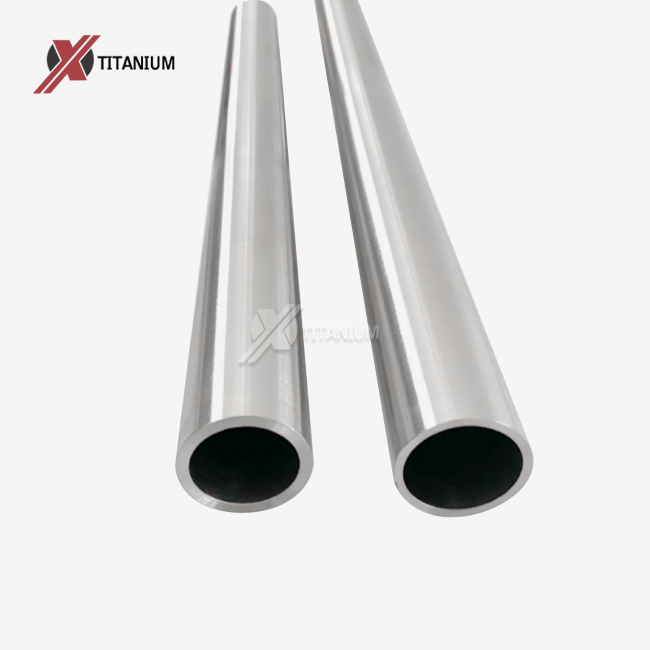
If you want to test titanium alloy pipe free samples, you should make sure they pass a lot of tests that check for important things like mechanical strength, rust resistance, measurement accuracy, and metallurgical integrity. Before you place a large order, these sample pieces from companies like Baoji Chuanglian New Metal Material Co., Ltd. let you see if the titanium alloy pipe meets your necessary application needs. There are several review steps in the testing process that are directly related to the needs of operations in aircraft, chemical processing, medical devices, and marine engineering.
Understanding Titanium Alloy Pipe Free Samples
Titanium metal pipe free samples are more than just promotional items; they are important evaluation tools that can help you decide whether to buy something or not. These samples show how well a seller can make things and how high their standards are for material quality. We at Baoji Chuanglian know that people who buy things for other businesses need solid information before they commit large amounts of money. This is especially true when they are working with expensive materials like Ti-6Al-4V, Ti-5Al-2.5Sn, and Ti-6Al-2Sn-4Zr-6Mo metals.
The Strategic Value of Sample Testing
Evaluation of samples is used for more than just checking the quality; it also serves other strategic purposes. The process lets procurement teams check how reliable a provider is, how consistent their production is, and how well they can help with technology issues. When you ask recognized makers for samples, you can learn about how they make their products, how they check the quality of their work, and how well they follow international standards like ISO 5832-2, ASTM B338, and ASTM B861.
The testing step also makes it easier to get to know possible providers. During this review time, you can check how well they communicate, how knowledgeable they are in technical matters, and how responsive they are—all of which become very important during large-scale production runs. This thorough way of evaluating suppliers is especially helpful for companies in the aerospace, petroleum, and medical device industries.
Sample Representativeness and Production Correlation
To figure out how free samples and large production quality are related, you need to think carefully about the factors that affect manufacturing. Suppliers you can trust make sure that samples go through the same cold rolling, hot rolling, heating, and quenching processes that will be used on large quantities. This stability makes sure that test results are a good indicator of how well the bulk material will work.
When you ask for samples, you should be clear about the surface finish choices you want, such as bright, polished, pickled, acid cleaned, or sandblasted. These surface processes have a big effect on how well something works in difficult situations in terms of corrosion protection, fatigue life, and general performance.
Essential Tests to Perform on Titanium Alloy Pipe Free Samples
Comprehensive sample testing includes many types of evaluations that, when put together, give a full picture of how well a material works. The testing process should be tailored to the needs of your product and cover basic material properties that affect how well and how long something will last.
Mechanical Property Verification
Any program that does a thorough job of evaluating samples starts with mechanical testing. These tests show that the material can handle the working stresses and environmental factors that are typical of your application. Standardized methods are used to measure elongation, tensile strength, yield strength, and hardness. These are some of the most important mechanical studies. For materials like Titanium alloy pipe, these tests are crucial to ensure that the alloy can withstand the specific demands of the application, including pressure, temperature, and corrosion resistance.
Testing for hardness gives you instant information about how consistent a material is and how well heat treatment works. Measurements on the Rockwell C scale for common titanium alloys are usually between 32 and 42 HRC, but exact numbers rely on the alloy's make-up and how it is heated. Bending tests check how flexible and workable something is, which is especially important for situations where the product needs to be shaped or made after delivery.
Hydrostatic testing confirms the ability to withstand pressure, which is important for uses in chemical processing, the water industry, and the energy sector. This damaging testing method proves that the pipe can safely work at certain pressure levels without breaking or changing shape.
Corrosion Resistance Evaluation
One of the main reasons titanium is better than other materials is that it doesn't corrode easily. Standardized testing, on the other hand, makes sure that certain metal compositions and surface processes meet the needs of your surroundings. Salt spray testing mimics conditions found in the ocean and in chemical processing settings where people are exposed to chloride.
Electrochemical corrosion testing gives numbers about how fast rusting happens and how passivation works. This testing is especially important for situations with acids, alkalis, or high temperatures that cause oxidation, because the choice of material has a direct effect on how long it lasts and how often it needs to be maintained.
Stress corrosion cracking (SCC) testing looks at one of the worst ways things can go wrong in high-stress situations. This way of testing mimics both mechanical stress and exposure to a corrosive environment to figure out how reliable something will be in tough working conditions over time.
Dimensional Accuracy and Surface Quality Assessment
With precise measures, you can be sure that the sample's dimensions are in line with the standards and production needs that have been set. Measuring the outer diameter, checking the wall thickness, and checking the length precision make sure that it works with current systems and meets installation needs. Advanced measuring methods, like coordinate measuring tools (CMM) and laser scanning, make sure that all dimensions are correct.
Surface roughness values affect both how the surface looks and how well it works. In sanitary uses, roughness values affect how well something cleans, how long it lasts, and how resistant it is to rust. The specs for the surface finish must match the needs of the product, whether the focus is on smooth flow or better adhesion.
A close look at the surface with a microscope shows any flaws, spots, or strange patterns on the surface that could affect how well it works. This test finds possible stress collection spots and confirms that the surface treatment works across the whole surface area of the sample.
Titanium Alloy Pipe vs. Other Materials – What to Consider in Testing
To compare different materials, you need to use organized testing methods that show how titanium alloys work differently compared to other materials like carbon steel, stainless steel, or other alloys. This process of comparing helps to support choices about which materials to use and supports cost-benefit analyses that are needed for purchase approval.
Performance Advantage Quantification
Titanium's key performance benefits, such as its high strength-to-weight ratio, resistance to corrosion, and temperature stability, should be measured in the testing procedures. Direct comparisons with samples of stainless steel under the same test settings give solid information that helps people decide which materials to use. Weight readings show that titanium has a higher density, and power tests show that it works well. For applications involving components like Titanium alloy pipe, these performance metrics are essential to ensure that the material can meet the required demands for strength, durability, and environmental resistance.
When cyclic loading conditions are present, like in aircraft and naval uses, fatigue testing becomes very important. Titanium metals usually have better fatigue resistance than steel options. However, standard testing is needed to prove this, which is needed for technical approval and government compliance.
High-temperature performance testing checks how well a material keeps its mechanical properties at high temperatures. This testing is very important for chemical processing jobs where the temperatures are higher than what stainless steel can handle but not too high for titanium.
Cost-Benefit Analysis Support
Even though titanium metals are more expensive than other materials, full testing data supports total cost of ownership estimates that often favor titanium solutions. Longer service life, less upkeep, and less weight all lead to lower operating costs that balance out the higher costs of the materials at first.
Documentation of testing is the technical basis for engineering explanation and approval by management. Quantified performance benefits, such as longer service intervals, less frequent replacement, and higher dependability, help investment choices in ways other than just comparing the cost of materials.
How to Use Free Sample Testing to Make Informed Procurement Decisions?
Strategic sample testing is more than just a pass/fail test; it also includes making full processes for evaluating suppliers and validating materials. The testing method should match the needs of internal decision-making while giving enough information to make sure that procurement choices are made with confidence.
Developing Application-Specific Test Protocols
The first step in making a test procedure is to carefully look at the operational needs and performance goals. In aerospace, the focus is on reducing weight and performing well at high temperatures. In chemical processing, the focus is on resistance to rust and the ability to withstand pressure. Biocompatibility and skin finish quality are very important for medical devices.
Working closely with engineering teams makes sure that testing methods cover important performance factors and avoid tests that aren't needed and take too long without adding any value. Setting the order of tests based on what the application needs helps make the best use of resources and speeds up the review process.
Different industries and uses have different documentation needs. For aerospace purposes, providers must provide full test certificates and paperwork for traceability. For industrial uses, on the other hand, simpler reporting forms may be acceptable. Setting standards for paperwork during the sample request phase avoids delays and makes sure that internal procedures are followed.
Supplier Communication and Collaboration
During the sample review phase, good communication with the provider sets standards and builds working relationships that are necessary for long-term partnerships to work. Clear communication about specifications keeps people from misunderstood each other and makes sure that examples are a good representation of the production materials.
Sharing progress reports and interim results on a regular basis promotes openness and shows that professional buying practices are being used. Suppliers like hearing about how well samples work and will often offer extra expert help or different solutions based on test results. For instance, when testing Titanium alloy pipe, providing feedback on how the material performs can encourage suppliers to suggest alternative solutions or improvements that better meet the specific application requirements.
Discussions after testing give you a chance to voice concerns, make sure you understand the requirements, or look into other possible options. During these talks, suppliers' skills and knowledge are often revealed, which affects the final choice to buy in ways other than just meeting material requirements.
Best Practices for Requesting and Evaluating Titanium Alloy Pipe Free Samples
To get samples successfully, you need to use organized methods that make evaluations as useful as possible while also cutting down on time and resource needs. These best practices come from years of experience in B2B buying and are based on industry standards and tried-and-true methods.
Specification Communication and Documentation
Full specification papers get rid of confusion and make sure that samples correctly show what is needed for production. Technical specs should list the required sizes, the preferred metal grade, the surface finish, and the expected performance. Clear paperwork stops confusion and makes sure that everyone is responsible.
When the two sides first talk, they need to be clear about quality standards and approval requirements. There are big differences between uses when it comes to ASTM compliance, ISO standards, and industry-specific requirements. These differences need to be taken into account ahead of time to avoid delays or compliance problems.
Lead times should take into account how complicated the product is to make and how it will be shipped. Custom specs or surface treatments may mean that production plans have to be stretched, which can delay the completion of a project. Communicating with suppliers early on about shipping standards helps them make the best use of their production schedules and keep their promises.
Quality Control and Testing Coordination
When buying teams and quality control experts work together, they can make sure that the review is thorough and that the testing process stays objective. From receiving the sample to the final review, QC is involved to make sure that testing is consistent and that paperwork meets standards. Using a third-party testing center gives you independent confirmation and gets rid of any worries about bias. The results of independent tests are more reliable during internal reviews and can be used as proof to meet legal standards.
Documentation of test results should be in a standard style that helps with making internal decisions and serves as a guide for future purchases. Systematic recording makes it possible to compare sources and products and helps with efforts to keep getting better.
Conclusion
For titanium alloy pipe sample testing to work, there needs to be a thorough review procedure that looks at things like mechanical performance, resistance to corrosion, dimensional accuracy, and the supplier's abilities. The testing process checks both the quality of the item and the quality of the supplier, which helps people make confident buying choices in tough situations. Procurement pros can choose the best materials and build trusting relationships with sellers like Baoji Chuanglian by using organized testing methods and clear communication. Putting in the time and effort to carefully test samples pays off in the form of lower purchase risks, more predictable performance, and lower total cost of ownership results in fields like marine engineering, chemical processing, aerospace engineering, and medical device engineering.
FAQ
Q1: What is the typical lead time for titanium alloy pipe free samples?
A: Sample wait times are usually between one and three weeks, but they can be longer or shorter based on the specifics and how the surface is finished. Standard grades like Ti-6Al-4V with simple surface finishes can be shipped in one week. However, it may take two to three weeks for specialty metals or custom surface treatments to be properly prepared and quality checked.
Q2: How representative are free samples of bulk production quality?
A: Free samples go through the same manufacturing steps as production amounts, such as cold rolling, hot rolling, heating, and surface treatments. For full quality assurance, however, you need to look at more than just individual samples. You need to look at mill test certificates, batch sampling methods, and supplier quality control systems.
Q3: What certifications should accompany titanium alloy pipe samples?
A: Standard sample certifications include proof that the sample meets ASTM standards, mill test certificates that show the chemical make-up and mechanical features, and ISO quality system certifications. Depending on the intended use, medical and aerospace apps may need extra certifications like AS9100 or FDA compliance documents.
Q4: Can sample testing predict long-term performance in harsh environments?
A: Sample testing gives useful starting information, but predicting long-term success needs faster testing methods and a full modeling of the environment. Corrosion testing, fatigue testing, and temperature cycling tests can give you an idea of how long something should last, but field testing and practical experience are the best ways to prove its performance.
Q5: What sample size is needed for comprehensive testing?
A: Minimum sample amounts are set by the type of testing. For example, bigger pieces are needed for destructive testing than for non-destructive evaluation. For basic testing, samples are usually 6 inches long. For full mechanical and rust testing procedures, samples are usually 12 inches long. For statistical proof and repeat testing, you may need more than one sample.
Partner with Chuanglian for Superior Titanium Alloy Pipe Solutions
Baoji Chuanglian New Metal Material Co., Ltd. is ready to help you buy titanium alloy pipes by offering full sample testing programs and professional support. In Baoji City, which is known as the "City of Titanium," where we make our products, we have over ten years of specialized knowledge, modern CNC machining, and strict quality control systems. We offer free samples of our ASTM B338-, ASTM B861-, and ISO 5832-2-compliant Ti-6Al-4V, Ti-5Al-2.5Sn, and Ti-6Al-2Sn-4Zr-6Mo metals. As a reliable titanium alloy pipe manufacturer, we offer full scientific paperwork, help with certification, and one-on-one consultations to make sure you choose the best material for your needs. You can email us at info@cltifastener.com or djy6580@aliyun.com to talk about your needs and ask for samples that show how committed we are to quality and dependability.
References
1. ASTM International. Standard Specification for Seamless and Welded Titanium and Titanium Alloy Tubes for Condensers and Heat Exchangers. ASTM B338-18.
2. Boyer, R.R. "An Overview on the Use of Titanium in the Aerospace Industry." Materials Science and Engineering: A, 1996.
3. International Organization for Standardization. Implants for Surgery - Metallic Materials - Part 2: Unalloyed Titanium. ISO 5832-2:2018.
4. Lutjering, G. and Williams, J.C. "Titanium: Engineering Materials and Processes." Second Edition, Springer-Verlag Berlin Heidelberg, 2007.
5. Peters, M. and Leyens, C. "Titanium and Titanium Alloys: Fundamentals and Applications." Wiley-VCH Verlag GmbH & Co. KGaA, Weinheim, 2003.
6. Schutz, R.W. and Thomas, D.E. "Corrosion of Titanium and Titanium Alloys." ASM Handbook Volume 13B: Corrosion Materials, ASM International, 2005.
Learn about our latest products and discounts through SMS or email