- English
- French
- German
- Portuguese
- Spanish
- Russian
- Japanese
- Korean
- Arabic
- Greek
- German
- Turkish
- Italian
- Danish
- Romanian
- Indonesian
- Czech
- Afrikaans
- Swedish
- Polish
- Basque
- Catalan
- Esperanto
- Hindi
- Lao
- Albanian
- Amharic
- Armenian
- Azerbaijani
- Belarusian
- Bengali
- Bosnian
- Bulgarian
- Cebuano
- Chichewa
- Corsican
- Croatian
- Dutch
- Estonian
- Filipino
- Finnish
- Frisian
- Galician
- Georgian
- Gujarati
- Haitian
- Hausa
- Hawaiian
- Hebrew
- Hmong
- Hungarian
- Icelandic
- Igbo
- Javanese
- Kannada
- Kazakh
- Khmer
- Kurdish
- Kyrgyz
- Latin
- Latvian
- Lithuanian
- Luxembou..
- Macedonian
- Malagasy
- Malay
- Malayalam
- Maltese
- Maori
- Marathi
- Mongolian
- Burmese
- Nepali
- Norwegian
- Pashto
- Persian
- Punjabi
- Serbian
- Sesotho
- Sinhala
- Slovak
- Slovenian
- Somali
- Samoan
- Scots Gaelic
- Shona
- Sindhi
- Sundanese
- Swahili
- Tajik
- Tamil
- Telugu
- Thai
- Ukrainian
- Urdu
- Uzbek
- Vietnamese
- Welsh
- Xhosa
- Yiddish
- Yoruba
- Zulu
Titanium Fasteners Supplier in Southeast Asia
Southeast Asia has established itself as a strategic sourcing destination for premium titanium fasteners, offering manufacturers and distributors access to high-quality titanium shoulder bolts and specialized fastening solutions. This comprehensive guide explores the technical specifications, procurement advantages, and industry applications that make Southeast Asian suppliers increasingly valuable partners for companies across aerospace, automotive, marine, and precision manufacturing sectors seeking reliable titanium fastener solutions.

Understanding Titanium Shoulder Bolts: Specifications and Benefits
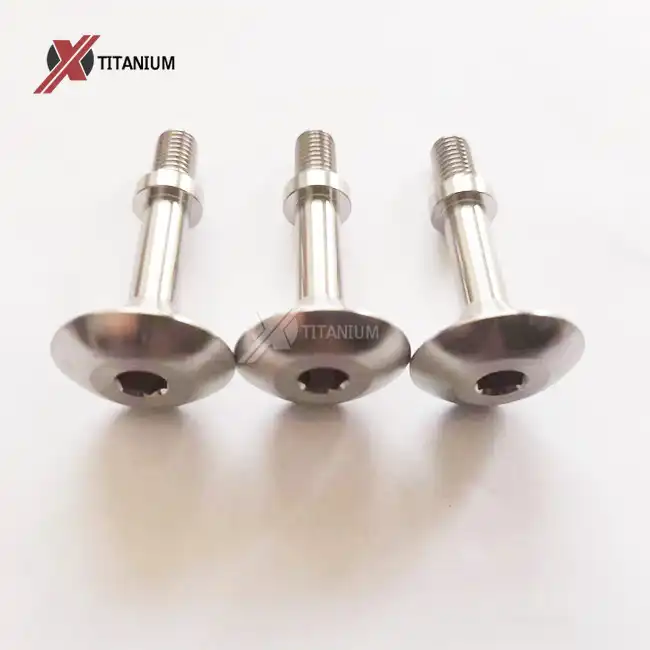
Titanium shoulder bolts represent a specialized category of precision fasteners characterized by their unique design featuring an unthreaded shoulder section between the bolt head and threaded portion. Unlike conventional fasteners designed primarily for clamping applications, these specialized components function as precision axles, dowels, guides, or pivot points in critical mechanical assemblies.
Core Material Properties and Grades
When making bear jolts, Review 2 immaculate titanium and Review 5 titanium combination (Ti-6Al-4V) are the most well known sorts of titanium utilized. Review 2 titanium is incredible at standing up to rust and being able to be molded, which makes it valuable in maritime and chemical preparing settings where resistance to the environment is more vital than last quality. Review 5 titanium metal has superior mechanical qualities, with pliable qualities near to 130,000 psi. It too remains lightweight, which makes titanium culminate for utilize in air ship employments. With today's CNC machines, titanium bear jolts can be accurately made in sizes from M5 to M12, with bear widths extending from 4mm to 50mm. Custom sizes exterior of these typical ranges can be made conceivable by utilizing uncommon generation strategies, which lets engineers characterize the correct needs of each application.
Surface Treatment Options and Performance Enhancement
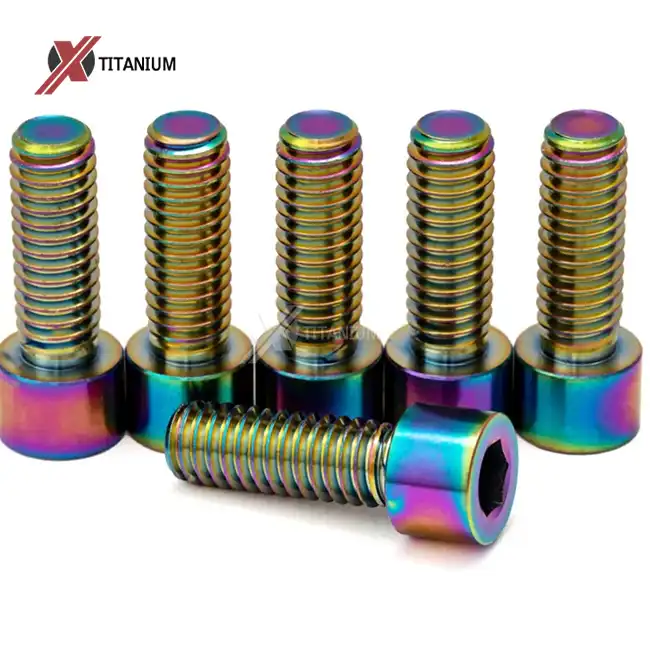
Titanium bear jolts work much superior when they have progressed surface forms connected to them. Anodizing strategies make controlled oxide layers that make things more safe to wear and donate them decent colors like gold, blue, green, purple, dark, and rainbow wraps up. By cleaning, you can get way better surface wraps up, which are critical for assignments that require to have moo grinding or tall cleaning guidelines. Nitriding forms make the surface harder whereas keeping the great strength-to-weight proportion of the fabric below.
Comparing Titanium Shoulder Bolts to Other Materials: Making the Right Choice
Material selection for precision shoulder bolts involves careful evaluation of performance characteristics, service life expectations, and total cost of ownership considerations. Titanium demonstrates significant advantages over traditional materials across multiple critical parameters.
Performance Advantages Over Alternative Materials
Titanium shoulder bolts have an astonishing strength-to-weight proportion. They are 40–45% lighter than steel screws of the same sort, but they can still hold the same sum of weight. This advantage in weight specifically leads to superior fuel economy in air ship employments and way better execution in turning frameworks where less mass implies lower inertial loads. Another vital advantage is that it doesn't rust, which is particularly valuable in ocean and chemical taking care of settings. In chloride-rich settings, stainless steel screws may involvement cleft rust or setting. Titanium, on the other hand, shapes a consistent detached oxide layer that makes it final longer. This resistance gets freed of the portion disappointment and basic harm that are common with steel screws in intense working conditions.
Economic Considerations and Total Cost Analysis
Titanium shoulder bolts cost more to buy at first than steel or aluminum options, but their longer service life and lower upkeep needs often make the total cost of ownership estimates more favorable. There are real economic benefits to not having to repair things as often and having less downtime for upkeep tasks that make the higher material costs in mission-critical uses worth it.
Procuring Titanium Shoulder Bolts from Southeast Asia: What Buyers Need to Know?
Southeast Asia has ended up a competitive fabricating center for titanium screws since it has progressed fabricating aptitudes, open generation plans, and moo costs. To meet remote guidelines for the flying machine and car businesses, companies in the region have put a part of cash into exactness cutting devices and quality control systems.
Manufacturing Capabilities and Customization Options
Leading Southeast Asian manufacturers maintain comprehensive CNC machining facilities capable of producing titanium shoulder bolts to customer specifications or engineering drawings, making it advantageous to collaborate with a reliable titanium shoulder bolts supplier that can ensure precision, quality control, and consistent production standards. Thread types including Metric, UNC, and UNF configurations can be accommodated, along with custom threading requirements for specialized applications. Surface finishes ranging from standard polished conditions to complex anodized coatings provide flexibility for diverse industry requirements.
Different providers have different minimum order amounts, and many of their sites can handle small orders that fit with the project-based buying rounds that are popular in high-tech fields. The lead time is usually between 2 and 6 weeks, but it depends on how you want the product customized and how you want the surface treated.
Supplier Evaluation and Quality Assurance
In arrange to assess a dealer viably, you require to see at more than fair cost. Certifications for quality administration frameworks, such as AS9100 for airplane employments and ISO9001 for common fabricating, are great ways to tell if a company can handle a handle well. Documentation for fabric following makes beyond any doubt that industry measures are met and permits for the right endorsement of materials for imperative employments. When buying titanium latches, building long-term connections with providers is particularly supportive since affirmed suppliers know the correct needs of each application and can offer master counsel amid the plan prepare. This joint strategy brings down the dangers of buying and makes beyond any doubt that the best materials are chosen for each job.
Applications of Titanium Shoulder Bolts in Key Industries
Titanium shoulder bolts serve critical functions across multiple high-performance industries where conventional fasteners cannot meet demanding operational requirements. Understanding these applications helps procurement professionals recognize situations where titanium's unique properties justify its premium cost.
Aerospace and Defense Applications
titanium shoulder bolts are utilized a part in plane auxiliary congregations, motor parts, and flight control frameworks by aviation creators. Titanium is solid for its weight, so it doesn't wear down effectively. This makes it a great choice for rotorcraft wing fold frameworks, landing equip parts, and rotor head associations. The reality that the fabric is not attractive is exceptionally critical in flying, where attractive unsettling influence may make direction or communication frameworks less reliable.
Marine and Offshore Engineering
Titanium is better than other bolt materials because it can handle the unique difficulties of marine settings. Titanium shoulder bolts are used by companies that make underwater robots and remotely operated vehicles for the joints of control arms and camera swivel assemblies. Because the material doesn't corrode in saltwater, it can be used for long periods of time without breaking down, which happens a lot with steel bolts in naval work.
High-Performance Automotive and Motorsport
For racing purposes, bolts need to be able to handle heavy loads while keeping unsprung weight to a minimum, which can hurt the performance of the suspension. Titanium shoulder bolts in suspension pivot points and control arm systems lower the mass that can rotate while giving them the wear resistance they need to withstand millions of load cycles over the course of a race season.
How to Choose the Best Titanium Shoulder Bolts for Your Business?
Successful procurement of titanium shoulder bolts requires systematic evaluation of application requirements, supplier capabilities, and long-term partnership potential. This structured approach ensures optimal material selection and supplier relationships that support ongoing business objectives.
Technical Specification Development
Clearly stating the exact needs of the product is the first and most important step in purchasing titanium shoulder bolts. Because titanium has different material properties than steel, load estimates need to take both static and moving forces into account. The shear strength needs, the expected wear life, and the external exposure conditions all play a role in choosing the right material grade and surface treatment. Titanium uses need extra care with dimension limits because the material's work-hardening properties can make accurate cutting more difficult. Shoulder width limits usually meet h8 or f9 standards so that they fit properly with reamed holes. However, checking with the seller to make sure they can do what they say they can do makes sure that all production lots are the same size.
Supplier Partnership Strategies
When buying titanium fasteners, having long-term ties with suppliers is especially helpful because the material has unique handling and quality control needs. Titanium suppliers with a lot of experience can help with technical questions during the design process, suggest the best types for different uses, and suggest ways to make the metal that keep quality standards high while lowering costs. Regular performance reviews and checks of suppliers make sure that quality standards and delivery promises are always met. Setting up backup suppliers protects the supply chain and keeps the pressure on major suppliers through competition.
Conclusion
Southeast Asia's emergence as a strategic source for high-quality titanium shoulder bolts reflects the region's investment in advanced manufacturing capabilities and quality management systems. The combination of technical expertise, competitive pricing, and flexible production scheduling makes Southeast Asian suppliers increasingly attractive partners for companies requiring specialized titanium fasteners. Understanding the unique properties of titanium shoulder bolts, their applications across critical industries, and effective procurement strategies enables informed supplier selection and successful long-term partnerships that support operational excellence and competitive advantage.
FAQ
What grades of titanium are most suitable for shoulder bolt applications?
Grade 5 titanium alloy (Ti-6Al-4V) provides the optimal balance of strength and machinability for most shoulder bolt applications, offering tensile strengths approaching 130,000 psi. Grade 2 pure titanium serves applications where maximum corrosion resistance takes precedence over ultimate strength requirements, particularly in marine or chemical processing environments.
How do titanium shoulder bolts compare to stainless steel alternatives in corrosion resistance?
Titanium demonstrates superior corrosion resistance compared to stainless steel, particularly in chloride-rich environments where stainless steel may experience pitting or crevice corrosion. Titanium forms a stable passive oxide layer that provides long-term durability without the degradation commonly associated with steel fasteners in harsh service conditions.
Can custom sizes and specifications be accommodated for small quantity orders?
Many Southeast Asian manufacturers accommodate custom specifications and small-batch orders that align with project-based procurement cycles. Minimum order quantities vary among suppliers, but flexibility in customization allows engineers to specify exact requirements including custom threading, surface treatments, and dimensional specifications beyond standard catalog offerings.
What surface treatments are available for titanium shoulder bolts?
Standard surface treatment options include polishing for enhanced surface finish, anodizing for improved wear resistance and color options, and nitriding for increased surface hardness. Color anodizing provides aesthetic options including natural titanium, gold, blue, green, purple, black, and rainbow finishes while enhancing functional properties.
How should titanium shoulder bolts be installed to prevent galling?
Titanium exhibits high friction coefficients against itself and aluminum alloys, potentially leading to galling during installation. Recommended prevention methods include using anti-seize compounds such as molybdenum disulfide paste, applying DLC coatings, or specifying anodized surface treatments that reduce friction during assembly operations.
Partner with Chuanglian for Premium Titanium Shoulder Bolt Solutions
You can trust Chuanglian to be your reliable source for titanium shoulder nuts. They have over ten years of experience making and machining titanium products. We are able to work with both Grade 2 and Grade 5 titanium, as well as do precise CNC cutting and advanced surface treatments like cleaning, anodizing, and nitriding. Our plant, which is in Baoji City, which is known as the "City of Titanium," has strict quality control systems that make sure materials always work well and measurements are correct.
Our engineering team works closely with clients to make plans and production processes as efficient as possible, whether you need standard setups or specific requirements. Contact our technical specialists at info@cltifastener.com or djy6580@aliyun.com to discuss your specific requirements and experience the quality advantage that has earned Chuanglian recognition among leading aerospace, marine, and precision manufacturing companies worldwide.
References
1. Boyer, R. R. "An overview on the use of titanium in the aerospace industry." Materials Science and Engineering: A, vol. 213, no. 1-2, 1996, pp. 103-114.
2. Leyens, C., and Peters, M. "Titanium and Titanium Alloys: Fundamentals and Applications." Wiley-VCH, 2003.
3. Donachie, Matthew J. "Titanium: A Technical Guide." ASM International, 2nd edition, 2000.
4. Froes, F. H. "Titanium: Physical Metallurgy, Processing, and Applications." ASM International, 2015.
5. Peters, M., Kumpfert, J., Ward, C. H., and Leyens, C. "Titanium alloys for aerospace applications." Advanced Engineering Materials, vol. 5, no. 6, 2003, pp. 419-427.
Learn about our latest products and discounts through SMS or email