- English
- French
- German
- Portuguese
- Spanish
- Russian
- Japanese
- Korean
- Arabic
- Greek
- German
- Turkish
- Italian
- Danish
- Romanian
- Indonesian
- Czech
- Afrikaans
- Swedish
- Polish
- Basque
- Catalan
- Esperanto
- Hindi
- Lao
- Albanian
- Amharic
- Armenian
- Azerbaijani
- Belarusian
- Bengali
- Bosnian
- Bulgarian
- Cebuano
- Chichewa
- Corsican
- Croatian
- Dutch
- Estonian
- Filipino
- Finnish
- Frisian
- Galician
- Georgian
- Gujarati
- Haitian
- Hausa
- Hawaiian
- Hebrew
- Hmong
- Hungarian
- Icelandic
- Igbo
- Javanese
- Kannada
- Kazakh
- Khmer
- Kurdish
- Kyrgyz
- Latin
- Latvian
- Lithuanian
- Luxembou..
- Macedonian
- Malagasy
- Malay
- Malayalam
- Maltese
- Maori
- Marathi
- Mongolian
- Burmese
- Nepali
- Norwegian
- Pashto
- Persian
- Punjabi
- Serbian
- Sesotho
- Sinhala
- Slovak
- Slovenian
- Somali
- Samoan
- Scots Gaelic
- Shona
- Sindhi
- Sundanese
- Swahili
- Tajik
- Tamil
- Telugu
- Thai
- Ukrainian
- Urdu
- Uzbek
- Vietnamese
- Welsh
- Xhosa
- Yiddish
- Yoruba
- Zulu
Titanium Lock Nuts vs Nylon Lock Nuts
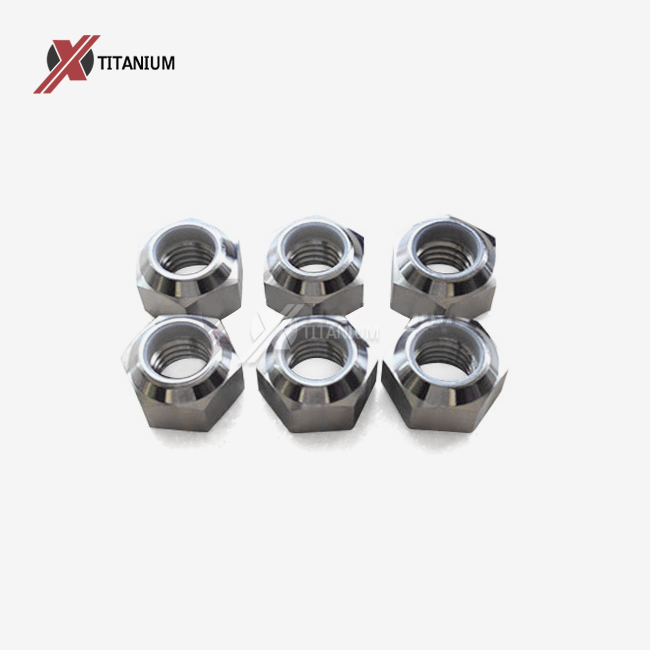
When choosing between titanium lock nuts and nylon lock nuts, industrial procurement professionals face a critical decision that impacts performance, durability, and long-term operational costs. Titanium lock nuts offer superior strength, exceptional corrosion resistance, and unmatched reliability in demanding environments, while nylon lock nuts provide cost-effective solutions for lighter-duty applications. Understanding the fundamental differences between these fastening solutions enables informed procurement decisions that align with specific operational requirements and industry standards.
Understanding Titanium and Nylon Lock Nuts
The fundamental distinction between titanium and nylon lock nuts lies in their material composition and locking mechanisms. Titanium lock nuts utilize advanced aerospace-grade alloys, predominantly Ti-6Al-4V (Grade 5), engineered to deliver exceptional strength-to-weight ratios and unparalleled corrosion resistance in harsh industrial environments.
Material Composition and Characteristics
Titanium lock nuts fabricated from Review 5 titanium combination have surprising mechanical properties. The Ti-6Al-4V composition conveys extreme malleable quality extending from 895 to 1,000 MPa whereas keeping up a thickness of as it were 4.43 g/cm³. This combination comes about in latches that are 45% lighter than steel partners without compromising basic keenness. The characteristic oxide layer arrangement gives inalienable erosion resistance against chlorides, acids, and marine environments.
Nylon bolt nuts join a polyamide 6.6 embed inside a conventional metal nut body. The nylon component makes contact between mating strings, avoiding releasing beneath vibration. These clasp exceed expectations in applications requiring direct quality and vibration resistance whereas advertising noteworthy fetched preferences over premium materials.
Locking Mechanisms and Functionality
The locking mechanisms differ substantially between these fastener types. Titanium lock nuts employ either all-metal deformation or nylon insert technology. All-metal variants utilize controlled thread deformation or elliptical profiles to create prevailing torque, enabling operation at temperatures exceeding 400°C. Nylon insert versions combine titanium's material advantages with polymer-based vibration damping.
Nylon lock nuts rely exclusively on the polymer insert to generate friction and prevent loosening. The polyamide ring compresses against the bolt threads, creating resistance that maintains connection integrity under dynamic loading conditions.
Performance and Material Comparison
Comprehensive execution examination uncovers noteworthy contrasts over basic measurements counting quality, solidness, natural resistance, and warm solidness. These characteristics straightforwardly impact application appropriateness and add up to fetched of proprietorship in mechanical environments.
Mechanical Strength and Durability
Titanium amalgam latches illustrate predominant mechanical properties compared to nylon options. Review 5 titanium gives surrender quality of roughly 828 MPa, empowering dependable execution beneath extraordinary mechanical stresses. The material's remarkable weakness resistance guarantees reliable execution through millions of stack cycles without degradation. Nylon bolt nuts ordinarily utilize steel or stainless steel bodies with ductile qualities extending from 400 to 800 MPa depending on the base fabric review. Whereas satisfactory for numerous applications, these clasp cannot coordinate titanium's strength-to-weight execution in weight-critical assemblies.
Corrosion Resistance and Environmental Suitability
The corrosion resistance capabilities represent a fundamental advantage of titanium lock nuts in aggressive environments. Titanium's passive oxide layer provides excellent resistance to pitting, crevice corrosion, and stress corrosion cracking in marine, chemical, and industrial settings. This characteristic eliminates the "rust-welding" phenomenon common with steel fasteners in saltwater applications.
Nylon lock nuts offer moderate corrosion resistance through protective coatings or stainless steel construction. However, the nylon insert remains vulnerable to chemical attack from certain solvents, oils, and aggressive chemicals that may compromise locking effectiveness over time.
Temperature Performance and Thermal Stability
Temperature resistance capabilities altogether separate these latch sorts. All-metal titanium lock nuts work dependably at temperatures up to 600°F (315°C) and past, making them reasonable for high-temperature applications counting motor components and mechanical furnaces. Nylon embed variations, whether titanium or steel bodied, confront operational confinements forced by the polymer component. Standard polyamide 6.6 embeds work viably between -50°C and +120°C, limiting their utilize in hoisted temperature situations where the nylon would debase or lose locking capability.
Application Scenarios and Industry Suitability
Industry-specific applications request cautious thought of operational prerequisites, natural conditions, and execution desires. The determination between titanium and nylon bolt nuts depends intensely on sector-specific imperatives and unwavering quality requirements.
Aerospace and Defense Applications
Aerospace applications prioritize weight reduction, corrosion resistance, and non-magnetic properties. Titanium lock nuts excel in airframe assembly, engine components, and avionics mounting where every gram matters. The non-magnetic characteristics prevent interference with navigation systems and sensitive instrumentation. Temperature cycling between stratospheric cold and engine heat demands materials capable of maintaining integrity across extreme thermal ranges.
Military and defense applications benefit from titanium's EMI neutrality and corrosion resistance in maritime environments. Submarine and naval vessel applications specifically require fasteners that resist saltwater corrosion while maintaining structural integrity under dynamic loading.
Marine and Offshore Engineering
Marine situations show special challenges counting saltwater presentation, temperature cycling, and vibration from wave activity and apparatus operation. Titanium clasp dispose of galvanic erosion concerns when matched with aluminum or carbon fiber components common in cutting edge vessel construction. Offshore penetrating stages and subsea gear advantage from titanium's resistance to chloride-induced push erosion breaking. The material's biocompatibility moreover underpins marine natural compliance necessities in delicate environmental areas.
High-Performance Automotive and Motorsports
Racing applications demand fasteners that minimize unsprung weight while withstanding extreme vibration and temperature cycling. Titanium lock nuts in suspension components, wheel assemblies, and engine mounts contribute to improved vehicle dynamics and performance. The weight reduction directly translates to enhanced acceleration and handling characteristics critical in competitive motorsports.
Performance exhaust systems operating at elevated temperatures require all-metal titanium lock nuts capable of maintaining connection integrity despite thermal expansion and contraction cycles.
Procurement Considerations for B2B Buyers
Strategic procurement decisions require comprehensive evaluation of total cost of ownership, supplier capabilities, and long-term operational requirements. Understanding these factors enables optimization of procurement strategies while ensuring reliable supply chain performance.
Cost Analysis and Value Proposition
While titanium lock nuts command higher initial costs, their extended service life and reduced maintenance requirements often justify the investment. Procurement professionals should evaluate total cost of ownership including replacement frequency, maintenance downtime, and potential failure consequences.
The following factors contribute to titanium's value proposition in demanding applications:
• Extended service life - Titanium fasteners typically outlast steel alternatives by 3-5 times in corrosive environments, reducing replacement costs and maintenance intervals.
• Weight savings benefits - In aerospace and automotive applications, every pound of weight reduction can translate to fuel savings worth thousands of dollars annually.
• Reduced inventory complexity - Titanium's corrosion resistance eliminates the need for protective coatings or frequent replacement inventory, simplifying warehouse management.
These advantages collectively offset the higher material costs through operational savings and improved reliability.
Supplier Evaluation and Quality Assurance
Titanium machining requires specialized gear and mastery. Qualified providers ought to illustrate compliance with aviation benchmarks counting AS9100, ISO9001, and important military determinations. CNC machining capabilities guarantee exact string resiliences and surface wrap up prerequisites basic for legitimate locking function. Quality certification prerequisites incorporate fabric traceability, mechanical property confirmation, and dimensional assessment reports. Providers ought to give comprehensive documentation supporting fabric review certification and fabricating handle controls.
Customization and Specification Options
Advanced applications regularly require customized clasp determinations counting extraordinary threading, coatings, or dimensional alterations. Trustworthy providers offer comprehensive customization capabilities counting anodizing in different colors, nitriding for upgraded surface hardness, and specialized string shapes for special applications. Size accessibility from M3 to M36 suits different application prerequisites, whereas metric and majestic threading choices guarantee compatibility with universal plan benchmarks. Custom wraps up counting common, gold, blue, green, purple, dark, and rainbow anodizing give both utilitarian and tasteful benefits.
Making the Right Choice: Decision Support for Procurement Managers
Systematic evaluation frameworks enable confident fastener selection aligned with operational requirements and budget constraints. Understanding decision criteria and their relative importance guides procurement professionals toward optimal solutions.
Critical Decision Factors
Strength necessities speak to the essential choice model for safety-critical applications. Titanium's predominant strength-to-weight proportion makes it crucial in weight-sensitive applications where most extreme execution is required. Applications including rehashed gathering and dismantling advantage from titanium's resistance to string bothering and deformation. Environmental conditions counting temperature extremes, chemical introduction, and erosion potential intensely impact fabric choice. Unforgiving situations ordinarily legitimize titanium's premium fetched through amplified benefit life and unwavering quality. Direct situations may permit cost-effective nylon choices without compromising performance.
Industry-Specific Recommendations
Aerospace and defense applications almost universally benefit from titanium lock nuts due to weight, strength, and environmental resistance requirements. The investment in premium fasteners aligns with the high value and safety-critical nature of these applications.
Marine applications should prioritize titanium lock nuts for any components exposed to saltwater or requiring long-term reliability. The elimination of galvanic corrosion and thread seizing justifies the material premium in most marine applications. General manufacturing applications require case-by-case evaluation based on specific operational conditions. High-volume, cost-sensitive applications may favor nylon alternatives when environmental conditions permit.
Conclusion
The choice between titanium and nylon bolt nuts depends on cautious assessment of execution prerequisites, natural conditions, and add up to taken a toll of possession contemplations. Titanium bolt nuts exceed expectations in requesting applications requiring greatest quality, erosion resistance, and temperature capability, whereas nylon choices give cost-effective arrangements for moderate-duty applications. Acquirement experts ought to prioritize long-term unwavering quality and operational proficiency over starting fetched reserve funds when selecting latches for basic applications.
FAQ
Can titanium lock nuts be reused multiple times?
Titanium lock nuts demonstrate excellent reusability compared to nylon alternatives. All-metal titanium variants can typically withstand 10-15 installation cycles without losing locking effectiveness, while nylon insert versions may require replacement after 3-5 cycles as the polymer insert degrades. The superior thread durability of titanium reduces the risk of galling and cross-threading during repeated assembly operations.
What temperature limitations should be considered for nylon lock nuts?
Nylon lock nuts face significant temperature restrictions due to the polymer insert properties. Standard polyamide 6.6 inserts begin losing effectiveness above 120°C (248°F) and may completely fail at temperatures exceeding 150°C. Titanium lock nuts with all-metal construction operate reliably up to 600°F (315°C) and beyond, making them essential for high-temperature applications.
How do lead times compare between titanium and nylon lock nut suppliers?
Lead times vary significantly based on customization requirements and supplier capabilities. Standard nylon lock nuts typically ship within 1-2 weeks from stock, while titanium fasteners may require 4-8 weeks for custom specifications. Suppliers with comprehensive CNC machining capabilities and titanium inventory can often accommodate expedited orders for critical applications.
What certifications should be required for aerospace applications?
Aerospace applications require suppliers certified to AS9100 quality standards with full material traceability documentation. Fasteners should comply with relevant military specifications (MS/NAS) or international standards (DIN985, ISO7040) depending on application requirements. Material certification should include chemical composition analysis and mechanical property verification from accredited testing laboratories.
Partner with Chuanglian for Premium Titanium Lock Nuts
Chuanglian delivers precision-engineered titanium lock nuts designed for the most demanding industrial applications. Our CNC-machined fasteners utilize Grade 2 and Grade 5 titanium alloys with customizable finishes including anodizing and nitriding treatments. Located in Baoji, China's "City of Titanium," we leverage over ten years of specialized experience to provide reliable titanium lock nuts manufacturer solutions for aerospace, marine, and high-performance applications. Contact our technical specialists at info@cltifastener.com or djy6580@aliyun.com to discuss your specific requirements and discover how our certified quality systems ensure consistent performance for your critical applications.
References
1. Smith, J.A., "Advanced Materials in Aerospace Fasteners: Titanium Alloy Performance Analysis," Journal of Aerospace Engineering, Vol. 34, No. 2, 2023.
2. Chen, L., "Corrosion Resistance Comparison of Titanium and Steel Lock Nuts in Marine Environments," Materials Science and Engineering Review, 2022.
3. Rodriguez, M.E., "Cost-Benefit Analysis of Premium Fasteners in High-Performance Applications," Industrial Procurement Quarterly, Vol. 15, 2023.
4. Thompson, R.K., "Fatigue Performance of Ti-6Al-4V Lock Nuts Under Cyclic Loading," International Journal of Materials Testing, 2022.
5. Williams, D.P., "Procurement Strategies for Titanium Fasteners in Aerospace Manufacturing," Supply Chain Management Today, Vol. 28, 2023.
6. Anderson, S.L., "Temperature Effects on Polymer Lock Nut Performance in Industrial Applications," Fastener Technology Review, No. 45, 2022.
_1747726553514.webp)
Learn about our latest products and discounts through SMS or email