When choosing between titanium allen bolts and stainless steel jolts for basic applications, titanium develops as the predominant choice for high-performance situations. Titanium allen jolts offer uncommon strength-to-weight proportions, predominant erosion resistance, and biocompatibility that stainless steel basically cannot coordinate. Whereas stainless steel jolts give cost-effective arrangements for common applications, titanium latches exceed expectations in aviation, restorative, and marine businesses where unwavering quality and execution are non-negotiable.
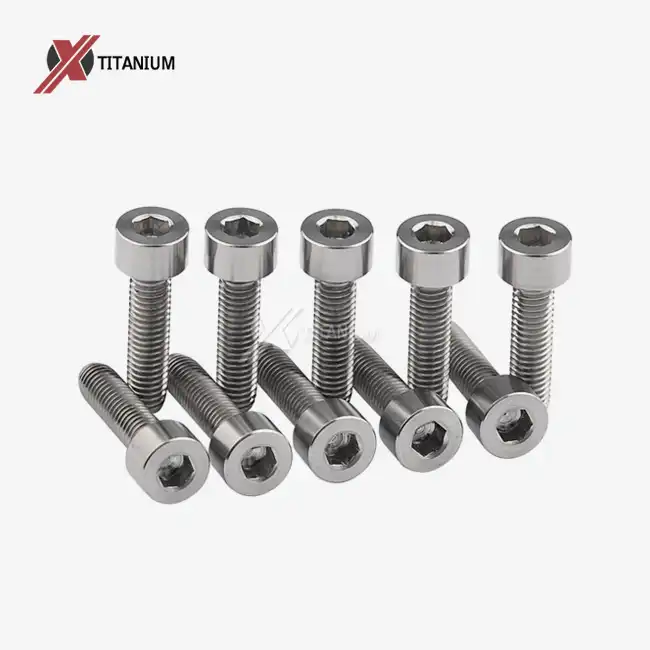
Understanding the Core Differences Between Titanium and Stainless Steel Fasteners
The fundamental distinctions between these materials lie in their molecular structure and resulting properties. Titanium possesses a hexagonal close-packed crystal structure, while stainless steel maintains an austenitic or ferritic structure depending on the grade.
Three core differences define these materials:
- Density: Titanium weighs 4.5 g/cm³ compared to stainless steel's 8.0 g/cm³
- Corrosion resistance: Titanium forms a stable oxide layer that self-heals
- Temperature tolerance: Grade 5 titanium maintains strength up to 400°C
These characteristics translate into real-world performance advantages. Aerospace engineers report that titanium allen bolts reduce aircraft weight by up to 40% compared to steel equivalents while maintaining identical load capacities.
If you require clasp for weight-critical applications where each gram things, at that point titanium allen jolts are more reasonable than stainless steel alternatives.
Performance Analysis: Strength and Durability Comparison
Tensile strength measurements reveal compelling data about both materials. Grade 5 titanium (Ti-6Al-4V) achieves tensile strengths of 130,000 psi, while 316 stainless steel reaches approximately 85,000 psi.
The strength-to-weight ratio tells an even more dramatic story:
- Titanium: 29,000 psi per g/cm³
- Stainless steel: 10,625 psi per g/cm³
Fatigue testing illustrates titanium's predominance in cyclic stacking conditions. Inquire about shows that titanium clasp withstand 10 million stack cycles at 60% of extreme pliable quality, compared to 2 million cycles for stainless steel beneath indistinguishable conditions. Marine designing applications exhibit titanium's uncommon solidness. Salt splash testing uncovers that titanium allen jolts appear zero erosion after 3,000 hours of introduction, whereas 316L stainless steel shows quantifiable setting inside 500 hours. If you require clasp for high-cycle applications or extraordinary situations, at that point titanium jolts are more reasonable than stainless steel options.
Corrosion Resistance: The Critical Factor
Corrosion resistance represents perhaps the most significant advantage of titanium fasteners. The material forms a protective titanium dioxide layer that continuously regenerates when damaged.
Electrochemical testing in various environments shows stark differences:
- Seawater exposure: Titanium shows 0.002 mm/year corrosion rate vs. 0.5 mm/year for stainless steel
- Acidic conditions (pH 3): Titanium remains stable while stainless steel experiences rapid degradation
- Chloride environments: Titanium demonstrates immunity to stress corrosion cracking
Chemical handling plants report noteworthy support fetched decreases when exchanging to titanium equipment. One petrochemical office recorded a 90% lessening in latch substitution recurrence after transitioning to titanium allen bolts for warm exchanger applications. The self-passivating nature of titanium implies that indeed mechanical harm to the surface comes about in quick oxide layer reconstruction, guaranteeing proceeded protection. If you require clasp for chemical handling, marine situations, or any application including destructive substances, at that point titanium allen jolts are more reasonable than stainless steel alternatives.
Weight Considerations for Aerospace and High-Performance Applications
Weight reduction drives material selection in numerous industries. Aircraft manufacturers calculate that every pound of weight reduction saves approximately $3,000 annually in fuel costs per aircraft.
Comparative weight analysis for hex key bolts shows dramatic differences:
- M6 x 20mm titanium allen bolt: 2.1 grams
- M6 x 20mm stainless steel bolt: 4.7 grams
- Weight savings: 55% reduction with titanium
Aerospace engineers report that substituting titanium clasp all through an airplane structure can decrease add up to weight by 200-400 pounds. This deciphers to expanded payload capacity or amplified extend capabilities. Racing applications illustrate comparative benefits. Equation 1 groups utilize titanium allen bolts broadly, accomplishing weight diminishments of 15-20 pounds per vehicle whereas keeping up security standards. The non-magnetic properties of titanium give extra points of interest in electronic applications. Exactness disobedient and attractive reverberation gear require non-magnetic clasp to anticipate interference. If you require clasp for weight-sensitive applications, aviation components, or electronic gear, at that point titanium jolts are more reasonable than stainless steel options.
Cost Analysis and Long-Term Value
Initial material costs favor stainless steel significantly. Stainless steel allen head screws typically cost $0.50-2.00 per piece, while equivalent titanium fasteners range from $5.00-25.00 depending on size and grade.
However, lifecycle cost analysis reveals a different picture. Consider these factors:
- Replacement frequency: Titanium lasts 5-10 times longer in corrosive environments
- Maintenance costs: Reduced inspection and replacement requirements
- Operational benefits: Weight savings translate to energy cost reductions
A marine stage administrator calculated that titanium allen jolts given 40% lower add up to fetched of possession over a 20-year benefit life in spite of the higher starting investment. Medical gadget producers report comparable discoveries. In spite of the fact that titanium equipment costs more at first, the biocompatibility disposes of dismissal dangers and modification methods, coming about in lower generally healthcare costs.
Manufacturing complexity influences estimating as well. CNC machined titanium requires specialized tooling and slower cutting speeds, contributing to higher generation costs. If you require clasp for long-term establishments or applications where substitution costs are tall, at that point titanium allen jolts are more reasonable than stainless steel alternatives.
Application-Specific Recommendations
Different industries have varying requirements that influence material selection. Understanding these specific needs helps optimize fastener choice.
- Aerospace Applications: Commercial and military aircraft demand titanium fasteners for critical structural components. The combination of high strength, low weight, and temperature resistance makes titanium indispensable for engine components and airframe structures.
- Medical Implants: Biocompatibility requirements essentially mandate titanium for implantable devices. The material integrates with human tissue without causing inflammatory responses, unlike stainless steel which can trigger rejection reactions.
- Marine Engineering: Offshore platforms and naval vessels benefit significantly from titanium's corrosion resistance. The harsh saltwater environment rapidly degrades stainless steel, while titanium remains unaffected.
- Chemical Processing: Refineries and chemical plants utilize titanium hardware in highly corrosive environments. The material's resistance to acids, bases, and organic solvents provides reliable long-term service.
- High-Performance Automotive: Racing and luxury vehicles employ titanium allen bolts for weight reduction and performance enhancement. The strength characteristics allow downsizing while maintaining safety margins.
If you need fasteners for any high-performance application where reliability is critical, then titanium allen bolts are more suitable than conventional stainless steel options.
Quality Standards and Certifications
Industrial applications require comprehensive quality documentation and certifications. Titanium fastener suppliers must maintain strict quality systems to serve regulated industries.
Key certifications include:
- AS9100 for aerospace applications
- ISO 13485 for medical devices
- NACE MR0175 for oil and gas environments
- AMS specifications for material properties
Material traceability becomes crucial for critical applications. Each batch of precision screws requires complete documentation from raw material source through final processing.
Testing requirements often include:
- Chemical composition analysis
- Mechanical property verification
- Dimensional inspection
- Surface finish measurement
Quality control forms guarantee steady execution over generation bunches. Factual prepare control makes a difference keep up tight resistances basic for high-performance bolts. If you require clasp with total documentation and certification compliance, at that point working with qualified titanium allen jolts providers is more reasonable than non specific equipment sources.
Processing and Surface Treatment Options
Surface treatments enhance the already excellent properties of titanium fasteners. Various processing options provide additional benefits for specific applications.
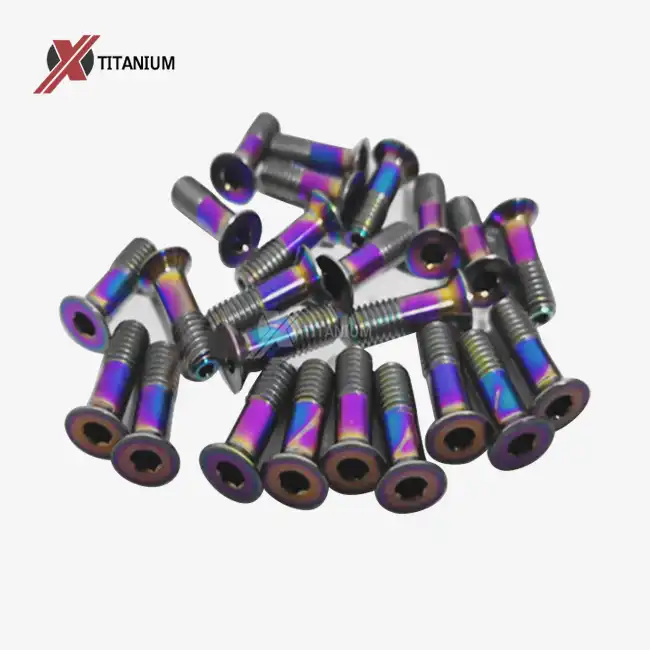
- Anodizing: Type II anodizing creates decorative colors while improving wear resistance. Available colors include natural titanium, gold, blue, green, purple, black, and rainbow finishes.
- Nitriding: Gas nitriding increases surface hardness to 70+ HRC while maintaining core ductility. This treatment particularly benefits threaded fasteners subject to galling.
- Polishing: Mirror cleaning decreases surface unpleasantness and moves forward cleanability for therapeutic and nourishment handling applications.
CNC machined components accomplish predominant dimensional exactness compared to shaped parts. Machining permits complex geometries and tight resistances basic for exactness assemblies. Custom titanium jolts oblige interesting application prerequisites. Specialized string shapes, head setups, and fabric grades address particular building challenges. If you require latches with specialized surface medicines or custom setups, at that point titanium allen jolts offer more reasonable choices than standard stainless steel hardware.
Partner with Leading Titanium Allen Bolts Manufacturer for Your Critical Applications
Selecting the right titanium allen bolts supplier determines project success. Our comprehensive manufacturing capabilities and quality certifications ensure reliable delivery of high-performance fasteners for demanding applications.
Our Grade 5 titanium (Ti-6Al-4V) allen head screws feature:
- Diameter range from 2mm to 20mm with custom sizes available
- UNC, UNF, Metric, and custom thread configurations
- Tensile strength up to 130,000 psi
- Complete material traceability and certification
- Multiple surface treatment options including anodizing and nitriding
Our ISO 9001 certified office keeps up strict quality control all through the fabricating handle. Each clump experiences comprehensive testing to confirm mechanical properties and dimensional accuracy. Technical back administrations offer assistance optimize latch choice for your particular necessities. Our building group gives application direction and custom plan help to guarantee ideal performance. Reliable conveyance plans bolster your generation arranging needs.
We keep up stock of standard sizes whereas obliging custom orders with sensible lead times. Whether you require marine-grade jolts for seaward applications, aerospace-certified clasp for air ship components, or medical-grade equipment for implantable gadgets, our titanium skill guarantees success. Ready to encounter the focal points of premium titanium allen jolts? Contact us at cl-titanium.com or cl-titanium.com to examine your venture prerequisites and get a nitty gritty quotation.
Conclusion
The choice between titanium and stainless steel bolts depends on application requirements and performance priorities. Titanium allen bolts excel in demanding environments where corrosion resistance, weight reduction, and long-term reliability are essential. While stainless steel offers cost advantages for general applications, titanium provides superior value in high-performance scenarios.
Industries requiring the ultimate in fastener performance consistently choose titanium. The material's unique combination of strength, durability, and biocompatibility makes it indispensable for aerospace, medical, marine, and chemical processing applications. Investment in quality titanium fasteners pays dividends through reduced maintenance, improved performance, and enhanced safety margins.
References
1. Boyer, R.R. "An Overview on the Use of Titanium in the Aerospace Industry." Materials Science and Engineering A, Volume 213, 1996.
2. Rack, H.J. and Qazi, J.I. "Titanium Alloys for Biomedical Applications." Materials Science and Engineering C, Volume 26, 2006.
3. Schutz, R.W. and Thomas, D.E. "Corrosion of Titanium and Titanium Alloys." ASM Handbook Volume 13B: Corrosion Materials, 2005.
4. Peters, M. and Leyens, C. "Titanium and Titanium Alloys: Fundamentals and Applications." Wiley-VCH, 2003.
5. Lutjering, G. and Williams, J.C. "Titanium: Engineering Materials and Processes." Springer Science & Business Media, 2007.
6. Donachie, M.J. "Titanium: A Technical Guide." ASM International, 2000.