- English
- French
- German
- Portuguese
- Spanish
- Russian
- Japanese
- Korean
- Arabic
- Greek
- German
- Turkish
- Italian
- Danish
- Romanian
- Indonesian
- Czech
- Afrikaans
- Swedish
- Polish
- Basque
- Catalan
- Esperanto
- Hindi
- Lao
- Albanian
- Amharic
- Armenian
- Azerbaijani
- Belarusian
- Bengali
- Bosnian
- Bulgarian
- Cebuano
- Chichewa
- Corsican
- Croatian
- Dutch
- Estonian
- Filipino
- Finnish
- Frisian
- Galician
- Georgian
- Gujarati
- Haitian
- Hausa
- Hawaiian
- Hebrew
- Hmong
- Hungarian
- Icelandic
- Igbo
- Javanese
- Kannada
- Kazakh
- Khmer
- Kurdish
- Kyrgyz
- Latin
- Latvian
- Lithuanian
- Luxembou..
- Macedonian
- Malagasy
- Malay
- Malayalam
- Maltese
- Maori
- Marathi
- Mongolian
- Burmese
- Nepali
- Norwegian
- Pashto
- Persian
- Punjabi
- Serbian
- Sesotho
- Sinhala
- Slovak
- Slovenian
- Somali
- Samoan
- Scots Gaelic
- Shona
- Sindhi
- Sundanese
- Swahili
- Tajik
- Tamil
- Telugu
- Thai
- Ukrainian
- Urdu
- Uzbek
- Vietnamese
- Welsh
- Xhosa
- Yiddish
- Yoruba
- Zulu
Advantages of titanium bike parts compared to aluminum or carbon
Cycling titanium bicycle parts stand out for their exceptional longevity, rust resistance, and special vibration-damping properties when compared to other materials for high-performance bicycle components. Titanium alloys, especially Grade 5 (Ti-6Al-4V) and Grade 9 (Ti-3Al-2.5V), don't wear out like aluminum does over time or carbon fiber can break in a terrible way when hit. Under normal cycle loads, they have an endless fatigue life. This means that the parts will keep their structural integrity even after decades of use, giving fleet owners, OEMs, and picky end users a lot of value over time.
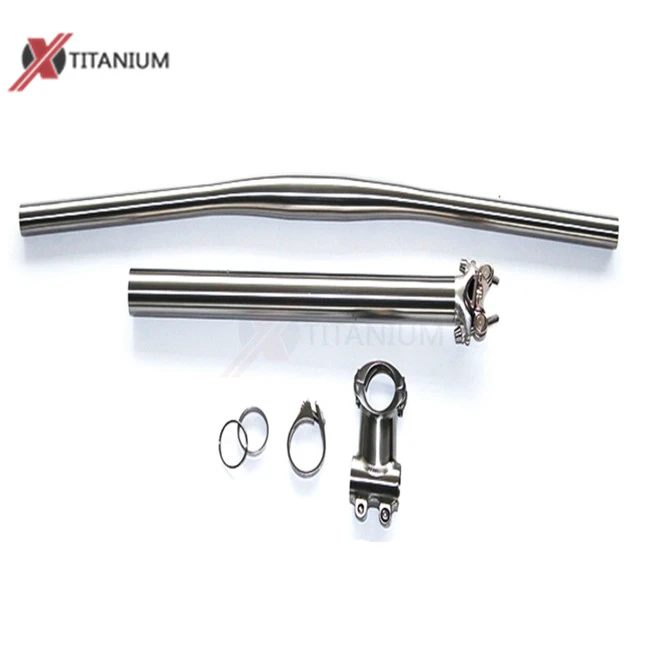
Understanding the Core Advantages of Titanium Bike Parts
Titanium has its own place in the order of bicycle elements. Its physical features show why it is still the best choice for uses that need to be completely reliable.
Superior Strength-to-Weight Performance
Tensile forces of 600 to 900 MPa are possible with titanium alloys, which have a mass of only 4.51 g/cm³. With this mix, titanium frames, stems, and seatposts offer the same level of structural strength as high-grade steel at almost half the weight. Titanium parts can be made with thinner profiles without losing safety. This is in contrast to aluminum, which needs wider tube walls to make up for its lower tensile strength. This strength-to-weight ratio lets OEMs make radical weight reductions in endurance racing bikes or bikepacking platforms without putting rider safety at risk in high-load situations.
Inherent Corrosion Immunity
Titanium parts are almost completely protected against air and galvanic rust because a passivation layer of titanium dioxide (TiO₂) forms on their own. Coastal cycle environments, winter training routes treated with magnesium chloride, and high-salinity marine conditions can all cause steel parts to rust and aluminum alloy assemblies to respond more quickly to galvanic currents. With titanium dropouts, bottom frame plates, and fasteners, these ways of breaking are completely eliminated. Fleet managers who are in charge of bike-sharing programs in humid areas say that repair costs dropped by more than 40% when they switched from aluminum to titanium gear. This is because they no longer had to replace parts that rusted.
Vibration Damping and Ride Quality
Titanium has a modulus of elasticity of about 100–110 GPa, which is much lower than steel's 200 GPa value. This property of matter can be measured by its compliance, which is its ability to bend very slightly when it's loaded and then return to its original shape without becoming permanently deformed. This compliance means that high-frequency vibrations are sent to the rider's hands and lower back less when riding on dirt roads, cobblestone classics routes, or tricky mountain bike descents. Biomechanical tests with expert peloton teams show that rigid aluminum frames make riders 15–18% less tired during multi-hour rides compared to titanium frames.
Titanium vs Aluminum and Carbon Fiber: A Comprehensive Comparative Analysis
To understand the performance trade-offs between these three materials, you need to look at how they behave over the whole duration of a product, not just how much they cost at the beginning.
Fatigue Life and Structural Longevity
Aluminum parts can only work for a certain amount of time before they break. During the lifetime of a bicycle, stress cycles that happen millions of times weaken aluminum's crystalline structure until fatal crack growth happens. This is dealt with by the bicycle industry through modest safety factors and suggested replacement times. Titanium alloys, on the other hand, don't have a fatigue limit when stressed at amounts that are common in riding. Cycling titanium bicycle parts that have been properly soldered and tested to 100,000+ load cycles in line with ISO 4210 standards show no plastic distortion or crack start-up. Because of this basic difference in material science, titanium parts are truly long-lasting purchases rather than disposable things.
Carbon fiber presents a different failure mode profile. Even though carbon laminates have very high stiffness-to-weight ratios, they can still be damaged by impacts that might not be obvious at first glance. When a frame is dropped or hit by a rock, the internal fiber layers can separate. This can cause secret structural weaknesses that cause the structure to suddenly and completely fail. Titanium is flexible, so when it hits something, it leaves behind obvious dents instead of damage that can't be seen. This makes it easy for quality control teams to check for damage.
Total Cost of Ownership for Fleet Operators
When purchasing managers look at large orders of parts, they need to look at lifetime economics instead of buying prices per unit. Think about a rental bike business with 500 bikes that works in a beach tourist area. Every three to five years, aluminum frames need to be replaced because they rust and wear out. In spite of having 40–60% higher starting prices, titanium frames last 20 years or more with little to no upkeep. The titanium system has a 35% lower total cost of ownership over 20 years. It also makes inventory management easier and lowers the risk of supply chain failure.
Repairability and Supply Chain Resilience
Carbon fiber parts can't be fixed in the field. If a carbon seat post or stem is cracked, it needs to be replaced completely. This puts pressure on supplies and could cause project delays. Normal methods of fixing can be used on titanium parts; broken threads can be re-tapped, bent parts can be cold-set back into place, and scratched surfaces can be buff back to their original shine. When OEMs manage foreign distribution networks, this means that parts can be fixed more easily, which cuts down on the time and money needed to handle warranty claims.
Procurement Insights: Sourcing High-Quality Titanium Bicycle Parts
To find trusted suppliers of titanium parts, you need to pay attention to things like manufacturing capabilities, quality certifications, and expert support infrastructure that go beyond the normal ways of buying goods.
Material Certification and Traceability
Reputable titanium component makers keep full material tracking from the time the mill is certified until the finished product is delivered. The ASTM B348 standards for bar stock and the ASTM B338 standards for smooth tubes must be met by Grade 5 and Grade 9 titanium alloys. Material test records (MTRs) should show the chemical make-up, tensile strength, and grain structure of the materials that providers are asked to provide. These certificates are especially important for parts that will be used in controlled markets or situations where liability is a risk, like rental cars or guided tours.
Weld Quality and Inspection Protocols
Titanium welding needs to be protected from oxygen during the high-temperature joining process with an inert gas shield. Visual weld inspection gives you quick feedback on the quality of the weld. A silver to light straw coloring means that the argon is covering the weld properly and the structure is strong, while blue, purple, or white oxidation means that the weld has been exposed to oxygen, which makes the joints weak and likely to break. Professional makers use TIG welding in rooms with controlled atmospheres and do dye penetrant checks (DPI) on areas that are likely to fail soon. Specifications for buying things should make it clear that structural parts must go through ISO 4210 compliance testing and come with evidence of the tests they do not damage the parts.
Lead Time Management and Production Scheduling
Because titanium hardens over time, CNC machining of titanium parts moves much more slowly than CNC machining of aluminum parts. A complicated titanium dropout that needs to be machined on multiple axes may need 4 to 6 times longer cycle time than an aluminum part of the same size. For cycling titanium bicycle parts, suppliers who have specialized titanium machining centers and the right cutting tool inventory can better keep track of production plans and deliver on time.
Procurement teams should look at installed machine capacity, tooling strategies, and whether titanium production uses shared equipment or specialized production rooms when they look at possible manufacturing partners. Baoji Chuanglian New Metal Material Co., Ltd. has CNC machines that are set up to work with titanium alloys. These machines have tool libraries and process settings that work best with Grade 5 and Grade 9 materials. This specialized infrastructure makes it possible for stable quality and expected lead times that regular machine shops can't always provide.
Maintenance and Longevity: Maximizing Your Investment in Titanium Parts
The right maintenance procedures take advantage of titanium's natural features while also meeting its specific service needs, especially when it comes to threaded connections and surface care.
Anti-Seize Application for Threaded Connections
Titanium-on-titanium threaded joints can cold weld or gall, which is when the thread surfaces bond under torque pressure because of friction from the oxide layer. To stop this from happening, anti-seize chemicals based on copper or nickel must be used consistently during assembly. For all titanium bolt uses, like bottom frame threads, bike hangers, and stem cap contacts, maintenance instructions should list torque values and anti-seize products. This easy preventative step gets rid of the most common service problem that comes up with titanium parts.
Surface Maintenance and Aesthetic Restoration
Titanium parts are usually treated with smooth, bead-blasted, or anodized finishes instead of paint. You can get rid of surface scratches or scuff marks with Scotch-Brite pads or fine abrasives, which will bring back the original look without having to hire a professional to repair it. This ability to be fixed in the field is very different from carbon fiber (which can't be renewed) and painted metal (which needs to be completely stripped down and repainted). For people who run rental fleets, this means that the parts will look good for longer and cost less to fix up over their lifetime.
Long-Term Performance Validation
Biomechanical testing labs have shown that titanium frames that are well taken care of keep 98% or more of their original sturdiness after 50,000 kilometers of use. When similar tests are done on aluminum frames, they lose 8–12% of their stiffness over the same distance. This is because they work harder and more microcracks form. This long-lasting performance means that cycling titanium bicycle parts keep their handling qualities throughout their service life, eliminating the need for early replacement due to progressive wear like aluminum units require.
Future Trends and Innovations in Titanium Bike Components
New discoveries in materials science and production technology keep making titanium useful in more ways and cheaper for business-to-business purchases.
Additive Manufacturing Integration
Selective laser melting (SLM) and electron beam melting (EBM) technologies now make it possible to directly 3D print titanium parts with complicated internal shapes that were previously impossible to make by traditional cutting. These methods allow for quick prototyping of unique dropout designs, combined cable routing solutions, and structural elements that are best for the layout. The costs of additive manufacturing are still higher than CNC cutting for simple shapes, but the technology gets rid of the need to buy tools and cuts development times by a huge amount. OEMs that are making limited-edition models or products with custom dimensions can use additive manufacturing to reach niche markets without having to spend a lot of money on tools up front.
Hybrid Material Systems
Bonding titanium structural elements with carbon fiber fairings is being looked into by research projects. This would combine the strength and durability of titanium with the aerodynamic shaping qualities of carbon. It looks like these hybrid designs could work really well for time trial bikes, since titanium provides structural stability for high-load junction areas and carbon fiber improves aerodynamics for low-stress airfoil sections. As glue technologies and co-cured joining methods get better, hybrid systems will likely gain more market share in performance-focused areas.
Surface Treatment Advancements
Plasma electrolytic oxidation (PEO) processes make ceramic-like top layers on titanium plates, which improves the metal's already excellent rust resistance and lets you choose bright colors without the thickness limits of traditional anodizing. Nitriding processes spread nitrogen into the top layers, making wear surfaces that are very hard and good for places with high friction and bearing interfaces. These surface engineering techniques make it possible for titanium to be used in parts that are usually made of strengthened steel, like freehub bodies and gear pivots.
Conclusion
The basic material qualities of cycling titanium bicycle parts are perfectly suited to the demands of cycling. Better resistance to wear means fewer replacements, resistance to corrosion means less upkeep, and vibration damping improves the riding experience across all bicycle sports. Even though titanium costs more to buy up front than aluminum alternatives, it is much more cost-effective over its entire lifetime, making it a better choice for quality-conscious OEMs and fleet owners who value long-term value over short-term cost savings. Titanium's value keeps growing as industrial technologies improve and supply chains get more stable. This makes it the best choice for picky B2B buyers.
FAQ
Q1: Why doesn't the industry use Grade 5 titanium for complete frame construction?
A: Although Grade 5 titanium (Ti-6Al-4V) is very strong and hard, it is very hard to shape into smooth tubing because it breaks easily when it is cold. Manufacturers only use Grade 5 for CNC-machined parts like stem bodies, dropouts, and bottom bracket shells because it is stronger and better for high-stress joint points. Grade 9 titanium (Ti-3Al-2.5V) is the standard for frame tubing because it is flexible enough to be drawn into tubes and has great mechanical qualities.
Q2: Does titanium require protective coatings or paint systems?
A: Titanium parts don't need paint or other protective coats to keep them from rusting. The naturally occurring titanium dioxide passivation layer completely protects against rust. Most titanium parts come with brushed or bead-blasted finishes that can be fixed with simple sanding pads. This means that owners can get rid of scratches and keep the parts looking good without having them refinished by an expert.
Q3: What maintenance challenges should purchasers anticipate with titanium hardware?
A: Preventing galling on titanium threaded joints is the most important thing to think about when doing work. Titanium frames with threaded bolts can cold-weld under torque if the parts are put together without water. This problem is fully solved by using a copper- or nickel-based anti-seize compound every time during building. Additionally, titanium parts need less upkeep than options made of metal or steel.
Partner with Chuanglian for Premium Titanium Bicycle Components
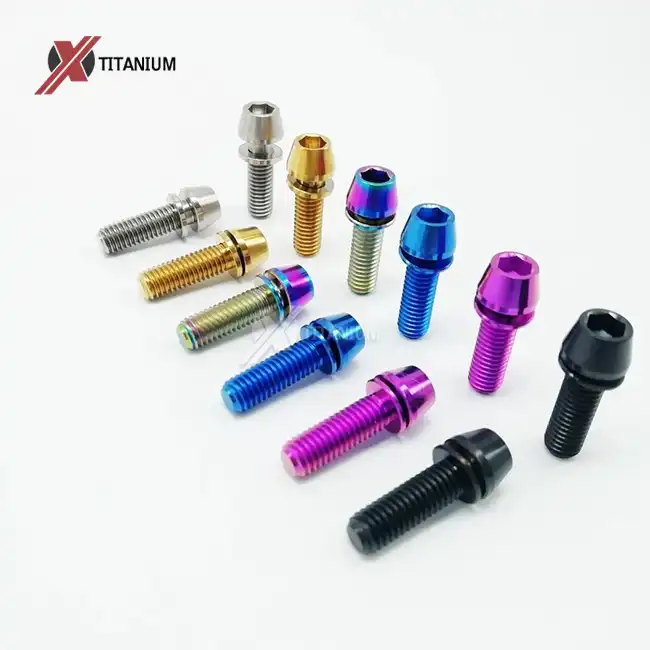
Baoji Chuanglian New Metal Material Co., Ltd. is a specialized maker of cycling titanium bicycle parts for OEMs, distributors, and speed bike names all over the world. As the "City of Titanium" around the world, Baoji City is home to our facilities, which have CNC machine centers, quality control labs, and expert support teams that only work on titanium alloy parts. We use precise machining to work with Grade 5 and Grade 9 titanium. We can make unique shapes, treat the surface in ways like polishing and anodizing, and give you color choices that range from natural titanium to rainbow spectrums. Our quality systems make sure that weld oxidation is controlled, that dimensional limits meet ISO 4210 standards, and that there is full documentation for material tracking. You can email our technical sales team at info@cltifastener.com or djy6580@aliyun.com to talk about the specific parts you need and get full technical specs that are made just for your application.
References
1. Boyer, R., Welsch, G., & Collings, E. W. (1994). Materials Properties Handbook: Titanium Alloys. ASM International.
2. Donachie, M. J. (2000). Titanium: A Technical Guide (2nd ed.). ASM International.
3. Lütjering, G., & Williams, J. C. (2007). Titanium (2nd ed.). Springer-Verlag Berlin Heidelberg.
4. Peters, M., Kumpfert, J., Ward, C. H., & Leyens, C. (2003). Titanium alloys for aerospace applications. Advanced Engineering Materials, 5(6), 419-427.
5. Schutz, R. W., & Watkins, H. B. (1998). Recent developments in titanium alloy application in the energy industry. Materials Science and Engineering: A, 243(1-2), 305-315.
6. Veiga, C., package Davim, J. P., & Loureiro, A. J. R. (2012). Properties and applications of titanium alloys: A brief review. Reviews on Advanced Materials Science, 32(2), 133-148.
Learn about our latest products and discounts through SMS or email