- English
- French
- German
- Portuguese
- Spanish
- Russian
- Japanese
- Korean
- Arabic
- Greek
- German
- Turkish
- Italian
- Danish
- Romanian
- Indonesian
- Czech
- Afrikaans
- Swedish
- Polish
- Basque
- Catalan
- Esperanto
- Hindi
- Lao
- Albanian
- Amharic
- Armenian
- Azerbaijani
- Belarusian
- Bengali
- Bosnian
- Bulgarian
- Cebuano
- Chichewa
- Corsican
- Croatian
- Dutch
- Estonian
- Filipino
- Finnish
- Frisian
- Galician
- Georgian
- Gujarati
- Haitian
- Hausa
- Hawaiian
- Hebrew
- Hmong
- Hungarian
- Icelandic
- Igbo
- Javanese
- Kannada
- Kazakh
- Khmer
- Kurdish
- Kyrgyz
- Latin
- Latvian
- Lithuanian
- Luxembou..
- Macedonian
- Malagasy
- Malay
- Malayalam
- Maltese
- Maori
- Marathi
- Mongolian
- Burmese
- Nepali
- Norwegian
- Pashto
- Persian
- Punjabi
- Serbian
- Sesotho
- Sinhala
- Slovak
- Slovenian
- Somali
- Samoan
- Scots Gaelic
- Shona
- Sindhi
- Sundanese
- Swahili
- Tajik
- Tamil
- Telugu
- Thai
- Ukrainian
- Urdu
- Uzbek
- Vietnamese
- Welsh
- Xhosa
- Yiddish
- Yoruba
- Zulu
Are GR5 Titanium Rotor Bolts Worth It for Bicycle Manufacturers?
Yes — and the numbers back it up. After reviewing specifications, field data, and supplier feedback, I can say that hot sale GR5 titanium rotor bolts for bicycle applications genuinely deliver on their promise. Made from Ti-6Al-4V alloy, these bolts reach 950 MPa tensile strength while weighing roughly 40% less than steel equivalents. For brands selling disc brake upgrade kits at $15–$30 per set, the margin potential is real. More than aesthetics, they solve the rust-seizure and thread-galling problems that cost service shops time and customers trust.
Understanding GR5 Titanium Rotor Bolts: Key Features and Benefits
Before committing to a new fastener material, it helps to understand exactly what separates GR5 from the alternatives — and why it keeps showing up on top-selling lists for disc brake components.
What Is GR5 Titanium (Ti-6Al-4V)?
GR5 titanium, formally designated Ti-6Al-4V, contains 90% titanium, 6% aluminum, and 4% vanadium. This composition gives it a density of 4.43 g/cm³ and a tensile strength of 950 MPa — nearly double that of 316 stainless steel at ~500 MPa. For a safety-critical component like a disc brake rotor bolt, that strength margin is not a luxury; it is a baseline requirement.
Standard Sizes and Thread Specifications
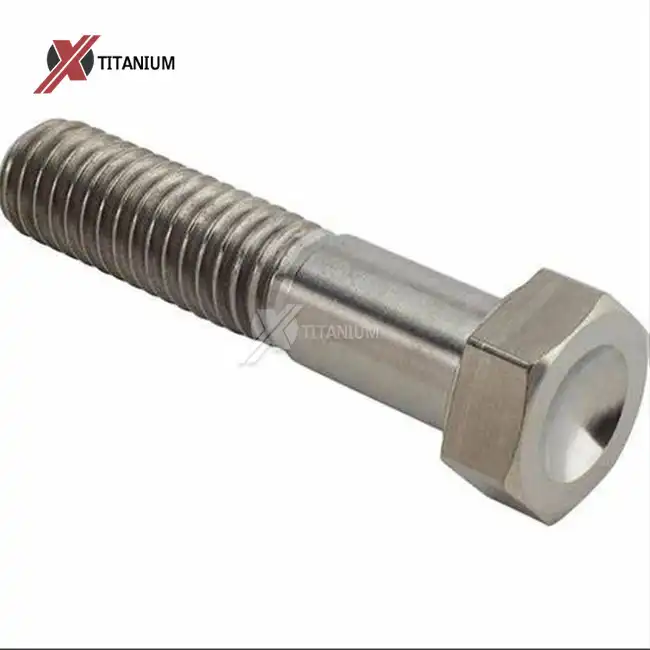
Chuanglian's GR5 rotor bolts are available in M5 (0.8 mm pitch) with lengths of 10 mm, 12 mm, and 15 mm, and M6 (1.0 mm pitch) with lengths of 15 mm, 18 mm, and 20 mm. Both Torx and Hex head types are offered. M5 x 0.8 mm aligns with the ISO 6-bolt standard used by Shimano and most aftermarket rotors, making these bolts broadly compatible across MTB, road, and e-bike platforms. Hot sale Gr5 titanium rotor bolts for bicycle are the SKU this specification supports.
Surface Treatment and Color Options
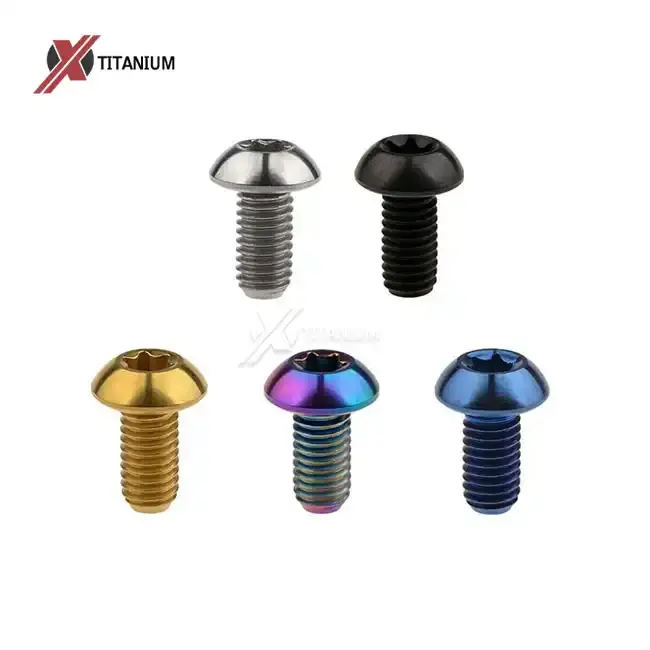
The bolts are CNC machined from high-purity GR5 bar stock, then finished through polishing, anodizing, or nitriding. Available colors include Ti natural, Gold, Blue, Green, Purple, Black, and Rainbow. The anodized and PVD finishes are not just cosmetic — they increase surface hardness, reduce galling risk during installation, and protect against galvanic corrosion when the titanium bolt seats against an aluminum hub flange.
Comparing GR5 Titanium Rotor Bolts with Alternative Materials
The type of material used affects not only the weight, but also how reliable it is over time, how much it costs to maintain, and how well-known the brand name is on the package. This is how GR5 compares to the two most common choices.
GR5 vs. Stainless Steel
Standard 304 or 316 grade stainless steel rotor nuts have a tensile strength of about 500 MPa and a good barrier to corrosion. They are, however, about 70% heavier per bolt than GR5. When riding near the coast or in the winter, steel bolts can seize up in aluminum hubs within one season, which makes replacing the rotors a dangerous process. GR5 titanium doesn't rust or break down easily in salt water or road chemicals, so the threads stay strong even after years of use.
GR5 vs. GR2 Titanium
The tensile strength of GR2 titanium is about 345 MPa, which is less than half of that of GR5. GR2 is good for fasteners that don't have to hold a lot of weight, but it's too soft for disk brake rotors, which have to withstand strong shear forces when stopping quickly. There is a known safety risk when using GR2 for rotor nuts; the difference in strength is not small.
ROI for Bicycle Brands and E-Commerce Sellers
The difference in price between a stainless steel set and a GR5 titanium set is real, as is the extra cost. The profit margin is high because each set costs $3 to $5 and sells for $15 to $30. Less warranty claims for failures caused by rust adds long-term value that doesn't always show up in a cost-per-unit comparison.
Installation and Maintenance Insights for GR5 Titanium Rotor Bolts
If you don't install it right, even the best materials won't work well. Both the part and the person are safe if the process is done right.
Torque Specifications and Tools
For GR5 titanium rotor bolts, the suggested fitting torque is 4–6 Nm, but not more than 6 Nm. A accurate torque wrench is necessary, not a nice-to-have. Titanium threads are carefully rolled to a class 6g standard, and over-torquing can strip the hub's aluminum threads, which will cost a lot more to fix than just replacing the bolts. Hot sale Gr5 titanium rotor bolts for bicycle depend on this installation discipline to deliver their durability claims.
Threadlocker and Anti-Galling Measures
Titanium can cold-weld to itself or to aluminum by rubbing them together dry. This is called galling. Putting on a medium-strength liquid threadlocker (like Loctite 243) before fitting is the right thing to do. This keeps the thread from coming loose during assembly, stops the titanium-aluminum interface from moving after curing, and lubricates the thread while it's being put together. The same two jobs are done by the nylok patches that come with factory kits.
Routine Maintenance Intervals
After the first installation, check the bolt torque after 50–100 km of riding. After that, check the torque every 500 km or whenever a rotor needs to be replaced. Titanium doesn't rust normally, but it's still a good idea to check the coating and thread contact every so often, especially on bikes that are used in mud or salty environments.
Procurement Strategies for Bicycle Manufacturers: Sourcing GR5 Titanium Rotor Bolts
Getting the right item is only half the battle. The other half is making a supplier system that you can count on.
Quality Verification Before Ordering
Before you place a large order, make sure you get proof of the spectral analysis to make sure the metal is real Ti-6Al-4V and not GR2 or a lower-grade version. Ask for torque-to-failure test results that show the bolt head can handle at least 2–3 times the stated installation force. Any trustworthy GR5 titanium rotor bolt provider should do a 100% thread gage check (Go/No-Go) as standard. This is something that can't be skipped when buying safety-critical brake fasteners.
MOQ, Pricing, and Sample Protocol
For small brand builders, a MOQ of 500 to 1,000 sets is usually enough. The normal buying process takes three to five weeks. It takes one to two weeks to confirm specifications and look over samples, one week to compare suppliers, and then one to two weeks to install samples and test them on the road before the first full order. Many-color mixed orders, like 200 sets of gold, 200 sets of blue, and 200 sets of black, are a useful way to see what the market wants without committing too much to one SKU.
OEM Partnerships and Packaging
A good GR5 titanium rotor bolt maker should offer custom kit assembly, which includes 6 bolts per set with nuts and retail-ready packaging for brands that need private-label packing. For e-commerce listings, where product photography is what drives sales, color uniformity across batches is a key quality point. Before making a long-term supply deal, make sure that the anodizing is the same from batch to batch. Hot sale Gr5 titanium rotor bolts for bicycle need this level of consistency to hold their listing quality over time.
Why Choose GR5 Titanium Rotor Bolts? Future Trends and Business Impact
It's not slowing down the move toward lightweight, corrosion-resistant parts for MTB, road, gravel, and e-bikes. Consumer demand data from sites like Amazon and the Weight Weenies forums regularly shows that titanium fastener kits do better than stainless steel options in terms of both the number of searches and the number of repeat purchases.
Sustainability and Brand Differentiation
Titanium has an incredibly long useful life, which means that less material is wasted over the course of a product's life. When a brand is trying to sell to high-end or environmentally conscious customers, saying that titanium parts last a long time is a real selling point that can be supported by facts.
Cost-Benefit Analysis Over Product Life
A set of stainless steel rotor bolts might be cheaper at first, but after one guarantee repair, the cheaper price is no longer there. The overall value is higher for a GR5 set that doesn't rust, seize, or deform over the life of the rotor. Lower return rates directly improve seller data and review scores for e-commerce sellers who sell a lot of items.
Emerging Material and Coating Technologies
The technology behind PVD coatings keeps making surfaces harder and colors last longer. Nitriding is becoming more popular as a surface treatment for situations where maximum galling protection is needed. Manufacturers can choose the right finish for each market segment and riding application by keeping up with these changes.
Conclusion
People who make, sell, or ride motorcycles should get GR5 titanium rotor nuts. The mix of 950 MPa tensile strength, 40% less weight than steel, and long-term resistance to corrosion solves the major problems that come up with maintaining disk brake fasteners. These bolts give small to medium-sized bicycle brands that sell online in competitive markets a real product edge and a strong profit profile. The end user and the brand's image are both protected by installing the bolts correctly at 4–6 Nm with threadlocker and getting them from a certified GR5 titanium disk brake bolt manufacturer. Hot sale Gr5 titanium rotor bolts for bicycle are the SKU this advice applies to most directly.
FAQ
What torque should I use for GR5 titanium rotor bolts?
Use a calibrated torque wrench to install at 4–6 Nm. Do not overtorque by more than 6 Nm, as this could damage the metal hub threads.
Do I need threadlocker with these bolts?
Yes. Before fitting, use a medium-strength threadlocker like Loctite 243. It keeps threads from sticking together while they're being put together and stops vibrations from stopping when it's dry.
Are these bolts compatible with Shimano rotors?
The ISO 6-bolt standard is used by Shimano and most aftermarket rotor brands. M5 x 0.8 mm GR5 nuts can be used with this standard. They're not made to work with Centerlock systems.
Why not use GR2 titanium instead?
Tensile strength for GR2 is only about 345 MPa, which is much too low for the shear loads found in disk brakes. For brake fasteners that need to be safe, GR5 at 950 MPa is the right choice.
Can I order custom colors and private-label packaging?
Yes, Chuanglian has many anodized color choices, such as Gold, Blue, Purple, Black, Green, and Rainbow. They also offer OEM kit assembly for making branded retail packaging.
Request a Quote from Chuanglian — GR5 Titanium Rotor Bolt Supplier
From Baoji, China's titanium production center, Chuanglian produces hot sale Gr5 titanium rotor bolts for bicycle brands and online stores. Our team has more than ten years of experience with CNC machining, strict batch-to-batch quality control, and OEM packaging support. We are ready to help you with your next product line. Email us at info@cltifastener.com or djy6580@aliyun.com to get samples and a cheap bulk price.
References
1. ASM Handbook, Volume 2: Properties and Selection — Nonferrous Alloys and Special-Purpose Materials. ASM International, 1990.
2. Titanium: A Technical Guide, 2nd ed. Matthew J. Donachie. ASM International, 2000.
3. Bicycle Science, 3rd ed. David Gordon Wilson. MIT Press, 2004.
4. Fatigue and Fracture of Engineering Materials and Structures — "Fatigue behavior of Ti-6Al-4V fasteners under cyclic shear loading." Wiley, 2018.
5. Journal of Materials Engineering and Performance — "Corrosion resistance of titanium alloys in chloride environments." Springer, 2021.
6. International Journal of Fatigue — "Thread form effects on the fatigue life of titanium alloy bolts." Elsevier, 2019.
Learn about our latest products and discounts through SMS or email