- English
- French
- German
- Portuguese
- Spanish
- Russian
- Japanese
- Korean
- Arabic
- Greek
- German
- Turkish
- Italian
- Danish
- Romanian
- Indonesian
- Czech
- Afrikaans
- Swedish
- Polish
- Basque
- Catalan
- Esperanto
- Hindi
- Lao
- Albanian
- Amharic
- Armenian
- Azerbaijani
- Belarusian
- Bengali
- Bosnian
- Bulgarian
- Cebuano
- Chichewa
- Corsican
- Croatian
- Dutch
- Estonian
- Filipino
- Finnish
- Frisian
- Galician
- Georgian
- Gujarati
- Haitian
- Hausa
- Hawaiian
- Hebrew
- Hmong
- Hungarian
- Icelandic
- Igbo
- Javanese
- Kannada
- Kazakh
- Khmer
- Kurdish
- Kyrgyz
- Latin
- Latvian
- Lithuanian
- Luxembou..
- Macedonian
- Malagasy
- Malay
- Malayalam
- Maltese
- Maori
- Marathi
- Mongolian
- Burmese
- Nepali
- Norwegian
- Pashto
- Persian
- Punjabi
- Serbian
- Sesotho
- Sinhala
- Slovak
- Slovenian
- Somali
- Samoan
- Scots Gaelic
- Shona
- Sindhi
- Sundanese
- Swahili
- Tajik
- Tamil
- Telugu
- Thai
- Ukrainian
- Urdu
- Uzbek
- Vietnamese
- Welsh
- Xhosa
- Yiddish
- Yoruba
- Zulu
Why Use Titanium Motorcycle Caliper Bolts in High-Heat Brakes?
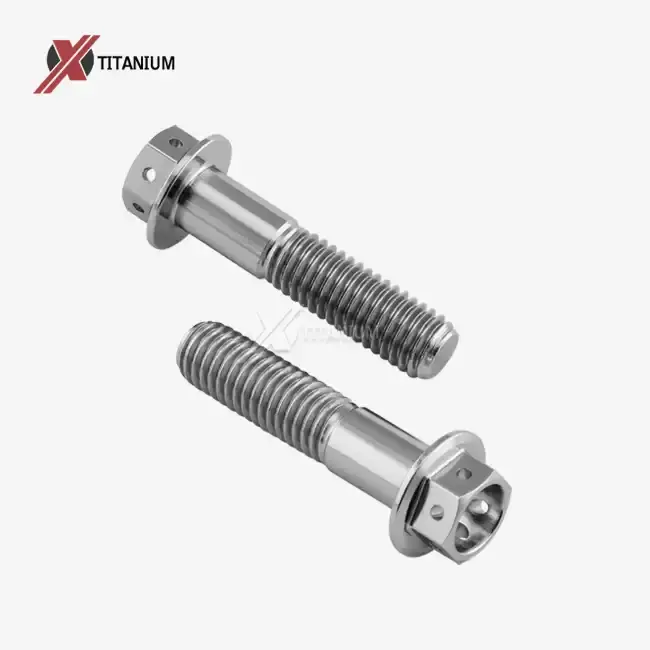
When brakes get hot — and on a sport bike or race machine, they get very hot — the fasteners holding your caliper in place face serious stress. Titanium motorcycle caliper bolts answer that challenge directly. Made from aerospace-grade Ti-6Al-4V (Grade 5) alloy, they deliver tensile strength above 950 MPa, weigh roughly 45% less than equivalent steel bolts, and resist corrosion without surface degradation. For brand owners building performance brake kits, these properties translate into safer products, stronger margins, and repeat customers who trust what they bolt onto their machines.
What Makes Caliper Bolts a High-Heat Problem?
The Temperature Reality Inside a Brake Caliper
When the wheels stop quickly on a track, the brakes can get more than 600 °C hot. The heat spreads to the caliper's body and the nuts that hold it in place. When standard carbon steel nuts are heated and cooled over and over, they lose their ability to hold things in place. This means that the brake caliper could move, which is something that no rider wants to happen.
How Steel and Aluminum Fail Under Heat?
Brake dust, water, and road salt that are heated over and over again make carbon steel nuts rust fast. Since aluminum nuts aren't very strong, they can't stop torque loads, even though they are small. Both of these things can get stuck inside metal wheel bolts through galvanic corrosion, which can damage the threads and make it hard to remove.
Why the Fastener Grade Matters?
Titanium comes in different forms. Pure Grade 2 titanium sold in stores has a tensile strength of only about 350 MPa, which is way too low for mounting calipers. Grade 5 (Ti-6Al-4V) nuts are just as strong as Grade 10.9 steel nuts, but they weigh about half as much. This difference is important for safety-critical brake hardware. Titanium motorcycle caliper bolts are the SKU where this grade distinction matters most.
The Advantages of Titanium Caliper Bolts for High-Heat Brakes
When picking the right bolt material for a high-performance brake system, it's not just about cutting down on weight. Since Grade 5 titanium is better than other options in these ways, it is the best choice.
- Sustained High-Temperature Strength: Ti-6Al-4V retains its mechanical properties across a wide temperature range. Unlike steel, which softens progressively above 300 °C, Grade 5 titanium maintains structural integrity well into conditions typical of aggressive street and track braking, reducing the risk of clamping force loss over time.
- Corrosion Immunity Without Coatings: Titanium forms a self-healing oxide layer that blocks rust, chloride attack, and acidic brake dust degradation. Steel bolts corrode within months in wet climates; titanium bolts removed after years of service still thread out cleanly, lowering maintenance costs and improving long-term safety.
- Genuine Weight Reduction: At a density of 4.43 g/cm³ versus 7.85 g/cm³ for steel, Grade 5 titanium caliper bolts are approximately 45% lighter. Reducing unsprung weight at the wheel end improves suspension response and cornering precision — factors that matter in both road riding and motorsport competition.
- Anti-Galling Surface Options: PVD anodizing or ceramic anti-seize application prevents the thread galling that plagues titanium installation in aluminum calipers. Chuanglian's bolts are available with anodized, polished, or nitrided finishes specifically to address this installation challenge.
Technical Specifications and Installation Guidelines
Bolt Grades, Thread Standards, and Finish Options
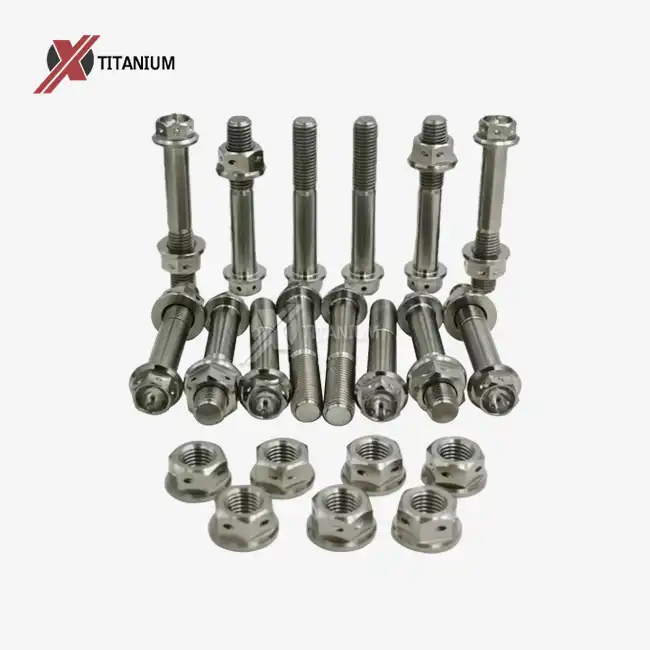
The caliper bolts that Chuanglian makes are made from ASTM B348 Grade 5 Ti-6Al-4V stock that has been CNC cut to the most common size for calipers, M10×1.25 (6g thread tolerance). The sizes can be changed to fit brake calipers from Brembo, Nissin, Tokico, and other companies. The outside can be polished, coated with colors like gold, blue, green, purple, black, and rainbow, or it can be made of natural titanium.
Torque Settings and Anti-Seize Requirements
Every time you fit something, you should use an anti-seize paste made of copper or clay. The friction coefficient goes down, which stops galling. For your type of brake, use the torque number that the OEM gives you. Do not use more power than what is suggested. Titanium doesn't act like steel does near its yield point, and it doesn't feel the same when it's over-tightened.
Maintenance and Inspection Intervals
Check the brake caliper bolts every 5,000 miles or before any track day. Inspect for thread distortion, signs of stress, and confirm the torque remains at spec. For safety-wire applications, bolts must be pre-drilled through the head — this creates a mechanical backup against loosening caused by high-RPM engine vibrations. Titanium motorcycle caliper bolts are the SKU where this inspection discipline matters most.
Comparing Titanium Caliper Bolts with Other Materials
Titanium vs. Stainless Steel
This metal is strong and doesn't rust, but it's 30–40% heavier and not as strong as titanium. It also gets stuck easily in metal caliper holes after being heated and cooled several times, which makes it hard to service. Titanium is a better material than stainless steel, which is used by brands that want to appeal to riders who care about speed and weight.
Titanium vs. Carbon Steel OEM Bolts
OEM carbon steel nuts are not expensive, but they rust fast, especially in the winter or on roads near the water. People are unhappy with the price of replacement parts, broken hardware, and the way rust looks on a performance bike. When you switch to titanium, you get fewer claims on your long-term warranty, and you can charge more for your products—a typical brand store markup for safety-critical screws is 5 to 8 times the cost.
Real-World Racing Validation
In MotoGP and World Superbike, the brakes always have bolts made of titanium. Teams say that the clamping force stayed the same during the whole race and that material wear did not cause any bolt service problems. If you want to sell titanium brake parts to race teams and track day riders, these results show that they work.
Procurement Insights: Buying Titanium Motorcycle Caliper Bolts
Verifying Supplier Quality Before You Order
For sure you know the Ti-6Al-4V chemistry, ask for XRF or spectrometry records of the mixing. So Grade 2 replacement is out of the question. To get UTS data above 950 MPa, you should get them from outside labs. If you sell safety-related brake parts, you need to keep track of each batch. This protects your brand if there is a quality problem after delivery. Titanium motorcycle caliper bolts are the SKU where this documentation discipline matters most.
Customization and OEM Fitment Planning
Caliper bolt sizes depend on the motorcycle's year, the type of mount, and the brand of caliper. You can trust a reliable titanium caliper bolt provider to make bolts that are the right length for the thread, the right thickness for the shank, the right style for the head, and the right finish. Before deciding on a large production run, at least 50 to 100 pieces can be used for sample runs to test the fit and pressure.
Lead Times and Bulk Order Logistics
Most of the time, it takes two to four weeks to make custom CNC titanium screws. Most of the time, safety parts get their first approval orders of 500 to 1,000 pieces, which are checked for all sizes. Quarterly restocking orders that don't keep too much capital on hand can help brands keep up with their inventory cycles.
Conclusion
Grade 5 titanium caliper bolts are great because they don't rust or break and can hold brake calipers in place even when they're very hot. These brakes are a good example of a product category that has strong technical credibility, high customer perceived value, and fair retail prices for people who own brands in the performance brake aftermarket. To make sure they are safe and work well for years, they need to be made with Grade 5 metal, rolled threads, a 6g tolerance, and the right anti-seize procedure. A trusted line of products starts with ones that come from a company that has clear quality controls and can keep track of each batch. Titanium motorcycle caliper bolts are the SKU where this combination of material spec and process control matters most.
FAQ
Can I use standard OEM torque settings with titanium caliper bolts?
Yes, but you should always use anti-seize paste made for copper or pottery first. This makes the threads less frictional, so the torque number is a better measure of the real force holding the screw in place. Do not use too much force. When you press on titanium, it does not feel the same as steel when it stretches near its release point.
Is Grade 2 titanium safe for caliper bolt applications?
Not at all. Titanium Grade 2 that is sold in stores has a tensile strength of only 350 MPa, which is a lot less than the shear loads that are created when you brake hard. Not any grade of steel (Ti-6Al-4V) at 950 MPa UTS will work for this very important safety purpose.
Will titanium bolts cause galvanic corrosion in aluminum calipers?
When you use anti-seize paste during assembly, it effectively insulates the contact interface. This stops both galvanic corrosion and thread seizing, which are common ways for stainless steel in aluminum mounts to fail.
Do titanium caliper bolts need safety wiring for track use?
Safety wiring is required by most track days and races. A lot of titanium caliper bolts already have holes in their heads that can be used for this. This adds another way to keep the bolt in place in case it comes loose because of movements.
Get a Custom Quote from Chuanglian — Your Trusted Titanium Motorcycle Caliper Bolts Manufacturer
From Chuanglian, you can get OEM-grade titanium brake bolts for motorcycles in Grade 5 Ti-6Al-4V. You can pick the aluminum finish, size, and thread type that works best for you. Each batch of the fine titanium fasteners we make goes through strict quality checks that have been in place for over ten years. Names from the US, UK, Italy, Japan, and Australia work with us. Need samples or prices on large orders? Ask for them today. We can be reached by email at djy6580@aliyun.com or info@cltifastener.com.
References
1. ASM Handbook, Volume 2: Properties and Selection — Nonferrous Alloys and Special-Purpose Materials. ASM International, 1990.
2. Donachie, M. J. Titanium: A Technical Guide. ASM International, 2000.
3. ASTM B348 Standard Specification for Titanium and Titanium Alloy Bars and Billets. ASTM International, 2021.
4. Budynas, R. G., & Nisbett, J. K. Shigley's Mechanical Engineering Design, 10th ed. McGraw-Hill, 2015.
5. Journal of Materials Engineering and Performance — "Fatigue Behavior of Ti-6Al-4V Fasteners Under Cyclic Loading Conditions." Springer, 2018.
6. Yoder, G. R., & Eylon, D. "Effect of Microstructure on Fatigue Crack Growth in Titanium Alloys." Metallurgical Transactions A, 1979.
Learn about our latest products and discounts through SMS or email