- English
- French
- German
- Portuguese
- Spanish
- Russian
- Japanese
- Korean
- Arabic
- Greek
- German
- Turkish
- Italian
- Danish
- Romanian
- Indonesian
- Czech
- Afrikaans
- Swedish
- Polish
- Basque
- Catalan
- Esperanto
- Hindi
- Lao
- Albanian
- Amharic
- Armenian
- Azerbaijani
- Belarusian
- Bengali
- Bosnian
- Bulgarian
- Cebuano
- Chichewa
- Corsican
- Croatian
- Dutch
- Estonian
- Filipino
- Finnish
- Frisian
- Galician
- Georgian
- Gujarati
- Haitian
- Hausa
- Hawaiian
- Hebrew
- Hmong
- Hungarian
- Icelandic
- Igbo
- Javanese
- Kannada
- Kazakh
- Khmer
- Kurdish
- Kyrgyz
- Latin
- Latvian
- Lithuanian
- Luxembou..
- Macedonian
- Malagasy
- Malay
- Malayalam
- Maltese
- Maori
- Marathi
- Mongolian
- Burmese
- Nepali
- Norwegian
- Pashto
- Persian
- Punjabi
- Serbian
- Sesotho
- Sinhala
- Slovak
- Slovenian
- Somali
- Samoan
- Scots Gaelic
- Shona
- Sindhi
- Sundanese
- Swahili
- Tajik
- Tamil
- Telugu
- Thai
- Ukrainian
- Urdu
- Uzbek
- Vietnamese
- Welsh
- Xhosa
- Yiddish
- Yoruba
- Zulu
Best Titanium Derailleur Jockey Wheel Bolts: A Buyer’s Guide
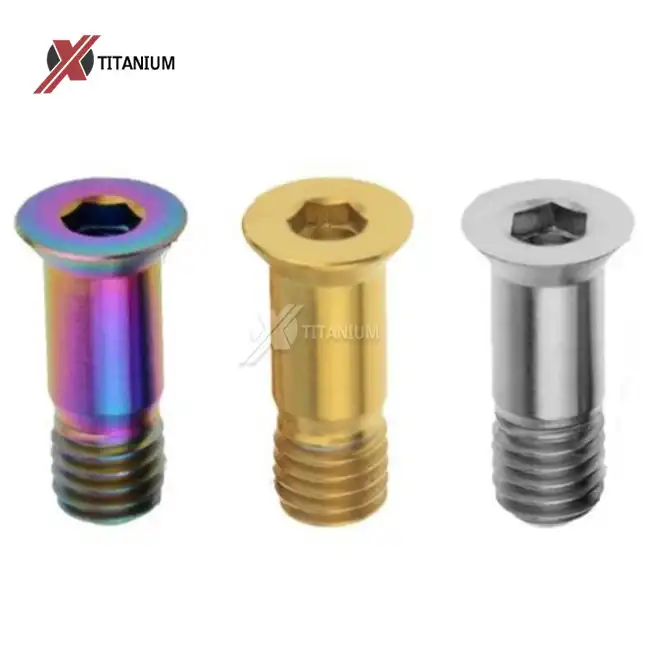
The finest titanium derailleur jockey wheel bolts are Grade 5 (Ti-6Al-4V) fasteners that match your derailleur in thread size, length and head type. Each weighs around 2 g and resists corrosion without loss of strength. Weight is important, but fit and proven quality are more important. In this post I explain how these bolts operate, what criteria to verify, how titanium stacks up against stainless steel and aluminium, and how to install and source them. If you manage a bike brand, an online store or a workshop you will discover a straightforward method to evaluate possibilities and prevent expensive sample errors.
What Are Titanium Derailleur Jockey Wheel Bolts?
Before you compare suppliers, it helps to know what the part does and why material choice matters.
The Job These Bolts Do Inside the Cage
Jockey wheel bolts (also known as pulley bolts) are used to fix the top guide pulley and the lower tension pulley within the cage of the rear derailleur. The chain goes around both wheels so each bolt is carrying the consistent stress of the chain and the persistent vibration. Also the bolt needs to let the pulley spin freely. It needs a length and a shoulder to work with the washers, bushings or bearings and cage plates. Too lengthy a bolt might restrict the cage. Too short a bolt leaves too little thread engaged. The part is little yet it’s exactly in the course of the drivetrain’s movement.
Why Titanium Suits This Small Part?
Titanium alloy has a density of 4.43 g/cm³ compared to the about 8 g/cm³ of ordinary stainless steel. So a titanium bolt of the same design is about 45% lighter. Ti-6Al-4V, or Titanium Grade 5, provides strength to that low weight. Titanium also produces a thin oxide coating that protects it from rain, road spray and perspiration. Our Gr5 bolts weigh roughly 2 g apiece and the alloy is resistant to acid and alkalis. Riders who count grams know that little saves may pile up across a whole build.
Where Buyers Use Them?
Titanium derailleur jockey wheel bolts are used by road riders pursuing light builds, mountain cyclists mired in mud and water, and gravel riders in mixed conditions. Brands also package them with bigger pulley wheels or ceramic bearing kits to ensure the fasteners complement the luxury feel of the improvement. Coloured pulley wheels may be matched to bolts at a store with anodised colours. Road bikes include Shimano, SRAM and Campagnolo, mountain bikes include Shimano, SRAM and Microshift, and gravel bikes include a host of manufacturers. Bolt details vary with generation therefore check for fit by sample or sketch.
Key Specifications to Check Before Buying
Once you know the part, check the numbers that decide whether a bolt fits and holds.
Grade and Mechanical Data
Start with the grade. Gr5 (Ti-6Al-4V) is the alloy to request for a load-bearing fastener. Commercially pure Grade 2 is softer, and its hex or Torx socket can round off under repeated torque. Our product data lists a tensile strength of 950 MPa, a yield strength of 880 MPa, a hardness of 36 HRC, and a density of 4.43 g/cm³. ASTM B348 covers titanium and titanium alloy bars and billets, including Grade 5. Ask any supplier for a material certificate that traces the bar stock, because numbers on a quote mean little without that paperwork.
Thread Size, Length, and Head Style
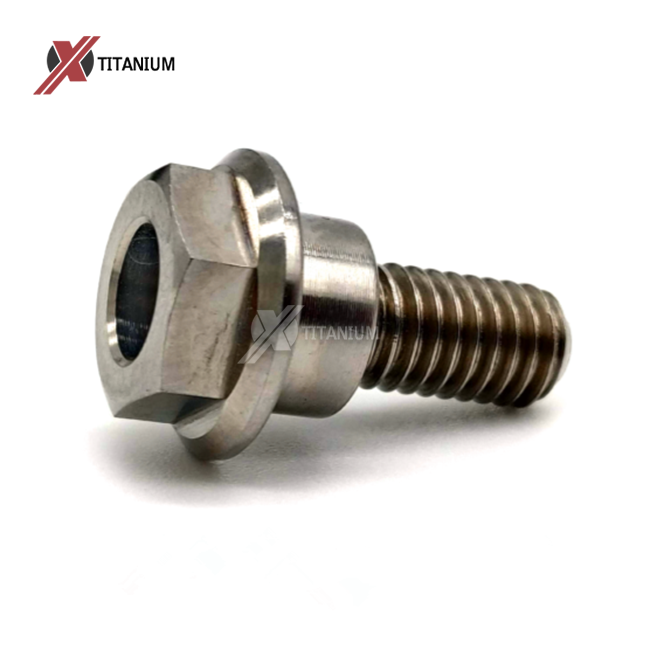
Our standard sizes include M5, M6, and M8 threads in 10 mm, 12 mm, 14 mm, and 16 mm lengths. Do not assume one size fits every derailleur, because thread, length, shoulder, and head shape can change between models and generations. Check the thread pitch, threaded length, head diameter, head height, and drive type, such as hex or Torx. The drive must carry enough torque without camming out. Precision machined threads support a snug, secure fit. ISO 965-1 defines tolerances for metric threads, which gives buyers a shared language when they review drawings. If your derailleur needs a different size, send a drawing or sample.
Finish and Color Options
Surface treatment changes both looks and wear. We offer polishing, anodizing, and nitriding on CNC machined titanium derailleur jockey wheel bolts. Anodizing builds a controlled oxide film on titanium, and the film thickness produces the color through light interference rather than dye. Available colors are Ti nature, gold, blue, green, purple, black, and rainbow. Nitriding suits buyers who want a harder surface layer. Ask for a color sample under daylight, since shades can drift between batches without tight process control. Shops that sell colored pulley wheels can match the bolts to those wheels and offer a clean visual set.
Titanium vs. Stainless Steel vs. Aluminum Jockey Wheel Bolts
Material choice affects weight, strength, and service life, so here is how the three common options compare.
Weight and Strength
Aluminum is the lightest of the three at about 2.7 g/cm³. It is soft, though, so threads and socket drives wear or strip faster, especially when a mechanic over-tightens. Stainless steel is strong and affordable, but it weighs about 8 g/cm³. Gr5 titanium sits between them on weight at 4.43 g/cm³, and our data lists 950 MPa tensile strength. That strength matters because the bolt carries chain tension on a small cross-section with little safety margin. A bolt that saves a gram but strips during service costs a shop more in returns than the gram earns.
Corrosion and Galvanic Contact
Titanium resists corrosion from water, road salt, and mud, so its threads rarely seize from rust. Stock steel bolts can rust and lock in place, which makes pulley service harder. Galvanic corrosion also deserves attention. Fontana's Corrosion Engineering explains that dissimilar metals joined in a wet environment can corrode at different rates. Titanium sits at the noble end of that scale, and it is generally considered compatible with carbon fiber. Titanium can still gall when threaded dry into metal, so anti-seize remains good practice.
Cost and Best-Fit Use
Stainless steel works for standard replacement programs, high-volume sales, and price-sensitive buyers. Aluminum fits weight-focused riders who accept more frequent replacement and gentle torque. Titanium fits premium builds where weight, corrosion resistance, and appearance justify a higher price. For small brands and specialty shops, a niche category like this lets you price on value, and anodized colors add product variety without changing the base part. Compare total cost, including returns, replacements, and customer trust, rather than looking only at unit price.
How to Choose the Best Titanium Derailleur Jockey Wheel Bolts?
With the specifications clear, a simple process keeps your selection and installation on track.
Start With the Derailleur and Pulley Fit
Write down the derailleur brand, model, and generation, then identify the pulley design: standard, oversized, or ceramic bearing. Next, measure the original bolt's thread diameter, pitch, length, head shape, and any shoulder, and note the washers and spacers in the stack. Match the titanium bolt to those details, not to a size name from a search listing. Buyers weigh features differently. Riders look at weight and color, mountain bikers look at durability, and distributors look for stable SKUs. Brands working from a drawing care most about batch consistency. Decide your priority before you request samples.
Install With Care
Photograph the pulley orientation before you remove anything, and note the order of washers, spacers, and bearings. Clean the parts and check the threads for damage. Start the new bolt by hand to avoid cross-threading, then use a properly fitting driver and a torque wrench. Follow the derailleur maker's torque value, not a generic number, because over-tightening can strip the cage threads. Add a light anti-seize compound to reduce galling. Finally, spin the pulley by hand, check clearance, and shift through the gears to confirm smooth movement.
Avoid Common Buying Mistakes
The most frequent mistake is assuming every derailleur takes the same M5 bolt. Another is picking the lightest option without checking grade and strength. Buyers also forget to check the package contents: one bolt, a pair, or a kit with washers and spacers. Dry assembly and repeated tightening can gall titanium threads, so include installation notes with your retail packs. Ask suppliers to state the material grade, tolerances, and inspection steps in writing. Order samples, fit them on real derailleurs, and spin-test the pulleys before you place a first batch.
Procurement Guide for Wholesale, OEM, and Custom Orders
After you pick a bolt, the next step is to order it in a way that protects your margins and your reputation.
Separate Standard Items from Custom Parts
Standard items need clear specifications, steady stock, protective packaging, and predictable restocking. Custom projects need more: drawings or physical samples, head geometry, colors, and packaging details. Our titanium derailleur jockey wheel bolts follow a customized standard, so we CNC machine Gr5 titanium alloy to your drawing. Before mass production, agree on sample approval, pilot production, final inspection, and acceptance criteria in writing. When you compare quotes, count MOQ, sample charges, finishing, packaging, shipping terms, and lead time, not just the unit price.
Quality Control and Supplier Background
Small bolts are hard to inspect, so ask every supplier how it checks them. At Chuanglian, we inspect each stage from raw material to finished product, and we follow national, international, and industry standards. We are based in Baoji, known as the City of Titanium, and we bring more than ten years of titanium machining and research experience, with a dozen CNC machine tools. Our titanium products have reached well-known companies worldwide, and those customers have field-tested them for years. Useful checks for any supplier include material verification, thread gauging, dimension checks, and surface inspection.
A Buyer Checklist for Quotes and Samples
Use this checklist when you request quotes and approve samples. For compatibility, confirm the derailleur model, thread size, pitch, length, head style, and package contents. For performance, confirm the titanium grade, actual weight per bolt, finish, and corrosion needs. For the supplier, confirm material certificates, inspection method, lead time, customization ability, and after-sales support. A drawing, photos, or a physical sample, sent together with your quantity, speeds up review and cuts sampling time. A written checklist also gives you a fair base to compare suppliers and lowers the risk of a bad repeat order.
Conclusion
Titanium derailleur jockey wheel bolts are small parts that carry chain tension, so fit and strength matter as much as weight. Gr5 (Ti-6Al-4V) offers a 4.43 g/cm³ density, 950 MPa tensile strength, and natural corrosion resistance, which makes it stronger than aluminum and lighter than stainless steel. Buyers should confirm thread size, length, head style, finish, and derailleur compatibility from a drawing or sample, because sizes differ between models. Correct installation with the maker's torque value and anti-seize protects both bolt and cage. For wholesale and OEM orders, written acceptance criteria, material certificates, inspection records, and total cost comparisons reduce risk more than a low unit price does.
FAQ
What torque should I use on titanium jockey wheel bolts?
Follow the derailleur manufacturer's torque value. Torque values differ across models. A generic number can over-tighten the bolt and strip the cage threads, so check the service document for your exact model.
Do titanium bolts need anti-seize?
Yes. A light layer of anti-seize reduces galling when titanium threads into metal, and it makes later pulley service easier, especially after wet rides.
Why choose Gr5 over Grade 2?
Gr5 (Ti-6Al-4V) is an alloy with higher strength and hardness. Our Gr5 data lists 950 MPa tensile strength. Grade 2 is commercially pure and softer, so hex or Torx sockets can round off sooner. Gr5 is the better choice for load-bearing fasteners.
Do the same bolts fit Shimano and SRAM derailleurs?
Not always. Thread sizes may match, but length and head shape vary by model and generation. Anodized colors do not change the fit. Send the derailleur model or a sample, and our team will check fit before production.
Request a Quote for Titanium Derailleur Jockey Wheel Bolts from Chuanglian
Chuanglian is a titanium derailleur jockey wheel bolts manufacturer based in Baoji, the City of Titanium. We CNC machine Gr5 (Ti-6Al-4V) bolts, offer polishing, anodizing, and nitriding, and work from your custom drawings. Send your sample, drawing, and quantity to info@cltifastener.com or djy6580@aliyun.com, and our team will reply with pricing and sample details.
References
1. ASTM International, ASTM B348 Standard Specification for Titanium and Titanium Alloy Bars and Billets, 2019.
2. Donachie, M. J., Titanium: A Technical Guide, 2nd Edition, ASM International, 2000.
3. Leyens, C. and Peters, M., Titanium and Titanium Alloys: Fundamentals and Applications, Wiley-VCH, 2003.
4. Boyer, R., Welsch, G., and Collings, E. W., Materials Properties Handbook: Titanium Alloys, ASM International, 1994.
5. Fontana, M. G., Corrosion Engineering, 3rd Edition, McGraw-Hill, 1986.
6. International Organization for Standardization, ISO 965-1: ISO General Purpose Metric Screw Threads, Tolerances, Part 1, 2013.
Learn about our latest products and discounts through SMS or email