- English
- French
- German
- Portuguese
- Spanish
- Russian
- Japanese
- Korean
- Arabic
- Greek
- German
- Turkish
- Italian
- Danish
- Romanian
- Indonesian
- Czech
- Afrikaans
- Swedish
- Polish
- Basque
- Catalan
- Esperanto
- Hindi
- Lao
- Albanian
- Amharic
- Armenian
- Azerbaijani
- Belarusian
- Bengali
- Bosnian
- Bulgarian
- Cebuano
- Chichewa
- Corsican
- Croatian
- Dutch
- Estonian
- Filipino
- Finnish
- Frisian
- Galician
- Georgian
- Gujarati
- Haitian
- Hausa
- Hawaiian
- Hebrew
- Hmong
- Hungarian
- Icelandic
- Igbo
- Javanese
- Kannada
- Kazakh
- Khmer
- Kurdish
- Kyrgyz
- Latin
- Latvian
- Lithuanian
- Luxembou..
- Macedonian
- Malagasy
- Malay
- Malayalam
- Maltese
- Maori
- Marathi
- Mongolian
- Burmese
- Nepali
- Norwegian
- Pashto
- Persian
- Punjabi
- Serbian
- Sesotho
- Sinhala
- Slovak
- Slovenian
- Somali
- Samoan
- Scots Gaelic
- Shona
- Sindhi
- Sundanese
- Swahili
- Tajik
- Tamil
- Telugu
- Thai
- Ukrainian
- Urdu
- Uzbek
- Vietnamese
- Welsh
- Xhosa
- Yiddish
- Yoruba
- Zulu
Titanium Bike Bottle Cage Bolt Guide: Benefits, Uses, and Fit
An M5 screw for attaching a titanium bike bottle cage bolt to the threaded bosses of a bicycle frame. It's made of Grade 5 titanium (Ti-6Al-4V) and weighs around 1.5g. It is corrosion resistant and available in polished or anodised colours. Riders like it for its weight savings and attractiveness. Shops and brands select it for consistent demand and quick add-on sales. In this tutorial, we’ll go over the advantages, uses, fit, installation, and purchase suggestions so you can confidently choose the proper bolt.
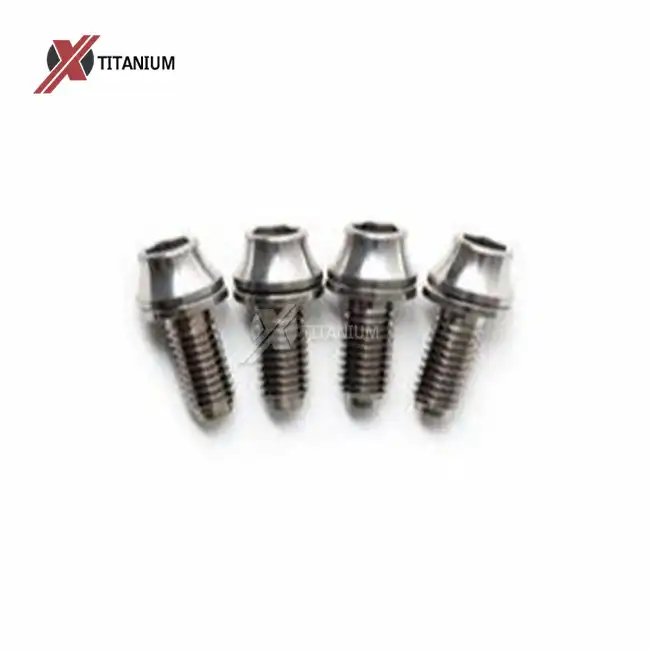
What Is a Titanium Bike Bottle Cage Bolt and What Does It Do?
Definition and Thread Standard
Most bike frames have two or three threaded bosses on the down tube and seat tube. Each boss has a bottle cage bolt that screws in and secures the cage in place. M5 x 0.8 mm is standard for road, mountain, gravel and touring bikes. I would still suggest verifying the pitch and useful length on each frame before purchase. A whole mounting set is the bolt, an optional washer, the frame boss and the cage hole. Shops commonly offer loose bolts, 2 bolt sets or replacement packs. We normally stock M5 x 12 mm, and we mill bespoke lengths when a frame or cage requires anything else. This little thing is what keeps a cage locked, or not, on a bumpy ride.
Chuanglian Product Specifications
Our titanium bike bottle cage bolt is CNC machined from Grade 5 titanium alloy. The standard bolt measures M5 x 12 mm with a 0.8 mm thread pitch and weighs about 1.5 g. Tensile strength is 950 MPa. Length accuracy is ±0.1 mm, and head diameter tolerance is ±0.05 mm. You can choose hex, Torx, button, or flat heads. Surface treatments include polishing, sandblasting, anodizing, and nitriding. Colors run from natural titanium to gold, blue, green, purple, black, and rainbow, and we can discuss custom colors. These numbers give your buyers checkable data for a product listing. They also give your team a fixed target during sample approval.
Common Uses
The main use is holding water bottle cages. The same bolt also suits other bike accessories that mount on M5 bosses. Riders swap steel hardware for colored titanium to match a stem, seat clamp, or cage. Racing and triathlon builders choose it to save grams. Beyond cycling, lightweight titanium fasteners also serve aerospace and industrial equipment, plus marine settings where corrosion resistance matters. A bike with two cages uses four bolts, so the part is one of the easiest upgrades to sell. It has a low price, installs quickly, and shows visible results.
Benefits of Titanium Compared With Other Bolt Materials
Weight and Strength
Grade 5 titanium has a density of about 4.43 g/cm³, compared with about 7.85 g/cm³ for common steel. That makes titanium roughly 44 percent lighter by volume. Each of our M5 x 12 mm bolts weighs about 1.5 g, so a set of four adds only about 6 g to a bike. Strength stays high, with a tensile strength of 950 MPa. Grade 5 is also harder than commercially pure titanium grades, which helps the drive head resist rounding when a tool slips. Weight savings from one bolt look small. Still, riders who build lightweight bikes chase gains gram by gram, and bottle cage hardware is an easy place to start.
Corrosion Resistance
Titanium forms a thin, stable oxide film the moment it meets air. That film protects the metal from rain, road salt, sweat, and the sugary, acidic sports drinks that drip onto cage bolts. Our bolts offer strong acid and alkali resistance, which is why the same material appears in marine and chemical equipment. Titanium also works well beside carbon fiber. It does not cause the galvanic corrosion that aluminum can create in wet conditions. A bolt that does not rust also does not seize from rust. Riders who wash their bikes often or ride near the coast can remove a cage years later without a fight.
Titanium vs. Steel, Stainless Steel, and Aluminum
Steel bolts cost the least and suit entry-level bikes, but plated steel can rust once the coating wears. Stainless steel resists corrosion well and costs less than titanium, yet it is heavier. Aluminum bolts are light and come in bright colors, but their threads and drive heads deform easily during repeated service or overtightening. Titanium sits in the middle ground many riders want. It is light like aluminum, tough enough for repeated service, and rust-free like stainless. The trade-off is a higher unit cost. Buyers accept that price when the bolt looks good and lasts, which is why titanium works well as a premium upgrade.
Fit, Compatibility, and Installation
Checking Thread, Length, and Head Style
Start with the thread, then measure the length. Total length must cover the cage thickness, any washer or spacer, and enough thread inside the boss. A bolt that is too short grips too few threads. A bolt that is too long can hit the inside of the frame tube or touch the bottle. The head matters too. A hex socket is the most familiar and works with common multitools. Torx gives the tool a firmer grip and resists slipping. A button head has a low, rounded look, and a flat head sits level where the cage hole is countersunk. Our M5 x 12 mm titanium bike bottle cage bolt suits many standard cages, and custom sizes cover the rest.
Step-by-Step Installation
Good installation takes about two minutes. First, clean the frame bosses and the bolt threads, then thread each bolt in by hand to confirm it turns smoothly. Second, add a thin layer of bicycle-safe anti-seize to the threads. Third, set the cage in place and tighten each bolt a little at a time, alternating between them. Use a torque wrench and follow the torque value from the frame or cage maker. Last, check that the cage sits firmly and the bottle clears the frame. Recheck the bolts after your first ride, since new hardware can settle slightly.
Preventing Galling and Frame Damage
Titanium can gall, which means the thread surfaces cold-weld and the bolt seizes. Anti-seize and slow, even tightening reduce that risk. Overtightening causes more damage than weak material does. The frame boss is often the weakest link, especially a bonded insert in a carbon frame, so a stronger bolt will not fix a loose insert. Use threadlocker only if the frame or cage maker allows it. If a boss feels loose, or the bolt spins without tightening, stop and have a mechanic inspect the frame. Clean threads, correct length, and correct torque protect the bolt, the cage, and the frame together.
Choosing and Buying Titanium Bottle Cage Bolts in Volume
Selection Criteria for Shops and Brands
Retailers and bike brands usually screen on five points: exact thread and length, head type, finish quality, color range, and delivery time. Finish quality matters most for online sales, because scratches and uneven color show up in photos and then in reviews. Thread quality matters just as much. A bolt that binds in the boss leads straight to a one-star review and a return. Ask each supplier for the titanium grade in writing, the tolerance values, and photos of real samples rather than renderings. Then confirm minimum order quantity, lead time, and packaging or labeling needs. Our team answers these questions with specific figures for your order.
Color Consistency and Finish Quality
Anodized titanium gets its color from a thin oxide layer, not from dye. Layer thickness changes how light reflects, so small process changes can shift the shade. That explains why color differences between batches worry buyers. You can reduce the risk in three ways. Approve a physical sample before the first order and keep it as your color reference. Ask your supplier to run each color in controlled lots. Compare incoming batches with your sample under the same lighting. To keep inventory simple, start with the three or four colors your customers request most, then add the rest as sales data builds. Discuss mixed-color orders with us when you plan your first purchase.
Evaluating a Manufacturer and Total Cost
Bolt prices on marketplaces are easy to compare, so the gap between suppliers is often small. Total landed cost tells the real story. It includes unit price, freight, duties, rejected pieces, and the time spent on returns. Working directly with a factory shortens communication and gives you a clear view of the process. Baoji Chuanglian New Metal Material Co., Ltd. is based in Baoji, known as the City of Titanium. We have more than ten years of experience machining titanium, a dozen CNC machine tools, and quality checks from raw material to finished product. Our titanium products have been sold to well-known companies around the world.
Common Mistakes and Selection Scenarios
Mistakes to Avoid
Most bottle cage problems come from fitting errors, not from titanium itself. Mixing up M5 with another size leads to cross-threading and a damaged boss. Overtightening can strip a head or crack a carbon insert. A titanium bike bottle cage bolt that is too short leaves too little thread engaged. Skipping anti-seize invites galling at the next service. Another trap is treating color as proof of quality. Anodized color says nothing about grade or strength, so ask for the material grade in writing. Finally, check the frame boss before replacing hardware, because a damaged insert needs repair, not a stronger bolt.
Scenarios for Riders and Racers
Carbon road riders need an exact M5 fit, a safe length, and controlled torque, since carbon inserts leave little room for error. Gravel and mountain riders put more stress on cages through vibration and rough terrain, so they value secure clamping and easy removal after mud and water. Triathletes and coastal riders deal with salt, sweat, and drink spills, where a bolt that does not rust saves frustration. Weight-focused climbers choose titanium to trim grams, and custom builders choose colors to match other parts. In each case, a bolt with a clear specification and clean threads does the job.
Scenarios for Retailers, Brands, and OEM Buyers
Online sellers, bike brands, and OEM buyers care about different things. E-commerce sellers want color choices, clean finishes, and listing-ready data. A low-priced titanium bolt can serve as an entry item that brings shoppers to a store, where they may also look at other titanium parts. Bike brands want matching colors across components and stable dimensions. With a length accuracy of ±0.1 mm and a head diameter tolerance of ±0.05 mm, our bolts give your quality team clear targets to check. Custom sizes, head types, and finishes let you build a product line that matches your brand. Approve a sample first, then place the larger order.
Conclusion
A titanium bike bottle cage bolt is a small M5 fastener that delivers real advantages when specified correctly. Grade 5 titanium combines low density, 950 MPa tensile strength, and natural corrosion resistance, which gives it an edge over steel, stainless steel, and aluminum in weight, rust resistance, and thread durability. Good results depend on matching thread, length, and head style to the frame, then installing with clean threads, anti-seize, and the maker's torque value. Most failures come from fitting errors or damaged frame bosses, not from the material. For retailers and brands, finish quality, color consistency, tolerances, and total landed cost matter as much as unit price, and a physical sample check lowers risk before volume orders.
FAQ
Does a titanium bike bottle cage bolt need anti-seize?
Yes. Titanium can gall, which means the threads cold-weld under pressure. A thin layer of bicycle-safe anti-seize keeps installation smooth and makes removal easy at the next service.
Is titanium safe to use on carbon frames?
Yes. Titanium does not cause galvanic corrosion with carbon fiber. Always follow the frame maker's torque limit, because the insert is often the weakest part, not the bolt.
Can I order custom sizes and colors?
Yes. The standard size is M5 x 12 mm, and we machine custom sizes. Head types include hex, Torx, button, and flat. Colors include natural titanium, gold, blue, green, purple, black, and rainbow.
Does color change the strength of the bolt?
No. Anodizing adds a thin oxide layer that creates color. Strength comes from the Grade 5 alloy and the machining, not from the finish. Ask for the material grade in writing when you compare suppliers.
Request a Titanium Bike Bottle Cage Bolt Quote From Chuanglian
Chuanglian is a titanium bike bottle cage bolt manufacturer based in Baoji, the City of Titanium. We supply Gr5, CNC-machined bolts in M5 x 12 mm and custom sizes, with polished, anodized, and nitrided options. Send your drawing, quantity, head type, and color plan to info@cltifastener.com or djy6580@aliyun.com, and we will reply with a quote and sample details.
References
1. ASTM International, ASTM B348/B348M Standard Specification for Titanium and Titanium Alloy Bars and Billets, 2019
2. International Organization for Standardization, ISO 261 ISO General Purpose Metric Screw Threads: General Plan, 1998
3. Boyer, Welsch, and Collings, Materials Properties Handbook: Titanium Alloys (ASM International), 1994
4. Leyens and Peters, Titanium and Titanium Alloys: Fundamentals and Applications (Wiley-VCH), 2003
5. Donachie, Titanium: A Technical Guide, 2nd Edition (ASM International), 2000
6. Park Tool, Big Blue Book of Bicycle Repair, 4th Edition, 2019
Learn about our latest products and discounts through SMS or email