- English
- French
- German
- Portuguese
- Spanish
- Russian
- Japanese
- Korean
- Arabic
- Greek
- German
- Turkish
- Italian
- Danish
- Romanian
- Indonesian
- Czech
- Afrikaans
- Swedish
- Polish
- Basque
- Catalan
- Esperanto
- Hindi
- Lao
- Albanian
- Amharic
- Armenian
- Azerbaijani
- Belarusian
- Bengali
- Bosnian
- Bulgarian
- Cebuano
- Chichewa
- Corsican
- Croatian
- Dutch
- Estonian
- Filipino
- Finnish
- Frisian
- Galician
- Georgian
- Gujarati
- Haitian
- Hausa
- Hawaiian
- Hebrew
- Hmong
- Hungarian
- Icelandic
- Igbo
- Javanese
- Kannada
- Kazakh
- Khmer
- Kurdish
- Kyrgyz
- Latin
- Latvian
- Lithuanian
- Luxembou..
- Macedonian
- Malagasy
- Malay
- Malayalam
- Maltese
- Maori
- Marathi
- Mongolian
- Burmese
- Nepali
- Norwegian
- Pashto
- Persian
- Punjabi
- Serbian
- Sesotho
- Sinhala
- Slovak
- Slovenian
- Somali
- Samoan
- Scots Gaelic
- Shona
- Sindhi
- Sundanese
- Swahili
- Tajik
- Tamil
- Telugu
- Thai
- Ukrainian
- Urdu
- Uzbek
- Vietnamese
- Welsh
- Xhosa
- Yiddish
- Yoruba
- Zulu
Best titanium motorcycle disc bolts for sport bikes
Knowing the Grade 5 Ti-6Al-4V alloy's great qualities is important for choosing the best titanium motorcycle disc bolts for sport bikes. These safety-critical bolts have a tensile strength of over 950 MPa and are about 45% lighter than steel versions. This directly improves the performance of the brakes and the suspension. Titanium motorcycle disc bolts are much more resistant to corrosion and stress than regular steel bolts that rust when exposed to road salt and aluminium fasteners that lose their structural integrity when used at high pressure. Their rolled thread production keeps the grain flow structure, which stops stress concentration failures that happen a lot with cut-threaded screws. This guide talks about technical specs, quality control methods, and buying strategies that procurement teams and OEM experts need to know in order to find reliable, high-performance brake system parts.
Understanding Titanium Motorcycle Disc Bolts: Key Features and Benefits
Metallurgical Composition and Strength Characteristics
Ti-6Al-4V is the official name for grade 5 titanium metal, which is mostly titanium (90%), 6% aluminium, and 4% vanadium. This exact mix of chemicals gives the material amazing mechanical qualities, like a yield strength of 880 MPa and a tensile strength between 950 and 1050 MPa. These numbers are the same as or higher than Grade 10.9 high-strength steel, but the density is only 4.43 g/cm³. The aluminium part makes the structure more stable, and the vanadium makes it easier to strengthen and keep its strength at high temperatures. Racing teams and companies that make speed bikes see these bolts as necessary upgrades because the material can handle the heat cycling and mechanical stress that come with hard stopping without losing its strength.
Weight Reduction Impact on Suspension Performance
Mass that isn't sprung directly affects how quickly the suspension responds and how stable the tyre contact patch is. Changing six steel disc bolts (a total of about 60 grams) with titanium motorcycle disc bolts (equal to about 27 grams) lowers the wheel assembly's spinning inertia. This 33-gram decrease per rotor might not seem like much, but it adds up when the rotors are compressed and return quickly. Better chassis feedback and cornering trust come from suspension parts that respond more accurately to changes in the road. Track-focused riders will really like this improvement when they have to brake hard into turns, because weight transfer factors affect how well the front end grips the road and how well the rider can steer.
Corrosion Resistance in Harsh Operating Environments
When exposed to air, the natural titanium oxide film forms on its own, protecting against oxidation, salt attack, and acidic poisoning. Instead of pitting corrosion that happens when road salts and brake dust get on stainless steel bolts, titanium motorcycle disc bolts keep their structural and aesthetic integrity over years of use. This feature is very helpful for motorcycles that are stored near the coast or used during the winter. When scratched, the oxide layer grows back on its own, giving self-healing security that extends the life of components and gets rid of the upkeep problems that come with steel hardware that has corroded.
How to Choose the Best Titanium Motorcycle Disc Bolts for Sport Bikes?
Technical Specifications and Compatibility Assessment
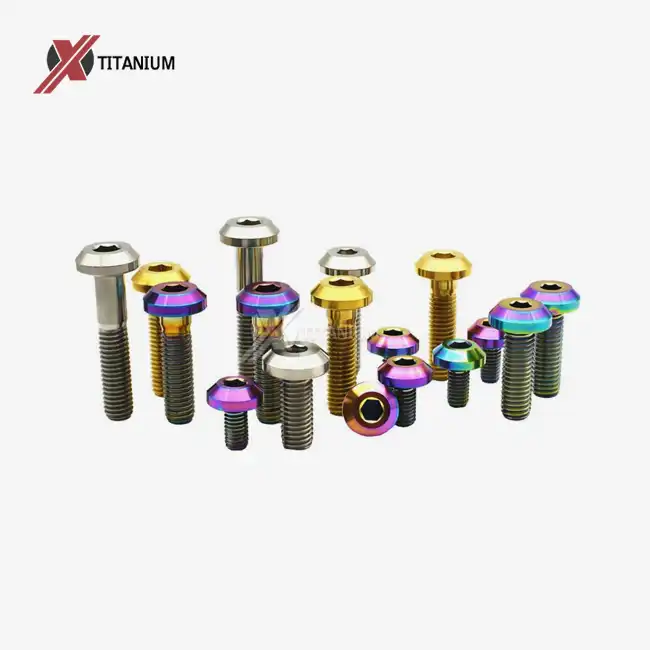
To choose the right titanium motorcycle disc bolts, you need to make sure that the thread sizes (M6, M8, or M10), lengths, and head shapes are all the right for your motorbike. The fixing places for brake rotors on sport bikes are made with very tight tolerances. If the bolt length is off, it might not engage enough threads or it might bottom out before it reaches the right clamping force. The shape of the head profile—whether it's button head, countersunk, or flanged—must match the shape of the rotor hole to make sure the disc mounts flush and doesn't bend. When you follow the ISO 965 tolerance class 6g for thread pitch accuracy, you can be sure that the threads will connect properly and not cross-thread, which can damage expensive wheel hub threads.
The procurement engineers should make sure that the length of the bolts can fit any rotor spacers or washers that the motorbike maker specifies. When using aftermarket brake pads or changing brake systems for racing, the ability to customise becomes useful. For full strength to be used and to avoid pullout fails under heavy braking loads, the thread engagement depth should reach at least 1.5 times the width of the bolt.
Quality Certifications and Supplier Verification
For safety-critical bolts, suppliers must go through a lot of testing. Manufacturing companies should have quality management systems that are in line with ISO 9001 and materials that are certified to meet ASTM B348 Grade 5 standards. Each production batch must come with a Certificate of Conformance (CoC) that lists the chemicals that were used and how they were analysed using spectroscopy to make sure that the levels of aluminium and vanadium are within the allowed ranges. Suppliers who provide tracking documents, such as raw material heat numbers and final inspection reports, show that they are committed to quality assurance methods that keep fake or low-quality materials from getting into the supply chain.
Advanced suppliers use X-Ray Fluorescence analysers to do Positive Material Identification (PMI) on produced goods. This finds any material replacements before the goods are shipped. This check is especially important because Grade 5 titanium looks a lot like much weaker Grade 2 commercially pure titanium or even stainless steel. You can have more faith in process controls and quality systems by asking for third-party testing reports and visiting manufacturing facilities during source audits.
Thread Manufacturing Process Evaluation
The difference between rolled and cut threads has a big impact on how long and reliably a bolt works. When you roll something into a thread, you squeeze it, which lines up the grains along the thread's shape and makes the surface harder. During cyclic pressure, this process leaves behind compressive residual forces that stop cracks from starting. When cut threads are made from solid stock, they break up the grain structure and make tiny holes that act as stress concentration points. When brakes are applied repeatedly, tensile and shear forces shorten the wear life of cut threads by a large amount.
Specifications for buying things should make it clear that they need rolled threads and ask for metallographic cross-section proof when samples are being evaluated. The grain flow pattern that can be seen under a microscope clearly shows the difference between these two ways of making things. When suppliers use CNC cutting for bolt bodies along with special thread rolling equipment, they show that they have invested in good manufacturing practices that allow them to charge higher prices because their products last longer.
Installation and Maintenance Best Practices for Titanium Motorcycle Disc Bolts
Torque Specification Adjustments and Anti-Seize Requirements
Titanium has higher friction coefficients than steel, which means that there is a chance of galling when two surfaces cold-weld together while they are being tightened. Because of this, anti-seize solutions are needed to put titanium motorcycle disc bolts. When applied to thread contact zones, high-quality anti-seize based on copper or nickel reduces friction and stops seizure, making sure correct torque-to-tension conversion. Because of the grease, the manufacturer's dry torque standard usually needs to be lowered by 10 to 15 percent to avoid over-tensioning and thread stripping.
To check tightened values, you should use calibrated torque tools with accuracy certificates. Using anti-seize on the threads and underhead surfaces, hand-threading the bolts to make sure they fit smoothly, and tightening them in a star design to spread the clamping forces evenly across the rotor mounting surface is the right way to install them. This method stops the rotor from warping, which could cause the brakes to pulse or the pads to wear unevenly. Keeping track of torque values during installation gives you a starting point for future maintenance checks and helps you spot any patterns of loosening that could mean that the preload wasn't right or that the mounting surface is dirty.
Routine Inspection Protocols and Service Intervals
As part of checking the brake system, the titanium motorcycle disc bolts heads should be looked at visually for pitting rust marks that show how the bolt and rotor are moving in relation to each other. Titanium doesn't rust, but movement signs suggest that there isn't enough preload or that there are problems with the mounting surface preparation that need to be fixed. Inspections happen at the same time that brake pads need to be replaced, which is usually every 10,000 to 15,000 kilometres for street use or after every race for racing bikes.
To clean titanium bolts, all you need are light soap solutions and soft brushes to get rid of brake dust. Wire cleaning and harsh chemical cleaners can damage the protected oxide layer and add hydrogen to the material, which makes it more fragile. After cleaning, a visible check with enough light will show any cracks near the thread runout zone or underhead radius, which are the main places where fatigue failure starts. Replacement is needed when cracks show up, threads get damaged, or head drive features (hex or Torx) get rounded off, making it impossible for the tool to connect properly.
Common Installation Errors and Prevention Strategies
The most common fitting mistake is cross-threading, which happens when bolts hit incorrect mounting holes or dirt that stops the threads from engaging at first. Before using torque tools, starting bolts by hand makes sure they are in the right place. If you rush through the fitting process or use impact tools, you could damage the threads or apply too much force, which would weaken the joint.
People also often make the mistake of using thread-locking solutions made for steel bolts on titanium motorcycle disc bolts. A lot of anaerobic thread-lockers have chemicals in them that stop the formation of titanium's oxide layer. This could make the material less resistant to rusting. Thread-lockers made just for titanium or mechanical locking methods like distorted threads keep things in place securely without worrying about chemical compatibility. Installation training for repair workers should stress these material-specific requirements to stop failures in the field caused by bad assembly methods.
Performance Impact and Application Scenarios of Titanium Motorcycle Disc Bolts
Braking System Efficiency and Heat Management
When you slow down quickly, the brake rotors get hotter than 300°C, which causes them to expand, which puts more stress on the hardware that holds them in place. Titanium motorcycle disc bolts do not carry heat as well as steel does (about 7 W/m·K vs. 50 W/m·K), so they act as a thermal barrier between the rotor and wheel hub, keeping hub bearings and suspension parts from getting too hot. This feature makes bearings last longer and keeps the shape of the suspension stable during repeated hard stops.
Because titanium has a high strength-to-weight ratio, it can withstand the clamping forces needed to keep the rotor from slipping while keeping the spinning mass that the suspension parts need to control to a minimum. Testing data from race uses shows that titanium brake hardware keeps its force even when heated and cooled many times, which would cause steel bolt preload to relax. This stability makes sure that the brakes work consistently over long track sessions, where consistency is what sets competitive lap times apart from results that aren't consistent.
Racing and High-Performance Street Applications
Professional racing teams in MotoGP, World Superbike, and endurance racing all use titanium motorcycle disc bolts as standard equipment. These tough settings prove that the materials work well in conditions that are much tougher than what a street motorbike needs. In racing, brake temperatures can get as high as 600°C, vibration rates can speed up the wear process, and mechanical loads during emergency stopping can test the material's ultimate strength.
The performance benefits that have been shown to work in racing situations can be directly applied to high-performance riding on the street. The stability and weight savings that professional teams count on are also good for sport bike owners who go to track days or go canyon riding with a lot of gusto. Titanium hardware has a higher starting cost than steel hardware, but the longer service life and better performance qualities make up for it over time.
Comparison with Alternative Fastener Materials
Even though stainless steel brake bolts don't rust as badly as titanium motorcycle disc bolts, they are 75% heavier and aren't as strong for their weight. The extra mass that isn't sprung hurts the performance of the suspension and makes the spinning inertia higher. High-strength, low-cost carbon steel bolts rust quickly when exposed to water and salt, needing to be replaced often, which makes them more expensive overall than titanium.
While aluminium bolts are light, they don't have the tensile strength needed for fitting brakes in situations where safety is important. Aerospace-grade aluminium metals have a yield strength of about 500 MPa, which is only about half of what Grade 5 titanium can do. This lack of strength makes it too likely that the bolt will break during emergency stopping, which directly affects the safety of the rider. The scientific study makes it clear that titanium is the best material for brake disc fasteners in terms of strength, weight, and longevity.
Where and How to Procure High-Quality Titanium Motorcycle Disc Bolts
Manufacturer Selection and Supply Chain Considerations
To find titanium motorcycle disc bolts, you need to find makers who have experience with machining titanium and know what safety-critical fastener standards are. Baoji Chuanglian New Metal Material Co., Ltd., which is in China's "City of Titanium," is an example of a seller that combines easy access to materials, CNC machining skills, and quality control systems that are necessary to make reliable brake gear. Their more than ten years of experience making titanium products and thorough testing methods meet the technical needs that procurement professionals put first.
When evaluating a supplier, it's important to look at their manufacturing equipment, such as CNC machines that can work with titanium and thread rolling machines that can make sure that the right fasteners are made. Quality control systems must include programs for checking materials, measuring dimensions, and destructive tests to make sure products are in line with standards. This can be done through site visits or full facility documentation. Long-term relationships with well-known providers offer more stable supply chains and consistent product quality than buying things one at a time based on price per unit.
Customization Capabilities and Technical Support
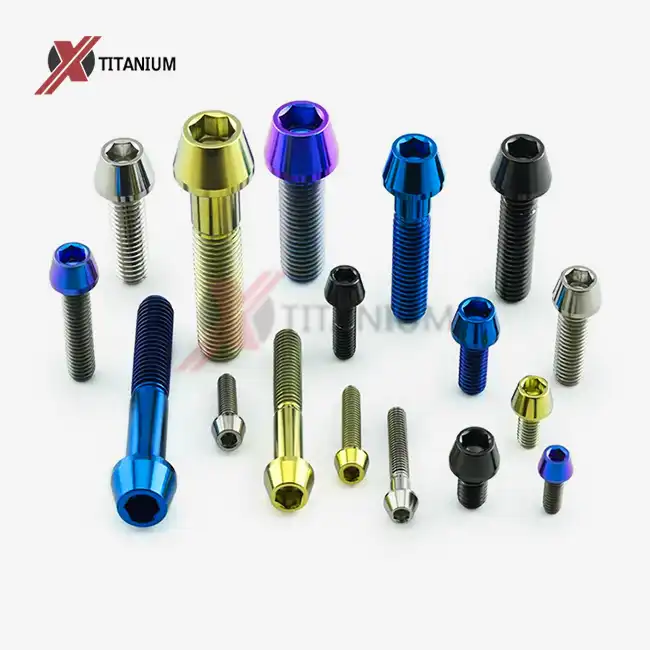
Catalogue goods can be used for a lot of different things, but custom builds and racing often need special specs. Manufacturers that let you change the thread sizes, lengths, head types, and surface treatments offer freedom that meets the needs of a wide range of projects. You can choose from gold, blue, green, purple, black, or rainbow anodised colour finishes that match the style of your motorbike and make the surface harder through the anodising process for your titanium motorcycle disc bolts.
Superior sellers are different from commodity vendors because they can provide technical help. Engineering tools that help with choosing materials, coming up with torque specs, and improving the fitting process are very useful in addition to providing products. When it comes to making difficult purchasing choices, business-to-business buyers value a partnership approach from suppliers who understand the needs of the application and offer solutions immediately.
Order Fulfillment and Quality Assurance Documentation
For buying processes to work well, there needs to be clear communication about objectives, release dates, and the quality of the paperwork that needs to be provided for your titanium motorcycle disc bolts. Suppliers should give thorough quotes that include information about the type of material used, how it will be made, how it will be inspected, and how long it will take to get both trial samples and production amounts. Sample evaluation tools let you check the quality and accuracy of the measurements of a product before placing a large order.
Shipments should come with full paperwork packages that include material approvals, dimensional inspection records, and photos that show the quality of the surface finish. This paperwork helps with the inspection process for new parts going in and gives the tracking information needed for safety-critical parts. Setting clear standards for quality and documentation while choosing a provider stops misunderstandings and makes sure that the goods supplied meet all technical and legal requirements.
Conclusion
Titanium motorcycle disc bolts are a tried-and-true way to improve speed, safety, and longevity on sport bikes. The Grade 5 Ti-6Al-4V metal is very strong for its weight, doesn't rust, and doesn't wear down easily. This makes the investment worthwhile because it improves suspension response and long-term dependability. For the right choice, you need to pay attention to technical requirements, the qualifications of the provider, and the production methods that guarantee quality. Installing and maintaining titanium parts in a certain way stops common problems and extends the life of components. Titanium is better for fitting brake discs than other materials, as shown by testing in races and comparisons with other materials. Strategic seller relationships with well-known makers give procurement professionals the quality control, customisation options, and technical support they need to successfully integrate components.
FAQ
Can Grade 5 titanium brake bolts replace stock steel fasteners directly?
Grade 5 titanium motorcycle disc bolts are as strong as or stronger than Grade 8.8 steel brake bolts, which are what most motorbike makers specify. For direct replacement, the threads, length, and head style must be the same as the original equipment. When anti-seize compounds are used, the steel torque number needs to be lowered by 10-15% in order to change the torque standard for titanium hardware. This change makes for less friction and keeps the stress from getting too high. For certain motorcycle types, the right installation settings can be found by talking to skilled suppliers or reading technical documents.
How do I verify authentic Grade 5 titanium versus inferior materials?
Visual inspection is not a reliable way to tell the difference between Grade 5 titanium and Grade 2 titanium or stainless steel, which are both weaker. Hardness testing is a first step toward confirmation. On different scales, Grade 5 is about 36 HRC and Grade 2 is about 80 HRB. To be sure for sure, the chemical makeup must be analysed using spectroscopy or X-Ray Fluorescence (XRF) tests to make sure it meets the ASTM B348 Grade 5 standards for aluminium and vanadium content. For procurement purposes, the best way to be sure that the titanium motorcycle disc bolts you buy are real is to buy them from trusted sellers who offer material certifications and keep quality control records.
Partner with Chuanglian for Premium Titanium Motorcycle Disc Bolt Solutions
Chuanglian specializes in making high-precision titanium motorcycle disc bolts that are designed to meet the strict standards of OEM partners and riders around the world who are focused on performance. Our ability to use CNC machines and our strict commitment to ISO 9001 quality systems ensure that every lot of products we make is of the highest quality. We have been making titanium motorcycle disc bolts for a long time and are based in Baoji, which is the center of the titanium industry in China. We have a lot of benefits over our competitors when it comes to getting materials, having technical knowledge, and having the production capacity to meet both prototype development and large-scale production needs.
Our research team can help you choose the right materials, make sure they meet your specific needs, and make suggestions based on your application that will help your brake system work better. Chuanglian is your long-term partner for safety-critical titanium screws because they provide full traceability paperwork, third-party testing confirmation, and helpful customer service. Get in touch with our purchasing experts at info@cltifastener.com or djy6580@aliyun.com to talk about your unique needs and get full technical proposals.
References
1. Boyer, R., Welsch, G., & Collings, E.W. (1994). Materials Properties Handbook: Titanium Alloys. ASM International, Materials Park, Ohio.
2. Donachie, M.J. (2000). Titanium: A Technical Guide, 2nd Edition. ASM International, Materials Park, Ohio.
3. Lutjering, G. & Williams, J.C. (2007). Titanium, 2nd Edition. Springer-Verlag, Berlin Heidelberg.
4. Society of Automotive Engineers (2018). SAE J1701: Disc Brake Friction Material Characterization. SAE International Standards, Warrendale, Pennsylvania.
5. American Society for Testing and Materials (2021). ASTM B348: Standard Specification for Titanium and Titanium Alloy Bars and Billets. ASTM International, West Conshohocken, Pennsylvania.
6. Bozzi, A.C., De Mello, J.D.B., & Oliveira, C.M. (2012). Tribological Behavior of Titanium Alloys in Automotive Applications. Journal of Materials Engineering and Performance, Volume 21, Issue 5, Pages 732-739.
Learn about our latest products and discounts through SMS or email