- English
- French
- German
- Portuguese
- Spanish
- Russian
- Japanese
- Korean
- Arabic
- Greek
- German
- Turkish
- Italian
- Danish
- Romanian
- Indonesian
- Czech
- Afrikaans
- Swedish
- Polish
- Basque
- Catalan
- Esperanto
- Hindi
- Lao
- Albanian
- Amharic
- Armenian
- Azerbaijani
- Belarusian
- Bengali
- Bosnian
- Bulgarian
- Cebuano
- Chichewa
- Corsican
- Croatian
- Dutch
- Estonian
- Filipino
- Finnish
- Frisian
- Galician
- Georgian
- Gujarati
- Haitian
- Hausa
- Hawaiian
- Hebrew
- Hmong
- Hungarian
- Icelandic
- Igbo
- Javanese
- Kannada
- Kazakh
- Khmer
- Kurdish
- Kyrgyz
- Latin
- Latvian
- Lithuanian
- Luxembou..
- Macedonian
- Malagasy
- Malay
- Malayalam
- Maltese
- Maori
- Marathi
- Mongolian
- Burmese
- Nepali
- Norwegian
- Pashto
- Persian
- Punjabi
- Serbian
- Sesotho
- Sinhala
- Slovak
- Slovenian
- Somali
- Samoan
- Scots Gaelic
- Shona
- Sindhi
- Sundanese
- Swahili
- Tajik
- Tamil
- Telugu
- Thai
- Ukrainian
- Urdu
- Uzbek
- Vietnamese
- Welsh
- Xhosa
- Yiddish
- Yoruba
- Zulu
Are titanium rotor bolts better than steel for M8 size?
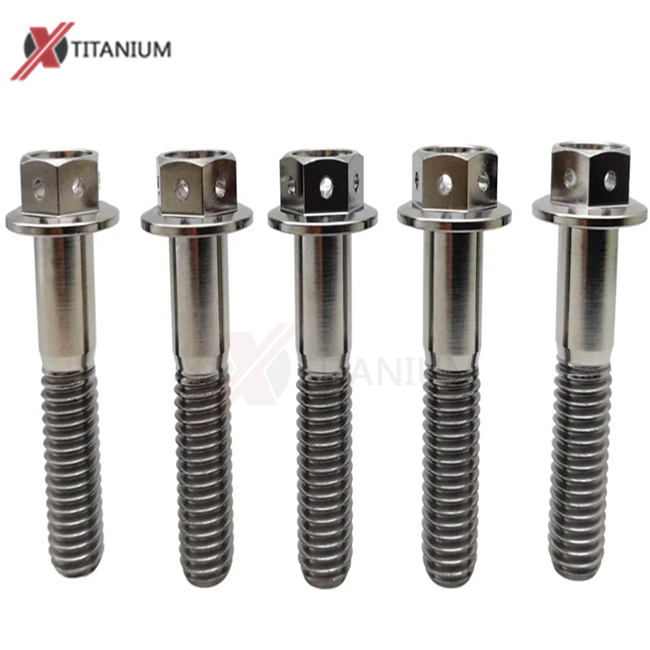
When looking at fastening options for high-performance stopping systems, the question of which material is better becomes very important. Using Grade 5 titanium alloy (Ti-6Al-4V) to make M8 titanium rotor bolts gives them clear benefits over regular steel screws in certain situations. These screws have a tensile strength of over 950 MPa and a density of only 4.51 g/cm³, which is about 45% lighter than steel. They have great strength-to-weight ratios and don't rust at all. The choice depends on the needs of the application. Titanium works best in corrosive environments, weight-critical systems, and long-term durability situations. Steel, on the other hand, can be used in cost-effective, low-corrosion situations where weight reduction doesn't improve performance much.
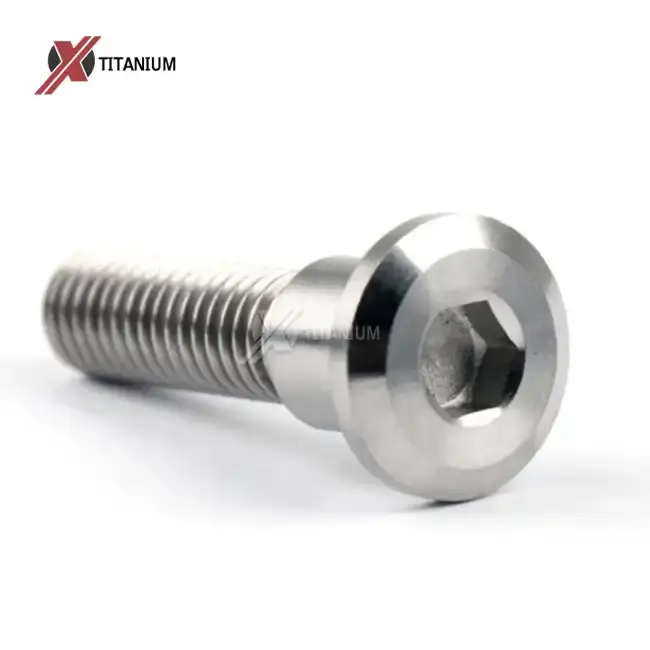
Understanding M8 Titanium and Steel Rotor Bolts
The M8 designation is used for metric fasteners with a nominal thread width of 8mm. These fasteners are standard in many fields, from aircraft to leisure riding. The choice of material is especially important for M8 titanium rotor bolts because this size falls between light-duty fastening needs and structural load-bearing needs.
Dimensional Standards and Threading Specifications
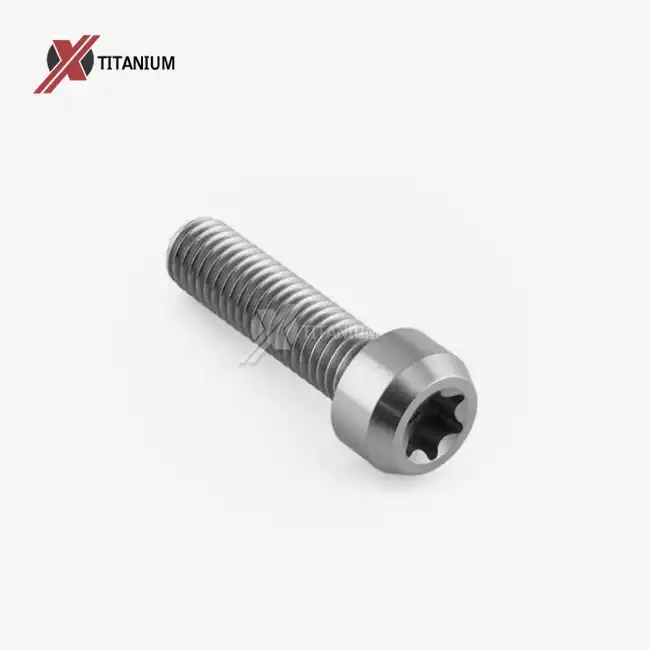
The thread pitch on most M8 rotor bolts is 1.25 mm, which meets ISO 7380 or DIN 912 norms. Length can be anywhere from 15mm to 40mm, based on the width of the rotor hub and how the caliper is mounted. There are T25 Torx and hex socket drive types, and the head styles come in countersunk, button head, and unique shapes. Manufacturing standards of ±0.05mm make sure that brake rotor kits fit correctly on a wide range of bikes, from high-end bicycle hubs to motorcycle disc systems.
Material Composition and Metallurgical Properties
It is usual for steel rotor bolts to be made from types like 12.9-class alloy steel, which has tensile strengths of about 1200 MPa but is easily oxidized. Grade 5 titanium alloy (Ti-6Al-4V) has a hardness of about 35 HRC and a melting point of 1660°C. It is made up of 6% aluminum and 4% vanadium. This metal mix has a higher modulus of elasticity, which means that stress doesn't build up at the thread roots during cycle loading.
Application Contexts in Braking Systems
Rotor bolts hold brake discs to wheel hubs. When the brakes are applied, they experience shear forces, and when the temperature rises, they experience tension loads. In mountain bikes, these fasteners are put through repeated rounds of high-impact loading in downhill races. Bolts used in marine uses are exposed to saltwater spray, and speed builds for cars need clamping forces that stay the same from -40°C to 200°C. Understanding these operating pressures is more than just a way to compare costs when choosing materials.
Titanium vs Steel: Performance and Durability Comparison
Material choice directly impacts system dependability, repair intervals, and overall ownership costs. The next section looks at how the performance of M8 titanium rotor bolts and steel screws can be measured to show differences.
Tensile Strength and Load-Bearing Capacity
The tensile strength of Grade 5 titanium is about 950 MPa, which is a little less than the 1200 MPa strength of top grade 12.9 steel screws. Titanium, on the other hand, has a better ratio of yield strength to mass, which means that each gram of material is more useful for building. In real life, an M8 titanium bolt can handle the same gripping loads as a steel bolt, but it has less rotational mass at the wheel's outer radius. This is very important in race situations where acceleration dynamics are important.
Torque Specifications and Installation Parameters
When torque is applied correctly, it stops both under-clamping (which lets the rotor move) and over-torquing (which strips the threads). Due to their different elastic bending properties, steel M8 bolts usually need 12 to 15 Nm of torque, while titanium screws need exact 10 to 12 Nm settings. Because titanium has a lower friction coefficient, it needs to be carefully calibrated during fitting, even when it is not oiled. Ti-6Al-4V's anti-galling qualities mean that it can be put together over and over again without damaging the threads. This is very helpful for rotor repair or seasonal brake service.
Corrosion Resistance in Operational Environments
This is titanium's most important benefit. When steel bolts are exposed to road salts, ocean air, or chemical spray, they break down quickly, even if they have been zinc-plated or coated with black oxide. Titanium makes a solid, self-healing oxide layer (TiO2) that doesn't react with acids or bases between pH 3 and 12. This means that galvanic corrosion problems don't exist. Field data from marine engineering uses shows that titanium fasteners keep their structural integrity after five years of being exposed to saltwater, while steel fasteners need to be replaced every 18 to 24 months because the rust gets below the surface.
Weight Reduction and Rotational Mass Impact
A normal bicycle hub design of six M8 rotor bolts weighs about 36 grams in steel and 20 grams in titanium. This is a 16-gram weight loss per wheel. Even though this weight doesn't seem like much, it's right on the edge of the spinning assembly, which is where reducing mass has the biggest effect on acceleration reaction. Competitive cycling teams can measure how much power they save during sprint intervals, but casual cyclists might not notice any functional differences. It is important to meet fuel economy goals in aircraft uses where weight saves from hundreds of fasteners add up to a big difference.
Procurement Considerations: Selecting the Right M8 Rotor Bolts for Your Needs
In strategic sourcing, you have to weigh the costs of the original purchase against the costs over the product's lifetime, the dependability of the supply chain, and the availability of technical help for M8 titanium rotor bolts.
Cost Analysis: Initial Investment versus Total Ownership
Titanium screws are very expensive—usually 4 to 6 times as much as steel ones. A titanium M8 rotor bolt costs about $3 to $5 per unit, while a steel one costs about $0.80 to $1.20. But lifetime cost estimates need to take into account how often things need to be replaced, how much it costs to maintain them, and how long the system is down. In places where corrosion is common, steel nuts that need to be replaced every year cost more than long-lasting titanium screws over the course of three to five years of use. The total cost of ownership should be modeled by procurement managers based on how bad the operational situation is and how much money they have for upkeep.
Supplier Qualification and Quality Assurance
Material verification is the most important part of getting titanium. Reliable providers give mill test reports (MTRs) that show the chemical makeup according to ASTM B348 standards, the mechanical properties that were checked, and how the products can be tracked back to the raw material lots. Strong process controls are shown by quality management certifications like ISO 9001, AS9100 (aerospace), or EN ISO 13485 (medical products). Because titanium is so sensitive to even small amounts of contamination, batch consistency issues require suppliers with advanced spectroscopic testing tools and statistical process control procedures.
Buyers should assess provider stability through measures including production capacity, wait time reliability, and expert help responsiveness. Established makers keep a backup stock of standard setups and offer custom machining services for head styles or sizes that aren't available off the shelf. Authorized distributors with clear supply lines lower the chances of fake materials or alloys that don't meet standards getting into important uses.
Customization Options and Bulk Ordering Strategies
With CNC cutting, you can change the thread lengths, head profiles, and drive types to fit different rotor hub shapes. Surface treatments make things more useful. For example, cleaning lowers drag in aerodynamics, and anodizing in colors (blue, gold, rainbow, and black) makes it easier to find parts in complicated systems or makes boutique builds look better. Nitriding processes on the surface make things harder for heavy-duty uses.
When you buy 500 to 1000 units, you can usually get better prices through volume buying deals. This is helpful for OEM makers or fleet owners with a lot of vehicles. Custom packing choices, such as sorted kits that already have thread-locking compounds on them, make the assembly line simpler. Lead times for standard Grade 5 M8 bolts are between 2 and 4 weeks, and they can be up to 6 to 8 weeks for special orders that need dedicated production runs.
Installation and Usage Guidelines for M8 Titanium Rotor Bolts
Using the right installation method has a direct effect on safety, performance longevity, and the length of the warranty. M8 titanium rotor bolts have special qualities that make them need to be handled in a certain way.
Step-by-Step Installation Procedure
First, clean the mating surfaces on both the rotor and the hub to get rid of any oils or dirt that might affect the accuracy of the torque. Thread engagement should be smooth; any binding is a sign of cross-threading or contamination that needs to be fixed right away. For 6-bolt setups, apply force slowly in a star pattern to make sure that the clamping pressure is spread out evenly. For titanium M8 screws, use a torque wrench that has been measured and set to 10–12 Nm. Check the settings every time you use it.
Do not use impact tools because they can instantly go over the yield strength even if they meet the minimum force values. Thread-locking solutions (medium strength, like Loctite 243) stop vibrations from loosening things up without making ties that last forever. Wait 24 hours for the thread-locker to dry completely before putting working loads on the parts. Record installation torque values and times to set maintenance baselines.
Maintenance Protocols and Service Intervals
After the first 50 to 100 hours of use (the "break-in" period), check the tension of the rotor bolts every six months or as directed by the manufacturer. Visual analysis should recognize discoloration suggesting overheating, corrosion spots (rare with titanium but possible with different metal contact), or deformation from impact events. If you look and see that the bolt is loose, tighten it to the specified level and look into why it's loose, like if the thread contact depth isn't deep enough or if the rotor mounting surfaces are broken.
To clean, use only light soap and a soft brush; don't use rough chemicals that hurt the oxide layer. Because titanium doesn't gall, you don't need copper-based anti-seize compounds, which can cause galvanic reactions with aluminum hubs. If you see thread damage, obvious cracks, or deformation beyond the limits of elastic, you should replace the screws.
Compatibility Considerations Across Rotor Types
Most metric-threaded rotor systems, such as those made by Shimano, SRAM, Hope, and Magura, can use standard M8 titanium bolts. Check that the length of the bolt fits the thickness of the rotor. Thicker rotors need longer fasteners to get the minimum thread contact, which is usually 1.5 times the diameter of the bolt for structural uses. To keep composite materials from getting crushed, carbon fiber rotors need lower torque sets (8–10 Nm).
Grade 8 titanium (Ti-6Al-2Sn-4Zr-2Mo) is sometimes used in motorcycles and cars because it has better creep resistance at high temperatures. However, Grade 5 is still fine for most uses below 400°C continuous contact. Consult OEM specs when changing original equipment fasteners to ensure compliance with safety-critical engineering requirements.
Making the Decision: Are Titanium Rotor Bolts Better than Steel for M8 Size?
Material superiority is completely determined by the performance goals and operational limits of the individual application. Selecting M8 titanium rotor bolts is based on the following structure.
Scenario-Based Material Selection
High-Corrosion Environments: Titanium is best for marine boats, coastal areas, winter riding with road salt exposure, and chemical processing plants. The full removal of rust-related failures supports premium costs through longer service life and decreased maintenance interventions.
Weight-Critical Uses: Titanium's 45% weight reduction makes it a better choice for competitive riding (especially hill climbing or criterium racing), aerospace parts, and high-performance motorbike builds. Getting rid of unnecessary rotating mass leads to faster speeds and less energy use over the life of the machine.
Budget-Constrained Projects: Standard car uses, recreational bikes in controlled settings, or high-volume manufacturing where replacing fasteners costs little in terms of labor may be good reasons to choose steel. Zinc-plated or stainless steel (304/316 grades) is good enough for corrosion protection in normal situations and costs a lot less than titanium.
Extreme Temperatures: Titanium keeps its mechanical qualities over a wider temperature range (-200°C to 400°C), while steel tends to become rigid at very low temperatures and soften above 200°C. Titanium's dimensional stability makes it useful for racing brake systems that go through a lot of heat cycles.
Long-Term Value Proposition
Model the number of replacements, labor costs, and system downtime to figure out the return on investment. If steel needs to be replaced every two years and titanium lasts ten, then a $40 titanium fastener set will be the same price as a $10 steel set after two replacement rounds. Include the costs of keeping a product on hand, managing purchases, and the guarantee coverage that could be lost if fasteners fail early.
Emerging Material Technologies
Lattice-structured titanium screws can now be made with additive manufacturing methods, which makes them even lighter while keeping their strength. Hybrid screws with titanium shanks and sharpened steel heads make the best use of the trade-offs between cost and performance. New developments in surface engineering, like diamond-like carbon (DLC) layers on titanium, raise the bar for performance in the most demanding situations. Keeping up with these changes allows buying teams to take advantage of new ideas that fit changing business needs.
Conclusion
M8 titanium rotor bolts are definitely better than steel in corrosive environments, uses that care about weight, and situations that need long-term dependability with little upkeep. Grade 5 titanium alloy has great strength-to-weight ratios, full resistance to corrosion, and anti-galling qualities that make the higher costs worth it over the long term. Steel can still be used in places where money is tight and there aren't many chances of rusting. When engineers do application-specific assessments, they should compare performance needs to total ownership costs. They should keep in mind that choosing a material is more of a strategic decision that affects safety, efficiency, and long-term operational economics than just a choice of what to buy.
FAQ
Will M8 titanium rotor bolts rust in saltwater environments?
It is almost impossible for M8 titanium rotor bolts to rust in saltwater and chemical conditions. The substance creates a solid layer of titanium dioxide on the surface that fixes itself when it gets scratched, stopping oxidation from getting through. Marine engineering data shows that structures can keep their stability after being exposed to saltwater nonstop for five years without any protective layers.
Do titanium rotor bolts affect braking performance compared to steel?
The choice of material has a secondary effect on braking effectiveness through reducing weight and controlling temperature. Titanium's 45% lower density reduces rotational mass, slightly improving acceleration response in competitive uses. When correctly torqued, both materials have the same clamping force, which means that the stopping power stays the same. Because the fastener has a small contact area with the braking surfaces, differences in thermal conductivity are not important.
What torque setting should I use for M8 titanium rotor bolts?
Using measured torque tools, apply 10 to 12 Nm of torque to Grade 5 titanium M8 fasteners. Titanium has a lower friction coefficient than steel, so this range keeps you from over-torquing, which can damage threads or bend rotor bearing surfaces. Always follow the manufacturer's instructions when they are given, because different applications may need different values depending on the hub or rotor material.
Partner with Chuanglian for Premium M8 Titanium Rotor Bolts
Baoji Chuanglian New Metal Material Co., Ltd. is a reliable company that makes M8 titanium rotor bolts. They have been making titanium for over ten years and have strict quality control systems in place, such as ISO 9001 approval and ASTM B348 compliance. Our CNC cutting skills allow us to make precise fasteners with ±0.05mm tolerances. These can be made in custom lengths (15–40mm), with a variety of drive types (T25 Torx, hex socket), and with surface finishes that range from natural polished to anodized colors like blue, gold, and rainbow.
We are in Baoji City, which is known around the world as the "City of Titanium." From checking the raw materials to the final inspection, we have strict quality control measures in place to make sure that every Grade 5 (Ti-6Al-4V) fastener meets the high standards needed for aerospace, marine engineering, and high-performance automotive applications. Whether you need special orders for a small number of items or a lot of them for OEM production lines, our expert team can help you find the best fastener specs for your needs. You can get competitive quotes, full product details, and material certifications by emailing info@cltifastener.com or djy6580@aliyun.com. Check out cl-titanium.com to see all of our titanium fixing options, which are made to last in the harshest industrial settings and provide stability, performance, and long-term value.
References
1. Boyer, R., Welsch, G., & Collings, E.W. (1994). Materials Properties Handbook: Titanium Alloys. ASM International, Materials Park, Ohio.
2. Donachie, M.J. (2000). Titanium: A Technical Guide, 2nd Edition. ASM International, Materials Park, Ohio.
3. Lutjering, G., & Williams, J.C. (2007). Titanium: Engineering Materials and Processes, 2nd Edition. Springer-Verlag, Berlin Heidelberg.
4. Schutz, R.W., & Watkins, H.B. (1998). "Recent Developments in Titanium Alloy Application in the Energy Industry." Materials Science and Engineering: A, 243(1-2), 305-315.
5. Veiga, C., Davim, J.P., & Loureiro, A.J.R. (2012). "Properties and Applications of Titanium Alloys: A Brief Review." Reviews on Advanced Materials Science, 32(2), 133-148.
6. Welsch, G., Boyer, R., & Collings, E.W. (1993). Materials Properties Handbook: Titanium Alloys - Mechanical Properties and Corrosion Resistance. ASM International, Materials Park, Ohio.
Learn about our latest products and discounts through SMS or email