- English
- French
- German
- Portuguese
- Spanish
- Russian
- Japanese
- Korean
- Arabic
- Greek
- German
- Turkish
- Italian
- Danish
- Romanian
- Indonesian
- Czech
- Afrikaans
- Swedish
- Polish
- Basque
- Catalan
- Esperanto
- Hindi
- Lao
- Albanian
- Amharic
- Armenian
- Azerbaijani
- Belarusian
- Bengali
- Bosnian
- Bulgarian
- Cebuano
- Chichewa
- Corsican
- Croatian
- Dutch
- Estonian
- Filipino
- Finnish
- Frisian
- Galician
- Georgian
- Gujarati
- Haitian
- Hausa
- Hawaiian
- Hebrew
- Hmong
- Hungarian
- Icelandic
- Igbo
- Javanese
- Kannada
- Kazakh
- Khmer
- Kurdish
- Kyrgyz
- Latin
- Latvian
- Lithuanian
- Luxembou..
- Macedonian
- Malagasy
- Malay
- Malayalam
- Maltese
- Maori
- Marathi
- Mongolian
- Burmese
- Nepali
- Norwegian
- Pashto
- Persian
- Punjabi
- Serbian
- Sesotho
- Sinhala
- Slovak
- Slovenian
- Somali
- Samoan
- Scots Gaelic
- Shona
- Sindhi
- Sundanese
- Swahili
- Tajik
- Tamil
- Telugu
- Thai
- Ukrainian
- Urdu
- Uzbek
- Vietnamese
- Welsh
- Xhosa
- Yiddish
- Yoruba
- Zulu
How do titanium bolts compare to steel for motorcycle applications?
Consider titanium bolts motorcycle applications as an alternative to standard steel fasteners when looking at choices for making motorcycles and high-performance builds. Titanium Grade 5 (Ti-6Al-4V) titanium bolts motorcycle have a tensile strength of about 900 to 950 MPa, which is about the same as high-grade steel. They also reduce the weight of parts by up to 40%. The material doesn't oxidise in open areas, so there are no worries about rust. It also works well with aluminium engine cases, so there aren't any galvanic reactions like there are with stainless steel setups. When procurement managers and engineering teams understand these important differences, they can use data to make choices that balance the initial investment with long-term performance and less maintenance needs across a wide range of motorcycle uses.
Understanding the Basics – Titanium vs Steel Bolts in Motorcycles
Titanium and steel screws are fundamentally different from each other because of their atomic structure and alloy makeup. Steel bolts, which are usually made from carbon steel or stainless steel, have a great tensile strength that ranges from 400 MPa for normal grades to over 1000 MPa for high-strength alloys. Their density is around 7.8 g/cm³, which makes them much heavier than titanium options.
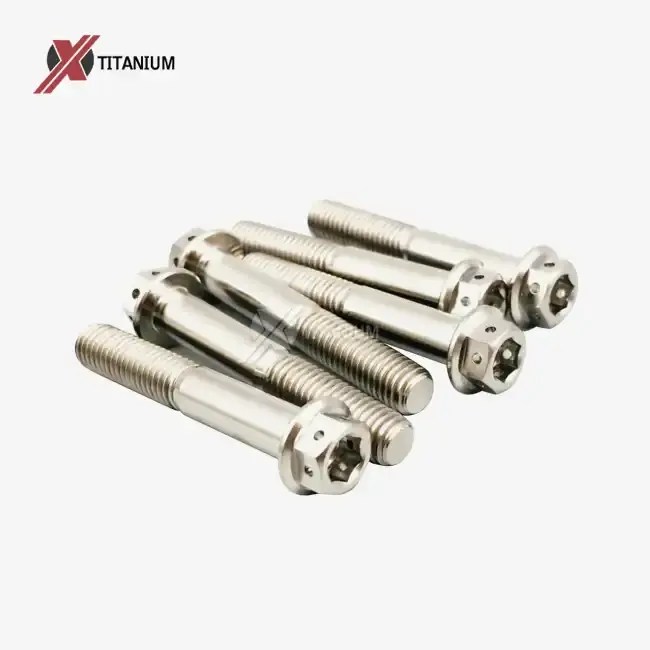
Most of the titanium bolts motorcycle applications used on motorcycles are Grade 5 (Ti-6Al-4V) alloys, which are made up of 6% aluminium and 4% vanadium. It has a density of only 4.43 g/cm³, but its tensile strength is between 900 and 1050 MPa and its yield strength is around 880 MPa. The difference in weight is especially noticeable when you look at the whole motorbike. Changing all the steel fasteners in the frame, engine, and suspension systems can cut the bike's mass by several kilograms.
Material Properties That Matter for Motorcycle Engineering
Besides basic measurements of strength, there are a number of material properties that directly affect how well fasteners work in motorcycle settings. Titanium's inactive oxide layer forms right away when it comes into contact with air. It protects against rust from the air, road salt, fuel spills, and chemicals. To get the same level of protection, steel screws need extra coatings like zinc plating or powder coating. However, these surface treatments wear off over time due to mechanical wear and exposure to the environment.
Another important difference is thermal stability. At temperatures up to 400°C, titanium bolts motorcycle keep their mechanical qualities. This means they can be used in exhaust manifolds and other engine parts that operate at high temperatures. In these high-heat areas, standard steel nuts may lose strength and have problems with thermal expansion, which could cause them to loosen or damage the threads over time.
Common Application Zones in Motorcycle Assemblies
Titanium bolts motorcycle are carefully used in a number of important assembly areas by motorcycle makers and aftermarket builders. Engine cover bolts lose less weight without losing holding force, and brake calliper fixing bolts use titanium's high shear strength to keep links that are safety-critical in place. Titanium is used in suspension parts like triple clamp pinch bolts and axle pinch bolts to lower unsprung weight, which directly improves the handling and reaction of the suspension. Titanium is very good at resisting rust and staying stable at high temperatures. This means that exhaust system fasteners can be used even after years of being exposed to extreme heat and corrosive combustion fumes.
Performance Comparison: Strength, Weight, and Corrosion Resistance
To find out how much better titanium bolts motorcycle applications work, you have to look at a lot of different factors that affect how well and how long a motorbike lasts. For uses that care about weight, the strength-to-weight ratio is the most important measure of efficiency. Grade 5 titanium has a specific strength of about 214 MPa·cm³/g, while Grade 10.9 steel only has a specific strength of about 128 MPa·cm³/g. With a 67% increase in specific strength, it is possible to reduce mass without affecting the structure's stability.
Weight Reduction Impact on Motorcycle Dynamics
Using lighter bolts in wheels and brake systems to lower the rotational mass makes the acceleration reaction and suspension performance better. In terms of how well the suspension dampens, taking away 100 grams of unsprung weight feels like taking away 300 to 500 grams of the motorcycle's total mass. When steel screws are switched out for titanium bolts motorcycle on brake rotors, calliper bolts, and wheel assemblies, each wheel assembly usually loses between 200 and 400 grams of weight. This decrease directly improves the suspension system's capacity to keep tires in contact with the road even during fast cycles of compression and release.
Lowering the center of gravity by reducing the weight of the upper frame parts in a planned way makes the car easier to handle and more confident when turning. When titanium bolts motorcycle are put in handlebar clamps, upper triple clamps and fairings, they move weight away from high-mounted areas where it has the most impact on how the motorbike moves. After converting all of their fasteners to titanium, racing teams and OEM performance sections have seen real gains in lap times and handling accuracy.
Corrosion Resistance in Real-World Environments
Accelerated rust testing shows that titanium bolts motorcycle is better at withstanding the elements than both carbon steel and stainless steel. According to ASTM B117 standards, salt spray testing shows that Grade 5 titanium has no surface degradation after 1000 hours or more of continuous contact. Zinc-plated steel screws, on the other hand, start to show corrosion within 48 to 96 hours. Even though different types of stainless steel work about the same, they still get crevice rust and surface discolouration after being exposed to air for a long time.
Fasteners wear out faster on motorcycles that are used near the coast, in winter conditions with road salt, or in warm areas with high humidity. When steel nuts are used in these conditions, oxidation growth can cause them to seize within their threads. This makes regular maintenance hard and sometimes requires damaging methods to remove. Even after years of use, titanium bolts motorcycle fasteners can still be taken apart. This cuts down on upkeep time and keeps expensive aluminium parts from getting damaged during removal.
Cost Analysis and Value Proposition for Procurement
The biggest reason why cost-conscious buyers don't use titanium bolts motorcycle applications more often is the difference in price when buying them initially. When you look at unit prices, Grade 5 titanium nuts are usually 8–15 times more expensive than steel screws that do the same job. A sport motorcycle titanium fastener kit with 100 to 150 pieces could cost between $800 and $1500. A steel fastener set with the same number of parts costs between $80 and $150.
To find the total cost of ownership, you have to look at more than just the original purchase price. You have to also consider how often the item needs to be maintained, replaced, and its performance value. In corrosive settings, steel fasteners usually need to be replaced every two to three years to keep their look and function. Titanium bolts motorcycle fasteners, on the other hand, can be used for the entire life of the motorbike. Hidden costs like the labour needed to remove stuck steel fasteners and the chance of ruining threaded aluminium parts during extraction make titanium a better long-term investment.
Bulk Procurement and Supplier Considerations
Companies that need to buy a lot of titanium bolts motorcycle for production lines or fleet maintenance can arrange bulk discounts that bring down the price difference. By building ties with specialised titanium fastener makers, you can get thread lengths, head styles, and surface treatments that are exactly what you need for your application. A lot of providers have OEM partnership programs that include technical help, paperwork for material certification, and services for managing inventory.
It is important to check the quality of titanium bolts motorcycle because there are products on the market that are wrongly labelled as Grade 5 titanium but use weaker commercially pure titanium grades. Reliable sellers give test records on the materials they sell that prove their chemical composition according to ASTM B348 standards and their mechanical property certification. Purchasing teams should ask for batch tracking and spectroscopy analysis records to make sure that the metal has the right amount of vanadium (3.5–4.5%) and aluminium (5.5–6.75%).
Performance Value Justification for Engineering Teams
Titanium bolts motorcycle can improve performance enough to warrant higher prices in race situations, for high-end motorcycle models, and for performance-focused aftermarket goods. Improving power-to-weight ratios is directly linked to losing weight. For example, losing 1 kilogram of mass is about the same as gaining 1.5 to 2 horsepower in sprinting performance. When you combine less spinning inertia with less unsprung weight, you get better balance, which customers see as big improvements in the motorcycle's abilities.
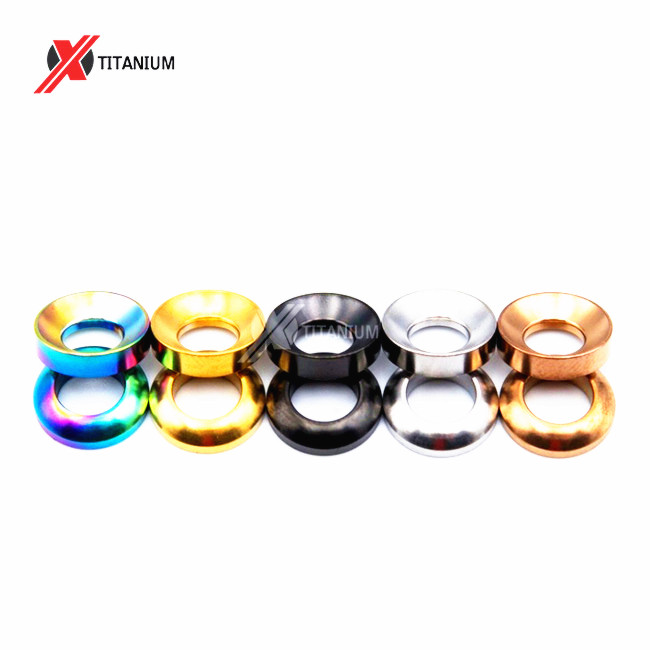
Titanium bolts motorcycle are seen as a feature that sets high-end motorcycles apart from others. This helps them charge more for their products and strengthens their brand standing in performance segments. The unique look of gold, blue, purple, or rainbow-coloured anodised titanium screws makes them stand out, which appeals to buyers who are willing to pay more for customisation and personalisation.
Installation and Maintenance Considerations for Titanium Bolts
Galling is the main problem with titanium bolts motorcycle that can be avoided by using the right fitting methods. When titanium surfaces come into touch with each other under pressure, they start to cold-weld together, which could lead to thread seizure. Professional installation procedures call for anti-seize compound or copper paste to be applied to titanium threads before they are installed. This makes a layer of lubrication that keeps metals from touching directly.
Torque Specification Adjustments
Titanium doesn't resist like steel does, so the torque setting needs to be changed to get the same gripping force. When techs replace steel fasteners with titanium bolts motorcycle ones that are the same size, they should lower the power by about 10 to 15 percent to make up for the friction reduction caused by the lubricant. Manufacturers' torque specifications usually assume that the installation is dry, so installations of titanium that have been oiled hit the goal preload at lower torque values.
When putting titanium bolts motorcycle in important places like brake callipers, suspension parts, and engine assemblies, you need to use precise torque tools. When titanium nuts are over-torqued, they can be stretched past their yield point. This lowers their clamping force forever and could lead to failure. Under-torquing lets parts move and causes fretting wear, which speeds up fatigue failure. As long as you follow the manufacturer's instructions and think about how the grease is working, the fitting will go smoothly and last a long time.
Compatibility with Different Materials
Titanium is very good at galvanic interaction with aluminium metals that are often used to build motorcycles. Titanium bolts motorcycle is one of the best materials for fastening aluminium threaded parts because there isn't much of an electrical potential difference between it and aluminium. Stainless steel fasteners, on the other hand, can cause galvanic corrosion in aluminium threads when wetness makes a way for electricity to flow.
The galvanic series arrangement should be checked when titanium bolts motorcycle are used to attach steel or other material parts. Titanium stays safe in most galvanic pairs because it is in a noble position, but in some situations it can speed up rust in less noble materials. Galvanic interaction risks are kept to a minimum when titanium screws are installed with the right washers and anti-seize chemicals.
Making the Right Choice: When to Opt for Titanium Over Steel Bolts?
Frameworks for making decisions about which fastener material to use should be based on the goals of the application, the working environment, and the budget. Weight-critical parts, places that are likely to rust, and high-temperature settings are all places where titanium bolts motorcycle are most useful. In professional racing motorbike races, where every speed edge counts, using titanium fasteners all over the chassis and drivetrain is the obvious choice.
When it comes to street bikes, limited usage of titanium bolts motorcycle works best in places that are exposed and likely to rust, as well as in rotating parts where less weight makes the reaction better. Putting brake system fasteners, wheel axle parts, and exhaust gear at the top of the list lowers change costs and raises performance. Fairings and exterior bolts are another high-value use for titanium. Its resistance to corrosion keeps their look, and the unique anodised colours make them look even better.
Industry-Standard Titanium Grades and Specifications
Grade 5 (Ti-6Al-4V) is the standard for structural titanium bolts motorcycle. It has the best mix of strength, weight, and price among titanium alloys that are sold in stores. This grade meets the requirements set out in ASTM B348, ASTM F136, and AMS 4928. These guidelines make it easy to check the quality and authenticity of materials. Grade 23 (Ti-6Al-4V ELI), which has extra-low interstitial content for better ductility, may be used in some specialised applications. However, this expensive grade is usually only used in aircraft applications.
The methods used to make fasteners have a big effect on the quality and performance of the finished product. Because the grain flow is kept intact during forming, cold-headed titanium bolts motorcycle are stronger than milled ones. When you roll threads instead of cutting them, the material stays continuous and the wear resistance goes up by 50–100% compared to cut threads. For titanium screws that are used in cyclic loading situations, the procurement requirements should make it clear that they need rolled threads.
Addressing Common Misconceptions
When people worry about how strong titanium bolts motorcycle are compared to high-grade steel, it's usually because they are comparing the wrong types. It is true that widely pure titanium Grade 2 is not as strong as structural steel, but Grade 5 titanium alloy is as strong as or stronger than Grade 8.8 and Grade 10.9 steel fasteners while being much lighter. Understanding grade labels and asking for the right material certifications clears up any questions about how well something will work.
A common misconception is that titanium bolts motorcycle need special tools to be installed. Titanium nuts and bolts can be used with regular hex keys, socket wrenches, and torque tools. Applying anti-seize powder and possibly changing torque specs are the main differences in installation. Neither of these tasks needs special tools. Because they are so easy to use, titanium fasteners can be added to current repair and building processes without any problems.
Conclusion
Titanium bolts motorcycle applications are clearly better than standard steel screws in terms of their strength-to-weight ratio, resistance to corrosion, and long-term reliability. Even though titanium is much more expensive to buy at first, it has a higher total ownership value because it lasts longer, needs less upkeep, and performs better in weight-sensitive uses. When purchasing managers look at different fastener choices, they should do an application-specific cost-benefit analysis that takes into account the operational environment, performance goals, and costs over the product's lifetime. Putting Grade 5 titanium screws in key places in a planned way gives the best return on investment while still leaving money for less demanding uses where steel is still suitable.
FAQ
Are titanium fasteners strong enough for safety-critical brake system applications?
Tensile strength of Grade 5 titanium bolts motorcycle is between 900 and 950 MPa, which is about the same as Grade 10.9 steel screws used in tough structural uses. Professional race events, like MotoGP, use titanium screws in their brake systems because they are strong enough for the most demanding uses. When installed correctly with the right amount of torque and anti-seize substance, the clamping force will be stable and work well for a long time.
Will titanium bolts cause corrosion damage to aluminum engine components?
Titanium bolts motorcycle is one of the safest materials for fastening aluminium threaded parts because it is very good at galvanic compatibility with aluminium alloys. Galvanic rusting doesn't happen with titanium and aluminium because their electrochemical potential differences are very small. This is something that usually happens with stainless steel bolts. The anti-seize treatment adds extra protection and makes it easy to remove for future care.
Can I directly replace steel fasteners with titanium without modifying torque specifications?
To account for the changes in friction caused by anti-seize lubrication, force must be adjusted for titanium bolts motorcycle. For setups using dry steel, lowering the applied torque by 10-15% below what the maker recommends will give you the same preload in lubricated titanium fasteners. This adjustment keeps the clamping force right across the joint contact and stops the strain from getting too high.
Partner with Chuanglian for Your Titanium Fastener Needs
Precision-engineered titanium bolts motorcycle uses are produced by Baoji Chuanglian New Metal Material Co., Ltd. using CNC-machined Grade 5 (Ti-6Al-4V) alloy and have full material approval. Our factory in Baoji City, which is known around the world as the "City of Titanium," uses modern CNC cutting and strict quality control systems to make sure that all of our production batches perform the same way. We can make threads to your exact specs (M5 to M14), polish and anodise the surface in titanium natural, gold, blue, green, purple, black, and rainbow finishes, and we offer bulk prices for OEM partnerships and large purchases. Get in touch with our technical team at info@cltifastener.com or djy6580@aliyun.com to talk about your unique needs and ask for material certifications for your titanium bolts motorcycle source review.
References
1. Boyer, R., Welsch, G., & Collings, E.W. (1994). Materials Properties Handbook: Titanium Alloys. ASM International, Materials Park, Ohio.
2. Donachie, M.J. (2000). Titanium: A Technical Guide, Second Edition. ASM International, Materials Park, Ohio.
3. Lutjering, G. & Williams, J.C. (2007). Titanium: Engineering Materials and Processes, Second Edition. Springer-Verlag, Berlin.
4. Schutz, R.W. & Watkins, H.B. (1998). Recent Developments in Titanium Alloy Application in the Energy Industry. Materials Science and Engineering: A, Volume 243, Issues 1-2.
5. Veiga, C., Davim, J.P., & Loureiro, A.J.R. (2012). Properties and Applications of Titanium Alloys: A Brief Review. Reviews on Advanced Materials Science, Volume 32, Number 2.
6. Wanhill, R.J.H. & Barter, S.A. (2012). Fatigue of Beta Processed and Beta Heat-treated Titanium Alloys. Springer Science & Business Media, Dordrecht.

Learn about our latest products and discounts through SMS or email