- English
- French
- German
- Portuguese
- Spanish
- Russian
- Japanese
- Korean
- Arabic
- Greek
- German
- Turkish
- Italian
- Danish
- Romanian
- Indonesian
- Czech
- Afrikaans
- Swedish
- Polish
- Basque
- Catalan
- Esperanto
- Hindi
- Lao
- Albanian
- Amharic
- Armenian
- Azerbaijani
- Belarusian
- Bengali
- Bosnian
- Bulgarian
- Cebuano
- Chichewa
- Corsican
- Croatian
- Dutch
- Estonian
- Filipino
- Finnish
- Frisian
- Galician
- Georgian
- Gujarati
- Haitian
- Hausa
- Hawaiian
- Hebrew
- Hmong
- Hungarian
- Icelandic
- Igbo
- Javanese
- Kannada
- Kazakh
- Khmer
- Kurdish
- Kyrgyz
- Latin
- Latvian
- Lithuanian
- Luxembou..
- Macedonian
- Malagasy
- Malay
- Malayalam
- Maltese
- Maori
- Marathi
- Mongolian
- Burmese
- Nepali
- Norwegian
- Pashto
- Persian
- Punjabi
- Serbian
- Sesotho
- Sinhala
- Slovak
- Slovenian
- Somali
- Samoan
- Scots Gaelic
- Shona
- Sindhi
- Sundanese
- Swahili
- Tajik
- Tamil
- Telugu
- Thai
- Ukrainian
- Urdu
- Uzbek
- Vietnamese
- Welsh
- Xhosa
- Yiddish
- Yoruba
- Zulu
Comparison of titanium Torx socket cap bolts versus stainless steel bolts
When looking at bolt materials for high-performance bikes, the choice between titanium and stainless steel has a big effect on both how well they work and how long they last. M10 Titanium Torx Socket Cap Bolts for Ducati Motorcycle Bike uses have great strength-to-weight benefits. They are 45% lighter than steel versions while still having a tensile strength of over 895 MPa. Grade 5 titanium alloy (Ti-6Al-4V) doesn't rust in tough environments and doesn't need any protective coatings. Stainless steel versions, while cheaper, add extra weight and need to be checked regularly for galvanic reactions in metal structures that aren't the same.
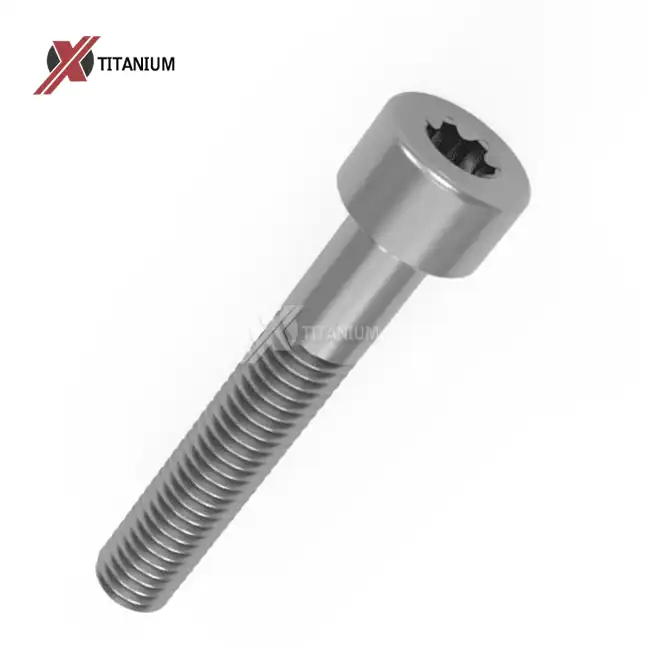
Understanding Torx Socket Cap Bolts for Ducati Motorcycles
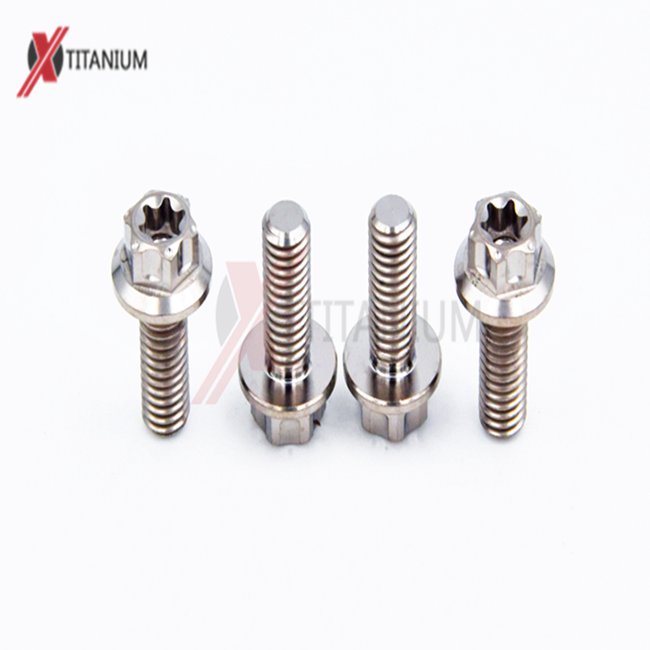
For high-performance bikes, fastening methods must strike a balance between keeping the structure strong and reducing weight. M10 Titanium Torx Socket Cap Bolts for Ducati Motorcycle Bike are an important part of how Ducati bikes are put together and how they are maintained. They have a direct effect on safety margins and performance traits when the bikes are loaded and unloaded quickly.
Material Composition and Specifications
The fasteners are made of Grade 5 titanium alloy (Ti-6Al-4V), which has about 6% aluminium and 4% vanadium in it. This makes for a better metal structure that gives the screws better dynamic properties. Our CNC-machined bolts meet ISO14579 standards or special Ducati requirements. They have a Torx 50 head design for better power transfer. The density of the material is 4.43 g/cm³, which is much lower than stainless steel's 7.9 g/cm³. It also has the same tensile strength as high-grade alloy steels. Surface processes like cleaning, anodising, and nitriding make things even more durable. Anodised finishes come in natural titanium, gold, blue, green, purple, black, and rainbow colours.
Corrosion Resistance and Environmental Performance
Titanium naturally creates an oxide layer that protects it from corrosion in the air, contact to road salt, and chemical breakdown. This layer does not need any extra treatments. This passive film heals itself when it gets broken, so it can be used in marine settings and places where winter road treatments are used. The material stays structurally sound at temperatures ranging from -40°C to +400°C, which makes it suitable for engine parts and exhaust systems that go through a lot of temperature changes. Some types of stainless steel, like 304 and 316, are resistant to rust because they contain chromium. However, they can still pit and crack when they are exposed to chloride-rich areas, which is common when riding along the coast.
Application in High-Performance Motorcycle Systems
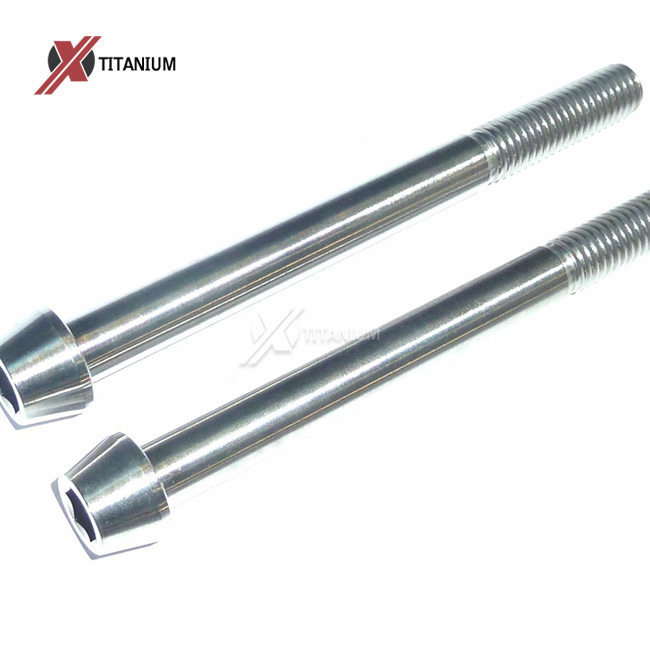
These special screws, specifically M10 Titanium Torx Socket Cap Bolts for Ducati Motorcycle Bike, are used in key structural links, mounting places for brake callipers, engine case assemblies, and suspension parts on Ducati bikes where reducing weight directly improves handling. Using titanium bolts to reduce unsprung mass makes the suspension respond better and the way it moves faster. When installing torque, the Torx socket interface spreads it out more evenly than hex head designs. This makes it less likely that the bolt head will get damaged during assembly or service.
Titanium vs Stainless Steel: A Comprehensive Comparison for Ducati Motorcycle Bolts
When procurement workers look at fastener materials, they need to think about more than just the original cost of acquisition. The next section looks at some of the main ways that titanium and stainless steel bolts are different in motorbike uses.
Mechanical Strength and Fatigue Resistance
Grade 5 titanium alloy has a yield strength of about 880 MPa and a tensile strength of over 950 MPa, which puts it in the middle of Grade 8.8 and Grade 10.9 steel. Material fatigue resistance is very important in motorbike uses with a lot of vibration, and titanium's higher fatigue limit makes repair intervals longer. When making threads, rolling them instead of cutting them keeps the grain flow patterns that make them last 30 to 40 percent longer than polished threads. Bolts made of stainless steel Grade A4-80 are strong enough for many uses and are less expensive, but they add about 80% more weight to each fastener.
Weight Reduction Impact on Vehicle Dynamics
When compared to steel versions, each titanium M10 bolt saves about 15 to 20 grams. The total weight savings for a motorbike system with 50 to 80 key fasteners is 750 to 1600 grams, mostly in areas where mass is not being sprung. This decrease makes the throttle reaction, stopping power, and turning steadiness better. Track testing data from racing uses shows that using titanium fasteners all over the car improves lap times, especially in areas where speed is increased and direction changes happen quickly.
Total Cost of Ownership Analysis
Titanium screws are very expensive—usually 300–500% more than stainless steel options when they are first bought. This investment will pay off in the long run because it will last longer between replacements, require less upkeep for corrosion, and lower the chance of failures in the field. Every so often, stainless steel bolts need to be checked for thread galling, stress corrosion cracks, and a galvanic reaction with aluminium parts. When upkeep labour costs and possible downtime costs are taken into account, titanium's lifetime economics often make up for the higher price for fleet owners and OEM makers who put reliability first.
How to Choose the Right Torx Socket Cap Bolt for Your Ducati Motorcycle?
When choosing materials, it's important to carefully look at the needs of the product, the conditions of the working area, and the supplier's abilities.
Alignment with OEM Standards and Specifications
Ducati's technical specs spell out exactly what fasteners are needed for each part of the assembly, taking into account load routes, torque values, and interface materials. To make sure the load is evenly distributed, aftermarket titanium bolts must match the OEM's standards for dimensions like thread contact length and head-to-shank transition geometry. Teams in charge of buying things should make sure that suppliers follow the chemical composition rules in ASTM B348 Grade 5 and ask for batch-specific material test reports that show the tensile qualities.
Environmental Condition Assessment
An study of the operating environment finds out about corrosive elements, temperature extremes, and vibration patterns. Salt spray speeds up rust in motorcycles that are used near the coast, which is why titanium's passive oxide defence is so useful. Anodised surface treatments make things harder and let you change how they look. Type II anodising is better at resisting wear than Type III artistic methods. Nitrided surfaces make the bolt surface harder (up to 70 HRC) while keeping the core's ductile qualities. This is useful for racing uses.
Supplier Quality Assurance and Certification
To tell the difference between real Grade 5 titanium and commercially pure Grade 2 material, you need to do more than just look at it. Reliable sellers provide material traceability documents, such as spectroscopy analysis that proves the amount of aluminium and vanadium present. Quality management certifications, like AS9100 for aircraft uses or ISO 9001 for manufacturing, show that process controls have been set up. Rolled thread production is a key sign of quality because cut threads have a lower fatigue resistance because they have a disturbed grain structure.
Procurement and Sourcing Guide for Titanium Torx Socket Cap Bolts for Ducati
Strategic buying relationships make sure that the quality of the materials, the dependability of shipping, and the technical support are all the same throughout the duration of a product.
Identifying Qualified Suppliers and Manufacturers
There are high hurdles to entry into the titanium processing business because you need to know a lot about metals and how to machine titanium. Manufacturers in places like Baoji City, which is known around the world as a titanium manufacturing hub, can take advantage of integrated supply lines and high numbers of skilled workers. Procurement teams should look at a possible supplier's CNC machining capabilities, quality control infrastructure (such as hardness tests and PMI analysis tools), and experience working with suppliers in the aircraft or medical device industries that have strict traceability requirements—all of which are critical for producing reliable M10 Titanium Torx Socket Cap Bolts for Ducati Motorcycle Bike.
Volume Procurement and Customization Options
When dealing with OEMs and aftermarket service companies, you need to use different ways to buy things. Customised thread standards, unique surface treatments, and packaging arrangements that make assembly line processes easier are all benefits of high-volume production contracts. For smaller repair shops, pre-assembled kits with frequently changed fasteners for certain Ducati models may be a good way to get what they need. Suppliers who offer flexible minimum order numbers while still keeping batch regularity are good at serving a wide range of customers.
Certification and Post-Sale Support Considerations
Each shipment should come with a material proof of conformance that lists the chemicals used, their mechanical qualities, and how they can be tracked back to the raw material heat lots. Suppliers whose quality management systems are in line with international standards show that they are dedicated to being consistent and always getting better. Technical support features, such as advice on torque specifications, anti-seize compound suggestions, and galling prevention routines, add a lot of value to deals that don't involve common fasteners. Having established warranty policies that cover material faults and production flaws lowers the risk of buying expensive titanium parts.
Installation Best Practices and Maintenance for Titanium Torx Socket Cap Bolts on Ducati Bikes
The service life of fasteners and the dependability of systems are both increased by following the right installation and preventative maintenance steps.
Torque Specification and Installation Procedures
Because titanium is easily galling, there are specific ways to place it. Copper or nickel particles in anti-seize products lower friction coefficients when tightening, but they need to be used with different pressure values. When you replace steel screws with titanium ones, you should lower the end torque settings by 10 to 15 percent to account for the effects of lubrication and keep the materials from being over-tensiled past their yield points. To make sure that the threads are all engaged evenly, use torque wrenches that have been measured and have accuracy tolerances of 3–5%. Also, apply torque in small steps rather than one long move.
Routine Inspection and Maintenance Strategies
Visual inspection should be done on a regular basis to look for damage to the surface, grinding wear at locked interfaces, or discolouration that means the part is too hot. Maintenance plans tell you how often to remove and check high-stress screws, like those that hold the brake calliper and the suspension in place. Use fluid and brass brushes to clean threads and get rid of dirt without hurting titanium surfaces. When reinstalling, use anti-seize chemicals again to keep galling protection. Replace any bolt that has thread warping, head damage, or changes in size from what was originally specified.
Preventing Galvanic Corrosion in Mixed-Metal Assemblies
Titanium is higher on the galvanic series than most aluminium alloys used in motorbike parts, which makes it a more valuable metal. Even though there is galvanic potential, titanium doesn't produce as much toxic current as stainless steel and aluminium. When anti-seize paste is applied, it forms a protective layer that lowers galvanic activity even more. It's best not to mix bolt materials within the same assembly, because different thermal expansion factors cause stress to build up when the temperature changes.
Conclusion
Comparing M10 Titanium Torx Socket Cap Bolts for Ducati Motorcycle Bike to stainless steel options shows that they have different performance profiles that are better for different tasks. Titanium screws have real benefits in terms of weight reduction, resistance to corrosion, and fatigue life that make them worth the extra cost in high-performance settings. Stainless steel choices are still available for projects that need to stay within a budget, even though they require more weight and upkeep. Instead of just comparing unit prices, procurement choices should take into account total ownership costs, application-specific loading conditions, and seller qualification.
FAQ
Can titanium bolts match the strength of high-grade steel fasteners?
The tensile strength of Grade 5 titanium alloy is about the same as that of Grade 10.9 steel, but it is more resistant to wear. The material is close to, but not quite as strong as, Grade 12.9 steel, so load estimates are needed for important uses. The right choice of material depends on the safety factor and stress levels that need to be met.
Do M10 titanium bolts require special installation tools?
These screws can be used with standard Torx 50 drivers, but you must have a measured torque wrench. Using an anti-seize substance stops galling during fitting. By lowering the force requirements by 10 to 15 percent compared to steel nuts, lubricant friction is reduced and the material doesn't give way.
How do titanium fasteners affect vehicle warranty coverage?
Installing M10 Titanium Torx Socket Cap Bolts for Ducati Motorcycle Bike from a different maker usually doesn't void the manufacturer's warranty, unless parts that were fitted incorrectly cause damage. For warranty claims support, purchasing managers should make sure that new fasteners meet or go beyond OEM specs and keep records of material certifications.
Partner with Chuanglian for Your Titanium Fastener Requirements
Baoji Chuanglian New Metal Material Co., Ltd. makes precision-engineered M10 Titanium Torx Socket Cap Bolts for Ducati Motorcycle Bike for use on Ducati motorcycles and in many other industries. Our factory in Baoji City, which is known as China's titanium production center, uses CNC machines that can keep ISO14579 standards across multiple production runs. For every batch, we use strict quality control methods like spectroscopy analysis, tension testing, and physical verification. Our metallurgical knowledge covers the aircraft, petroleum, and medical device industries, so you can be sure that your fasteners will work in mission-critical situations. As a reliable maker and provider, you can get in touch with our technical team at info@cltifastener.com or djy6580@aliyun.com to talk about your titanium Torx socket cap bolt needs.
References
1. American Society for Testing and Materials. Standard Specification for Titanium and Titanium Alloy Bars and Billets, ASTM B348-13. West Conshohocken: ASTM International, 2013.
2. Lutjering, Gerd, and James C. Williams. Titanium: Engineering Materials and Processes. 2nd ed. Berlin: Springer-Verlag, 2007.
3. Society of Automotive Engineers. Aerospace Material Specification for Titanium Alloy Bolts, AMS 4967. Warrendale: SAE International, 2018.
4. Donachie, Matthew J. Titanium: A Technical Guide. 2nd ed. Materials Park: ASM International, 2000.
5. International Organisation for Standardization. Mechanical Properties of Corrosion-Resistant Stainless Steel Fasteners, ISO 3506-1:2020. Geneva: ISO, 2020.
6. Boyer, Rodney, Gerhard Welsch, and E.W. Collings, eds. Materials Properties Handbook: Titanium Alloys. Materials Park: ASM International, 1994
Learn about our latest products and discounts through SMS or email