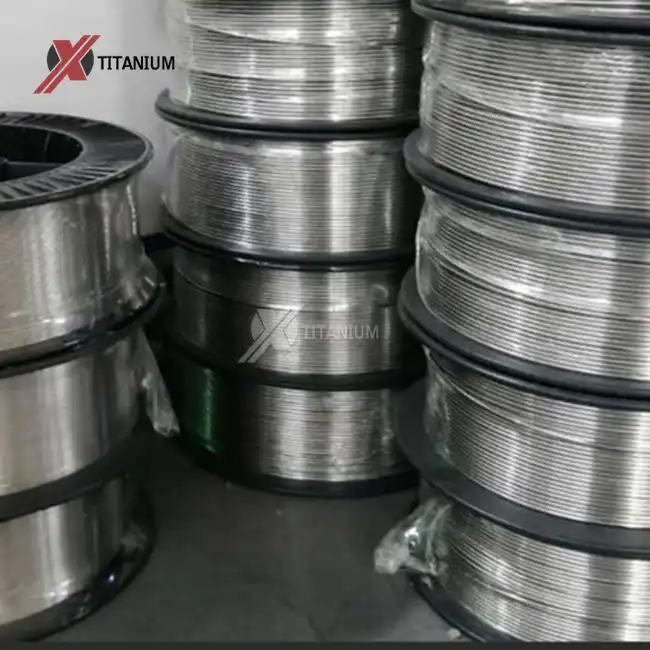
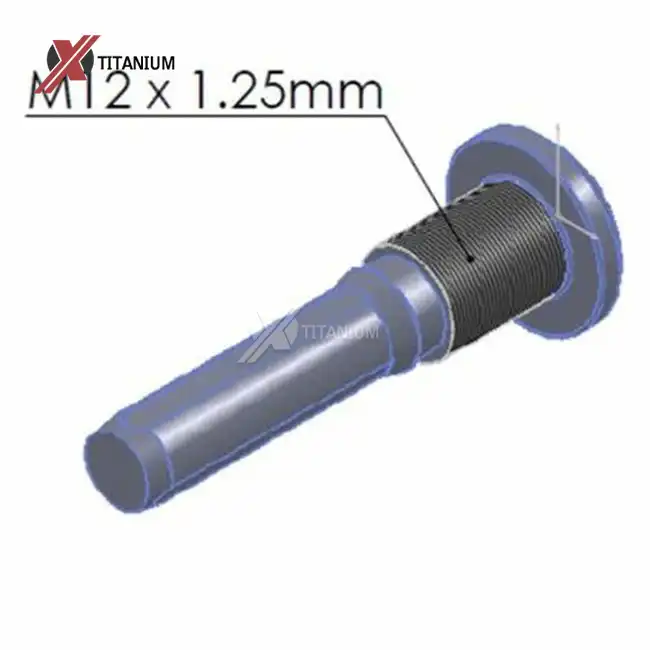
In modern industrial production, titanium alloy pipe is widely acknowledged as one of the materials that provides the highest level of adaptability and performance. These amazing pipes effectively combine titanium's natural resistance to corrosion with the better mechanical properties that come from careful alloying. Industries all around the world employ titanium alloy pipe for jobs where conventional materials can't meet the performance, lifetime, and safety standards that are required for important tasks.

Aerospace Applications: The Sky's the Limit
The aerospace industry is the largest and most important consumer for titanium alloy pipe systems in the globe. Aircraft manufacturers utilize these pipes for many things, such as fuel lines, hydraulic systems, and pneumatic systems. A lot of the 787 Dreamliner, which is constructed by Boeing, is composed of titanium pipe fittings and tube constructions. About 15% of the plane's weight is pure titanium.
Aerospace titanium pipes work particularly well at high altitudes, where temperatures may range from -65 degrees Fahrenheit to 180 degrees Fahrenheit. Aircraft designers may make the aircraft lighter while still keeping its structural integrity since the material has a great strength-to-weight ratio. Pipes used in commercial aircraft must be able to handle pressures of up to 3,000 pounds per square inch (PSI) and be able to handle fatigue from repeated heat cycling and vibration.
Engine makers care a lot about heat-resistant titanium pipe when it comes to bypass ducts and cooling systems. For these uses, materials that can keep their mechanical properties at temperatures beyond 800 degrees Fahrenheit are needed. Traditional steel pipes would be heavier and need to be replaced more often than titanium alloy pipes. In terms of both cost and how well they work, titanium alloy solutions are superior.
Medical Device Manufacturing: Precision Meets Biocompatibility
Medical equipment manufacturers utilize titanium pipe a lot because it is very biocompatible and resistant to corrosion. These pipes are used by companies that make surgical instruments to make tools that are minimally invasive, arthroscopic equipment, and devices that can be implanted. Because the substance is not harmful, it is great for situations where it comes into close touch with patients.
Orthopedic implant makers use titanium seamless tubing to make personalized prostheses and parts for replacing joints. The material's modulus of elasticity is very similar to that of human bone, which lowers stress shielding effects that may cause implants to fail. Studies reveal that titanium implants have a 95% success rate over 15 years, which is far better than other materials.
Another increasing industry is dental applications. The qualities of titanium alloy tubes let manufacturers make equipment that are light, strong, and resistant to germs. The material's capacity to connect with live tissue (osseointegration) makes it very useful for permanent implants that need to stay stable for a long time.
Chemical Processing: Conquering Corrosive Environments
Chemical processing businesses are often having problems with aggressive media that quickly break down traditional pipe systems. Pipes built of titanium alloys that don't rust work well in places where there are chlorides, acids, and alkaline solutions. These pipes are used by petrochemical refineries to move corrosive liquids that would ruin stainless steel systems in a matter of months.
Desalination facilities are a big place where typical materials don't work because they shatter under chloride tension. Because titanium pipes don't corrode, these facilities can run all the time without having to shut down for maintenance as often as other materials do. Most of the time, the original cost of titanium systems is recouped in three to five years via lower maintenance expenses and more uptime.
Pharmaceutical production requires the greatest standards of purity, which is why high-strength titanium alloy pipes are necessary for important process streams. These systems keep the quality of the drugs intact by keeping metallic ions from getting into the products. The smooth surface of the material makes it harder for germs to develop and makes it easier to check that cleaning is done correctly.
Marine Engineering: Mastering the Maritime Environment
Marine engineering uses plumbing systems in some of the most difficult places on Earth. Because seawater is so hostile and the temperature and speed of the water are always changing, only the strongest materials can survive in it. Lightweight titanium pipe works very well for constructing ships, offshore platforms, and things that are underwater.
Naval ships use titanium systems for cooling seawater, putting out fires, and ballast operations. Because the material doesn't corrode galvanically, there is no requirement for sacrificial anodes or cathodic protection devices that are usually needed with steel pipes. This cuts down on the amount of maintenance needed and makes the vessel more available for operational missions.
Saltwater spray, hydrogen sulfide, and really bad weather are some of the problems that offshore oil rigs have to deal with. Engineers may change the size of titanium alloy pipes to fit their needs, which lets them make the walls thicker to handle pressure while still being resistant to corrosion. Compared to typical materials, which need to be replaced every 5 to 7 years, these systems may work for more than 20 years without needing to be replaced.
Energy Sector: Powering the Future
More and more, the energy industry depends on titanium pipes for both conventional and renewable energy production. Nuclear power facilities utilize these pipes in cooling systems, condensers, and heat exchangers where they need to be able to withstand radiation and last a long time. Because it doesn't absorb many neutrons, this material is great for nuclear uses.
Wind energy systems use titanium parts in their cooling circuits and hydraulic pitch control systems. These systems can handle millions of loading cycles over 20 years of use since the material is resistant to fatigue. Geothermal applications benefit from titanium's capacity to withstand corrosion from fluids that include sulfur, which may ruin regular pipe in only a few months.
For concentrated solar power applications, solar thermal plants employ titanium heat exchangers and pipe systems. These systems need to be able to handle thermal cycling between temperatures of 1000°F and higher while still being able to transmit heat efficiently. Heat treatment techniques for titanium alloy pipes improve the material's characteristics for these tough temperature conditions.
Advanced Manufacturing: Innovation Through Material Science
More and more, advanced manufacturing processes rely on the ability to weld titanium pipes to make complicated assemblies. Additive manufacturing systems employ titanium powder feedstock that is supplied via precision piping systems that must keep the flow rates steady and the surroundings free of contaminants. Because the material can be welded, producers can make bespoke shapes that would be impossible with materials that break easily.
Semiconductor production needs process settings that are very clean, because even little amounts of contamination may ruin pricey wafers. Titanium systems provide the required purity while being resistant to the harsh cleaning chemicals employed in these operations. The material's thermal stability lets it work at high temperatures without changing shape, which might impact the accuracy of the process.
3D printing uses titanium alloy pipe suppliers to make complicated interior cooling channels in tools for injection molding and die casting. To keep heat transfer efficiency high and provide enough mechanical strength, these uses need careful control over the thickness of titanium alloy pipes.
Sports and Recreation: Performance Enhancement
Companies that make high-performance sports equipment use lightweight titanium tubing to make bicycle frames, golf clubs, and racing gear. The material's capacity to dampen vibrations makes it more comfortable for users while yet being quite strong. Professional cycling teams say that their frames are 15–20% lighter than steel frames, which means they perform better.
Motorsports need materials that can handle very harsh circumstances while keeping their weight down. Titanium exhaust systems, roll cage parts, and fuel lines are safer since they are better at withstanding impacts and protecting against fire. More and more, racing rules call for titanium parts to be used in important safety systems.
Conclusion
As industries learn more about the unique features of titanium alloy pipes, their uses continue to grow. These pipes make it possible for technology to go forward while also being the most reliable. They are used in everything from aeronautical fuel systems to medical implants. Because it is so strong, resistant to corrosion, and biocompatible, this material is essential for important uses where failure is not an option. As production methods become better and prices keep going down, titanium alloy pipes will become more common in many different industries. This will lead to new ideas and higher performance requirements throughout the globe.
FAQ
Q1: What are the main advantages of titanium alloy pipe over stainless steel?
A: Compared to stainless steel, titanium alloy pipe is less likely to corrode, weighs 40% less, and is less likely to break down over time. Stainless steel rusts in chloride conditions, whereas titanium does not. This makes titanium perfect for marine and chemical uses.
Q2: How do titanium alloy pipe standards ensure quality consistency?
A: International standards like ASTM B338, ASTM B861, and ISO 5832-2 state what the composition, mechanical qualities, and testing criteria should be. These standards make guarantee that products from diverse producers and uses are consistent and reliable all across the world.
Q3: What factors determine titanium alloy pipe price in the market?
A: The price depends on the quality of the alloy, the size, the number of pieces, and how hard it is to make. Even if the initial prices of titanium are higher than those of other materials, the overall lifecycle costs are frequently lower since titanium lasts longer and needs less maintenance.
Partner with Chuanglian for Premium Titanium Alloy Solutions
Chuanglian has more than ten years of specialized expertise in making titanium pipes, which makes it one of the best in the world. Our AS9100 and ISO9001-certified factories make titanium alloy pipe supplier solutions that satisfy the highest standards. Our advanced quality control methods make sure that every batch works the same way, and our expert technical staff is always available to help with any application issues. Contact us at info@cltifastener.com or djy6580@aliyun.com to discuss your specific requirements.
References
1. Peters, M., Kumpfert, J., Ward, C.H., & Leyens, C. (2003). Titanium alloys for aerospace applications. Advanced Engineering Materials, 5(6), 419-427.
2. Rack, H.J., & Qazi, J.I. (2006). Titanium alloys for biomedical applications. Materials Science and Engineering: C, 26(8), 1269-1277.
3. Schutz, R.W., & Thomas, D.E. (1987). Corrosion of titanium and titanium alloys. Metals Handbook, 9th Edition, Volume 13, Corrosion, ASM International, 669-706.
4. Boyer, R., Welsch, G., & Collings, E.W. (1994). Materials Properties Handbook: Titanium Alloys. ASM International, Materials Park, Ohio.
5. Donachie, M.J. (2000). Titanium: A Technical Guide, 2nd Edition. ASM International, Materials Park, Ohio.
6. Lutjering, G., & Williams, J.C. (2007). Titanium, 2nd Edition. Springer-Verlag, Berlin Heidelberg.
_1742980398281.webp)