- English
- French
- German
- Portuguese
- Spanish
- Russian
- Japanese
- Korean
- Arabic
- Greek
- German
- Turkish
- Italian
- Danish
- Romanian
- Indonesian
- Czech
- Afrikaans
- Swedish
- Polish
- Basque
- Catalan
- Esperanto
- Hindi
- Lao
- Albanian
- Amharic
- Armenian
- Azerbaijani
- Belarusian
- Bengali
- Bosnian
- Bulgarian
- Cebuano
- Chichewa
- Corsican
- Croatian
- Dutch
- Estonian
- Filipino
- Finnish
- Frisian
- Galician
- Georgian
- Gujarati
- Haitian
- Hausa
- Hawaiian
- Hebrew
- Hmong
- Hungarian
- Icelandic
- Igbo
- Javanese
- Kannada
- Kazakh
- Khmer
- Kurdish
- Kyrgyz
- Latin
- Latvian
- Lithuanian
- Luxembou..
- Macedonian
- Malagasy
- Malay
- Malayalam
- Maltese
- Maori
- Marathi
- Mongolian
- Burmese
- Nepali
- Norwegian
- Pashto
- Persian
- Punjabi
- Serbian
- Sesotho
- Sinhala
- Slovak
- Slovenian
- Somali
- Samoan
- Scots Gaelic
- Shona
- Sindhi
- Sundanese
- Swahili
- Tajik
- Tamil
- Telugu
- Thai
- Ukrainian
- Urdu
- Uzbek
- Vietnamese
- Welsh
- Xhosa
- Yiddish
- Yoruba
- Zulu
Bicycle Titanium Spokes: How to Choose the Right Size and Finish
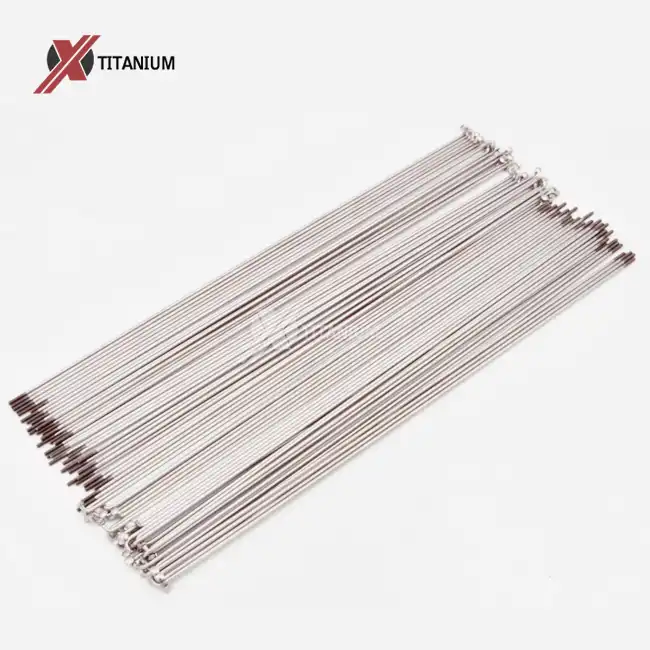
To choose the right size and finish for bicycle titanium spokes, start with your rim and hub measurements. Then match the diameter, length, thread, and surface treatment to the riding use. Our Gr5 (Ti-6Al-4V) spokes come in 1.8 mm, 2.0 mm, 2.2 mm, and 2.5 mm diameters, with custom lengths from 100 mm to 300 mm. Polished, anodized, and nitrided finishes serve different goals, from appearance to surface hardness. Treat the spoke as one part of the full wheel system, and confirm each detail with a sample before you place a volume order.
Start with the Wheel Application and Performance Requirements
Road and Climbing Wheels
First, you need to measure your rim and hub to find the right size and finish for your bicycle titanium spokes. Then, pick the right diameter, length, thread, and finish for the ride. Our Gr5 (Ti-6Al-4V) spokes come in four different diameters and lengths: 100 mm, 200 mm, 300 mm, and 1.8 mm. Different finishes, like polished, anodized, and nitrided, are used for different things, like how they look or how hard the surface is. Think of the spoke as a part of the wheel as a whole. Before you order a lot of them, make sure you are happy with every detail of a sample.
Most of the time, when people talk about road and climbing wheels, they first talk about how they feel to ride. Steel is about 7.9 g/cm³ dense, while titanium is about 4.43 g/cm³ dense. Our spokes are about 40% lighter than spokes made of stainless steel. Titanium is also less elastically stiff than steel. This means that it breaks more when it's heavy and can reduce noise. That makes you feel better, but the builder still needs to check the rim, spoke count, and tension to make sure the wheel isn't too stiff. Before you choose a diameter, you should ask the person who made the rim what the highest tension it can handle is. This is because the rim usually sets the ceiling.
Mountain, Gravel, and Touring Wheels
These wheels get hit and get wet, muddy, and salty. Titanium does not rust when it is wet and humid because it makes a stable metal layer. Stress cycles and impact loads are more important here than on smooth ground, so we need to look more closely at how fatigue acts. It was written by Gavin and published in the Journal of Engineering Mechanics in 1996. The study looked at how spoke patterns and cyclic stress affect spoke wear. It's stronger for tougher use when the diameter is bigger, like 2.2 mm or 2.5 mm, and there are more spokes to spread the load.
Write a Specification Sheet Before You Ask for Quotes
Before you ask for a price, write down the type of bike, wheel position, brake type, number of spokes, rim and hub measurements, and performance goal. It takes less time and money to make changes to a plan when the sheet is clear. It lets our engineers look at your picture and give you a choice of lengths and diameters. When a brand has more than one wheel model, having one sheet per model helps keep SKUs in order.
Choose the Correct Diameter, Length, and Thread
Match Diameter and Profile to the Load
Less heavy spokes make the wheel more flexible, so they work with light road bikes that don't carry much. Heavy-rider, cargo, or mountain wheels should have bicycle titanium spokes that are thicker. This makes the wheel stronger. One number, 900 to 1050 MPa, shouldn't help you decide. Our spokes have that much strength. Find out what the thread can do and how strong it is, as well as how it wears and bends. Send us a picture of your design if you need spokes that are butted or have different sections so we can see if it's possible before we make samples.
Calculate Length from Verified Measurements
If you use the wrong lengths, you'll have trouble with thread engagement and uneven tension. To figure this out, use real data. Along with the number of spokes and the pattern of laces, you need to know the rim's effective diameter, spoke-hole offset, hub flange diameters, and center-to-flange distances. Names for sizes like "700c" or "29er" don't tell you much. For bikes with disk brakes and back wheels that are set back, the left and right lengths often need to be different. We cut to the 100 mm to 300 mm lengths you tell us to. Just to be sure, I think you should measure a built model wheel and write down the exact length and any errors on a technical plan.
Confirm Thread, Nipple, and Hub Fit
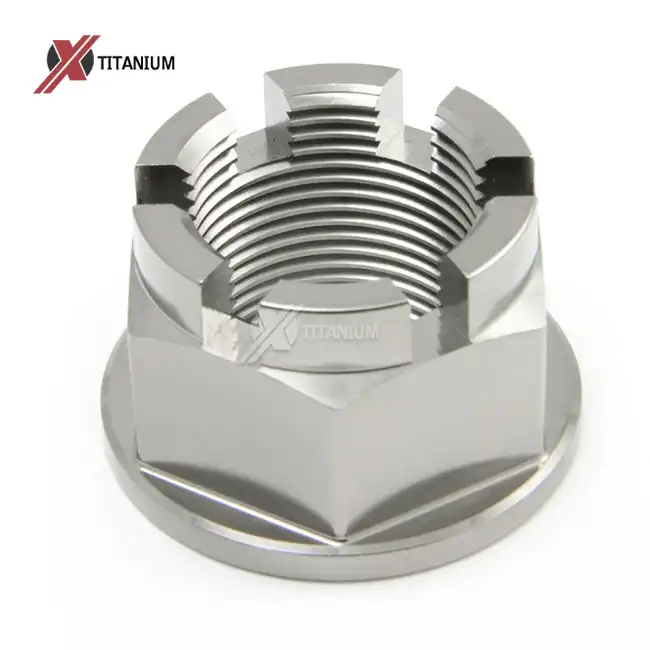
Taking care to roll the threads on our spokes. When Ti-6Al-4V metal is rolled, the grain flow stays the same. But when threads are cut, stress risers can form that let wear cracks form. Talk to the company that makes your nipple about the thread length, diameter, and pitch. Titanium can hit aluminum or brass nipples, but aluminum nipples are stronger and lighter. Do not let things stop up when you are putting them together. Another thing to check is the hub hole width, rim cutting, nipple head size, and washer size. You should also write the head style on the drawing, like "J-bend" or "straight-pull."
Choose the Appropriate Finish for Titanium Bicycle Spokes
Natural and Polished Finishes
It doesn't need much extra work, and natural bicycle titanium spokes look clean and technical. This makes it a good choice for many OEM programs. Once you polish, the cuts from cutting are gone, and the surface is smooth for a clean, high-end look. Small cracks are less likely to show up on a smoother surface, which is important for a part that is loaded and unloaded many times. Before we're done, we CNC make each spoke, and you can choose to have them polished. It usually looks good with the polished spokes of a high-end full wheel.
Anodized Colors and Nitriding
When titanium is anodized, a thin film of oxide forms on it. The color is changed by how thick the film is, which changes how light moves through it. Some of the colors we have are turquoise, gold, blue, green, purple, black, and rainbow. Brands can use this to match team colors or make their own unique wheel line. When you nitrate, you do it in a different way. It makes the surface tougher so it wears down less often, which might be good where spokes touch hub flanges or nipples. To mark something, choose color, and to wear down the surface, choose nitriding.
Check Batch Consistency and Fatigue Effects
A finish should never hurt what's below it. I think you should try finished spokes instead of raw wire because surface processes can change how Ti-6Al-4V wears down. You should agree on a color tolerance, a minimum order number, and a reference sample before you start production. This is important because every batch is different in terms of shade. After you clean and seal the threads, make sure that they stay within the accepted ranges for straightness, size, and condition. Our team makes sure that the anodized parts have the same color and surface, and we test each spoke to see how well it meets our specs.
Compare Materials and Verify Installation
Titanium vs. Stainless Steel
Most people still choose stainless steel. It's cheaper and easier to find parts, and wheel builders know this very well. Titanium needs a clear reason, like bicycle titanium spokes that weigh about 40% less, don't rust, or are used for high-end purposes. Ti-6Al-4V has an elastic modulus of about 114 GPa, while steel has an elastic modulus of about 200 GPa. This is why it feels softer. Since the spare weight is on the outside of the wheel, it counts as spinning weight. It is thought that a set of 32-spoke wheels weighs around 100 to 150 grams.
Carbon and Aluminum Alternatives
If you want carbon spokes to work well, they need rims, hubs, and repair steps that are made just for their system. Aluminum spokes are light, but you have to be very careful that they don't break or wear out. In this group, titanium is in the middle. Plus, it doesn't rust, works with standard hubs and rims, and is just the right amount stiff and flexible. You shouldn't just choose based on weight; you should also think about cost, performance, serviceability, and mass production.
Install and Tension with Care
Copying steel spoke tension targets is not allowed. If you use titanium spokes, make sure you don't go over the limits for your spoke size and rim. Spread out the stress as you slowly raise it. After that, let it go, then true, dish, and measure the wheel. The ISO 4210 series sets the rules for how to ride a bike safely. Once the wheel is in use, it's important to keep an eye on the threads, spoke bends, heads, and pin seats. Metal spokes made of titanium won't rust, but scratches and bumps can still damage them.
Build a Clear Procurement Specification
What to Request in Writing
When making things or testing them, having a written blueprint keeps everyone safe. In every email, these are the main things I need:
- Material and mechanical data: List the grade (Gr5, Ti-6Al-4V), the chemicals that make it up, and the range of tensile strengths. The standards for titanium bars are set by ASTM B348. Spectroscopic research can show that they are Grade 5 and not a softer commercially pure grade. Check to see if there is a test report for each batch.
- Dimensions and thread: Mark down the size, length, tolerance, highest level of straightness, thread type, thread length, head style, and nipple that you want to use. They should be written on a picture with a date so that both teams can use the same file to build and check.
- Finish and packaging: Write down the finish type, the color name, and the color range that can be used. Our large boxes can hold up to 1000 pieces, and if you need them made to order, we can do that too, which is great for private-label wheel projects.
These things turn an unclear ask into a written one that both programmers can read. They also cut down on rework, which can slow down sampling when details aren't clear.
Evaluate the Supplier
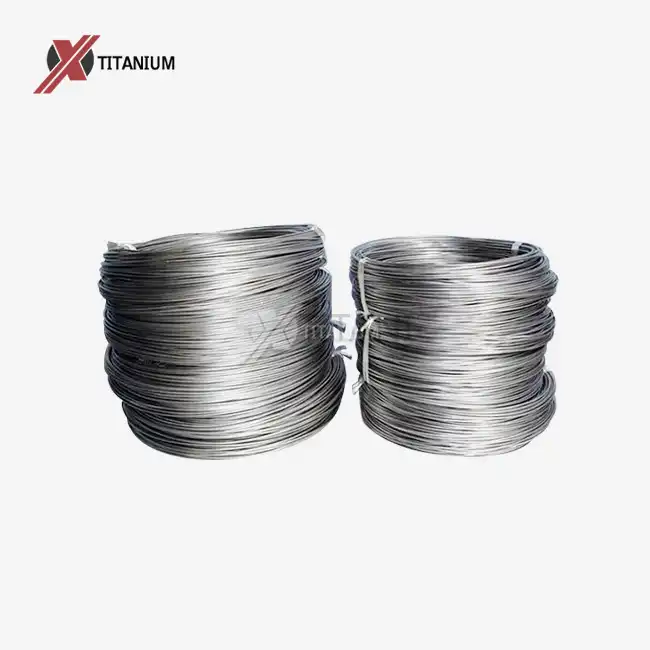
Baoji is called the "City of Titanium," and our business, Baoji Chuanglian New Metal Material Co., Ltd., has been working with and studying bicycle titanium spokes for over ten years. We use twelve CNC machines to make clamps, rods, wire, plates, tubes, flanges, and other made parts out of titanium. We pick out the material, use a CNC machine to cut and shape it, roll the threads, finish and anodize them, and then check them one last time. Talk to any possible thread suppliers about how they make thread, how they handle custom lengths, how much they can send, and how long they've been in business.
Match the Spec to Your Buyer Type and Validate
For most high-end road names, weight, exact length, and a smooth finish are the most important things. Mountain and 29er brands should check how the tires wear down, how well they stay in place, and how well they handle hits. Custom builders and distributors like standard lengths and nipples that fit, but OEM brands need rules for inspection, color tolerance, alloy, diameter, and thread. Make any kind of trial wheels and try them on the road. Before making a lot of them, make a small batch first. It takes longer this way, but it protects your brand name and keeps your guarantee costs cheap.
Conclusion
What the bike wheel is going to be used for affects the choice of bicycle titanium spokes that go on it. Different types of wheels (road, mountain, gravel, and touring) need different amounts of weight, durability, and resistance to rust. The buyer picks the width from 1.8 mm to 2.5 mm, and we use exact rim and hub data to figure out the length. Threads that are rolled, nipples that match, and anti-seize compound make the link safe. You can mark, change the look, or make the surface harder with polished, anodized, and nitrided finishes. Every single one needs to be checked for correctness and wear and tear. Steel spokes made of titanium are about 40% lighter and don't rust, but titanium costs more. Some of these options are written specs, test drives on the road, prototype wheels, and a pilot batch. All of these come together in a single controlled wheel system.
FAQ
Q1: How do I figure out what length spokes I need?
A: Don't use the standard wheel size to figure it out; use the confirmed rim and hub sizes instead. Please write down the number of spokes, the lacing design, the flange diameters, and the center-to-flange lengths. Then, test the result on a sample wheel that has already been built before ordering a lot of them.
Q2: Are titanium spokes prone to snapping?
A: When things first went wrong, it was usually because of broken threads or bad manufacturing. This is why grade 5 metal with rolled threads is used. Before you know what will happen, make sure you test the finished spokes for tension and fatigue the right way.
Q3: Which finish should I choose?
A: A natural or finished finish works well for OEM programs and high-end looks. Brands get their color from anodizing. The surface is harder after nitriding, so it doesn't wear down as quickly. Before they are made, check the finished spokes for wear and batch consistency.
Get Bicycle Titanium Spokes Made to Your Drawing from Chuanglian
What kind of wheel, rim, and hub do you want? Also tell Chuanglian the width, length, finish, and number of wheels you need. They will be looked over by our team. As a company in Baoji that makes titanium spokes for bikes, we have more than ten years of experience with this material. You can get Gr5 spokes in any length or color you want. They are light and won't rust. Email info@cltifastener.com or djy6580@aliyun.com to learn more.
References
1. Brandt, Jobst. The Bicycle Wheel, 1993.
2. Gavin, Henri P. "Bicycle-Wheel Spoke Patterns and Spoke Fatigue," Journal of Engineering Mechanics, 1996.
3. ASM International. ASM Handbook, Volume 2: Properties and Selection: Nonferrous Alloys and Special-Purpose Materials, 1990.
4. Leyens, Christoph, and Manfred Peters. Titanium and Titanium Alloys: Fundamentals and Applications, 2003.
5. International Organization for Standardization. ISO 4210-2: Cycles — Safety Requirements for Bicycles, 2015.
6. ASTM International. ASTM B348: Standard Specification for Titanium and Titanium Alloy Bars and Billets, 2019.
Learn about our latest products and discounts through SMS or email