- English
- French
- German
- Portuguese
- Spanish
- Russian
- Japanese
- Korean
- Arabic
- Greek
- German
- Turkish
- Italian
- Danish
- Romanian
- Indonesian
- Czech
- Afrikaans
- Swedish
- Polish
- Basque
- Catalan
- Esperanto
- Hindi
- Lao
- Albanian
- Amharic
- Armenian
- Azerbaijani
- Belarusian
- Bengali
- Bosnian
- Bulgarian
- Cebuano
- Chichewa
- Corsican
- Croatian
- Dutch
- Estonian
- Filipino
- Finnish
- Frisian
- Galician
- Georgian
- Gujarati
- Haitian
- Hausa
- Hawaiian
- Hebrew
- Hmong
- Hungarian
- Icelandic
- Igbo
- Javanese
- Kannada
- Kazakh
- Khmer
- Kurdish
- Kyrgyz
- Latin
- Latvian
- Lithuanian
- Luxembou..
- Macedonian
- Malagasy
- Malay
- Malayalam
- Maltese
- Maori
- Marathi
- Mongolian
- Burmese
- Nepali
- Norwegian
- Pashto
- Persian
- Punjabi
- Serbian
- Sesotho
- Sinhala
- Slovak
- Slovenian
- Somali
- Samoan
- Scots Gaelic
- Shona
- Sindhi
- Sundanese
- Swahili
- Tajik
- Tamil
- Telugu
- Thai
- Ukrainian
- Urdu
- Uzbek
- Vietnamese
- Welsh
- Xhosa
- Yiddish
- Yoruba
- Zulu
Why Choose Gr5 Titanium Motorcycle Bolts for Track Applications
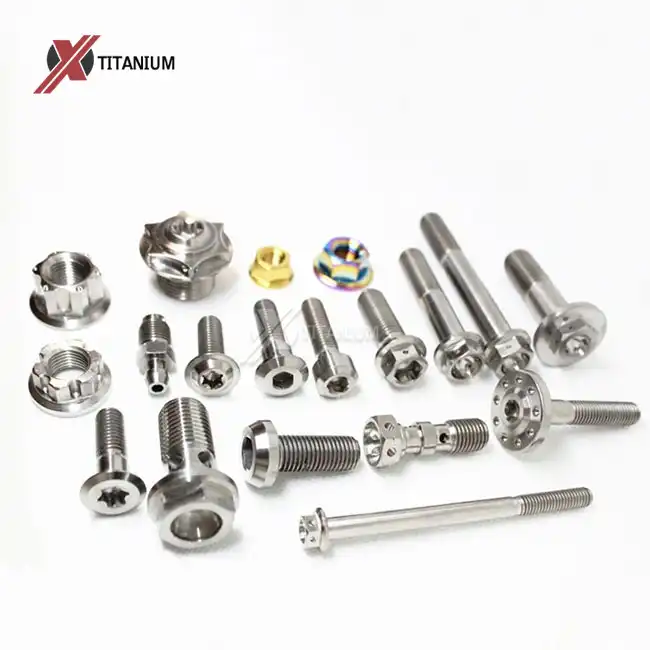
Gr5 titanium motorcycle bolts suit track use because they cut weight, resist corrosion, and keep strength high in a compact fastener. Ti-6Al-4V has a density of 4.43 g/cm³, about 44 percent lower than steel, and ASTM B348 sets a minimum tensile strength of 895 MPa for Grade 5 bar. These traits help riders and brands remove mass from fairings, covers, brackets, and controls while keeping hardware clean after wet sessions. Titanium still needs careful joint review, correct lubrication, and documented material data. In this guide, I explain how to choose, install, and buy these fasteners with confidence.
Introduction: Why Fastener Selection Matters on the Track?
What Track Riding Demands From Fasteners
A track motorcycle puts a lot of stress on its parts. It takes a lot of work to go slower, faster, and turn every lap. The engine also goes through cycles of heat and shaking. A lot of stress is put on even small bolts when you mix them with water, cleaning chemicals, race fluids, and dirt from the road. Not just by how it looks or how heavy it is, but also by how it works, what temperature it can handle, how long it lasts, and how safe it is.
The threads are the same size, but they are very dangerous in different ways. Teams that sort their gear by how dangerous it is can choose better gear to use and spend less time in the field. This tip can help shops, race teams, wholesalers, and OEM buyers. It goes over types of uses, how to install it, torque, checking the source, and the total price. It also talks about how to compare materials and what their best features are.
What Are Gr5 Titanium Motorcycle Bolts?
About 6% aluminum and 4% vanadium make up the alloy Ti-6Al-4V. A lot of people call it Gr5 titanium. It's strong, doesn't weigh much, and doesn't rust, so people have used it for a long time in races and space travel. But a bolt's quality can't be told by the metal it's made of. Some of the things that affect how well it works are how accurate the threads are, how the head is made, how smooth the surface is, and how well the process is managed.
Our bolts are CNC machined in sizes from M6 to M12, but you can ask for any size. Socket, button, and flange are the three main types of heads. Titanium isn't magnetic either, so it's simple to tell the difference between real steel and fake steel. People who buy bolts should make sure that each one has the same thread, length, head shape, clamping need, and level of risk so that they can be tracked. Also, they should demand proof that the item is real.
Why Choose Gr5 Titanium Motorcycle Bolts for Track Applications?
The first reason is weight. Gr5 titanium motorcycle bolts weigh about 44% less than steel bolts. Titanium is only 4.43 g/cm³ dense, while steel is about 7.85 g/cm³ dense. You can find out how much money you save by replacing a lot of screws that hold things in place. The second reason is that it doesn't rust. Titanium has a thin oxide film that protects it from water, road salt, many motorcycle fluids, and many acidic and basic environments.
The film is fine again after a small scratch. Lastly, rainbow, blue, green, purple, black, and gold anodizing can make race and special builds look one-of-a-kind. It's not good for all joints, though. Before they can be used, important bolts for the engine, brakes, suspension, steering, rotors, and suspension must be made technically safe. This is because they need to be less stiff and less likely to get stuck or rub against other metals.
Gr5 Titanium vs. Other Motorcycle Bolt Materials
Strength and Weight Compared With Steel
For class 8.8, these steel nuts should be 800 MPa strong, and for class 10.9, they should be 1,040 MPa strong. ASTM B348 says that Grade 5 titanium bar must have a tensile strength of at least 895 MPa and a yield strength of at least 825 MPa. Gr5 has a mass below class 10.9 and a tensile strength above class 8.8. It is about 200 GPa stiffer in steel than in titanium, which is only 114 GPa stiff. In other words, the same amount of weight puts on a titanium joint makes it stretch more. So, we need to keep an eye on the joint tightness and the loading. A table that shows the tensile strength, yield strength, density, hardness, rusting behavior, and cost of each replacement can help people choose which one to buy before they actually buy it.
Stainless Steel, Aluminum, Grade 2, and OEM Hardware
Titanium grade Gr5 doesn't rust, but it weighs about the same as other steels and isn't as strong when pulled apart as grades A2-70 and A4-80. These screws are not only less strong and last less time than titanium ones, but they are also lighter. So, they should only be used for small projects that are just for looks. Titanium Grade 2 is not as dense, soft, or strong as Titanium Grade 5. It can be used for parts that don't need to hold a lot of weight. An OEM steel bolt usually needs a certain head shape, coating, or strength class to work with the joint. So, I won't think of a titanium bolt as a replacement until I see how it fits with the old one. It quickly lets you know how hard something is. In general, Grade 5 is about 36 HRC, while Grade 2 is a lot lighter.
Where to Use Titanium Motorcycle Bolts on a Track Bike
Titanium gear doesn't need to hold a lot of weight or keep rust away when it's not in use. People put them on screen bolts, bodywork clips, the sides of the engine cover, some control parts, exhaust clamps, and links on the heat shield all the time. The bike doesn't rust in these places, they make it lighter, and they make it look the same all over. Thrust bolts made of titanium don't rust at the head, and they stay clean even when they get wet.
When it comes to brake caliper, rotor, suspension, and steering screws, you need to be much more careful. This is because safety rests on pressure, how they act when they're worn out, thread contact, and how strong they are proven to be. Before making kits that are special to a Honda, Yamaha, Kawasaki, Suzuki, Ducati, BMW, or KTM bike type, I always tell people to look at drawings or OEM references.
Selecting, Installing, and Maintaining Titanium Track Hardware
How to Select the Best Gr5 Titanium Motorcycle Bolts
Start with four things: the motorcycle, the part, the workplace, and the risk to both. Then, use OEM charts, models, or a tried-and-true size chart to make sure you have the right diameter, thread pitch, total length, threaded length, head height, clearance, and engagement. Make sure the type of head you choose gives you the room, tool access, and load spread you need. You can pick a button, a socket, a flange, or a design that is made just for you.
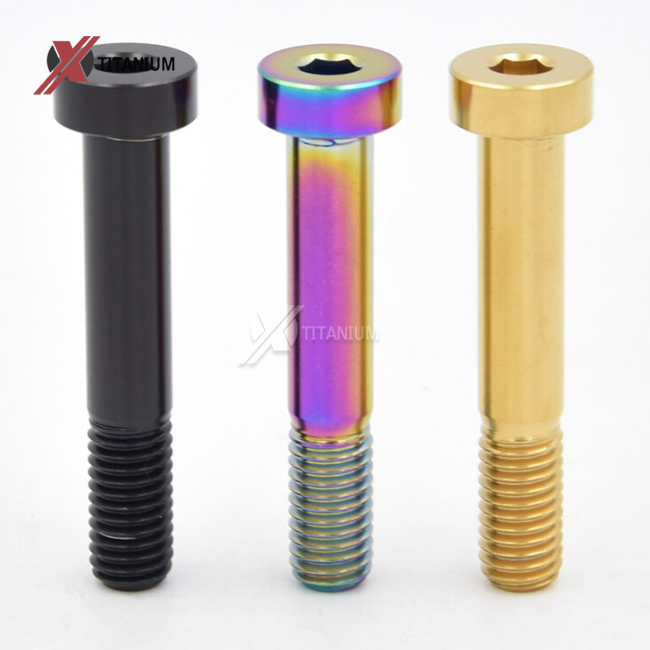
Pick a finish for Gr5 titanium motorcycle bolts that changes how something looks, how long it lasts, and how simple it is to find. You can use natural titanium, gold, blue, green, purple, black, or any other color metal. To make it shine, anodizing or nitriding works. Choose a color model before you start making something. Because of how well the process is run, the color of anodized metal changes. Before you place an order, make sure you get material certificates, information on dimensional inspection, surface specifications, the ability to keep track of the goods, and sample approval from the supplier.
Installation, Torque, and Maintenance Guidelines
Titanium threads can gall, which means the surfaces can tear and get stuck. When there is friction, the force changes a lot. Clean the female threads and the surfaces that they connect to, and look to see if anything is broken or doesn't fit right. Make sure the bolt is the right length and that the threads are facing up. Use a sealant or lube that has been approved if you have to. Do not use impact tools, and follow the manufacturer's instructions on how to tighten the part.
You can't just look at the width to find the torque. What's on the surface, coatings, washers, grease, and the preload can all change. A thread that is oiled can handle more force than a thread that is dry if the force is the same. As you play a track, make notes on how tight it is, how it deforms, how the color changes, how the threads are damaged, and how the cover wears. Nitriding makes surfaces less likely to wear down, but it's still not better than oil.
Common Risks and Limitations of Titanium Motorcycle Bolts
That's why you should never use a titanium bolt instead of an OEM high-strength fastener. Titanium isn't always stronger than steel. The joint can be less stiff or more stiff, and galling can make it harder to put in or take out. Putting the wet, softer part right up against iron and magnesium can hurt it because they are not as valuable as titanium.
That risk goes down if you use an anti-seize or isolation drug. If you touch carbon-fiber parts, fretting wear can happen, so check that area too. Stress, heat, and doing the same thing over and over can make you tired. Ask the service source how the threads are made; it's important to know. The safest thing to do first is to choose hardware that is only there to look good. Next, check the brakes, steering, wheels, suspension, front and rear suspension, and essential engine joints.
Buying Gr5 Titanium Motorcycle Bolts for Racing and B2B Procurement
Procurement Options and Documents to Request
You can buy just one new bolt or a fairing kit made to fit your model. You can also buy a lot of hardware, individual packaging, and OEM supplies for a long time. Race teams need to be able to do things again and again, get them quickly, and get help from experts. Distributors and workshops, on the other hand, need finish that is always the same, steady supply, and the freedom to change order amounts.
Before you place an order, you should have proof of the grade, material certificates, drawings, inspection reports, batch tracking, packing details, export paperwork, and a sample that has been approved. Make sure the measurements match the picture and that the formula is the same as Ti-6Al-4V. You can pack everything at once or all at once. A company that only makes titanium fasteners can make them in any length, style, or finish, and they can also make kits just for bikes. They just have to make sure the quality is high.
Are Gr5 Titanium Motorcycle Bolts Worth the Cost for Track Applications?
Value for Gr5 titanium motorcycle bolts is based on how it is used, how often it needs to be replaced, how well it is taken care of, and the performance goals. Bikes used by professionals, high-end track builds, and bikes that get a lot of service are worth the price. Because it looks good, doesn't rust, and is light are all important. It might still be better to use standard or stainless steel if the load is low, money is tight, or the part needs a certain kind of high-strength steel fixing. A good guess would be to think about how much it costs per unit, how much weight it saves, how long it lasts, and any paperwork that needs to be filled out. Phased replacement is used by many teams and brands. The covering is the first thing they work on, then the gear. It lets the idea get tested before moving on to the harder parts and spreads out the costs.
Recommended Decision Guide for Race Teams, Distributors, and OEM Buyers
A risk-based method makes sure that the part is checked the right number of times. I believe you should do the following:
- Low risk: frames, fairings, and screen mounts just to look good. After going over the grade of the material, length, thread size, and head style, sign off on a sample. Before a small practice order, it's usually enough to just check the size and material. This is because the parts don't hold much weight. When you place an order again, use the approved sample as a guide.
- Medium risk: engine covers, controls, exhaust brackets, and subframe mounts. You should have an engineer check the load, temperature, and vibration. Get inspection data and batch records, and fit one bike first before you order the rest of the production run. To see how the torque works, you should use the same grease that your crew does.
- High risk: engine, chassis, steering, brakes, and rotors. Before you make a change, you should get written permission from the company that made the motorbike or part, proof that the replacement works, and the ability to keep track of all the parts that were used. If you can't find that proof, leave the first high-strength steel bolt in place. A few-gram weight goal is never more important than safety on the track.
Following these levels keeps approvals consistent and protects both riders and brand reputation.
Working With Chuanglian on Custom Titanium Fasteners
Baoji is called the "City of Titanium," and it's where Baoji Chuanglian New Metal Material Co., Ltd. is based. It's something they make and sell. We've been working on the titanium parts we make for over ten years. Screws, rods, wire, plates, tubes, flanges, and parts that are made just for you are some of the things we sell. Twelve CNC machines do our work, and we check everything, from the raw materials to the finished product.
The Gr5 titanium motorcycle bolts we make are based on a sketch or example you send us. One more thing to do is to polish, anodize, or nitride them. The customer can change the MOQ if they want to. If someone wants to buy something, they should write down standard M6 and M8 part numbers, model kits, accepted finishes, packaging, shipping goals, and inspection records. After that, they should look at what suppliers have to offer in terms of quality, delivery, paperwork, and how quickly they answer.
Conclusion
Because they are lighter and won't rust, Gr5 titanium motorcycle bolts can replace steel ones. ASTM B348 says they weigh 4.43 g/cm³ and have a minimum tensile strength of 895 MPa. That is stronger than class 8.8 steel but not as strong as class 10.9 steel. It's not always a good idea to use titanium instead of other metals because it isn't as stiff. It may also not work well with other metals. It's smart to sort joints by how dangerous they are. Titanium should be used for things like fairings, caps, and braces.
After that, check the mid-level parts that have engineering data. Finally, make sure that the brakes, suspension, and steering all use original or approved fasteners. The results will be safe as long as the threads are properly cleaned, oiled, torqued, and checked for damage after the session. A material document, a drawing, inspection data, and tracking can help you make smart decisions. When it comes to saving money, weight, and safety, phased replacement is usually the best choice.
FAQ
Q1: Are Gr5 titanium bolts stronger than all steel?
A: Not at all. The tensile strength of Grade 5 bar must be at least 895 MPa, according to ASTM B348. It's better than class 8.8 steel but not as good as class 10.9 steel. Titanium isn't as stiff either, so check the original specs before you change anything.
Q2: How can I prevent galling?
A: Use a good anti-seize or lubricant on the threads and clean them if you want to tighten something slowly. Use a hand tool instead of impact tools. Nitriding can make the surface less likely to wear down, but you should still use the right amount of force and oil it regularly. Just take a look at one set of samples first.
Q3: Should I choose black or natural finishes?
A: Titanium that has not been anodized can be colored any color you want. It can be black, blue, green, purple, gold, or any other color you can think of. Pick a style for a brand, and then work with your supplier to make a color chart that will make sure every batch looks the same.
Q4: Which documents should a buyer request?
A: When you ask for Ti-6Al-4V, you should get a material certificate, drawings, dimensional inspection data, surface specs, batch tracking, and a sample that has been approved. Before you start making things, make sure that all of the paperwork for exporting and packing is correct. Also, don't throw away any of the records from past sales. Keeping clear records will also help your clients.
Request a Gr5 Titanium Motorcycle Bolt Quote
Chuanglian is the name of the titanium business that makes special Gr5 titanium motorcycle bolts. They have a low minimum order number and can CNC machine, shine, anodize, and nitride. Email info@cltifastener.com or djy6580@aliyun.com with how many bolts you want, what size they are, and what finish you want. After that, someone from our team will give you a price.
References
1. ASTM International, Standard Specification for Titanium and Titanium Alloy Bars and Billets (ASTM B348/B348M), 2019
2. International Organization for Standardization, Mechanical Properties of Fasteners Made of Carbon Steel and Alloy Steel, Part 1 (ISO 898-1), 2013
3. ASM International, Materials Properties Handbook: Titanium Alloys, 1994
4. ASM International, Titanium: A Technical Guide, 2nd Edition, 2000
5. Wiley-VCH, Titanium and Titanium Alloys: Fundamentals and Applications, 2003
6. CRC Press, An Introduction to the Design and Behavior of Bolted Joints, 1995
Learn about our latest products and discounts through SMS or email