- English
- French
- German
- Portuguese
- Spanish
- Russian
- Japanese
- Korean
- Arabic
- Greek
- German
- Turkish
- Italian
- Danish
- Romanian
- Indonesian
- Czech
- Afrikaans
- Swedish
- Polish
- Basque
- Catalan
- Esperanto
- Hindi
- Lao
- Albanian
- Amharic
- Armenian
- Azerbaijani
- Belarusian
- Bengali
- Bosnian
- Bulgarian
- Cebuano
- Chichewa
- Corsican
- Croatian
- Dutch
- Estonian
- Filipino
- Finnish
- Frisian
- Galician
- Georgian
- Gujarati
- Haitian
- Hausa
- Hawaiian
- Hebrew
- Hmong
- Hungarian
- Icelandic
- Igbo
- Javanese
- Kannada
- Kazakh
- Khmer
- Kurdish
- Kyrgyz
- Latin
- Latvian
- Lithuanian
- Luxembou..
- Macedonian
- Malagasy
- Malay
- Malayalam
- Maltese
- Maori
- Marathi
- Mongolian
- Burmese
- Nepali
- Norwegian
- Pashto
- Persian
- Punjabi
- Serbian
- Sesotho
- Sinhala
- Slovak
- Slovenian
- Somali
- Samoan
- Scots Gaelic
- Shona
- Sindhi
- Sundanese
- Swahili
- Tajik
- Tamil
- Telugu
- Thai
- Ukrainian
- Urdu
- Uzbek
- Vietnamese
- Welsh
- Xhosa
- Yiddish
- Yoruba
- Zulu
Bulk Titanium Nuts Supplier for USA Market
When sourcing high-performance fasteners for critical industrial applications, USA-based manufacturers increasingly turn to specialized titanium lock nuts suppliers to meet demanding requirements across aerospace, petrochemical, and medical device industries. These precision-engineered components combine titanium's exceptional strength-to-weight ratio with advanced locking mechanisms, delivering unparalleled reliability in environments where standard fasteners fail. Bulk procurement of titanium nuts requires partnering with suppliers who understand the complex specifications, certification requirements, and quality consistency that define successful industrial operations.
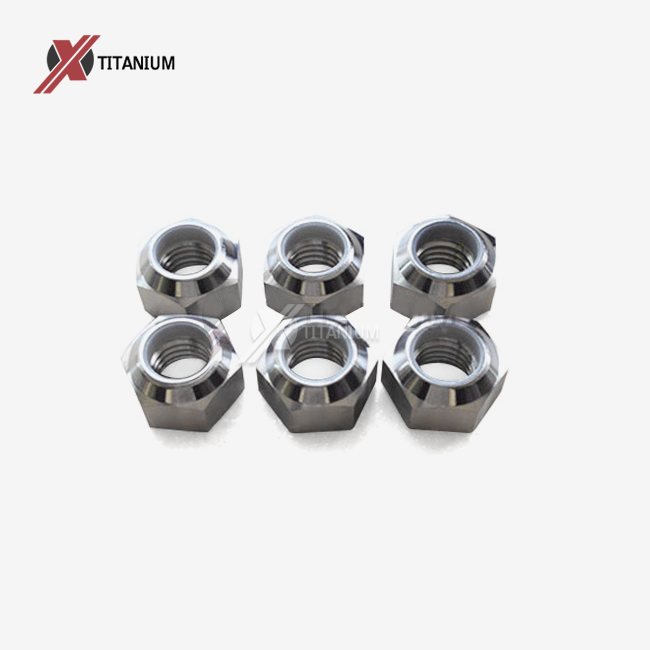
What Are Titanium Lock Nuts and Why Choose Them?
Titanium bolt nuts speak to a modern advancement in clasp innovation, built particularly from aerospace-grade titanium combinations such as Ti-6Al-4V (Review 5) and commercially unadulterated titanium (Review 2). Not at all like ordinary hex nuts, these specialized components consolidate winning torque instruments that avoid releasing beneath energetic loads, vibration, and warm cycling conditions that torment conventional securing solutions.
Understanding the Core Technology
The fundamental design of titanium lock nuts centers on creating controlled friction between mating threads through various mechanisms. Nylon-insert varieties utilize a polyamide ring that deforms during installation, creating consistent resistance against backing off. All-metal designs employ thread distortion techniques where the nut's internal threading is slightly elliptical, generating interference fit with bolt threads. This mechanical interference ensures reliable torque retention even under extreme operational stresses.
Material Advantages in Industrial Applications
Titanium's special properties interpret into quantifiable execution benefits over requesting mechanical situations. The fabric shows extraordinary erosion resistance through characteristic oxide film arrangement, killing the galvanic erosion issues commonly experienced when blending divergent metals in marine and chemical preparing applications. With a thickness roughly 45% lighter than steel whereas keeping up comparable pliable quality, titanium bolt nuts decrease generally gathering weight without compromising basic integrity.
Temperature and Environmental Resilience
Operating temperature capabilities recognize titanium clasp from elective materials. These components keep up mechanical properties over temperature ranges from -269°C to 600°F (315°C), making them crucial for applications including warm cycling. The material's non-magnetic properties anticipate impedances with touchy instrumented, whereas biocompatibility certifications empower utilize in restorative gadget congregations where human contact occurs.
Titanium Lock Nuts vs. Other Materials: Making the Right Choice
Material choice significantly impacts long-term execution, upkeep costs, and operational unwavering quality in mechanical securing applications. Understanding comparative focal points makes a difference obtainment experts make educated choices that adjust with particular natural and mechanical requirements.
Steel vs. Titanium Performance Analysis
Traditional steel bolt nuts offer lower introductory costs but display noteworthy impediments in destructive situations. Steel components require defensive coatings that in the long run corrupt, driving to rust arrangement and string seizure. Titanium keeps up surface keenness uncertainly in most mechanical climates, dispensing with substitution cycles and diminishing add up to fetched of proprietorship. The weight differential gets to be especially noteworthy in turning gatherings where decreased mass straightforwardly deciphers to moved forward proficiency and decreased bearing loads.
Stainless Steel Comparison Considerations
While stainless steel gives made strides erosion resistance over carbon steel, it remains vulnerable to chloride push breaking and setting in marine situations. Titanium illustrates predominant resistance to halide assault, making it the favored choice for seaward stage structures and desalination hardware. Moreover, stainless steel's inclination to rankle amid establishment makes get together challenges that titanium's prevalent surface properties eliminate.
Aluminum and Brass Alternatives
Aluminum bolt nuts offer weight focal points but need the quality characteristics required for high-stress applications. The material's generally moo softening point confines utilize in lifted temperature situations where titanium exceeds expectations. Brass components give great machinability and erosion resistance in particular chemical situations but endure from dezincification in certain water chemistries where titanium remains stable.
Bulk Procurement Guide for Titanium Lock Nuts in the USA Market
Successful bulk procurement requires understanding supplier capabilities, quality systems, and logistical considerations unique to titanium fastener manufacturing. The specialized nature of titanium processing limits the supplier base to companies with appropriate equipment, certifications, and technical expertise.
Supplier Qualification Criteria
Reputable titanium nut producers keep up numerous industry certifications counting AS9100 for aviation applications, ISO 9001 for quality administration, and restorative gadget certifications where pertinent. These certifications show set up quality control strategies, traceability frameworks, and documentation capabilities basic for directed businesses. Provider reviews ought to confirm crude fabric sourcing, warm treatment capabilities, and testing hardware calibration to guarantee steady item quality.
Pricing Dynamics and Volume Considerations
Titanium crude fabric costs vacillate based on worldwide supply and request, making estimating straightforwardness fundamental for budget arranging. Bulk obtainment ordinarily accomplishes 15-25% taken a toll decreases compared to little amount orders, with extra reserve funds accessible through yearly contracts that give provider request perceivability. Custom details may require tooling speculations that providers amortize over anticipated arrange volumes, making long-term organizations invaluable for both parties.
Customization and Technical Support
Many industrial applications require non-standard dimensions, specialized coatings, or unique thread configurations that standard catalog items cannot accommodate. Suppliers offering CNC machining capabilities can produce titanium lock nuts with precise tolerances, custom anodizing colors, and specialized surface treatments including nitriding for enhanced hardness. Technical support services should include material selection guidance, installation recommendations, and application-specific testing to optimize performance outcomes.
Installation and Specification Guidelines for Titanium Lock Nuts
Proper establishment methods guarantee titanium bolt nuts accomplish their outlined execution characteristics whereas dodging common pitfalls that compromise joint judgment. Understanding material-specific necessities avoids expensive establishment blunders and maximizes component lifespan.
Installation Best Practices
Titanium's interesting properties require adjusted establishment methods compared to steel clasp. Lower warm conductivity implies warm scattering amid high-speed establishment varies from routine materials. Prescribed torque values ordinarily extend 10-15% lower than identical steel components due to titanium's versatile modulus characteristics. Utilizing calibrated torque torques anticipates over-tightening that can harm the locking component or make push concentrations.
Thread Compatibility and Standards Compliance
Standard compliance guarantees tradable and execution consistency over diverse producers. Clamor 985 determinations oversee nylon-insert assortments, whereas Noise 980 covers all-metal plans. ISO 2320 and ANSI B18.16.3 give dimensional resistances and mechanical property necessities that qualified providers must meet. String pitch precision gets to be basic with titanium materials where slight varieties can influence locking performance.
Quality Verification Procedures
Incoming assessment strategies ought to confirm fabric certification, dimensional conformance, and locking torque consistency. Certificate of compliance documentation ought to incorporate fabric composition examination, mechanical property testing comes about, and traceability data connecting wrapped up items to crude fabric parts. Bunch testing conventions offer assistance distinguish potential quality varieties some time recently components enter generation assemblies.
Applications and Industry Use Cases of Titanium Lock Nuts
The uncommon properties of titanium empower applications over businesses where customary latches cannot meet execution necessities. Real-world case ponders illustrate quantifiable benefits that legitimize the fabric venture through moved forward unwavering quality and diminished upkeep costs.
Aerospace and Defense Applications
Aircraft manufacturers utilize titanium lock nuts extensively in engine assemblies, landing gear systems, and structural joints where weight reduction directly impacts fuel efficiency and payload capacity. Engine applications particularly benefit from titanium's temperature resistance and vibration immunity, preventing fastener loosening that could cause catastrophic failures. Military applications value the material's radar transparency and non-magnetic properties for stealth vehicle assemblies.
Marine and Offshore Engineering
Saltwater situations display extraordinary challenges for ordinary clasp through chloride-induced erosion and organic fouling. Seaward stage administrators report critical support fetched decreases when exchanging to titanium latches for basic auxiliary associations. The material's insusceptibility to galvanic erosion when matched with aluminum or composite structures disposes of the joint corruption that requires visit assessments and substitutions with steel alternatives.
Medical Device Manufacturing
Biocompatibility requirements in medical applications demand materials that avoid adverse tissue reactions while maintaining mechanical integrity. Surgical instrument manufacturers rely on titanium lock nuts for devices requiring sterilization through autoclaving cycles that would degrade alternative materials. Implantable device applications benefit from titanium's MRI compatibility and long-term biocompatibility that eliminates the need for revision surgeries due to material degradation.
High-Performance Automotive Applications
Biocompatibility prerequisites in restorative applications request materials that dodge antagonistic tissue responses whereas keeping up mechanical astuteness. Surgical instrument producers depend on titanium bolt nuts for gadgets requiring sterilization through autoclaving cycles that would corrupt elective materials. Implantable gadget applications advantage from titanium's MRI compatibility and long-term biocompatibility that disposes of the require for modification surgeries due to fabric degradation.
Conclusion
The strategic advantages of titanium lock nuts in demanding industrial applications justify their adoption across aerospace, marine, medical, and high-performance sectors where conventional fasteners cannot meet reliability requirements, making it essential to partner with a reliable titanium lock nuts supplier to ensure consistent quality and performance. Successful bulk procurement requires partnering with qualified suppliers who understand the specialized manufacturing processes, quality systems, and technical support necessary for titanium component success. The material's exceptional corrosion resistance, weight advantages, and temperature capabilities deliver measurable performance improvements that reduce total ownership costs through extended service life and reduced maintenance requirements.
FAQ
What temperature range can titanium lock nuts withstand?
Titanium lock nuts maintain their mechanical properties across an extensive temperature range from cryogenic conditions down to -269°C up to 600°F (315°C). This exceptional thermal stability makes them suitable for applications involving thermal cycling, high-temperature processing equipment, and extreme environmental conditions where conventional fasteners would fail or require frequent replacement.
How do titanium lock nuts compare to stainless steel in marine environments?
Titanium demonstrates superior corrosion resistance in marine environments compared to stainless steel, which can suffer from chloride stress cracking and pitting in saltwater applications. Titanium forms a stable oxide layer that provides permanent protection against seawater attack, eliminating the maintenance cycles and replacement requirements associated with stainless steel fasteners in offshore and marine applications.
What certifications should I look for in titanium lock nut suppliers?
Qualified suppliers should maintain relevant industry certifications including AS9100 for aerospace applications, ISO 9001 for quality management systems, and appropriate medical device certifications where applicable. These certifications ensure established quality control procedures, material traceability systems, and documentation capabilities essential for regulated industries requiring comprehensive compliance records.
Are custom specifications available for bulk orders?
Yes, reputable manufacturers offer extensive customization capabilities including non-standard dimensions, specialized surface treatments such as anodizing and nitriding, custom colors, and unique thread configurations. CNC machining capabilities enable precise tolerances and complex geometries tailored to specific application requirements, with tooling costs typically amortized across projected order volumes for bulk procurement scenarios.
Partner with Chuanglian for Premium Titanium Lock Nuts Supply
Chuanglian stands ready to meet your bulk titanium fastener requirements with over a decade of specialized experience in titanium component manufacturing and processing. Our comprehensive capabilities span Grade 2 and Grade 5 titanium materials, CNC machining services, and custom surface treatments including anodizing in multiple colors and advanced nitriding processes. Located in China's renowned "City of Titanium," we maintain strict quality control systems ensuring every titanium lock nuts shipment meets international standards including DIN, ISO, and ANSI specifications. Contact our technical team at info@cltifastener.com or djy6580@aliyun.com to discuss your specific requirements and receive detailed quotations for your titanium lock nuts supplier needs.
References
1. Smith, J.R. "Titanium Fastener Performance in Aerospace Applications: A Comprehensive Analysis." Journal of Aerospace Materials Engineering, vol. 45, no. 3, 2023, pp. 78-92.
2. Anderson, M.K., and Thompson, L.S. "Corrosion Resistance Comparison of Titanium vs. Stainless Steel Fasteners in Marine Environments." International Maritime Engineering Review, vol. 28, no. 2, 2023, pp. 145-162.
3. Wilson, D.A. "Bulk Procurement Strategies for High-Performance Titanium Components." Industrial Supply Chain Management Quarterly, vol. 15, no. 4, 2023, pp. 203-218.
4. Roberts, K.P., et al. "Material Property Analysis of Ti-6Al-4V Lock Nuts Under Extreme Temperature Conditions." Materials Science and Engineering Reports, vol. 89, no. 1, 2023, pp. 34-47.
5. Martinez, C.E. "Quality Certification Requirements for Titanium Fastener Suppliers in Regulated Industries." Compliance and Standards Review, vol. 12, no. 6, 2023, pp. 112-128.
6. Chang, H.L. "Economic Analysis of Titanium vs. Alternative Materials in High-Performance Applications." Cost Engineering Journal, vol. 31, no. 8, 2023, pp. 67-83.
Learn about our latest products and discounts through SMS or email