- English
- French
- German
- Portuguese
- Spanish
- Russian
- Japanese
- Korean
- Arabic
- Greek
- German
- Turkish
- Italian
- Danish
- Romanian
- Indonesian
- Czech
- Afrikaans
- Swedish
- Polish
- Basque
- Catalan
- Esperanto
- Hindi
- Lao
- Albanian
- Amharic
- Armenian
- Azerbaijani
- Belarusian
- Bengali
- Bosnian
- Bulgarian
- Cebuano
- Chichewa
- Corsican
- Croatian
- Dutch
- Estonian
- Filipino
- Finnish
- Frisian
- Galician
- Georgian
- Gujarati
- Haitian
- Hausa
- Hawaiian
- Hebrew
- Hmong
- Hungarian
- Icelandic
- Igbo
- Javanese
- Kannada
- Kazakh
- Khmer
- Kurdish
- Kyrgyz
- Latin
- Latvian
- Lithuanian
- Luxembou..
- Macedonian
- Malagasy
- Malay
- Malayalam
- Maltese
- Maori
- Marathi
- Mongolian
- Burmese
- Nepali
- Norwegian
- Pashto
- Persian
- Punjabi
- Serbian
- Sesotho
- Sinhala
- Slovak
- Slovenian
- Somali
- Samoan
- Scots Gaelic
- Shona
- Sindhi
- Sundanese
- Swahili
- Tajik
- Tamil
- Telugu
- Thai
- Ukrainian
- Urdu
- Uzbek
- Vietnamese
- Welsh
- Xhosa
- Yiddish
- Yoruba
- Zulu
Titanium Spring Benefits in Extreme Temperatures
Titanium spring technology represents a breakthrough solution for industries operating in extreme temperature environments. These precision-engineered components utilize advanced titanium alloys, particularly Grade 5 (Ti-6Al-4V), to deliver exceptional performance where traditional materials fail. The unique combination of lightweight properties, superior corrosion resistance, and remarkable thermal stability makes titanium spring systems indispensable for aerospace, petrochemical, and marine applications requiring reliable operation from -200°C to 400°C. Unlike conventional steel alternatives, these specialized springs maintain their elastic properties and structural integrity under severe thermal cycling, offering unmatched durability and performance consistency.
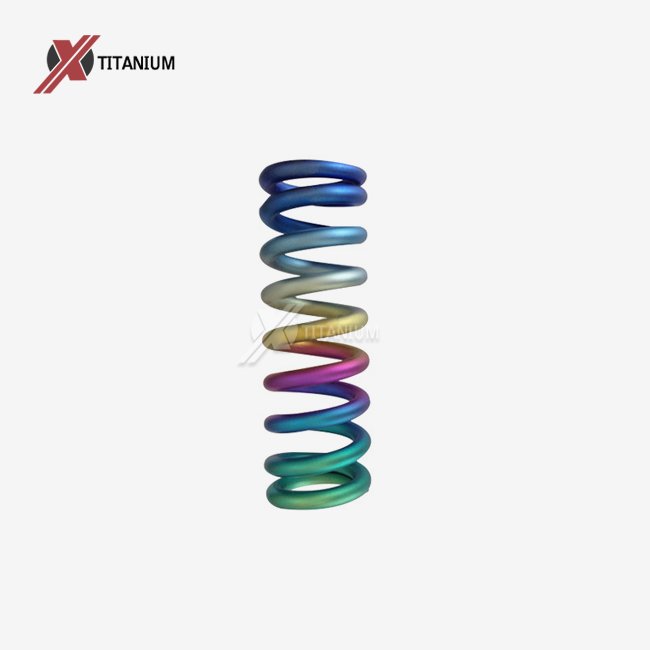
Understanding Titanium Springs and Their Properties
The engineering foundation of titanium springs lies in their sophisticated metallurgical composition and precision manufacturing processes. These critical components are primarily crafted from alpha-beta titanium alloys, with Ti-6Al-4V (Grade 5) being the most widely adopted standard due to its exceptional balance of strength, ductility, and thermal resistance.
Material Composition and Manufacturing Excellence
Modern titanium spring generation utilizes progressed CNC machining methods to accomplish exact dimensional resistances and surface wraps up. The fabricating handle starts with high-quality titanium billets that experience vacuum circular segment remelting (VAR) to guarantee fabric virtue and kill follow contaminants that might compromise execution beneath extraordinary conditions. The CNC machining prepare permits for customization of spring geometry, wire breadth, and coil arrangements to meet particular application necessities. Surface medicines counting cleaning, anodizing, and nitriding assist improve execution characteristics whereas giving stylish choices in common titanium, gold, blue, green, purple, dark, and rainbow colors.
Exceptional Physical Properties
Titanium springs show surprising physical properties that recognize them from ordinary materials. The thickness of titanium is around 4.5 g/cm³, which is generally 40-50% lighter than steel whereas keeping up comparable or predominant quality characteristics. This weight decrease gets to be basic in aviation applications where each gram spared deciphers to noteworthy fuel productivity enhancements and improved payload capacity. The warm development coefficient of titanium combinations remains steady over wide temperature ranges, anticipating dimensional changes that seem influence spring execution. This warm soundness guarantees reliable spring rates and load-bearing capabilities whether working in cryogenic situations or high-temperature mechanical processes.
Why Titanium Springs Outperform Other Materials in Extreme Temperatures?
The superior performance of titanium springs in extreme temperature environments stems from their unique combination of metallurgical properties and engineered characteristics that address critical industrial challenges.
Heat Resistance and Thermal Stability
Titanium alloys maintain their mechanical properties at elevated temperatures far beyond the capabilities of stainless steel alternatives. While stainless steel springs begin experiencing strength degradation around 300°C, titanium spring components continue operating reliably up to 400°C without significant loss of elastic modulus or fatigue resistance.
The crystalline structure of titanium alloys remains stable under thermal cycling, preventing the microstructural changes that plague other materials when subjected to repeated heating and cooling cycles. This stability ensures consistent spring performance throughout the component lifecycle, reducing maintenance requirements and operational downtime.
Corrosion Resistance in Harsh Environments
The characteristic oxide layer shaped on titanium surfaces gives remarkable security against erosion in extraordinary situations. This detached oxide film recovers naturally when harmed, advertising self-healing security that disposes of the require for defensive coatings or visit substitution cycles common with steel springs. In marine and chemical handling applications, titanium springs illustrate momentous resistance to chloride-induced push erosion breaking (SCC), a disappointment mode that regularly influences stainless steel components. This erosion resistance expands operational life essentially, with recorded cases appearing titanium springs working maintenance-free for decades in seaward environments.
Lifecycle Cost Analysis
While the introductory venture in titanium springs surpasses that of ordinary materials, the add up to fetched of proprietorship uncovers noteworthy points of interest. The expanded benefit life, decreased support prerequisites, and end of untimely disappointments make significant fetched reserve funds over the component lifecycle. Manufacturing information demonstrates that titanium springs can work for 10-15 a long time in extraordinary situations where steel options require substitution each 2-3 a long time. This life span, combined with decreased framework downtime and support labor, regularly comes about in 30-40% lower add up to working costs in spite of the higher forthright investment.
How to Select the Right Titanium Spring for Extreme Temperature Environments?
Successful titanium spring selection requires careful evaluation of application-specific parameters and performance requirements. The selection process involves analyzing operational conditions, load requirements, and environmental factors to ensure optimal component performance and reliability.
Critical Design Parameters
Temperature run speaks to the essential determination measure for extraordinary environment applications. Applications working underneath -100°C require extraordinary thought for fabric brittleness, whereas high-temperature applications over 350°C may require specialized amalgam compositions or warm treatment processes. Mechanical loads incorporate both inactive and energetic strengths, with specific consideration to weakness stacking designs. Titanium springs exceed expectations in high-cycle weakness applications, with perseverance limits regularly surpassing 10^7 cycles when legitimately planned and manufactured.
Environmental Considerations
Chemical compatibility appraisal guarantees fabric choice fitting for the particular working environment. Whereas titanium illustrates fabulous resistance to most destructive media, certain conditions such as hydrofluoric corrosive or high-temperature hydrogen situations require specialized fabric grades or defensive measures. Regulatory compliance gets to be basic in aviation, therapeutic, and atomic applications where fabric traceability, certification documentation, and quality control records must meet exacting industry measures counting AS9100, ISO9001, and FDA requirements.
Custom Manufacturing Capabilities
Custom titanium springs offer ideal execution through exact dimensional control and application-specific plan optimization. CNC machining capabilities empower complex geometries and tight resistances that maximize execution whereas minimizing fabric utilization and component weight. Advanced surface medications counting cleaning, anodizing, and nitriding give improved execution characteristics custom fitted to particular working conditions. These medicines can progress wear resistance, decrease contact, or give visual distinguishing proof coding for diverse spring rates or applications.
Procurement Best Practices for Titanium Springs
Strategic procurement of titanium springs requires understanding supplier capabilities, quality systems, and delivery logistics to ensure reliable component supply for critical applications. Effective procurement strategies focus on supplier qualification, quality assurance, and supply chain risk management.
Supplier Qualification and Certification
Qualified providers illustrate demonstrated encounter with titanium preparing, progressed fabricating capabilities, and strong quality administration frameworks. Basic certifications incorporate ISO9001 quality administration, AS9100 aviation measures, and industry-specific endorsements such as NADI or FDA enlistment for therapeutic applications. Manufacturing capabilities evaluation ought to assess CNC machining hardware, assessment capabilities, and fabric taking care of methods. Progressed providers keep up controlled climates amid handling, comprehensive fabric traceability frameworks, and measurable prepare control checking to guarantee reliable item quality.
Quality Assurance and Testing
Material certification documentation gives fundamental traceability from crude fabric through wrapped up component conveyance. Certified fabric test reports (CMTRs) ought to incorporate chemical composition investigation, mechanical property confirmation, and dimensional assessment results. Advanced testing capabilities counting weakness testing, push erosion testing, and lifted temperature property assessment illustrate provider commitment to quality and execution confirmation. These capabilities ended up especially critical for custom applications where standard fabric information may not completely speak to real working conditions.
Supply Chain Management
Lead time arranging ordinarily requires 4-8 weeks for custom titanium springs, with assisted conveyance alternatives accessible for basic applications. Viable acquirement arranging considers regular request varieties, fabric accessibility cycles, and provider capacity limitations to guarantee dependable conveyance schedules. Risk moderation techniques incorporate provider enhancement, security stock upkeep, and elective fabric capability to address potential supply disturbances. Long-term provider associations regularly give special treatment, moved forward conveyance unwavering quality, and get to to progressed fabricating capabilities.
Maximizing Titanium Spring Performance in Your Applications
Optimal titanium spring performance requires proper installation techniques, appropriate maintenance procedures, and understanding of operational limitations to ensure maximum service life and reliability.
Installation and Handling Best Practices
Proper establishment procedures protect titanium spring astuteness and anticipate harm amid gathering. Titanium's inclination toward rankling requires cautious taking care of and suitable grease amid establishment, especially when springs contact other metal components. Handling methods ought to minimize surface defilement and avoid scratches or scratches that may start weariness splits. Clean room conditions, suitable tooling, and prepared work force guarantee establishment quality that bolsters long-term execution objectives.
Maintenance and Monitoring Strategies
Routine assessment conventions ought to screen spring measurements, surface condition, and load-deflection characteristics to distinguish potential issues some time recently disappointment happens. Non-destructive testing strategies counting ultrasonic review and color penetrant testing can distinguish subsurface absconds or weakness break initiation. Environmental observing makes a difference optimize upkeep interims and distinguish working condition changes that might influence spring execution. Temperature logging, erosion observing, and stack estimation give important information for prescient support programs.
Emerging Technologies and Improvements
Advanced fabricating strategies counting added substance fabricating and powder metallurgy offer modern conceivable outcomes for complex spring geometries and upgraded fabric properties. These advances empower coordinates plans, diminished component checks, and optimized push dispersions that upgrade execution and decrease costs. Material science improvements proceed progressing titanium amalgam execution through progressed preparing strategies, amalgam optimization, and surface adjustment innovations. These changes guarantee improved temperature capabilities, made strides weakness resistance, and diminished fabricating costs for future applications.
Conclusion
Titanium springs deliver exceptional performance advantages in extreme temperature environments through their unique combination of thermal stability, corrosion resistance, and mechanical strength. The superior properties of titanium alloys, particularly Grade 5 Ti-6Al-4V, enable reliable operation from cryogenic temperatures to 400°C while maintaining consistent performance characteristics. Strategic procurement practices, proper selection criteria, and optimal installation techniques maximize the substantial lifecycle cost benefits these components provide. Industries requiring reliable performance in demanding environments benefit significantly from titanium spring technology, with documented cases showing operational life exceeding conventional materials by 300-500%. The investment in titanium springs delivers measurable returns through reduced maintenance costs, improved reliability, and enhanced system performance across aerospace, petrochemical, marine, and industrial applications.
FAQ
What temperature range can titanium springs operate in effectively?
Titanium spring components operate reliably across temperature ranges from -200°C to 400°C, maintaining their elastic properties and mechanical strength throughout this range. The thermal stability of titanium alloys prevents dimensional changes and strength degradation that affect conventional spring materials at extreme temperatures.
How do titanium springs compare to stainless steel in high-temperature applications?
Titanium springs maintain their mechanical properties at temperatures where stainless steel begins experiencing significant strength loss. While stainless steel springs start degrading around 300°C, titanium alternatives continue reliable operation up to 400°C with minimal performance reduction. The superior thermal stability and corrosion resistance of titanium provide significant advantages in extreme environment applications.
What are typical lead times for custom titanium spring orders?
Custom titanium spring manufacturing typically requires 4-8 weeks, depending on complexity and specifications. Expedited production options are available for critical applications, though rush orders may involve premium pricing. Standard configurations and smaller quantities often ship within 2-3 weeks from established inventory.
Are titanium springs cost-effective despite higher initial prices?
The lifecycle cost analysis demonstrates substantial savings through extended service life, reduced maintenance requirements, and elimination of premature failures. Titanium springs typically operate 10-15 years in extreme environments where steel alternatives require replacement every 2-3 years, resulting in 30-40% lower total operating costs despite higher upfront investment.
Do titanium springs require special surface treatments for corrosion protection?
Titanium forms a natural oxide layer that provides exceptional corrosion resistance without additional treatments. Surface treatments such as anodizing or nitriding are available for enhanced performance or aesthetic requirements, but basic corrosion protection is inherent to the material properties.
Partner with Chuanglian for Premium Titanium Spring Solutions
Baoji Chuanglian New Metal Material Co., Ltd. stands as a leading titanium spring manufacturer with over ten years of specialized experience in titanium processing and precision manufacturing. Our comprehensive capabilities include custom CNC machining, advanced surface treatments, and rigorous quality control systems ensuring every component meets the demanding requirements of extreme temperature applications.
Located in Baoji City, known as the "City of Titanium," we leverage our strategic position and deep industry expertise to deliver superior titanium spring solutions for aerospace, petrochemical, marine, and industrial customers worldwide. Our advanced manufacturing facility features state-of-the-art CNC equipment, enabling precise customization of spring geometries, surface treatments, and material specifications to meet your exact requirements. Contact our technical team at info@cltifastener.com or djy6580@aliyun.com to discuss your specific application requirements and receive expert consultation on optimal titanium spring selection for your extreme temperature environment.
References
1. Boyer, R., Welsch, G., & Collings, E.W. Materials Properties Handbook: Titanium Alloys. ASM International, 1994.
2. Donachie, Matthew J. Titanium: A Technical Guide, 2nd Edition. ASM International, 2000.
3. Peters, M., Kumpfert, J., Ward, C.H., & Leyens, C. Titanium Alloys for Aerospace Applications. Advanced Engineering Materials, 2003.
4. Rack, H.J. & Qazi, J.I. Titanium Alloys for Biomedical Applications. Materials Science and Engineering C, 2006.
5. Lutjering, G. & Williams, J.C. Titanium: Engineering Materials and Processes. Springer-Verlag, 2007.
6. Banerjee, D. & Williams, J.C. Perspectives on Titanium Science and Technology. Acta Materialia, 2013.
Learn about our latest products and discounts through SMS or email