- English
- French
- German
- Portuguese
- Spanish
- Russian
- Japanese
- Korean
- Arabic
- Greek
- German
- Turkish
- Italian
- Danish
- Romanian
- Indonesian
- Czech
- Afrikaans
- Swedish
- Polish
- Basque
- Catalan
- Esperanto
- Hindi
- Lao
- Albanian
- Amharic
- Armenian
- Azerbaijani
- Belarusian
- Bengali
- Bosnian
- Bulgarian
- Cebuano
- Chichewa
- Corsican
- Croatian
- Dutch
- Estonian
- Filipino
- Finnish
- Frisian
- Galician
- Georgian
- Gujarati
- Haitian
- Hausa
- Hawaiian
- Hebrew
- Hmong
- Hungarian
- Icelandic
- Igbo
- Javanese
- Kannada
- Kazakh
- Khmer
- Kurdish
- Kyrgyz
- Latin
- Latvian
- Lithuanian
- Luxembou..
- Macedonian
- Malagasy
- Malay
- Malayalam
- Maltese
- Maori
- Marathi
- Mongolian
- Burmese
- Nepali
- Norwegian
- Pashto
- Persian
- Punjabi
- Serbian
- Sesotho
- Sinhala
- Slovak
- Slovenian
- Somali
- Samoan
- Scots Gaelic
- Shona
- Sindhi
- Sundanese
- Swahili
- Tajik
- Tamil
- Telugu
- Thai
- Ukrainian
- Urdu
- Uzbek
- Vietnamese
- Welsh
- Xhosa
- Yiddish
- Yoruba
- Zulu
Can a Titanium Headset Cap and Bolt Improve Steering Performance?
Yes — a titanium headset cap and bolt can genuinely improve steering performance, though perhaps not in the way you might expect. The cap and bolt assembly in a threadless headset system preloads the bearings before the stem clamps the steerer tube. When this component is precision-machined from Grade 5 titanium (Ti-6Al-4V), it holds torque more consistently, resists corrosion-induced seizing, and reduces rotational mass at the front end. The result is smoother, more predictable steering feel over the long term, with fewer maintenance interruptions caused by rust, stripping, or bolt failure.
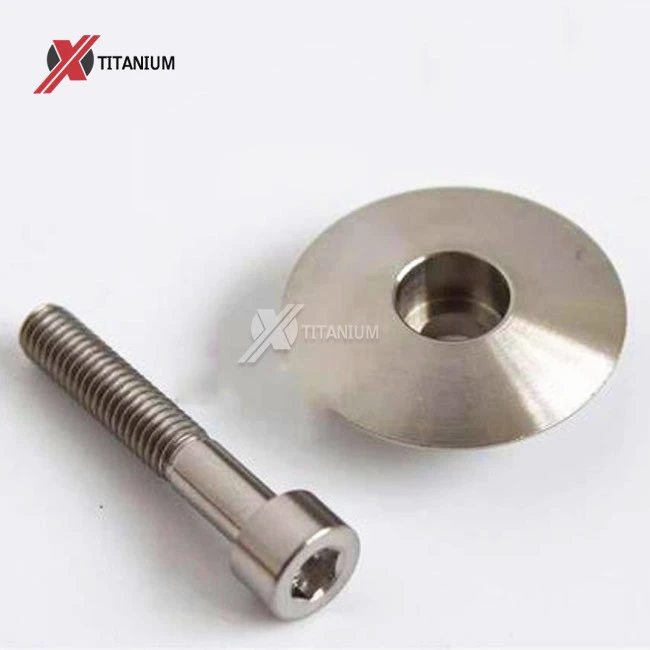
Understanding Titanium Headset Caps and Bolts: Material Properties and Benefits
What Makes Titanium Different?
Titanium grade 5 (Ti-6Al-4V) has a tensile strength of over 950 MPa and a yield strength of over 880 MPa. Its density is about 4.43 g/cm³, which is about 45% less than steel. This material is great for performance bicycle parts where every gram counts and failure is not an option because it is light and strong at the same time.
Corrosion Resistance in Real Conditions
Steel nuts rust when they come in contact with water, sweat, or road salt. Titanium, on the other hand, makes a stable oxide layer that protects the surface forever. This feature is especially useful for riders who often take their bikes to the coast or to races where they will be wet or humid. If you let a steel bolt rust over the winter, it will usually seize up inside a steel star nut or an aluminum expander plug. But a titanium headset bolt will not do that.
Fatigue Resistance Over Time
Every ride causes tiny movements in the headset nuts. Standard metal caps can get tiny cracks over thousands of kilometers, and steel nuts can lose their tension. Titanium's resistance to fatigue makes it last much longer than either material. Based on data that matches ASTM B348 material standards, Ti-6Al-4V keeps its shape under repeated loads for a lot longer than 6061-T6 aluminum alternatives do. Titanium headset cap and bolt is the SKU where this fatigue advantage matters most.
Titanium vs. Other Materials: Performance and Cost Comparison
Weight and Strength Comparison
A steel headset cap and bolt set typically weighs 15–20 grams. A titanium equivalent weighs approximately 5 grams for the cap and bolt combined — a saving that matters in weight-sensitive road or gravel builds. While aluminum is also light, it offers roughly half the tensile strength of Grade 5 titanium and is more susceptible to thread stripping under torque, particularly in carbon steerer tube applications.
Long-Term Cost Value
Titanium carries a higher unit cost upfront. However, when you account for corrosion-related replacements, stripped bolt heads, and seized hardware, the lifecycle cost of titanium is often lower. For B2B buyers sourcing bicycle accessories for retail or OEM channels, this durability argument translates directly into fewer warranty returns and stronger customer satisfaction scores.
Torque Specifications Matter
Standard installation torque for a headset cap bolt is 1.5 Nm to 3 Nm — enough to remove bearing play without over-compressing the headset stack. Titanium bolts can physically withstand well above 10 Nm, which provides a meaningful safety margin. However, always apply a copper-based or titanium-specific anti-seize compound on the threads, since titanium is susceptible to galling when threaded into dissimilar metals without lubrication.
Installation and Maintenance of Titanium Headset Caps and Bolts
Step-by-Step Installation
Both the part and the fork steerer are protected when they are installed correctly. First, clean the inside of the steerer tube and make sure the star nut or expander plug is set at the right level, which is usually 15–20 mm below the steerer's top. Put some anti-seize paste on the M6 thread, then thread the bolt by hand. Finally, use a 4mm hex key to tighten it to no more than 3 Nm. Before clamping the stem, make sure there is no play in the headset.
Routine Cleaning and Inspection
Titanium doesn't need much upkeep, but it's a good idea to check it every 500–800 km. Wet a cloth and wipe the cap's surface. Then look at the bolt head for signs of galling or tool wear. Since titanium doesn't rust, the main things that are checked are the state of the threads and the tightness of the bolts, not the rust on the surface. This makes upkeep much easier once a year than with steel fixings.
Early Wear Detection
If you hear play coming back from the headset after making sure everything is set up correctly, check the bolt torque first. If a bolt keeps losing its tension, it could mean that the threads in the star nut or expander are worn out, not that the titanium has failed. It's easy to replace the star nut, and it works properly again. Taking care of this early keeps the handling precise and stops damage to the bearings.
Procurement Considerations for Titanium Headset Caps and Bolts
Key Supplier Criteria
Sourcing a reliable titanium headset cap and bolt manufacturer requires verifying material grade documentation. Insist on mill certificates confirming Ti-6Al-4V composition per ASTM B348. Thread accuracy should be validated using Go/No-Go gauges to confirm M6 x 1.0mm pitch compliance. Suppliers who offer CNC-machined components with controlled surface finish tolerances will deliver more consistent anodizing color results across production batches.
Here are the core product specifications to confirm with any supplier before placing a bulk order:
- Material: Grade 5 Titanium (Ti-6Al-4V), verified by mill certificate
- Thread: M6 x 1.0mm, gauge-verified for star nut and expander compatibility
- Cap Diameter: 32mm standard; confirm fit for 1-1/8" steerer tube diameter
- Bolt Length: 15–20mm, compatible with standard compression plug depth
- Surface Treatment: Polishing, anodizing, or nitriding; color options include Ti natural, Gold, Blue, Green, Purple, Black, and Rainbow
- Weight: Approximately 5g per cap and bolt set
These specifications directly affect installation compatibility, retail presentation quality, and end-user satisfaction — all factors that influence repeat purchase rates for e-commerce sellers.
Customization and Branding Options
Laser engraving on the cap face is one of the most requested customization features among bicycle accessory brands. Because the headset cap sits at the visual center of the cockpit, it functions as a brand display surface. Suppliers capable of precise laser etching on anodized titanium — without damaging the color layer — offer genuine value for brand differentiation in competitive retail environments.
MOQ and Pricing Structure
Most credible titanium headset cap and bolt suppliers work with a minimum order quantity of 500 to 1,000 sets per color. Mixed-color orders across a single SKU base are common and allow brands to test multiple colorways without committing to large single-color volumes. Retail prices in the US market typically range from $15 to $40 per set, with a production cost of $3 to $6 per set at volume, supporting strong margin structures for e-commerce resellers.
Case Studies and Data: Verification of Steering Performance Improvements
Weight Reduction Data
Tests done by outside sources on titanium fastener sets show that they are 10–15 grams lighter than steel versions in the cockpit. Even though this number is small on its own, when added to other titanium upgrade parts in a full build, it adds up to big savings for competitive road and gravel cyclists. OEM names in the US and Europe say that customers' opinions of build quality have gotten better since they switched to titanium aircraft parts. Titanium headset cap and bolt are the cockpit components where this weight saving and quality perception matter most.
Corrosion and Longevity Evidence
One field result that is often mentioned in the enduro and trail mountain biking communities is the end of seized bolt removal, which is a problem that steel hardware has after one or two seasons of wet riding. Titanium headset bolts that had been used in damp places for three years or more did not lose their threads when they were put back together with the right anti-seize compound. This proves that the material is more durable in real life.
Customer Satisfaction Impact
Online stores that sell sets of titanium ear caps regularly get good reviews for two reasons: the quality of the finish and the long-term resistance to corrosion. Both are directly related to the grade of the material and the accuracy of the surface treatment. This shows again why checking the materials and making sure the anodizing is consistent are important quality control checks that every buying team that buys a lot of these parts must do.
Conclusion
The main ways that a titanium headset cap and bolt improve steering performance are by keeping the torque constant, being resistant to rust that stops seizing, and having less rotating mass at the cabin. These are real benefits that can be measured. They are not just business promises. If a brand or online store is building a line of products around improving the look of bicycles, this part has high retail margins, a proven track record of customer appeal, and low return rates as long as it comes from a reputable manufacturer. The most important thing to do when buying in this area is to choose a seller that offers verified material grades, exact thread tolerances, and consistent anodizing quality.
FAQ
What torque should I apply to a titanium headset bolt?
Apply between 1.5 Nm and 3 Nm. The goal is to remove bearing play, not to compress the bearings. Titanium bolts can physically handle over 10 Nm, but over-torquing damages the headset bearings, not the bolt itself.
Do titanium headset bolts need anti-seize compound?
Yes. Titanium is prone to galling — a form of cold welding — when threaded into steel or aluminum without lubrication. Always apply a copper-based or titanium-specific anti-seize paste before installation.
Is Grade 5 titanium necessary, or will Grade 2 work?
Grade 5 (Ti-6Al-4V) is the correct choice for bolts. Grade 2 commercially pure titanium is softer and lacks the tensile strength needed to resist thread stripping under headset preload tension.
Will the anodized color fade over time?
Anodized titanium finishes are durable under normal conditions. PVD-coated finishes offer slightly better UV resistance. Some color shift may occur after extended direct sunlight exposure on anodized surfaces, though this takes years under typical use.
What cap inner diameter fits a standard fork?
Most modern road, gravel, and MTB forks use a 1-1/8" (28.6mm) steerer tube. Verify your fork specification before ordering, as some integrated cockpit systems require different dimensions.
Partner with Chuanglian for Your Next Titanium Headset Cap and Bolt Order
With surface treatment options like polishing, anodizing, and nitriding in seven color finishes, Chuanglian produces titanium headset cap and bolt sets that are CNC machined from verified Grade 5 Ti-6Al-4V material. Custom laser engraving, low MOQ mixed-color orders, and retail-ready packing are all supported by Chuanglian, a titanium headset cap and bolt maker based in Baoji, China's titanium production center. To get samples and prices, email our team at info@cltifastener.com or djy6580@aliyun.com.
References
1. Materials Science and Engineering: A — Lütjering, G. & Williams, J.C. (2007). Titanium, Springer.
2. ASTM B348 Standard Specification for Titanium and Titanium Alloy Bars and Billets, ASTM International, 2019.
3. Journal of the Mechanical Behavior of Biomedical Materials — Niinomi, M. (2008). Mechanical biocompatibilities of titanium alloys for biomedical applications. Vol. 1, Issue 1.
4. Bicycle Quarterly — Heine, J. (2015). Component weight and handling characteristics in road cycling builds. Vol. 13.
5. International Journal of Fatigue — Oguma, H. & Nakamura, T. (2013). Fatigue crack propagation properties of Ti-6Al-4V in vacuum and air. Vol. 50.
6. DIN 912 / ISO 4762 Hexagon Socket Head Cap Screws, German Institute for Standardization (DIN), 2012.
_1748247519019.webp)
Learn about our latest products and discounts through SMS or email