- English
- French
- German
- Portuguese
- Spanish
- Russian
- Japanese
- Korean
- Arabic
- Greek
- German
- Turkish
- Italian
- Danish
- Romanian
- Indonesian
- Czech
- Afrikaans
- Swedish
- Polish
- Basque
- Catalan
- Esperanto
- Hindi
- Lao
- Albanian
- Amharic
- Armenian
- Azerbaijani
- Belarusian
- Bengali
- Bosnian
- Bulgarian
- Cebuano
- Chichewa
- Corsican
- Croatian
- Dutch
- Estonian
- Filipino
- Finnish
- Frisian
- Galician
- Georgian
- Gujarati
- Haitian
- Hausa
- Hawaiian
- Hebrew
- Hmong
- Hungarian
- Icelandic
- Igbo
- Javanese
- Kannada
- Kazakh
- Khmer
- Kurdish
- Kyrgyz
- Latin
- Latvian
- Lithuanian
- Luxembou..
- Macedonian
- Malagasy
- Malay
- Malayalam
- Maltese
- Maori
- Marathi
- Mongolian
- Burmese
- Nepali
- Norwegian
- Pashto
- Persian
- Punjabi
- Serbian
- Sesotho
- Sinhala
- Slovak
- Slovenian
- Somali
- Samoan
- Scots Gaelic
- Shona
- Sindhi
- Sundanese
- Swahili
- Tajik
- Tamil
- Telugu
- Thai
- Ukrainian
- Urdu
- Uzbek
- Vietnamese
- Welsh
- Xhosa
- Yiddish
- Yoruba
- Zulu
China 6Al-4V Titanium Plate Manufacturer for Industrial Use
Procurement workers have to make important choices that affect the whole supply chain when they are looking for a trusted China 6Al-4V titanium plate manufacturer for commercial use. The 6Al-4V titanium plate, which is also called Grade 5 titanium, is the most common type of titanium metal used around the world. It makes up more than half of all the titanium used. This alpha-beta dual-phase alloy has great strength-to-weight ratios and great corrosion protection, which is why it is the best choice for medical, petrochemical, naval, and aircraft uses where material performance must not be sacrificed.
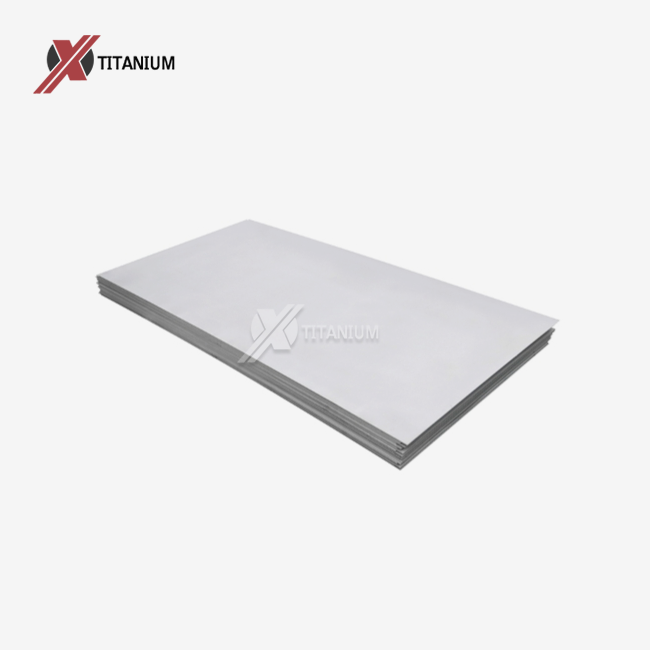
Comprehending 6Al-4V Titanium Plates: Properties and Applications
Composition and Material Properties
The 6Al-4V titanium plate is made up of 90% titanium, 6% aluminum (which acts as an alpha stabilizer), and 4% vanadium (which acts as a beta stabilizer). Together, they make UNS R56400, a chemically unique material. The strength-to-weight paradox is a technical problem that this particular combination tries to solve. The material has a tensile strength about the same as low-alloy steels (1000 MPa), but it is only 4.43 g/cm³ dense, which is about 56% that of steel.
The aluminum in the combination makes it stronger and less dense, and the vanadium makes it more flexible and difficult to break. This well-balanced mix lets heat treatment work in ways that pure titanium can't. This lets makers make stronger parts by carefully controlling the heat process. Because of this, the material is very resistant to wear and keeps its shape in places where aluminum fails and steel is too heavy.
Critical Industrial Applications
Because Ti-6Al-4V plates, such as 6Al-4V titanium plate, can be used in many different ways, they are essential in many high-performance areas. In the aircraft industry, these plates are used to make structure parts, engine parts, and fasteners. Less weight directly affects how much fuel an airplane can use and how much it can carry. The aircraft industry likes the alloy because it can keep its mechanical qualities at high temperatures, which makes it a good choice for engine parts and airframe structures.
Manufacturers of medical devices rely on 6Al-4V plates for surgical implants, mechanical devices, and oral uses because they are biocompatible and don't rust in body fluids. The material is strong enough to handle load-bearing devices like hip and knee replacements, and it is not magnetic, so it can be used with MRI machines.
Heat Treatment and Manufacturing Advantages
In contrast to pure titanium grades, 6Al-4V plates respond well to heat treatment methods. This lets makers make the mechanical features work best for certain uses. When steel is annealed, it is very easy to shape into complex shapes. Solution treatment and age can raise its tensile strength to meet the needs of complicated structures.
The two-phase architecture lets different processing methods work, like hot forming, cold forming, and cutting. This industrial freedom lowers production costs and lets projects be customized to meet their needs. It solves the common problem in the industry of finding a balance between performance and manufacturability.
Comparing 6Al-4V Titanium Plates with Alternative Materials
Performance Against Steel and Aluminum Alternatives
It is clear that 6Al-4V titanium plates work better than traditional materials when compared to a number of different factors. Titanium Grade 5 is stronger than 304 stainless steel, but it doesn't rust as easily in salt settings. It's also about half the weight of 304 stainless steel. In aerospace uses, where every pound saved means lower running costs, this weight loss is very important.
When compared to aluminum metals, 6Al-4V plates are much stronger and can handle higher temperatures. Even though aluminum is a cheaper material, titanium's better engineering qualities often make it worth the extra cost in high-stress situations. Titanium metal stays structurally stable at temperatures where aluminum starts to lose its strength. This makes it necessary for engine parts and other high-temperature industrial processes.
In naval settings, chemical handling, and medical settings, 6Al-4V is more resistant to corrosion than both steel and aluminum. This resistance comes from the formation of a solid oxide layer that fixes itself when it gets broken, protecting the surface for a long time without the need for any other treatments.
Comparison with Other Titanium Grades
When it comes to titanium, 6Al-4V plates are better than other grades, such as Ti-5Al-2.5V (Grade 6) and widely pure titanium types. Although Grade 6 has similar corrosion protection, it is not as strong. This means that 6Al-4V is better suited for structure uses that need to hold more weight.
6Al-4V is a balanced metal that has the best mix of strength, ductility, and fracture toughness. Other types of titanium have trouble matching it. Ti-3Al-2.5V is easier to shape when it's cold, but it's not strong enough at high temperatures for use in aircraft. Commercial purity titanium types are very resistant to rust, but they aren't strong enough for structural parts that need to be strong.
How to Source and Purchase 6Al-4V Titanium Plates from China Manufacturers?
Evaluating Chinese Titanium Suppliers
China has become a major player in the titanium business around the world, and its producers have been able to meet foreign quality standards and get certifications. To meet the strict needs of military, medical, and industrial customers around the world, China's top providers have put a lot of money into modern production tools and quality control systems.
Procurement workers should give more weight to makers with ISO 9001, AS9100, and other related medical certifications when they are looking at possible suppliers. These certificates show that the company follows quality control systems that are needed to make sure that materials always have the same traits and can be tracked. Chinese companies that have been around for a while often work together with foreign testing labs to offer full material approval and characterization services.
The fact that most titanium is made in places like Baoji, which is known as the "City of Titanium," forms groups of people with specific knowledge and the infrastructure they need to work together. This concentration makes supply lines work better and lets producers of raw materials, processing sites, and finishing processes work together technically.
Commercial Considerations and Procurement Strategy
To successfully buy 6Al-4V titanium plates, you need to know how the titanium market works from a business point of view. Pricing models usually take into account the cost of raw materials, the difficulty of the process, and the number of orders. Different suppliers have very different minimum order amounts. Bigger makers usually need big promises, while smaller, more specialized shops may be able to meet prototype or small-batch needs.
Lead times for titanium plates can be anywhere from a few weeks to a few months, based on the requirements, the amount, and the supplier's availability. Standard sizes and thicknesses usually have shorter lead times for delivery, while unique standards may need more time to plan production. Early on in the sourcing process, procurement workers should set clear delivery standards to make sure they are in line with project deadlines.
A very important part of getting titanium is having good paperwork. Reliable providers give full material test results that include the chemical makeup, mechanical properties, and measurements of the material. These papers make sure that things can be tracked and help with the quality control processes that are needed in controlled fields like aircraft and medical device manufacturing.
Customization and Technical Support Services
More and more, Chinese titanium makers offer services that add value on top of making plates. Precision cutting, finishing the surface, and unique packaging choices all help cut down on the amount of work that needs to be done later and the total cost of the job. Some providers offer engineering help with choosing materials, making suggestions based on specific applications, and fixing technical issues.
Quality suppliers are different from commodity suppliers because they can work together on unique specs. Experienced makers can suggest the best conditions for the metal, changes that can be made to the design to make it easier to make, and samples that can be tested and confirmed. This way of working together technically is especially helpful for complicated tasks that need to optimize materials.
Selecting the Best 6Al-4V Titanium Plate for Your Industrial Needs: A B2B Procurement Perspective
Technical Specification Definition
To buy titanium successfully, you must first have clear technical requirements that match the material's features to the needs of the application. The people who work in procurement have to list the required surface finish, dimensional tolerances, mechanical property goals, and any special tests or licensing needs. The factors for evaluating suppliers and accepting quality are based on these specs.
The choice of material state has a big effect on both cost and function. The annealed state makes it easy to shape complex forms, but it might not be the strongest state. Solution-treated and old conditions make the material stronger, but they also make it less flexible. Knowing these trade-offs helps you choose the best material for each application while avoiding over-specification, which raises costs for no reason.
Chemical makeup limits need to be carefully thought out, especially for medical and aircraft uses. Standard 6Al-4V formulas meet most needs, but for some uses, tighter controls on certain parts or less interstitial content are better. It is easier for suppliers to provide the right material certifications and testing paperwork when these standards are clearly stated.
Supplier Capability Assessment
Aside from the quality of the material, buying titanium successfully also means evaluating the supplier's skills in a way that supports the success of a long-term relationship. When dealing with application problems or looking for new possibilities, technical help skills come in very handy. Suppliers who know a lot about metallurgy can help you choose the right materials, make suggestions for handling, and fix problems.
The consistency of material features and transport performance is based on how solid the quality system is. Suppliers whose quality management systems are more established are better able to control the process variables that change the properties of the materials. This control means that there is less difference from batch to batch and better predictability in how the supply chain works.
As supply lines spread across multiple countries, the ability to distribute goods globally becomes more and more important. Suppliers who have built up transportation networks and shipped goods internationally before can better handle arrival times and customs rules. This feature is especially useful for jobs that need to be finished quickly or for uses that need just-in-time shipping.
Risk Mitigation and Partnership Development
Effective risk reduction methods deal with the problems that come with buying titanium, such as changing prices, supply problems, and differences in quality. Diversification across several qualified providers makes you less reliant on a single source while keeping prices and service levels reasonable. But this method needs to find a mix between lowering risk and the relationship benefits of concentrated numbers.
When you build a relationship over time, you both gain in ways that go beyond individual transactions. Having established relationships makes it easier to talk to each other, get special treatment when resources are limited, and work together to solve problems when they come up. Quality providers like stable, long-term customers and will often offer better prices and service to keep these customers.
When making a backup plan, you should think about things like possible supply problems, quality problems, and changes in demand. This planning includes finding other suppliers, making plans for supplies for important uses, and setting up quick ways to check out sources when needed. Active risk management lessens the effects of problems that come up out of the blue and keeps the project going.
Future Trends and Innovations in 6Al-4V Titanium Plates Industry
Technological Advances in Production
Better melting tools, better processing methods, and better quality control systems are all helping the titanium business move forward. Vacuum arc remelting (VAR) and electron beam melting both make material that is better, more uniform, and has fewer impurities. These improvements mean better mechanical qualities and higher dependability in important situations.
Additive manufacturing technologies are changing the way standard plates, like 6Al-4V titanium plate, are made and opening up new uses for titanium. 3D printing makes it possible to make shapes that are too complicated to make any other way, and it also increases the need for high-quality materials used in the printing process. Plate makers who can make powder or other specific starting materials will be able to take advantage of this trend.
Advanced heat treatment methods make it possible to tailor microstructures to specific performance needs. Controlled cooling rates, exact temperature control, and new aging processes make it easier for makers to change the properties of materials than with older methods. These features make it possible for 6Al-4V plates to be used in more situations and make them work better in tough conditions.
Market Dynamics and Global Supply Chains
China's growing production capacity keeps changing the global titanium markets and opening up new supply chain possibilities and competitive dynamics. Chinese makers have put a lot of money into new technology and quality systems, which lets them compete in high-end markets that Western companies used to control.
New demand areas, such as advanced manufacturing, green energy, and electric cars, are making titanium plates useful in new ways. Titanium's resistance to rust is used in offshore wind energy systems, and companies that make electric cars are looking for ways to make their cars lighter. These growing markets offer chances for growth and spread demand beyond the usual aircraft and chemical processing industries.
Sustainability in the supply chain is becoming more important as customers look for environmentally friendly ways to buy things. Titanium can be recycled and has a long useful life, which are both good for environmental goals. However, producers must also work on reducing energy use and waste during production. This focus gives providers who can show they care about the world a competitive edge.
Conclusion
To find a trustworthy China 6Al-4V titanium plate maker, you need to carefully look at their technical skills, quality control systems, and ability to work with you. To be successful in buying titanium, you need to know how the qualities of the material, the skills of the suppliers, and the changes in the market affect both performance and cost. Chinese firms of high quality have shown that they can meet foreign standards while also offering reasonable prices and quick service. Finding suppliers with professional know-how, strong quality processes, and a commitment to a long-term relationship is key.
FAQ
What makes 6Al-4V titanium plates superior to other titanium grades?
Other types of titanium can't compare to 6Al-4V titanium plates when it comes to strength, flexibility, and resistance to rust. The aluminum content makes the metal stronger while decreasing its bulk, and the vanadium content makes it tougher and better at responding to heat treatment. This mix gives titanium metals their best strength-to-weight ratio, which means they can be used in the toughest structural situations.
How can I verify the quality of Chinese titanium plate suppliers?
Checking for quality means looking at standards like ISO 9001 and AS9100, reading material test results, and judging the ability to produce. Ask for examples to test on your own, visit the facilities if you can, and get recommendations from customers who work in related fields. Suppliers with a good reputation give lots of paperwork and are happy to have quality checks done.
What are typical lead times for 6Al-4V titanium plates from China?
Lead times depend on the details, the amount, and the supplier's availability. Standard sizes take between 4 and 8 weeks, while special sizes may take between 8 and 16 weeks. Delivery is affected by things like the supply of materials, the needs for processing, and the shipping ways used. Setting clear delivery goals early on in the buying process helps make sure that the project stays on schedule.
What kinds of licenses should Chinese titanium suppliers have?
For example, ISO 9001 is needed for quality control, AS9100 is needed for aircraft uses, and the right medical certifications are needed for biomedical uses. Certifications for materials should meet foreign standards like ASTM, AMS, or something similar. Accreditation of testing laboratories makes sure that the identification and tracking of materials are done correctly.
How do I determine the right plate thickness for my application?
The choice of plate thickness is based on the needs of the structure, the production method, and the cost. Although thicker plates are stronger, they may need more complicated making steps. Talk to your providers to find out what thickness they think is best for your product and the limitations of your manufacturing process.
Partner with Chuanglian for Premium 6Al-4V Titanium Plate Solutions
Baoji Chuanglian New Metal Material Co., Ltd is a reliable company that makes 6Al-4V titanium plates. As a trusted 6Al-4V titanium plates supplier, they have over ten years of experience working with titanium and the most up-to-date production tools. Our thorough quality control system makes sure that the features of our materials stay the same from raw materials to finished goods. Our AS9100 and ISO 9001 certifications show that we are committed to meeting international quality standards. Get in touch with our expert team at info@cltifastener.com or djy6580@aliyun.com to talk about your needs and find out how our custom titanium solutions can make your industrial uses better.
References
1. Boyer, R.R. "An Overview on the Use of Titanium in the Aerospace Industry." Materials Science and Engineering: A, Vol. 213, 1996.
2. Lutjering, G. and Williams, J.C. "Titanium: Engineering Materials and Processes." Springer-Verlag Berlin Heidelberg, 2007.
3. Donachie, M.J. "Titanium: A Technical Guide." ASM International, Materials Park, Ohio, 2000.
4. Peters, M. and Leyens, C. "Titanium and Titanium Alloys: Fundamentals and Applications." Wiley-VCH, Weinheim, Germany, 2003.
5. American Society for Testing and Materials. "Standard Specification for Titanium and Titanium Alloy Strip, Sheet, and Plate." ASTM B265, ASTM International, 2020.
6. Aerospace Materials Specification. "Titanium Alloy, Sheet, Strip, and Plate 6Al-4V Annealed." AMS 4911, SAE International, 2019.
Learn about our latest products and discounts through SMS or email