- English
- French
- German
- Portuguese
- Spanish
- Russian
- Japanese
- Korean
- Arabic
- Greek
- German
- Turkish
- Italian
- Danish
- Romanian
- Indonesian
- Czech
- Afrikaans
- Swedish
- Polish
- Basque
- Catalan
- Esperanto
- Hindi
- Lao
- Albanian
- Amharic
- Armenian
- Azerbaijani
- Belarusian
- Bengali
- Bosnian
- Bulgarian
- Cebuano
- Chichewa
- Corsican
- Croatian
- Dutch
- Estonian
- Filipino
- Finnish
- Frisian
- Galician
- Georgian
- Gujarati
- Haitian
- Hausa
- Hawaiian
- Hebrew
- Hmong
- Hungarian
- Icelandic
- Igbo
- Javanese
- Kannada
- Kazakh
- Khmer
- Kurdish
- Kyrgyz
- Latin
- Latvian
- Lithuanian
- Luxembou..
- Macedonian
- Malagasy
- Malay
- Malayalam
- Maltese
- Maori
- Marathi
- Mongolian
- Burmese
- Nepali
- Norwegian
- Pashto
- Persian
- Punjabi
- Serbian
- Sesotho
- Sinhala
- Slovak
- Slovenian
- Somali
- Samoan
- Scots Gaelic
- Shona
- Sindhi
- Sundanese
- Swahili
- Tajik
- Tamil
- Telugu
- Thai
- Ukrainian
- Urdu
- Uzbek
- Vietnamese
- Welsh
- Xhosa
- Yiddish
- Yoruba
- Zulu
Gr5 Titanium Bicycle Screws OEM Supplier Guide
To find the best Gr5 Titanium Bicycle Screws supplier, you need to know about the material standards, the supplier's skills, and the best way to buy the screws that meet your manufacturing needs. This complete guide covers all the important things that business-to-business buyers need to think about when looking for titanium bicycle bolts, such as technical specs and quality standards, as well as managing the supply chain and lowering costs. In the competitive cycling business, choosing the right OEM provider is key to making sure that your products are of high quality, that they are delivered on time, and that your relationship works well in the long run.
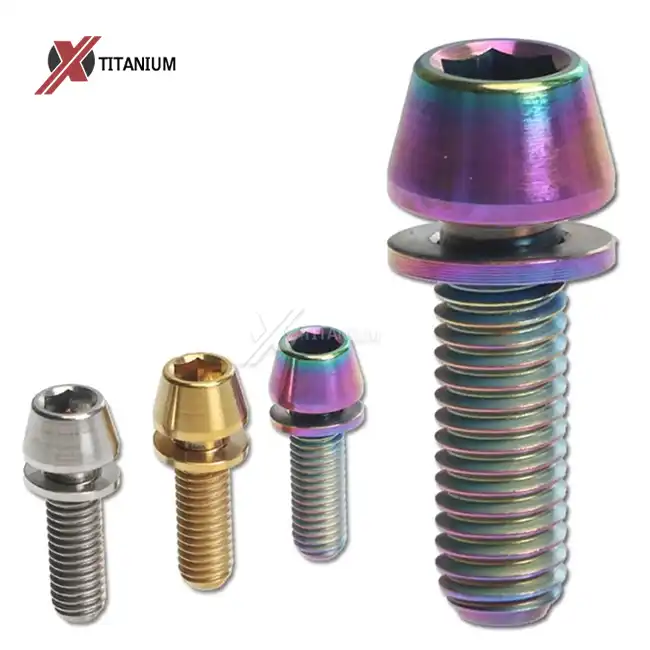
Introducing Gr5 Titanium Bicycle Screws: Properties and Advantages
Ti-6Al-4V, which is the formal name for grade 5 titanium alloy, is the best material for bicycle fixing. This material is strong enough to be used in aerospace, and it performs very well in the tough conditions of current cycling uses. The metal is made up of 6% aluminum and 4% vanadium. It has a density of 4.43 g/cm³ and a compressive strength between 895 and 1000 MPa.
Material Properties and Technical Specifications
When you look at the physical features of Gr5 titanium bicycle screws, you can see that they are technically better. The strength-to-weight ratio of these parts is much higher than that of steel options, and they keep their structural integrity under great stress. The yield strength of about 828 MPa makes sure that it works reliably in safety-critical situations like fixing places for brake calipers and stem faceplates.
Another thing that sets Grade 5 titanium screws apart is their resistance to corrosion. The substance creates a solid oxide film on its own, which protects it from external damage forever. This quality is especially useful in cockpits where riders sweat a lot, because salt corrosion from their sweat often breaks down standard steel bolts.
Performance Advantages Over Alternative Materials
When you compare titanium bicycle screws to screws made of other materials, the benefits are clear right away. Even though steel rivets are cheap, they are heavier and more likely to rust, which makes them less reliable in the long run. While aluminum options are lighter, they don't have the power needed for high-stress situations.
Titanium's nonmagnetic qualities make electric shifting systems and high-tech bike computers even better. The low thermal conductivity of the material is helpful in disc brake uses, where heat movement from the rotors to the hub assemblies can affect how well the bearings work during long descents.
How to Choose the Right Titanium Bicycle Screws for Your Business Needs?
To choose the right titanium screws, you need to carefully look at the needs of the product, the manufacturing standards, and the supplier's abilities. The choice matrix includes more than just cost. It also includes performance standards, delivery reliability, and expert help skills that match your output needs.
Application-Specific Requirements Assessment
Various types of bicycles need different types of fasteners. For mountain bike uses, longevity and resistance to external contamination are very important. This means that screws need to have better surface treatments and strong thread engagement. When used in road racing, the goal is to minimize weight while keeping the structure strong under high stress.
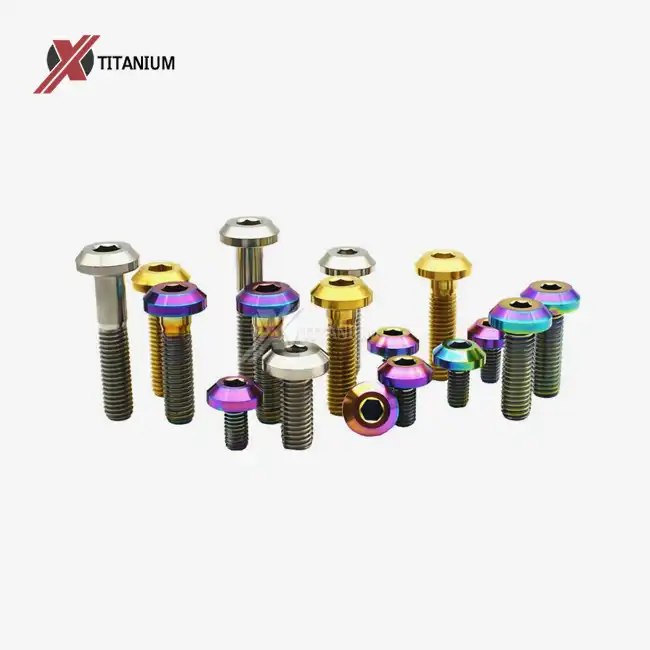
When you make your choice, you need to think about the thread requirements, head shapes, and surface finishes that work best with the way you put the parts together. Hex socket head cap screws that meet DIN 912 standards, button head screws that meet ISO 7380 standards, and countersunk screws that meet certain aerodynamic requirements are all common types, especially when using Titanium Bicycle Screws for added strength and corrosion resistance.
OEM Supplier Evaluation Criteria
When looking at possible OEM sources, you need to look at their manufacturing skills, quality systems, and how stable their supply chains are. Reliable providers keep certifications like AS9100 for aerospace uses, ISO 9001 for quality management, and approvals specific to the business that show they are dedicated to doing a great job.
The manufacturing method has a big effect on the quality and consistency of the result. When suppliers use rolled thread technology, they keep the structure of the material's grains, which makes it more resistant to stress than cut thread options. Advanced surface processes, such as PVD coating, let you change the way something looks without affecting its structural stability.
Procurement and Supply Chain Insights: Buying Titanium Bicycle Screws at Scale
For buying titanium bicycle bolts efficiently, you need to do more than just make transactions. You need to plan strategically and handle your relationships with suppliers in a way that goes beyond simple transactions. The special properties of titanium materials and the way they need to be processed make the supply chain complicated. It needs specialized knowledge and careful source selection.
Supply Chain Management Strategies
To buy titanium successfully, you must first understand how the global supply system works. Primary titanium production is concentrated in certain areas of the world. This can make the supply chain vulnerable, but smart buyers can protect themselves by using a variety of buying methods. By building ties with several qualified providers, you can keep things running smoothly even when the market is down and still get competitive prices.
Talks about buying a lot of titanium should take into account how volatile its price is and how hard it is to work with. Titanium is not priced like other materials because it depends on the cost of the raw materials, the amount of energy needed to make it, and the specific way it needs to be handled. Buyers get the best prices when they combine their orders, make shipping times flexible, and make long-term partnerships with providers that let them see what buyers want.
Customization and Value-Added Services
These days, OEM sellers let you make a lot of changes that make your product stand out and help your business. Bicycle companies can make their products stand out while still keeping costs low by using custom thread lengths, unique head designs, and special surface treatments.
Total cost of ownership is affected by value-added services like professional help, inventory management, and just-in-time shipping. Suppliers who offer full testing services, material certifications, and technical help cut down on the need for internal quality control while still making sure that industry standards are met.
Maintenance, Identification, and Longevity of Titanium Bicycle Screws
Titanium bicycle screws work best and last the longest when you know the right way to put them, how to keep them in good shape, and how to verify their authenticity throughout their entire lifecycle. Because titanium is so expensive and needs to be handled in a certain way, these things become even more important.
Installation and Torque Specifications
When installing Titanium Bicycle Screws, you need to follow different steps than when installing steel fasteners. Due to the lower elastic stiffness of the material, torque requirements must be lowered to protect threads and make sure proper preload distribution. Typical torque values are 20–30% less than those of steel screws that are the same size. Exact values depend on the thread size and the needs of the application.
Professional assembly methods don't allow threadlock compounds to be used with titanium screws. Because titanium and threadlock materials are chemically compatible, there is a chance of galvanic rust that could damage the joint. If you use the right fitting method and force values, the retention will be good enough without any chemical help.
Authentication and Quality Verification
Genuine Grade 5 titanium has certain physical traits that make it easy to spot in the field. When rare earth magnets are used to test them, real titanium screws show a unique silvery sheen and don't magnetize. The density of the material gives it a unique feel that only skilled techs can understand.
Quality control checks include making sure the dimensions are correct, the surface is smooth, and the thread shape stays the same. Premium providers offer material certificates, test results, and traceability paperwork that make it possible to do full quality audits. In safety-critical situations, these papers are necessary for guarantee claims and following the rules.
Top Titanium Bicycle Screws for Different Bike Types: 2026 Buyer's Guide
Because different types of current bikes have different needs, they need unique fitting solutions that work well and don't cost too much. This study looks at application-specific needs and suggested solutions for major bike groups. It gives procurement workers useful information for choosing suppliers and making product specifications.
Mountain Bike Applications
Mountain bike bolts have to be able to handle rough situations like mud, debris, temperature changes, and being hit hard. These uses get better corrosion protection from improved surface processes and strong thread engagement features that keep things safe even when they're vibrating, especially when using Titanium Bicycle Screws for enhanced durability and performance
High-quality mountain bike screws have bigger bearing areas that spread the load across different frame materials and keep the force constant. When Grade 5 material qualities are combined with optimized geometry, the result is steady performance over long service intervals, even in tough working conditions.
Road and Racing Applications
When used in road racing, the goal is to minimize weight while keeping the structure strong under high stress. Most of the time, these fasteners have reduced head profiles and improved thread engagement lengths that lower the weight of the parts without weakening the joints.
For racing purposes, aerodynamics play a role in the design factors. For example, countersunk and low-profile head shapes lower drag costs. Advanced surface treatments make the surfaces look good while keeping the performance qualities that are important for professional riding.
Specialized and Custom Solutions
Brand-new types of bikes, like electric bikes and dirt riding, have specific fastener needs that need custom engineering solutions. Applications for electric bikes need to be able to handle more weight and pressure while also making sure that battery systems and motor units can be attached securely.
Bicycle companies can solve certain design problems with custom bolt solutions that keep their brands separate. In these situations, fastener makers and bicycle manufacturers often need to work together on engineering to improve performance and make the products easier to make.
Conclusion
To successfully purchase Gr5 Titanium Bicycle Screws, you need to know a lot more about the material's features, the supplier's skills, and the needs of the application than just how much it costs. Titanium products are very special, so to get the best results, you need to know a lot about how to evaluate suppliers, check quality, and handle the supply chain. Modern bicycle makers know that choosing the right fasteners strategically is a big part of making sure that their products work well, that their brands stand out, and that customers are happy. It also helps them stay ahead of the competition in the cycling industry, which is always changing.
FAQ
What makes Gr5 titanium superior to stainless steel for bicycle applications?
Comparing Gr5 titanium to stainless steel, it is about 45% lighter while still having the same level of power. The material is better at resisting corrosion without coats, and it gets rid of the galvanic corrosion risks that come with bicycle systems that use different types of metals together.
How can I verify authentic Grade 5 titanium fasteners?
Genuine Gr5 titanium doesn't conduct magnetic fields, has a unique shiny look, and has certain density qualities. Material certifications, test results, and traceability paperwork from reputable sources make it easy to authenticate and check the quality of the goods.
What torque specifications apply to titanium bicycle screws?
Titanium screws usually need 20–30% less pressure than steel fasteners of the same size. The exact requirements rely on the thread size and the purpose of the application. For specific goods and setups, maker suggestions are the best way to go.
Are titanium bicycle screws suitable for all weather conditions?
Grade 5 titanium is very resistant to the surroundings in all cycling situations. The material doesn't rust and stays stable at high and low temperatures, so it works well in both arctic and warm climates without breaking down or needing upkeep.
Partner with Chuanglian for Premium Titanium Bicycle Screws Manufacturing Excellence
Chuanglian is a leading Titanium Bicycle Screws manufacturer, making the best Grade 5 titanium bicycle bolts in the business. They have over ten years of experience making them and have full quality control methods in place. Our advanced CNC machining skills and strict quality control procedures make sure that the quality of our products always meets the high standards of luxury bicycle makers around the world.Get in touch with our technical experts at info@cltifastener.com or djy6580@aliyun.com to talk about your specific titanium bicycle screws source needs and find out how our flexible solutions can help you make more products while making the supply chain less complicated.
References
1. American Society for Testing and Materials. "Standard Specification for Titanium and Titanium Alloy Bars and Billets." ASTM B348-19, 2019.
2. Boyer, Rodney R. "An Overview on the Use of Titanium in the Aerospace Industry." Materials Science and Engineering A, vol. 213, 1996.
3. International Organization for Standardization. "Hexagon Socket Head Cap Screws - ISO 4762:2004." Geneva: ISO Press, 2004.
4. Lutjering, Gerd and James C. Williams. "Titanium: Engineering Materials and Processes." Manchester: Springer-Verlag, 2007.
5. Peters, Manfred. "Titanium Alloys for Aerospace Applications." Advanced Engineering Materials, vol. 5, no. 6, 2003.
6. Welsch, Gerhard. "Materials Properties Handbook: Titanium Alloys." Materials Park: ASM International, 1994.

Learn about our latest products and discounts through SMS or email