- English
- French
- German
- Portuguese
- Spanish
- Russian
- Japanese
- Korean
- Arabic
- Greek
- German
- Turkish
- Italian
- Danish
- Romanian
- Indonesian
- Czech
- Afrikaans
- Swedish
- Polish
- Basque
- Catalan
- Esperanto
- Hindi
- Lao
- Albanian
- Amharic
- Armenian
- Azerbaijani
- Belarusian
- Bengali
- Bosnian
- Bulgarian
- Cebuano
- Chichewa
- Corsican
- Croatian
- Dutch
- Estonian
- Filipino
- Finnish
- Frisian
- Galician
- Georgian
- Gujarati
- Haitian
- Hausa
- Hawaiian
- Hebrew
- Hmong
- Hungarian
- Icelandic
- Igbo
- Javanese
- Kannada
- Kazakh
- Khmer
- Kurdish
- Kyrgyz
- Latin
- Latvian
- Lithuanian
- Luxembou..
- Macedonian
- Malagasy
- Malay
- Malayalam
- Maltese
- Maori
- Marathi
- Mongolian
- Burmese
- Nepali
- Norwegian
- Pashto
- Persian
- Punjabi
- Serbian
- Sesotho
- Sinhala
- Slovak
- Slovenian
- Somali
- Samoan
- Scots Gaelic
- Shona
- Sindhi
- Sundanese
- Swahili
- Tajik
- Tamil
- Telugu
- Thai
- Ukrainian
- Urdu
- Uzbek
- Vietnamese
- Welsh
- Xhosa
- Yiddish
- Yoruba
- Zulu
Choosing a Reliable NiTi Memory Wire Supplier in China
The success of your project depends on finding the right Chinese source for high-performance nickel titanium wire that you need for important uses. The global market for NiTi memory wire has grown at a speed that has never been seen before. China has become a manufacturing giant, offering low prices without lowering quality standards. Modern nickel titanium wire providers in China now offer advanced shape memory alloys that meet strict international standards. These alloys have the biocompatibility and superelasticity needed for medical devices, military parts, and precise industrial uses. By learning about the different types of suppliers, quality standards, and the best ways to buy things, your company can build trusting relationships that will help it run smoothly for a long time.
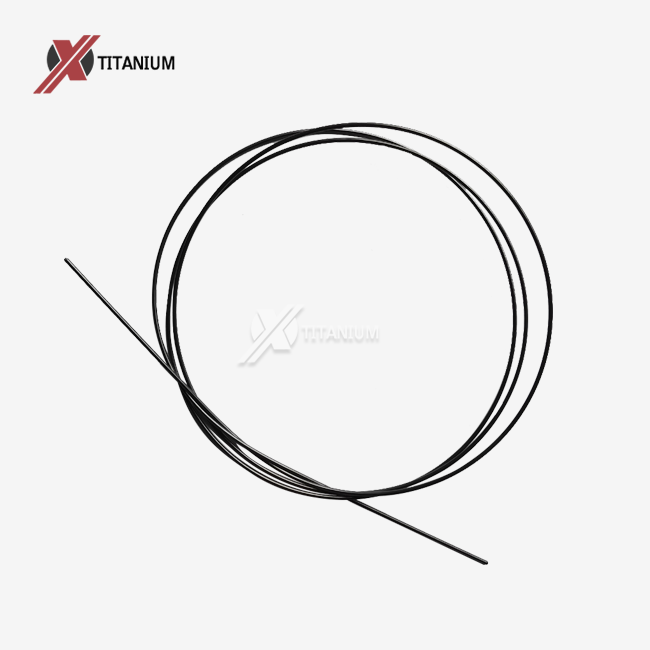
Comprehending Nickel Titanium Memory Wire and Its Market Demand
Nickel titanium wire, which is also called Nitinol wire, is a big step forward in the field of mechanical engineering. By weight, this useful equiatomic intermetallic alloy usually has between 44 and 45% titanium and 55 to 56% nickel. Nitinol wire is different from stainless steel or cobalt-chromium because it can change between two different thermo-elastic phases: Austenite (high temperature, hard cubic crystal structure) and Martensite (low temperature, flexible monoclinic crystal structure).
The information gives two different ways to solve important problems in the business. Shape Memory Effect (SME) lets the wire return to a pre-set shape when heated, and Superelasticity (SE) lets it handle up to 8% of pressure, which is ten times more than normal elastic materials can handle, without permanently changing shape. Because of these qualities, memory wire is essential in places with a lot of stress and complicated geometry where dependability is very important.
The world market for nickel titanium wire has grown a lot, especially in the production of medical devices and aerospace uses. The biggest places where people buy things are in North America and Europe. Medical braces alone make up more than 40% of all demand. The material's high biocompatibility and resistance to kinks have changed the way minimally invasive surgery tools and heart stents work.
Shape memory alloys are being used more and more in industrial automation and robots for actuators and sensors, which means that standard motors and hydraulic systems are no longer needed. Because of this trend, there are now more possibilities for specialized manufacturers who can provide consistent quality and expert support. Analysts predict that the market will continue to grow at rates higher than 12% per year until 2028. This is because the population is getting older and needs more advanced medical treatments, and flight programs are growing and need lightweight, high-performance materials.
Memory wire technology is clearly better than regular materials in a number of important performance areas. Even though stainless steel wires are cheap, they don't have the superelastic rebound properties that are needed for dynamic uses. Cobalt-chrome metals are strong, but they don't hold up well against wear when loaded and unloaded many times.
Because of its unique crystalline qualities, nickel titanium wire gets around these problems. The material keeps delivering the same amount of force over a large range of deflections, which is important for dental treatments and precision positioning systems. Also, its superior corrosion protection in biological and marine settings is better than that of standard alloys, which means that parts last longer and need less upkeep.
Key Criteria for Choosing a Reliable NiTi Memory Wire Supplier in China
To find a reliable provider, you need to carefully look at their quality certifications and manufacturing skills. Leading Chinese makers keep their quality control systems up to date with ISO 9001 and other certifications, like ISO 13485 for medical devices. For aircraft uses, AS9100 certification makes sure that standards set by the aviation business are met.
For European markets, medical-grade wire production needs extra licenses like FDA registration and CE marking. Suppliers should show proof of USP Class VI biocompatibility tests and give full material certificates that list the chemicals used, their mechanical qualities, and the temperatures at which they change. These certifications show that the provider is committed to meeting world quality standards and following the rules.
To make modern nickel titanium wire, you need high-tech tools and knowledge of metalworking. Vacuum arc remelting (VAR) technology makes sure that there are very few inclusions, which has a direct effect on the material's fatigue strength and uniformity. Advanced cold drawing skills allow for exact control of the width and improvement of the surface finish.
Leading sellers buy cutting-edge testing tools like differential scanning calorimetry (DSC) to check the change temperature and tensile testing systems to check the material properties. The fact that a supplier has specialized R&D centers and metallurgical labs shows how technically advanced and creative they are. These skills directly affect the quality of the result and the ways it can be customized for specific uses.
For high-performance uses, wire designs that go beyond normal requirements are often needed. Suppliers you can trust offer a wide range of customization options, such as diameters from 0.1mm to 6.0mm, different heat conditions, and unique surface treatments. Different types, like heat-activated and superelastic, are used for different tasks and have different change temperatures that work best in certain conditions.
Value-added services like shape-setting, electropolishing, and different packaging choices show how sophisticated the provider is. Manufacturing flexibility is shown by being able to make small batches for testing as well as bigger production runs. Companies that are making new goods or serving niche markets that need specific material qualities need to be able to do these things.
Comparative Analysis of Top NiTi Memory Wire Brands and Manufacturers in China
There are a few well-known companies in China that make nickel titanium wire. These companies can be told apart by their technology skills and focus on the market. Leaders in the industry have become experts in medical-grade uses, with a focus on biocompatibility and precise production. These companies usually keep separate production lines for different types of applications. This keeps products from getting contaminated and makes sure the quality is always the same.
Modern companies make both standard and special alloy formulas, some of which are low in nickel to make them more biocompatible. Their quality management methods include statistical process control and real-time process tracking, which makes sure that consistency from batch to batch. Many of them have formed international relationships with companies that make medical devices and aircraft parts, which proves their high quality standards in tough real-world situations.
Leading sellers set themselves apart by investing in study and new ideas all the time. In modern buildings, there are advanced metals labs with electron microscopes, X-ray diffraction, and mechanical testing tools. With these investments, providers can come up with new metal compositions and find the best ways to handle them for better results.
Working on research projects with universities and foreign partners speeds up the transfer of information and development of new technologies. Suppliers with strong research and development (R&D) skills can offer expert advice during the selection of materials and the development of new applications, which goes beyond just providing materials. This knowledge is especially useful for businesses that are joining new markets or making next-generation goods that need advanced material qualities.
Well-known makers offer full expert help throughout the entire lifecycle of a customer relationship. Pre-sales advice includes help choosing materials, figuring out if an application is possible, and making prototypes. Customers get thorough quality paperwork, batch certificates, and traceability records during production to make sure that internal quality systems are followed.
Post-delivery help includes fixing problems with applications, making suggestions for improving performance, and providing ongoing expert advice. The best providers have customer care teams that know a lot about metals and can answer complicated technical questions. For companies that are new to shape memory metal technology, this level of support is especially important for integrating materials well and building long-term partnerships.
Procurement Best Practices: How to Source and Order NiTi Memory Wire from China?
A thorough evaluation of the seller that takes into account a number of evaluation factors is the first step in effective procurement. Credit records and bank references should be used for the first screening to make sure that the company has the right business licenses, export certifications, and is financially stable. Facility checks, which can be done virtually or in person, are part of a manufacturing capability review. They look at how well equipment is set up, how well quality systems are used, and how skilled the staff is.
Evaluation of samples gives important information about a supplier's skills and the regularity of quality. Ask for samples from a number of different production batches to see how different they are, and ask for thorough test results that list the mechanical properties, transformation temperatures, and chemical composition of the samples. Verification through third-party testing gives buyers more faith in what suppliers say and makes sure that the features of the material are confirmed by a third party.
Clear communication rules and relationship management methods are needed for partnerships to work. Set up main points of contact with professional knowledge who can answer complicated material questions. Setting up regular times to talk about the project makes sure that everyone is on the same page and lets problems be fixed before they affect delivery dates.
Specifications, quality standards, and acceptance factors should all be included in documentation standards. Both parties' interests are protected by clear rules that cover intellectual property security, quality warranties, and ways to settle disagreements. Building personal ties through visits to the site and regular communication makes partnerships more stable and makes it easier to solve problems when things go wrong.
Strong quality assurance procedures make sure that materials always work the same way and lower the risks in the supply chain. The rules for pre-shipment inspections should include testing procedures, standards for paperwork, and criteria for acceptance. Third-party testing services make sure things are correct without bias and lower the number of quality disagreements.
Logistics planning is very important for foreign packages, especially when it comes to customs paperwork and materials that need to be kept at a certain temperature. Knowing the rules about importing, the different types of duties, and the certifications that are needed can help you avoid shipping delays and extra costs. Building ties with experienced freight forwarders who know how to handle unique materials makes the import process go more smoothly and makes sure that the goods are handled properly during transport.
Leveraging NiTi Memory Wire Properties for Your Business Success
Knowing how the qualities of a material relate to the needs of an application lets you choose the best material and get the best results. Superelastic wire types work great in places that need to give steady power and have a lot of deflection, like in orthodontic tools and surgical devices. Shape memory wire that is triggered by heat is used in situations where thermal triggers control how the device works.
The choice of transformation temperature has a big effect on how well an application works and needs to be carefully thought out in terms of the working setting. In medical settings, body temperature activation (37°C) is usually needed. In industry settings, higher change temperatures may be used for better control authority. Electropolishing and passivation treatments are two surface finish choices that improve biocompatibility and corrosion protection for harsh settings, especially when using nickel titanium wire for precision applications.
Strategic relationships with suppliers include more than just buying things. They also include partnerships for joint development and creativity. Leading providers offer application engineering support that helps customers get the most out of their materials and find ways to improve performance. Joint research projects can lead to alloy compositions that are exactly what an application needs.
Long-term relationships let providers invest in skills that are specific to the customer and keep a separate store for important uses. When there aren't enough supplies, volume promises and multi-year deals often lead to better prices and faster distribution. These connections are especially helpful when making a new product, because the knowledge of the provider shortens the time it takes to get the product to market and lowers the risks of the creation process.
For nickel titanium wire usage to go well, performance must be constantly checked and improved based on comments from users and experience in the field. Quality performance, delivery reliability, and the usefulness of expert help should all be looked at by suppliers on a regular basis. Collaborative improvement projects can find ways to cut costs while keeping or improving the performance of materials.
Data-driven study of how well materials work in real-world uses gives useful information for choosing materials and making specifications better in the future. Sharing application results with suppliers helps them improve the way they make things and come up with better types of materials. This way of working together leads to constant growth and keeps a competitive edge by using modern material technology.
Conclusion
To find a trustworthy nickel titanium wire provider in China, you need to carefully look at their technical skills, quality systems, and willingness to work with you. Chinese suppliers of high-performance shape memory alloys are appealing to businesses around the world that want to work with them because they have advanced production facilities, low prices, and growing technical knowledge. To be successful, you need to do your research, communicate clearly, and build relationships in a planned way. When businesses take the time to evaluate their suppliers and build partnerships, they will get solid supply lines, new technologies, and an edge in their markets.
FAQ
What distinguishes superelastic from shape memory nickel titanium wire?
The main change is the temperature of the Active Austenite Finish (Af) compared to the conditions of use. Superelastic wire keeps its Af below room temperature, usually below 20°C. At normal working temperatures, it stays austenitic and acts like a spring. Shape memory wire has an Af above room temperature, usually 40°C or higher. At room temperature, it looks soft and martensitic, but it only returns to its original shape when heated above the transformation temperature.
How should nickel titanium wire be joined or connected in assemblies?
The stubborn titanium oxide layer on the surface makes traditional soldering methods useless because it stops the proper bonding. For lasting connections, laser welding is the standard in the industry. Mechanical crimping, on the other hand, is a safe option for many uses. For medical device uses, mechanical joining methods are better because the aggressive acid fluxes needed for soldering often make the device less biocompatible.
What causes unexpected failure during cyclic loading of memory wire?
Usually, surface microcracks or beneath inclusions that were added during manufacturing cause fatigue failure to happen before it should. To get high-quality wire, vacuum arc remelting (VAR) processing is needed to reduce the size and spread of the inclusions. If you go over the suggested strain limit of 8% or don't do enough surface electropolishing, cracks can start to form, which can cause the material to fail early. Most problems caused by wear can be avoided by handling materials correctly and designing applications within certain limits.
What cutting methods work best for precision nickel titanium wire processing?
Because the material is so tough and work-hardening, regular wire tools don't work well with it and often cause broken ends or dimensional distortion. For most jobs, high-speed diamond grinding wheels make clean cuts. For more difficult jobs, like medical guidewires, electrical discharge machining (EDM) is more precise. These cutting techniques get rid of burrs and keep the exact measurements needed for precision parts.
Partner with Chuanglian for Premium Nickel Titanium Wire Solutions
Baoji Chuanglian New Metal Material Co., Ltd is a reliable nickel titanium wire manufacturer. They have over ten years of experience working with titanium and the most up-to-date production tools. In Baoji City, which is known as the 'City of Titanium,' our building has high-tech CNC machining centers and mechanical testing tools that make sure the quality and accuracy of all of our work are always the same. Our thorough quality control system keeps track of every step of the production process, from checking the raw materials to doing the final inspection. This ensures that your important applications will work perfectly. Get in touch with our tech support team at info@cltifastener.com or djy6580@aliyun.com to talk about your needs and find out how our memory wire options can help your product work better.
References
1. Mohd Jani, J., Leary, M., Subic, A., & Gibson, M. A. "A review of shape memory alloy research, applications and opportunities." Materials & Design, Vol. 56, 2014.
2. Duerig, T., Pelton, A., & Stöckel, D. "An overview of nitinol medical applications." Materials Science and Engineering: A, Vol. 273-275, 1999.
3. Otsuka, K., & Wayman, C. M. "Shape Memory Materials." Cambridge University Press, Cambridge, 1998.
4. Morgan, N. B. "Medical shape memory alloy applications—the market and its products." Materials Science and Engineering: A, Vol. 378, 2004.
5. Lecce, L., & Concilio, A. "Shape Memory Alloy Engineering: For Aerospace, Structural and Biomedical Applications." Butterworth-Heinemann, Oxford, 2014.
6. Van Humbeeck, J. "Non-medical applications of shape memory alloys." Materials Science and Engineering: A, Vol. 273-275, 1999.
Learn about our latest products and discounts through SMS or email