- English
- French
- German
- Portuguese
- Spanish
- Russian
- Japanese
- Korean
- Arabic
- Greek
- German
- Turkish
- Italian
- Danish
- Romanian
- Indonesian
- Czech
- Afrikaans
- Swedish
- Polish
- Basque
- Catalan
- Esperanto
- Hindi
- Lao
- Albanian
- Amharic
- Armenian
- Azerbaijani
- Belarusian
- Bengali
- Bosnian
- Bulgarian
- Cebuano
- Chichewa
- Corsican
- Croatian
- Dutch
- Estonian
- Filipino
- Finnish
- Frisian
- Galician
- Georgian
- Gujarati
- Haitian
- Hausa
- Hawaiian
- Hebrew
- Hmong
- Hungarian
- Icelandic
- Igbo
- Javanese
- Kannada
- Kazakh
- Khmer
- Kurdish
- Kyrgyz
- Latin
- Latvian
- Lithuanian
- Luxembou..
- Macedonian
- Malagasy
- Malay
- Malayalam
- Maltese
- Maori
- Marathi
- Mongolian
- Burmese
- Nepali
- Norwegian
- Pashto
- Persian
- Punjabi
- Serbian
- Sesotho
- Sinhala
- Slovak
- Slovenian
- Somali
- Samoan
- Scots Gaelic
- Shona
- Sindhi
- Sundanese
- Swahili
- Tajik
- Tamil
- Telugu
- Thai
- Ukrainian
- Urdu
- Uzbek
- Vietnamese
- Welsh
- Xhosa
- Yiddish
- Yoruba
- Zulu
Titanium Chain Ring Bolts Factory with Export Experience
When buying workers are looking for a trustworthy Titanium Chain Ring Bolts maker, they need to find a partner with both technical know-how and a history of exporting. Based in Baoji City, China's famous "City of Titanium," Chuanglian is one of the best companies in the world that makes titanium fasteners. They send precision-engineered chainring bolts to businesses around the world that need them. With more than ten years of experience working with titanium, advanced CNC machining, and strict quality control systems, we make sure that every bolt meets the high standards needed in aircraft, high-performance racing, and industrial settings.
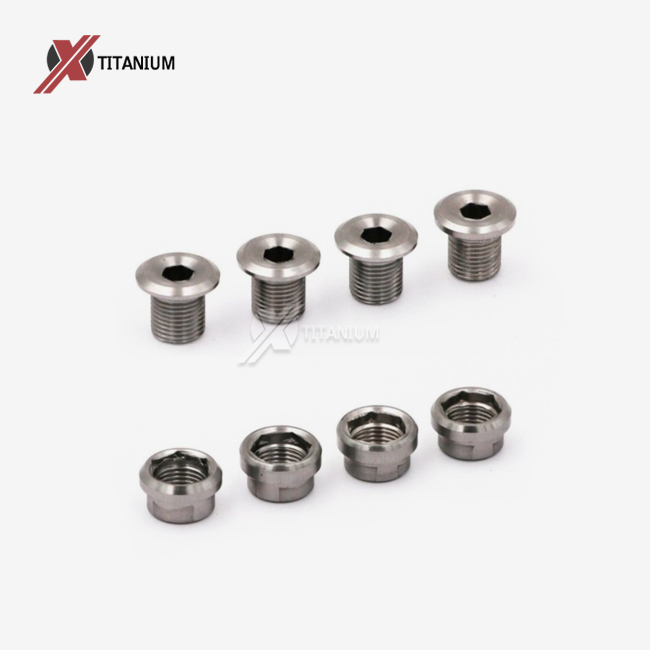
Understanding Titanium Chain Ring Bolts: Material, Strength, and Benefits
Titanium chainring nuts are a big step forward in fastening technology, especially for situations where performance under stress needs to be very high. These carefully designed parts are made from Grade 5 Ti-6Al-4V metal, which has a tensile strength of 1,200 MPa and is very resistant to corrosion in sea and chemicals.
Material Properties and Composition
The choice of material is the key to getting better performance from chainring bolts. About 6% of grade 5 titanium metal is aluminum and 4% is vanadium. This makes it the perfect mix of strength and workability. This mix makes titanium about three times stronger than pure titanium sold in stores, but it still has the natural corrosion resistance that makes titanium so useful in tough settings.
Galvanic rusting happens when steel chainring bolts are used with aluminum parts, but Titanium Chain Ring Bolts don't have this problem at all. The natural oxide layer on the material protects it from external damage all the time, so it retains its performance over an extended working life. Titanium is also about 45% lighter than steel, which means it has a low density. This lowers rotating mass without affecting the strength of the structure.
Key Applications Across Industries
Titanium screws play important roles in many fields where failure would have bad results. In aircraft uses, these bolts hold parts together that are subject to huge changes in temperature and repeated loads. For pressure tank assemblies, the petrochemical industry relies on their chemical inertness, and naval engineering uses them because they don't rust in saltwater.
In high-performance riding, losing weight has a direct effect on speed, which is another important area of use. Professional race teams and competitive riders need parts that can handle the strong forces that are created when sprinting and climbing while also putting as little weight as possible on the rotating parts. Titanium chainring bolts are also used by companies that make medical devices in specialized equipment that needs to be biocompatible and resistant to cleaning.
Titanium Chain Ring Bolts vs. Alternatives: Helping You Make the Right Choice
When choosing a material for a gear, you have to weigh the performance needs against the cost factors. Knowing the relative benefits of various materials helps you make smart purchasing choices that meet the needs of your application and your budget.
Performance Comparison Analysis
While steel chainring nuts are very strong and don't cost much, they are also very heavy and easily corroded. Their density adds to the rotational inertia, which slows down movement in bicycle uses. In outdoor settings, they need to be maintained often because they tend to rust.
When compared to steel, aluminum options are lighter, but they don't last as long and are more likely to break threads during installation. Because they don't have a high shear strength, they can't be used in high-torque situations, and their tendency to galle can make upkeep more difficult.
Titanium has the power of steel and the light weight of aluminum. It is also better than both steel and aluminum at resisting rust. The higher original investment cost is balanced out by longer service life, less upkeep, and better performance, which makes the cost difference worth it in demanding situations.
Torque Specifications and Installation Considerations
For proper installation, you must stick to the torque values given by the maker, which are usually between 8 and 10 Nm for chainring uses. Because titanium tends to galle, the right anti-seize additives must be used during fitting to keep threads from welding together. Using good copper paste or medium-strength thread locker will make sure the binding force is right and make removal easier in the future.
Because titanium has a high elastic modulus, it can absorb shocks very well. This makes these screws perfect for uses that involve shaking or impact loading. For mountain bikes and industrial machines where sudden changes in load are widespread, this feature is especially useful.
Why Choose Chuanglian: Expert Manufacturer with Export Experience
As a top maker of titanium fasteners, Chuanglian knows a lot about both material science and the rules for buying things in other countries. Our site in Baoji City gives us access to the best titanium raw materials, and our experience exporting makes sure that all of our business dealings with other countries go smoothly.
Advanced Manufacturing Capabilities
There are more than a dozen CNC machines in our production center that are especially set up to work with titanium. These machines use special tools and cutting settings that are best for working with titanium. This makes sure that the dimensions are always correct and the surface finish is good. The process of making Titanium Chain Ring Bolts starts with getting approved titanium metal. Next comes precise CNC machining that keeps errors within ±0.05mm.
Quality control rules cover every step of the production process, from checking the materials that come in to making sure the finished product is perfect. Each bolt is measured, tested for tensile strength, and has its surface quality checked to make sure it meets foreign standards like ASTM B348 and AMS 4928.
International Compliance and Certification
Chuanglian keeps up-to-date paperwork methods that help with international trade compliance because they understand the needs of global markets. Our quality management system uses parts of the ISO 9001 and AS9100 standards to make sure that everything can be tracked from the beginning to the end of the manufacturing process. This organized method gives the paperwork needed for medical and aircraft uses, as well as helping with the customs clearance process for packages going between countries.
Our export experience on several countries has helped us learn more about regional tastes and legal needs. Customers in Europe like that we pay attention to REACH rules, and customers in the US like that we know about ITAR rules for aircraft uses. With this world view, we can make changes to our services to fit the needs of different regions while keeping the same high quality standards.
Customization and OEM Support
Our wide range of customization options comes from the fact that we know that different uses need different specs. To fit the needs of a certain product, thread sizes, bolt lengths, and surface processes can be changed. Our engineering team works with clients to make sure that designs are the best they can be for their specific uses, even if those uses involve strange weather conditions or strict aesthetic needs.
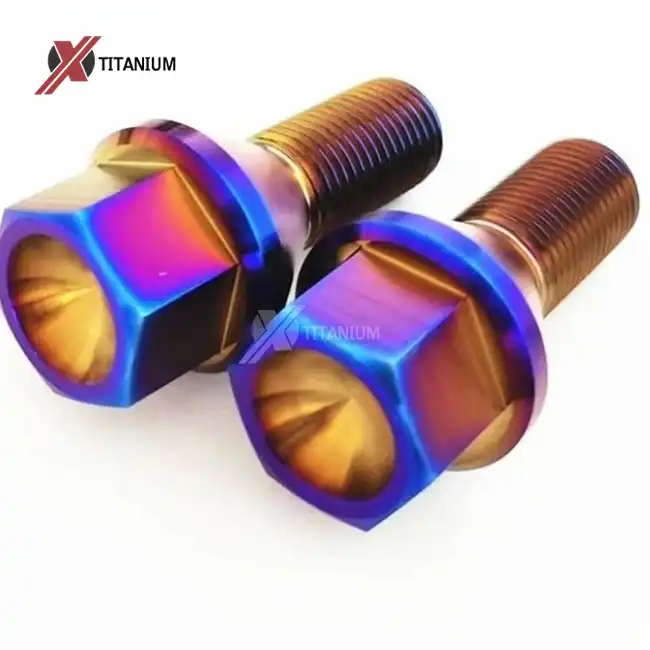
You can get titanium in its original color, as well as blue, green, purple, black, and rainbow finishes by anodizing it. By applying a titanium nitride layer, these processes not only make the surface look better, but they also make it harder to scratch and wear.
How to Procure Titanium Chain Ring Bolts from Chuanglian?
We've streamlined the buying process to show that we understand the needs of business-to-business buyers and the importance of good project management. Our methodical approach meets the needs of both prototype development and large-scale production while keeping the transaction open and honest.
Initial Inquiry and Specification Development
At the start of the procurement process, thorough talks about the specifications make it clear what the application needs, how well it should work, and when it should be delivered. Our expert team looks at the size requirements, preferred material grade, surface treatment choices, and number needs to make quotes that cover every part of the project.
Samples let you see how well we can make things and what our quality standards are before you commit to bigger orders. These samples, such as Titanium Chain Ring Bolts, go through the same manufacturing steps and quality checks as the production amounts. This means that they are a good picture of how the final product will be
Production Planning and Quality Assurance
When we get an order confirmation, we start the production planning process. This looks at things like the supply of materials, the capacity of our machines, and the shipping needs to set realistic deadlines. Clients are kept up to date on the progress of the project on a regular basis, and quality checks make sure that all the specs are followed during production.
As part of the final inspection process, measurements are checked, the quality of the surface is evaluated, and paperwork for material approval is created. Each shipment comes with detailed test records and material certificates that help with the receiving inspection process for the customer and the need for tracking further down the line.
Shipping and Documentation Support
International shipping organization includes planning the packing, preparing the paperwork, and managing the operations to make sure the delivery goes smoothly. Our export department takes care of customs paperwork, shipping insurance, and tracking information so that clients don't have to deal with the complicated details of sending and can keep an eye on the whole process.
Conclusion
The Titanium Chain Ring Bolts that Chuanglian makes offer the best mix of performance, dependability, and production skill for tough jobs in the aircraft, cycling, and industry sectors. Our Grade 5 Ti-6Al-4V design gives you great strength-to-weight ratios and keeps your parts resistant to corrosion, so they last longer in harsh settings. Chuanglian is the best partner for procurement workers looking for reliable titanium fastener options that meet strict international standards because they can customize everything, have strict quality control systems, and have a lot of experience exporting.
FAQ
What prevents cold welding during titanium bolt installation?
Titanium screws often have problems with cold welding, also known as galling, because the material tends to stick together when it's under pressure. To keep this from happening, you need to use the right anti-seize chemicals, like high-quality copper paste or medium-strength thread locker, before you put something. These chemicals make a buffer layer that keeps metals from touching while keeping torque values steady.
Can standard torque specifications be used with titanium chainring bolts?
Even though titanium can handle more power than aluminum, it is still important to follow the crank manufacturer's instructions. Standard torque values of 8 to 10 Nm give enough binding force without going over the limits of the component's design. Titanium is stronger than steel, but that's more of a safety cushion than a reason to use more installation force.
How do Grade 5 titanium bolts compare to Grade 2 alternatives?
Grade 5 Ti-6Al-4V has about three times the tensile strength of Grade 2 commercially pure titanium. This makes it necessary for uses that need strong shear forces. Even though Grade 2 is very resistant to rust, it is not strong enough to be used for high-stress fastener uses where structural stability is very important.
What maintenance requirements apply to titanium chainring bolts?
Compared to steel alternatives, they still don't need much maintenance. The only thing that needs to be done is an occasional check to make sure the torque is being retained properly and to check the thread state. Because titanium doesn't rust, you don't have to worry about it happening. Also, if you put it correctly with anti-seize compounds, it will be easy to take off for upkeep.
Are colored titanium bolts purely aesthetic or functionally beneficial?
Physical Vapor Deposition (PVD) layers have useful benefits as well as aesthetic ones. For example, they make the surface harder and reduce friction. These traits make things more resistant to wear and can make things easier to remove during upkeep, which has technical benefits beyond just looking better.
Partner with Chuanglian for Premium Titanium Chain Ring Bolt Solutions
Because Chuanglian is so good at working with titanium and strives for quality, we are the best Titanium Chain Ring Bolts manufacturer for your tough jobs. Our advanced CNC cutting, thorough quality systems, and more than ten years of experience in the field make sure that every screw meets your exact requirements. To talk about your particular needs and feel the Chuanglian difference, please email our technical sales team at info@cltifastener.com or djy6580@aliyun.com.
References
1. American Society for Testing and Materials. "Standard Specification for Titanium and Titanium Alloy Bars and Billets." ASTM International, West Conshohocken, PA.
2. Boyer, Rodney, Gerhard Welsch, and E.W. Collings. "Materials Properties Handbook: Titanium Alloys." ASM International, Materials Park, OH.
3. Donachie, Matthew J. "Titanium: A Technical Guide, 2nd Edition." ASM International, Materials Park, OH.
4. International Organization for Standardization. "Quality Management Systems - Requirements for Aviation, Space and Defense Organizations." ISO 9001:2015 Standards.
5. Leyens, Christoph, and Manfred Peters. "Titanium and Titanium Alloys: Fundamentals and Applications." Wiley-VCH, Weinheim, Germany.
6. Peters, Manfred, et al. "Structure and Properties of Titanium and Titanium Alloys." Titanium and Titanium Alloys, Wiley-VCH Publishers.
Learn about our latest products and discounts through SMS or email