- English
- French
- German
- Portuguese
- Spanish
- Russian
- Japanese
- Korean
- Arabic
- Greek
- German
- Turkish
- Italian
- Danish
- Romanian
- Indonesian
- Czech
- Afrikaans
- Swedish
- Polish
- Basque
- Catalan
- Esperanto
- Hindi
- Lao
- Albanian
- Amharic
- Armenian
- Azerbaijani
- Belarusian
- Bengali
- Bosnian
- Bulgarian
- Cebuano
- Chichewa
- Corsican
- Croatian
- Dutch
- Estonian
- Filipino
- Finnish
- Frisian
- Galician
- Georgian
- Gujarati
- Haitian
- Hausa
- Hawaiian
- Hebrew
- Hmong
- Hungarian
- Icelandic
- Igbo
- Javanese
- Kannada
- Kazakh
- Khmer
- Kurdish
- Kyrgyz
- Latin
- Latvian
- Lithuanian
- Luxembou..
- Macedonian
- Malagasy
- Malay
- Malayalam
- Maltese
- Maori
- Marathi
- Mongolian
- Burmese
- Nepali
- Norwegian
- Pashto
- Persian
- Punjabi
- Serbian
- Sesotho
- Sinhala
- Slovak
- Slovenian
- Somali
- Samoan
- Scots Gaelic
- Shona
- Sindhi
- Sundanese
- Swahili
- Tajik
- Tamil
- Telugu
- Thai
- Ukrainian
- Urdu
- Uzbek
- Vietnamese
- Welsh
- Xhosa
- Yiddish
- Yoruba
- Zulu
China Titanium Cotter Pin Manufacturer: OEM & Custom Sizes
When searching for reliable titanium cotter pin solutions, discerning procurement professionals turn to established Chinese manufacturers who combine advanced metallurgy expertise with cost-effective production capabilities. Titanium cotter pins represent a critical fastening component in high-performance applications, offering exceptional corrosion resistance and strength-to-weight ratios that surpass traditional materials. These precision-engineered fasteners serve industries ranging from aerospace and marine engineering to medical devices and chemical processing, where failure is not an option and long-term reliability remains paramount.
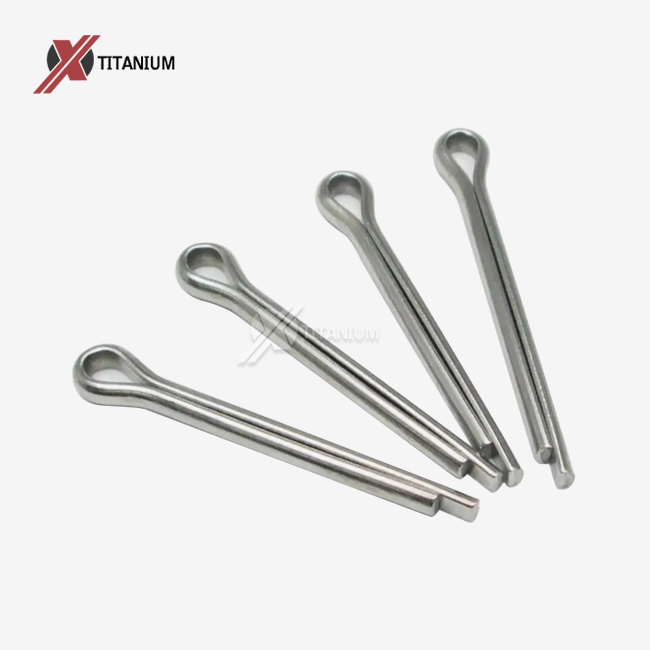
Understanding Titanium Cotter Pins: Key Features and Benefits
Fundamental Design and Engineering Excellence
Titanium cotter pins provide the role of split pins and are meant to retain other fasteners in place. When subjected to vibration, heat cycling, or dynamic stresses, they prevent the fasteners from being accidentally loose. The improved mechanical qualities of these precision components are achieved by the use of authentic titanium or titanium alloys, such as the two grades and Grade 5 (Ti-6Al-4V), in contrast to the standard steel alternatives for these components. The split-pin design makes it possible to easily insert the pins through crossover holes using bolts, shafts, in addition other similar hardware while ensuring that they are securely retained over the duration of their service life.
The engineering that goes into these components is centered on finding the optimal balance between flexibility while installation and stiffness during operation. In order to do this, manufacturers exercise exact control over the qualities of the material, the tolerances of the dimensions, and the surface treatments that improve both the performance and the durability of the product.
Material Properties That Drive Performance
The exceptional characteristics of titanium make these fasteners invaluable across demanding applications. Here are the core material advantages that distinguish titanium pins from alternatives:
• Corrosion Resistance: Titanium naturally forms a protective oxide layer that resists degradation in saltwater, acids, and aggressive chemical environments, making it ideal for marine and petrochemical applications.
• Strength-to-Weight Ratio: With density approximately 45% lower than steel while maintaining comparable strength, titanium pins reduce overall assembly weight without compromising structural integrity.
• Temperature Stability: Grade 5 titanium maintains mechanical properties across temperature ranges from cryogenic conditions to 400°C, ensuring reliable performance in extreme environments.
• Biocompatibility: Medical-grade titanium pins meet stringent biocompatibility standards, enabling use in surgical instruments and implantable devices without adverse reactions.
When it comes to operational benefits, these material advantages transfer directly into benefits such as decreased maintenance intervals, greater system dependability, and higher performance in particular uses where typical materials fall short.
Standard Specifications and Custom Capabilities
The production of modern titanium cotter pins may meet both conventional configurations and needs that are specific to the customer. Standard specifications generally include diameters that range from one millimeter to ten millimeters, and lengths that may be customized to meet the requirements of a particular application. In order to guarantee dimensional uniformity and interchangeability across worldwide supply chains, production standards among which are DIN94, ANSI B18.8.5, and ISO 1234 are developed and implemented.
How to Choose the Right Titanium Cotter Pin for Your Application
Application-Specific Selection Criteria
Selecting appropriate titanium fasteners, such as a titanium cotter pin, requires systematic evaluation of operational requirements, environmental conditions, and performance expectations. The decision process begins with understanding the specific demands of your industry and application context.
For aerospace applications, where weight reduction engine fatigue resistance are of utmost importance, Grade 5 a titanium-all is the material of choice for structural components of aircraft and engine assemblies. The high strength qualities of the alloy make it possible to have smaller pin sizes while still retaining load-bearing capability. This contributes to total weight reductions in applications that are weight-critical.
For aerospace applications, where weight reduction engine fatigue resistance are of utmost importance, Grade 5 a titanium-all is the material of choice for structural components of aircraft and engine assemblies. The high strength qualities of the alloy make it possible to have smaller pin sizes while still retaining load-bearing capability. This contributes to total weight reductions in applications that are weight-critical.
Material Grade Comparison and Selection
Understanding the differences between titanium grades enables informed material selection based on specific performance requirements. Grade 2 titanium offers excellent corrosion resistance and good formability, making it suitable for applications where moderate strength requirements coincide with aggressive environmental exposure.
The alloying additions of bauxite and vanadium in Grade 5 (Ti-6Al-4V), for instance, provide better mechanical qualities, including increased strength and greater fatigue resistance. These enhancements are achieved by the alloying process. The applications that need highest load-bearing capacity while preserving corrosion resistance + biocompatibility are the ones that this grade is specifically designed for.
Supplier Evaluation and Quality Assurance
To be successful in procurement, it is necessary to do a comprehensive evaluation of the supplier, taking into account their technical skills, quality processes, and production consistency. A manufacturer's dedication to industry-specific standards particularly regulatory compliance may be shown by the acquisition of quality exams such as AS9100 for aerospace uses or ISO 13485:2004 for medical devices.
When it comes to crucial applications, manufacturing traceability becomes more vital since it is necessary to record the material provenance and the processing history. Throughout the whole of the manufacturing process, reputable suppliers keep detailed records of the raw material suppliers, heat treatment conditions, and dimensional verification data.
The Manufacturing and Customization Process of Titanium Cotter Pins
Advanced Manufacturing Techniques
The manufacture of modern titanium cotter pins makes use of cutting-edge CNC machining centers that are outfitted with specialized tooling that is specifically intended for the processing of titanium. The production process starts with the careful selection of raw materials, which involves making sure that both the chemical makeup and mechanical qualities of the product fulfill the grade standards that have been established.
CNC machining procedures are able to maintain tight dimensions and tolerances while also keeping surface integrity, which is crucial for fatigue resistant and corrosion prevention. For the split configuration to be formed with precision, specialist approaches are required. These techniques must prevent hardening work or surface damage, both of which might limit the performance over the long run.
Quality control measures throughout production include dimensional verification, surface finish assessment, and mechanical property validation. Advanced inspection equipment ensures each component meets specified tolerances and performance criteria before packaging and shipment.
Surface Treatment Options and Benefits
Cotter pins made of titanium may have their visual appeal and operational efficiency improved by the use of surface treatments. During polishing procedures, machining markings are removed, and smooth surfaces are created that are resistant to the start and propagation of fracture waves. Anodizing methods result in the formation of regulated oxide layers, which not only improve corrosion resistance but also give color coding services.
Specialized treatments such as nitriding increase surface hardness and wear resistance, particularly valuable in applications involving frequent insertion and removal cycles, like those of a titanium cotter pin. These treatments maintain the underlying material's corrosion resistance while adding surface functionality.
Customization Capabilities and Engineering Support
Leading manufacturers offer comprehensive customization services ranging from dimensional modifications to specialized surface treatments. Custom length specifications accommodate unique assembly requirements, while diameter variations optimize fit and retention characteristics.
Clients may optimize pin specifications with the assistance of engineering support services, which are based on the needs of the application and the limits of the operation. This collaborative approach guarantees that the final products will achieve the highest possible level of effectiveness and dependability while also fulfilling the goals of cost and delivery.
Comparison: Titanium Cotter Pins Versus Other Materials
Performance Characteristics Analysis
When evaluating fastener materials, titanium consistently outperforms traditional alternatives across multiple performance metrics. The comparison reveals significant advantages in applications where conventional materials prove inadequate.
Although metallic cotter pins have a modest cost and an excellent resistance to corrosion, they are heavier than other types of pins and are more likely to shatter due to stress corrosion in chloride conditions. The limits of stainless steel in hostile settings sometimes result in greater lifespan costs owing to the need of premature replacement, despite the fact that stainless steel is originally found to be less costly.
Although they are lightweight, pins made of aluminum alloys lack the necessary rigidity and corrosion resistance that are required for applications that are very demanding. When combined with metals that are not comparable to one another, the material has a propensity to undergo galvanic corrosion, which further restricts its use in complicated assemblies.
Lifecycle Cost Considerations
Although titanium cotter pins command premium pricing, their extended service life and reduced maintenance requirements often justify the initial investment. The material's resistance to fatigue and environmental degradation eliminates frequent replacement cycles common with conventional materials.
Applications in remote or difficult-to-access locations particularly benefit from titanium's longevity, where replacement costs include not only material expenses but also significant labor and downtime costs. The reliability advantage becomes even more pronounced in safety-critical applications where failure consequences extend beyond simple replacement costs.
Application-Specific Material Recommendations
Marine environments consistently favor titanium due to its immunity to saltwater corrosion and resistance to marine fouling. The material's stable performance in varying salinity and temperature conditions makes it indispensable for underwater equipment and offshore installations.
Titanium's thermal stability along with its low thermal expansion coefficients, which preserves dimensional stability over temperature cycling, are qualities that are advantageous for applications that involve operation at high temperatures. In aeronautical and industrial applications, where temperature cycling might cause traditional materials to lose their retention force, this property shows to be quite useful.
Procurement and Partnership: Working with a Trusted China Titanium Cotter Pin Manufacturer
Supply Chain Advantages and Considerations
There are several compelling benefits that China's titanium manufacturing sector provides for worldwide procurement. These advantages include competitive price, superior production capabilities, and vast customisation choices. Synergies are created as a result of a strong focus of titanium processing knowledge in places such as Baoji. These synergies help foreign clients by improving manufacturing quality and lowering production costs.
Established Chinese manufacturers invest heavily in modern equipment and quality systems to serve international markets, often exceeding the capabilities of regional suppliers. The precise specification of components, such as the titanium cotter pin, exemplifies this commitment to reliability. This infrastructure investment translates into better product consistency, shorter lead times, and more responsive customer service for overseas clients.
Quality Management and Certification Standards
Comprehensive quality assurance processes that are linked with worldwide standards such as ISO 9001 and AS9100, as well as industry-specific certifications, are maintained by the leading titanium producers in China. In addition to providing the paperwork and traceability that are necessary for regulated businesses, these systems guarantee that the quality of the product is continuously maintained.
Manufacturing processes and control systems are validated via the use of customer inspections and audits conducted by third parties on a regular basis. This provides procurement specialists with extra confidence. In order to ease communication and support services, a few of suppliers additionally have regional outlets or partnerships in major markets.
Logistics and Delivery Optimization
Through the optimization of transportation routes and customs processes, effective logistics networks link Chinese production hubs with markets around the world. For the purpose of ensuring that titanium fasteners are delivered without any complications all across the globe, knowledgeable vendors maintain established contacts with carriers and customization brokers.
It is possible for suppliers to keep stock of common dimensions and features via the use of inventory management solutions. This helps to reduce lead times for standard items while still meeting just-in-time delivery needs. Products that are made to order may reap the benefits of simplified production planning, which helps to reduce manufacturing delays.
Conclusion
China's titanium manufacturing industry provides exceptional opportunities for procurement professionals seeking high-quality cotter pins that deliver superior performance across demanding applications. The combination of advanced manufacturing capabilities, competitive pricing, and comprehensive customization options makes Chinese suppliers increasingly attractive for international buyers. Understanding material properties, application requirements, and supplier capabilities enables informed procurement decisions that optimize both performance and value. As industries continue demanding higher performance from fastening components, titanium cotter pins manufactured by experienced Chinese suppliers offer proven solutions that meet the most stringent operational requirements while delivering long-term cost effectiveness.
FAQ
What advantages do titanium cotter pins offer over steel alternatives?
Titanium cotter pins provide superior corrosion resistance, reduced weight, and enhanced fatigue life compared to steel alternatives. The material's natural oxide layer protects against environmental degradation while maintaining structural integrity across temperature extremes. These characteristics result in longer service intervals and reduced maintenance costs, particularly in harsh operating environments.
Can small quantities of custom titanium cotter pins be manufactured economically?
Modern manufacturing capabilities accommodate small-batch custom production through efficient setup procedures and flexible machining processes. While unit costs may be higher than large-volume production, the ability to obtain precisely specified fasteners often justifies the investment, particularly for prototype development or specialized applications requiring unique dimensions.
What quality documentation is available for titanium cotter pins?
Comprehensive quality documentation includes material certificates, dimensional inspection reports, and mechanical property verification data. Traceability records track raw material sources, heat treatment parameters, and manufacturing processes to ensure compliance with applicable standards and customer specifications. Additional testing such as chemical analysis and mechanical testing can be provided upon request.
How do lead times compare between standard and custom specifications?
Standard titanium cotter pins conforming to common specifications typically ship within 2-3 weeks depending on quantity and finishing requirements. Custom dimensions or special surface treatments may extend lead times to 4-6 weeks to accommodate design verification, tooling preparation, and production scheduling. Rush orders can often be accommodated with expedited processing.
Partner with Chuanglian for Premium Titanium Cotter Pin Solutions
Chuanglian's expertise in titanium cotter pin manufacturing delivers the precision and reliability your critical applications demand. Our comprehensive OEM and custom manufacturing capabilities ensure optimal fastening solutions tailored to your specific requirements, backed by rigorous quality systems and responsive technical support. Whether you need standard specifications or completely custom designs, our team of metallurgy experts and precision machinists stands ready to exceed your expectations. Contact our engineering team at info@cltifastener.com or djy6580@aliyun.com to discuss your titanium cotter pin requirements and discover why leading manufacturers worldwide choose Chuanglian as their trusted titanium cotter pin supplier.
References
1. Boyer, R.R. "An Overview on the Use of Titanium in the Aerospace Industry." Materials Science and Engineering: A, Vol. 213, 1996.
2. Donachie, Matthew J. "Titanium: A Technical Guide, 2nd Edition." ASM International, Materials Park, OH, 2000.
3. Peters, M., Kumpfert, J., Ward, C.H., and Leyens, C. "Titanium Alloys for Aerospace Applications." Advanced Engineering Materials, Vol. 5, 2003.
4. Schutz, R.W. and Watkins, H.B. "Recent Developments in Titanium Alloy Application in the Energy Industry." Materials Science and Engineering: A, Vol. 243, 1998.
5. Veiga, C., Davim, J.P., and Loureiro, A.J.R. "Properties and Applications of Titanium Alloys: A Brief Review." Reviews on Advanced Materials Science, Vol. 32, 2012.
6. Zhao, X., Li, S., Zhang, M., Liu, Y., Sercombe, T.B., Wang, S., Hao, Y., Yang, R., and Murr, L.E. "Comparison of the Microstructures and Mechanical Properties of Ti–6Al–4V Fabricated by Selective Laser Melting and Electron Beam Melting." Materials & Design, Vol. 95, 2016.

Learn about our latest products and discounts through SMS or email