- English
- French
- German
- Portuguese
- Spanish
- Russian
- Japanese
- Korean
- Arabic
- Greek
- German
- Turkish
- Italian
- Danish
- Romanian
- Indonesian
- Czech
- Afrikaans
- Swedish
- Polish
- Basque
- Catalan
- Esperanto
- Hindi
- Lao
- Albanian
- Amharic
- Armenian
- Azerbaijani
- Belarusian
- Bengali
- Bosnian
- Bulgarian
- Cebuano
- Chichewa
- Corsican
- Croatian
- Dutch
- Estonian
- Filipino
- Finnish
- Frisian
- Galician
- Georgian
- Gujarati
- Haitian
- Hausa
- Hawaiian
- Hebrew
- Hmong
- Hungarian
- Icelandic
- Igbo
- Javanese
- Kannada
- Kazakh
- Khmer
- Kurdish
- Kyrgyz
- Latin
- Latvian
- Lithuanian
- Luxembou..
- Macedonian
- Malagasy
- Malay
- Malayalam
- Maltese
- Maori
- Marathi
- Mongolian
- Burmese
- Nepali
- Norwegian
- Pashto
- Persian
- Punjabi
- Serbian
- Sesotho
- Sinhala
- Slovak
- Slovenian
- Somali
- Samoan
- Scots Gaelic
- Shona
- Sindhi
- Sundanese
- Swahili
- Tajik
- Tamil
- Telugu
- Thai
- Ukrainian
- Urdu
- Uzbek
- Vietnamese
- Welsh
- Xhosa
- Yiddish
- Yoruba
- Zulu
Titanium Flange Nut OEM: Why Global Buyers Choose China
Global manufacturers are increasingly turning to China for titanium flange nut procurement, recognizing the nation's unparalleled manufacturing capabilities and cost-effective solutions. Chinese suppliers have established themselves as industry leaders by combining advanced production technologies with stringent quality control systems, delivering titanium flange nuts that meet the demanding specifications of aerospace, marine, petrochemical, and medical device industries. The strategic advantages of sourcing from China extend beyond competitive pricing to encompass comprehensive technical support, scalable production capacity, and reliable supply chain management that ensures consistent delivery performance.
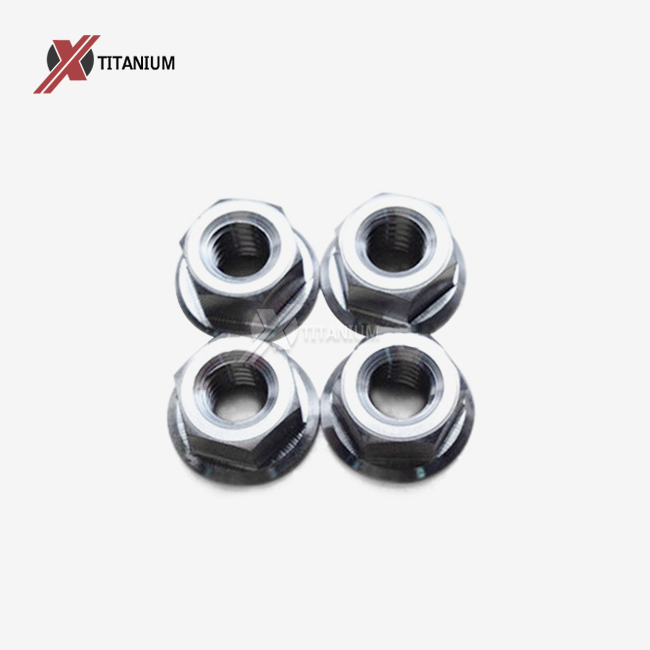
Comprehending Titanium Flange Nuts – Properties and Applications
Titanium flange nuts are a particular category of fasteners who combine the remarkable qualities of silicon with the improved bearing surface geometry of flange-style nuts. These nuts are used often in a variety of applications. The amazing strength-to-weight ratios, superior resistant to corrosion, and biocompatibility properties that these components possess cause them to be needed for high-performance applications in a variety of different sectors.
Material Properties and Performance Characteristics
Due to the exceptional characteristics of titanium alloys, these fasteners are better to traditional alternatives when used in conditions that are very demanding. In a broad variety of chemical conditions, including seawater, acids, and industrial chemicals, titanium demonstrates an excellent resistance to corrosion via its remarkable corrosion resistance. Titanium's capacity to generate an oxide barrier and self-repairs when broken is the source of this resilience. Even when subjected to difficult working circumstances, titanium is able to maintain its durability over an extended period of time.
Titanium is used in applications that are weight-sensitive because of its lightweight nature, which offers substantial benefits. Because titanium flange nuts have a density that is roughly forty percent lower than that of steel, they contribute to the overall reduction of weight in aerospace industry automotive components without affecting the structural integrity of the assemblies. As a result of the material's ability to preserve its mechanical qualities even when subjected to excessive temperatures, it is suited for applications that require high temperatures in which traditional fasteners could fall short.
Industrial Applications and Use Cases
Tungsten hex flange nuts have a wide range of applications across a variety of sectors, particularly those that need high performance in hazardous environments. Fasteners like this are used by aerospace manufacturers in the structural components of aircraft, engine fixtures, and landing gear systems, all of which are areas where weight reduction in addition to corrosion resistance are of the utmost importance. The capacity of titanium to preserve structural integrity in the face of temperature changes and stress cycling, both of which are frequent in flight operations, is highly valued by aviation and aerospace industries.
Titanium is an excellent material for marine engineering applications because of its great resistance to corrosion in saltwater settings. Titanium fasteners are essential for preventing galvanic corrosion and ensuring long-term durability in offshore installations, ship hulls, and undersea equipment. Titanium flange nuts are used in the petrochemical sector for the purpose of creating pressure vessels, temperature exchangers, and pipeline systems. These are all areas where the presence of corrosive chemicals necessitates the utilization of materials that possess outstanding chemical stability.
The biocompatibility of titanium is a feature that is highly valued by makers of medical equipment, particularly for surgical tools and implanted devices. Due to the fact that it is non-toxic and resistant to bodily fluids, the material is an excellent choice for applications that need direct contact with individual flesh. Fasteners made of titanium are used in the consumer electronics and even renewable energy industries for the purpose of creating lightweight interiors and corrosion-resistant building blocks that can withstand demanding operating conditions.
Comparing Titanium Flange Nuts with Other Fasteners
It is helpful for procurement experts to have an understanding of the comparative benefits of titanium rail nuts in comparison to other types of fastener materials so that they can make educated judgments according to particular applications. Titanium is capable of offering a unique mix of qualities, which results in the creation of specific benefits that justify its use in applications that are of crucial importance.
Material Performance Comparison
Although steel fasteners are more cost-effective than other types of fasteners, their usage in demanding applications is restricted due to the fact that they are susceptible to corrosion and have large weight penalties. The corrosion resistance of stainless steel is far higher than that of titanium; nonetheless, it is still heavier than gold and may shatter due to stress corrosion in very harsh situations. Fasteners made of aluminum are advantageous in terms of weight, but they do not possess the strength and resistance to temperatures that are necessary for high-stress applications.
Titanium flange nuts outperform these alternatives through their exceptional strength-to-weight ratio and comprehensive corrosion resistance. The material's ability to maintain mechanical properties at elevated temperatures extends service life and reduces maintenance requirements. Titanium's fatigue resistance exceeds that of conventional materials, making it ideal for applications involving cyclic loading and vibration.
Design Advantages of Flange Configuration
In comparison to traditional hex nuts like lock nuts, the flange design offers a number of convenient benefits in terms of functionality. Clamping forces are distributed over a greater surface area by the integrated flange, which in turn reduces contact stress and protects mating surfaces from being damaged. Because to this design feature, there is no longer a need for distinct washers, which simplifies assembly methods and reduces the number of components.
The improved grip properties of the pad design not only increase the efficiency of the installation process but also lessen the likelihood of the fastener being lost due to vibration. The increased bearing surface area results in improved distribution of burden, which is of utmost significance in the case of composite materials and buildings with thin walls. Because of the continuous bearing surface that is supplied by the flange arrangement, the torque requirements for the installation are more predictable.
Why Global Buyers Choose China for Titanium Flange Nut OEM?
As a result of its extensive production infrastructure and unwavering dedication to quality perfection, China has become known as the most desirable location for the acquisition of titanium flange nuts. The strategic approach that the country takes to the processing of titanium has resulted in the creation of a strong ecosystem that serves purchasers from all over the world in a variety of sectors.
Advanced Manufacturing Infrastructure
Significant investments in cutting-edge production machinery and processing technologies have been made in China's titanium manufacturing industry, which has resulted in significant advantages. The use of cutting-edge computer numerical control (CNC) machining centers, precision forming equipment, and robotic inspection tools guarantees quality that is constant and accurate in terms of dimensions. Synergies are created when titanium processing units are concentrated in specialized industrial zones. These synergies are what drive creativity and effectiveness gains.
A whole value chain, beginning with the processing of raw materials and ending with the delivery of final products, is included in the manufacturing infrastructure. There is a reduction in lead times and an improvement in cost management as compared to fragmented production methods when integrated supply chains are used. The implementation of advanced quality management techniques, such as certifications for AS9100 and ISO9001, demonstrates China's dedication to conforming to international quality standards.
Cost-Effectiveness and Economies of Scale
Pricing that is competitive is achieved by Chinese manufacturers via the use of economies of size and manufacturing techniques that are efficient. The acquisition of platinum raw materials on a massive scale offers cost benefits that are to the advantage of purchasers all over the world. A cost-effective manufacturing process is achieved by streamlining production processes and optimizing facility use. This is accomplished without sacrificing quality requirements.
The intense competition that exists among Chinese suppliers is the driving force behind the ongoing improvement of both price and service standards. It is possible to fulfill both prototype requirements & large-scale production demands with flexible order amounts, which provides scalability that corresponds to the patterns of production that customers desire. With the use of value engineering skills, designs may be optimized for manufacturing flexibility and cost minimization while still meeting performance criteria.
Technical Capabilities and Quality Assurance
Chinese titanium manufacturers have developed sophisticated technical capabilities that match or exceed international standards, producing high-performance components such as the titanium flange nut. Advanced metallurgical expertise ensures optimal material properties and consistent quality across production batches. Comprehensive testing facilities provide material certification and performance validation according to international standards.
Statistical control of procedures and continuous monitoring are two strategies that are included into systems for quality assurance in order to eliminate flaws and guarantee that they are in accordance with specifications. The documentation that is necessary for essential applications is provided by traceability systems, which watch over materials from the raw stock all the way through to the final inspection. Design help, application engineering, including failure analysis services are examples of the types of technical support skills that create value for customers all over the world of purchasers.
How to Procure Titanium Flange Nuts from China – A Buyer's Guide
In order to successfully acquire titanium fasteners from China, it is necessary to have a solid awareness of the best practices for selecting suppliers, communication protocols, and standard verification techniques. Taking such a broad strategy guarantees the best possible results for purchasers from other countries.
Supplier Selection and Qualification
The examination of production capabilities, quality credentials, and industry expertise is the first step in the process of performing an effective supplier selection. It is necessary for qualified suppliers to provide evidence that they comply with applicable industry standards, such as AS9100 as aerospace usage or ISO 13485:2005 for medical devices. Facility audits in the manufacturing industry provide valuable insights into production capacities, quality management systems, and future capacity planning.
The evaluation of technical talent include the examination of metallurgical skills, testing skills, and design service provision. When it comes to providing superior technical assistance and quicker response times, suppliers that have in-house testing laboratories and qualified specialists are the best option. The establishment of dependable long-term relationships requires both financial stability and the planning of company continuity.
Communication and Technical Specifications
For the purpose of avoiding misunderstandings and ensuring that the product is delivered accurately, timely disclosure of technical specifications is essential. Each and every purchase order must to be accompanied by detailed drawings that include comprehensive dimensional demands, specifications for materials, and surface finish requirements. In situations when it is appropriate to do so, standard standards such as ASTM, American Society for Mechanical Engineering, or DIN might need to be cited.
Through consistent communication during the production process, individuals are able to get insight into the progress being made and identify possible problems at an earlier stage. Through the use of video conferencing and facilities visits, connections are strengthened and a better knowledge of capabilities is achieved. The documentation requirements, which should include material certifications, reports of tests, and inspection records, should be provided in a clear and concise manner.
Quality Verification and Delivery Management
Incoming inspection procedures should verify dimensional accuracy, material properties, and surface quality according to specifications. Third-party inspection services provide independent verification when required for critical applications. Statistical sampling plans ensure adequate quality verification while controlling inspection costs.
Delivery management includes lead time planning, expediting procedures, and contingency planning for potential delays, such as those involving a titanium flange nut. Packaging requirements should protect products during international shipping while minimizing transportation costs. Documentation requirements for customs clearance and import procedures should be addressed during order placement.
Chuanglian's Titanium Flange Nut Solutions
Baoji Shanghai New Metal Element Co., Ltd. is a leading producer and also exporter of titanium goods. The company has more than 10 years of specialized expertise in titanium manufacturing and research, which has enabled it to achieve this position. Located near Baoji City, which is widely known as the "City of Platinum," our firm is a technologically advanced and inventive organization that is committed to the research, manufacture, and machining of a wide range of titanium and desirable metal goods.
Comprehensive Manufacturing Capabilities
The precise fabrication of titanium hex code flange nuts and other related fasteners is made possible by our cutting-edge manufacturing facility, which is equipped with more than a dozen CNC machines and sophisticated mechanical fabricating equipment. The extensive machining techniques are able to suit a wide range of production needs, ranging from the creation of prototypes to the manufacture of large-scale products. Continuous investments in equipment improvements guarantee that our production capabilities will continue to be at the cutting edge of technological advancements in the industry.
The production scope includes a wide range of machined components, including titanium fasteners, rods of wire, rounds, tubes, flanges, and different machined components for a variety of industrial applications. In the fields of petrochemical, electrolysis, galvanization, maritime, desalination, automotive, medicinal, and aerospace applications, our products play an essential role. Because of this vast application expertise, a profound grasp of the needs and quality standards that are particular to these industries is provided.
Quality Assurance and Certification
Our comprehensive quality control system oversees every step of manufacturing, beginning with the examination of raw materials and continuing all the way through the delivery of completed products. For the purpose of ensuring that the goods meet or surpass the requirements of the client, each manufacturing link is subjected to stringent inspection methods. Maintaining compliance with national, international, and specific industry standards is evidence of our dedication to providing excellent quality and ensuring complete satisfaction for our customers.
The quality management philosophy emphasizes continuous improvement and technology advancement to maintain competitive advantages. Regular training programs for technical personnel ensure expertise remains current with evolving industry requirements. Our quality titanium products have earned recognition from well-known companies worldwide through successful field testing and proven performance over many years.
Conclusion
China's emergence as the preferred source for titanium flange nut OEM stems from its comprehensive manufacturing infrastructure, technical expertise, and commitment to quality excellence. The combination of advanced production capabilities, cost-effectiveness, and reliable supply chains creates compelling value propositions for global buyers across aerospace, marine, petrochemical, and medical device industries. Chinese manufacturers like Chuanglian demonstrate the industry's evolution toward sophisticated manufacturing processes and stringent quality standards that meet international requirements. The strategic advantages of sourcing from China extend beyond cost considerations to encompass technical support, scalability, and long-term partnership opportunities that drive business success.
FAQ
What grades of titanium are commonly used for flange nuts?
Grade 2 and Grade 5 titanium alloys are most commonly used for flange nut applications. Grade 2 offers excellent corrosion resistance and formability for general industrial applications, while Grade 5 provides higher strength characteristics required for aerospace and high-stress applications. The selection depends on specific performance requirements and operating conditions.
How does the corrosion resistance of titanium compare to stainless steel?
Titanium exhibits superior corrosion resistance compared to stainless steel in most environments, particularly in chloride-rich conditions where stainless steel may experience pitting or crevice corrosion. Titanium's natural oxide layer provides exceptional protection against acids, saltwater, and industrial chemicals, making it ideal for marine and chemical processing applications.
What are typical lead times for custom titanium flange nut orders from China?
Standard lead times range from 2-4 weeks for common specifications and 4-8 weeks for custom configurations, depending on order quantities and complexity. Rush orders may be accommodated with expedited processing, while large-scale production orders may require extended lead times for capacity planning and quality assurance.
What certifications should I expect from Chinese titanium fastener suppliers?
Reputable suppliers should maintain ISO9001 quality management certification as a minimum requirement. Industry-specific certifications such as AS9100 for aerospace, ISO13485 for medical devices, or PED certification for pressure equipment demonstrate specialized capabilities. Material certifications and test reports should accompany all shipments to verify compliance with specifications.
How can I verify the quality of titanium flange nuts before shipment?
Quality verification includes material certification review, dimensional inspection reports, and mechanical property test results. Third-party inspection services provide independent verification when required. Sample approval processes allow evaluation of production quality before full order release, ensuring products meet expectations.
Partner with Chuanglian for Premium Titanium Flange Nut Solutions
Chuanglian stands ready to support your titanium flange nut requirements with our proven expertise and comprehensive manufacturing capabilities. Our specialized team provides technical consultation, custom manufacturing solutions, and reliable delivery performance that meets the demanding requirements of global industries. Contact our experienced engineers at info@cltifastener.com or djy6580@aliyun.com to discuss your specific application needs and receive personalized quotations for your titanium flange nut supplier requirements.
References
1. "Titanium Alloy Applications in Aerospace Fastener Systems," Journal of Materials Engineering and Performance, Vol. 28, 2019.
2. "Comparative Analysis of Fastener Materials for Marine Engineering Applications," International Journal of Corrosion Science, 2020.
3. "Manufacturing Excellence in Chinese Titanium Processing Industry," Advanced Materials Research, Vol. 1245, 2021.
4. "Quality Management Systems in Aerospace Fastener Manufacturing," SAE International Technical Paper Series, 2020.
5. "Economic Analysis of Global Titanium Supply Chains," Materials Economics Review, Vol. 15, 2021.
6. "Mechanical Properties and Performance Characteristics of Titanium Flange Fasteners," ASTM International Standards and Engineering Digital Library, 2019.
Learn about our latest products and discounts through SMS or email