- English
- French
- German
- Portuguese
- Spanish
- Russian
- Japanese
- Korean
- Arabic
- Greek
- German
- Turkish
- Italian
- Danish
- Romanian
- Indonesian
- Czech
- Afrikaans
- Swedish
- Polish
- Basque
- Catalan
- Esperanto
- Hindi
- Lao
- Albanian
- Amharic
- Armenian
- Azerbaijani
- Belarusian
- Bengali
- Bosnian
- Bulgarian
- Cebuano
- Chichewa
- Corsican
- Croatian
- Dutch
- Estonian
- Filipino
- Finnish
- Frisian
- Galician
- Georgian
- Gujarati
- Haitian
- Hausa
- Hawaiian
- Hebrew
- Hmong
- Hungarian
- Icelandic
- Igbo
- Javanese
- Kannada
- Kazakh
- Khmer
- Kurdish
- Kyrgyz
- Latin
- Latvian
- Lithuanian
- Luxembou..
- Macedonian
- Malagasy
- Malay
- Malayalam
- Maltese
- Maori
- Marathi
- Mongolian
- Burmese
- Nepali
- Norwegian
- Pashto
- Persian
- Punjabi
- Serbian
- Sesotho
- Sinhala
- Slovak
- Slovenian
- Somali
- Samoan
- Scots Gaelic
- Shona
- Sindhi
- Sundanese
- Swahili
- Tajik
- Tamil
- Telugu
- Thai
- Ukrainian
- Urdu
- Uzbek
- Vietnamese
- Welsh
- Xhosa
- Yiddish
- Yoruba
- Zulu
China Titanium Lock Nuts Supplier for OEM Projects
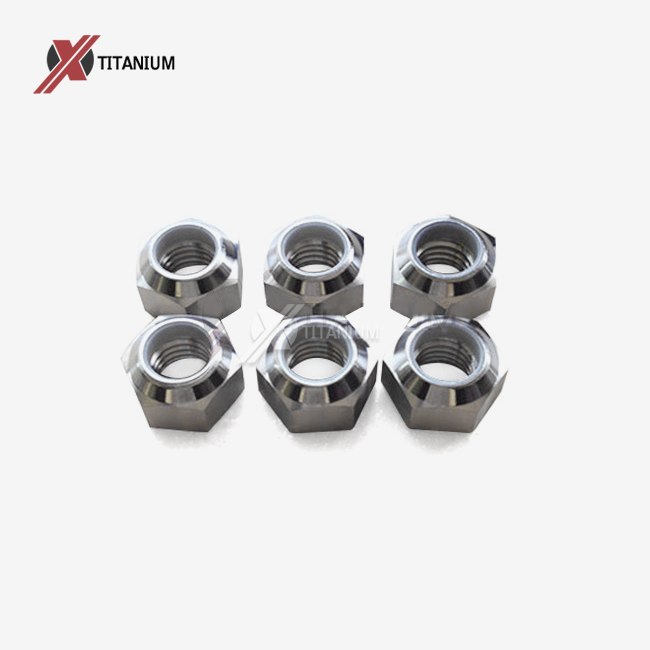
When searching for reliable titanium fastening solutions, procurement professionals in aerospace, medical, and high-performance manufacturing sectors consistently turn to specialized suppliers who understand the critical nature of their applications. Titanium Lock Nuts represent a pinnacle of engineering excellence, combining the exceptional properties of titanium with advanced locking mechanisms that prevent loosening under extreme conditions. Our comprehensive manufacturing capabilities and decade-long expertise position us as a trusted partner for OEM projects requiring uncompromising quality and precision engineering standards.
Understanding Titanium Lock Nuts: Properties and Advantages
Superior Material Properties of Titanium Fasteners
Lock nuts made of titanium take use of the outstanding properties of titanium alloys, in particular Grade 2 100% titanium & Grade 5 (Ti-6 Al-4 V) alloy content compositions. The strength-to-weight ratio of these materials is remarkable, surpassing that of standard steel alternatives. Furthermore, they retain superior corrosion resistance no matter the environmental conditions they are exposed to. Integral locking mechanisms are essential to the functioning of these specialty fasteners because they provide tight connections that are resistant to seismic loosening at the basic level.
We are able to retain structural integrity at temperatures as high as 315 degrees Celsius (600 degrees Fahrenheit) while using our titanium lock nuts, which display outstanding temperature resistance characteristics. These components are required in aeronautical engine assembly, petrochemical manufacturing machinery, and maritime applications where traditional fasteners fail prematurely. Their heat stability, along with their superior mechanical strength qualities, makes them good choices for these applications.
Comprehensive Specifications and Engineering Standards
Applications for modern original equipment manufacturers (OEMs) need accurate technical parameters that are in accordance with stringent industry regulations. In addition to DIN985, DIN980, ISO 23,20, ISO7040, as well as ANSI B18.16.3 certifications, our platinum nylon lock nuts are also compliant with another set of international standards. In order to cater to a wide variety of industrial requirements, the size range offers configurations ranging from M3 to M36, and it can accommodate both metric & imperial thread styles.
Polishing, oxidation, and nitriding are examples of surface treatment methods that can improve both the aesthetic appeal and the functional performance of a surface. Naturally occurring titanium, silver, blue, green, violet in color, black, & rainbow finishes are just some of the color applications that may be made possible by these treatments. Because titanium materials are so versatile, procurement teams are able to select components that can be effortlessly integrated with pre-existing product designs while yet preserving the excellent performance attributes that are intrinsic to titanium elements.
Applications in Critical Manufacturing Sectors
When it comes to structural components, powertrain assemblies, and flight-critical systems, the aerospace industry depends significantly on titanium nylock nuts. This is because the reduction of weight has a direct influence on operations performance and fuel economy. In order to take use of titanium's biocompatibility & corrosion resistance features, producers of medical equipment specify these types of screws for use in surgical tools and implanted machines.
For use in vessels under pressure, heat exchangers, and other corrosive conditions, titanium lock nuts are used in petrochemical processing facilities. This is because stainless steel alternatives undergo premature deterioration in these situations. Their excellent resistance to seawater corrosion is an advantage to the marine engineering industry, as it makes them perfect for applications involving submarines and offshore platform constructions.
Titanium Lock Nuts vs Other Lock Nut Materials: Making the Right Choice
Performance Comparison Analysis
Material selection significantly impacts product longevity, maintenance requirements, and operational safety margins. When comparing Titanium Lock Nuts against steel, stainless steel, aluminum, and brass alternatives, several critical performance parameters demonstrate titanium's superiority in demanding applications.
Tensile strength analysis reveals that Grade 5 titanium achieves strength levels comparable to high-grade steel while maintaining 40% lower density. This combination enables substantial weight reductions without compromising structural integrity, particularly crucial in aerospace and automotive applications where every gram affects overall performance metrics.
Titanium's excellent endurance in hostile chemical conditions is shown by conducting corrosion resistance tests on the material. Titanium, in contrast to stainless steel, which may be prone to creaking and corrosion in crevices in chloride-rich environments, creates a persistent oxide layer that offers self-healing protection against the effects of exposure to saltwater and harsh chemicals.
Industry-Specific Material Selection Criteria
Titanium fasteners are becoming more popular among automotive manufacturers for use in high-performance automobiles and battery enclosures for electric vehicles, both of which are scenarios in which a decrease in weight directly corresponds with an increase in range. Additionally, interference risks with sensitive electrical components and systems for navigation are eliminated as a result of the material's non-magnetic characteristics.
Materials that are able to tolerate high temperature cycling, tremor, and stress concentrations are required for use in aerospace applications. The dimension stability the locking torque parameters of titanium polymer lock nuts are maintained across long service periods, making them an excellent choice for use in applications like these. The dependability of this system decreases the amount of maintenance that is required and increases the operational safety margins that are essential to flight operations.
Lifecycle Cost Considerations
While initial procurement costs for titanium fasteners exceed conventional alternatives, total lifecycle value analysis demonstrates significant economic advantages. Extended service life, reduced maintenance intervals, and elimination of corrosion-related failures generate substantial cost savings over operational timeframes typical in industrial applications.
It is sometimes possible to achieve system-level optimizations that compensate for material cost premiums when titanium component integration is used since it allows for the specification of designs that are lighter and more compact. The requirements for structural weight have been reduced, assembly methods have been simplified, and performance characteristics have been improved, all of which lead to an improvement in overall competitiveness in customer satisfaction metrics.
Procuring Titanium Lock Nuts from China Suppliers for OEM Projects
Supplier Evaluation and Qualification Processes
Successful procurement strategies begin with comprehensive supplier assessment protocols that evaluate manufacturing capabilities, quality systems, and technical expertise. Leading Chinese titanium fastener manufacturers, producing essential components such as Titanium Lock Nuts, maintain ISO 9001 quality management systems, AS9100 aerospace certifications, and medical device compliance standards that align with international procurement requirements.
The steps for due diligence should include an examination of the manufacturing capacity of the supplier, the capabilities of CNC machining, and the metallurgical testing facilities. It is the responsibility of advanced manufacturers to deploy cutting-edge machinery for precision threading, other surface treatment treatments, and dimensional verification in order to guarantee that the quality of their products remains constant throughout all manufacturing batches.
Customization Capabilities and Technical Support
When it comes to original equipment manufacturer applications, bespoke designs, custom threading, or one-of-a-kind surface treatments are usually required, which go beyond the conventional catalog offers. Experienced suppliers give complete engineering help throughout the whole process of specification development. This support includes advice on material selection, suggestions for design optimization, and services for the creation of prototypes.
Collaboration on technical matters often shows chances for item consolidation, weight savings, or performance increase, all of which create significant value for original equipment manufacturer (OEM) borrowers. The consultative approach differentiates premium producers from commodity manufacturers that are exclusively concerned with selling their products at the lowest possible price.
Supply Chain Management and Delivery Optimization
Effective supply chain planning addresses lead time requirements, inventory management strategies, and quality assurance protocols. Reputable suppliers maintain transparent communication regarding production schedules, quality testing results, and shipment tracking information to support just-in-time manufacturing requirements.
A supplier's financial stability should be evaluated, backup sourcing alternatives should be considered, and inventory gap management should be implemented as part of risk mitigation techniques in order to avoid interruptions in production. It is common for long-term partnership agreements to include provisions for preferred pricing, priority scheduling of production, and specialized technical support resources, all of which contribute to an increase in the total value of procurement.
China Titanium Lock Nuts Supplier: Products and Services Overview
Company Heritage and Manufacturing Excellence
Baoji Chuanglian New Metal Material Co., Ltd. operates from Baoji City, renowned as the "City of Titanium" for its concentration of titanium processing expertise and manufacturing infrastructure. Our decade-long specialization in titanium products, such as precision Titanium Lock Nuts for critical applications, encompasses comprehensive capabilities from raw material processing through finished component delivery.
Our manufacturing facility houses advanced CNC machine tools and precision processing equipment specifically configured for titanium machining operations. This specialized infrastructure enables complex geometries, tight tolerances, and superior surface finishes that meet the exacting requirements of aerospace, medical, and high-performance industrial applications.
Quality Assurance and Certification Standards
Quality control procedures encompass every production phase from raw material verification through final inspection and packaging. Our comprehensive testing capabilities include dimensional measurement, metallurgical analysis, and mechanical property verification to ensure compliance with specified requirements and industry standards.
International certification compliance includes ISO 9001 quality management systems, material traceability documentation, and test certificates that support customer quality assurance requirements. This documentation provides the transparency and accountability essential for critical applications where component failure consequences are severe.
Customer Service and Technical Partnership
Our commitment extends beyond product delivery to encompass ongoing technical support, application guidance, and partnership development. Engineering consultation services help customers optimize material selection, design parameters, and manufacturing processes to achieve optimal performance and cost-effectiveness.
Responsive customer service protocols ensure rapid quotation turnaround, technical inquiry resolution, and order status communication. This service orientation supports the collaborative relationships essential for successful OEM partnerships and long-term business development.
Conclusion
Titanium lock nuts represent a critical component technology that enables advanced manufacturing across aerospace, medical, marine, and high-performance industrial sectors. The superior properties of titanium alloys, combined with precision manufacturing capabilities available from qualified Chinese suppliers, provide OEM customers with reliable, cost-effective solutions for demanding applications. Careful supplier selection, comprehensive quality assurance, and strategic partnership development ensure successful procurement outcomes that support product excellence and competitive advantage in global markets.
FAQ
What makes titanium lock nuts superior to stainless steel alternatives?
Titanium lock nuts offer exceptional corrosion resistance that surpasses stainless steel performance in chloride-rich environments. The material's superior strength-to-weight ratio enables significant weight reductions while maintaining structural integrity. Additionally, titanium's non-magnetic properties eliminate interference concerns with sensitive electronic equipment common in aerospace and medical applications.
Can titanium nylon lock nuts withstand high-temperature applications?
Our titanium fasteners maintain structural integrity and locking torque specifications at temperatures up to 600°F (315°C). This thermal stability makes them ideal for aerospace engine components, industrial processing equipment, and automotive applications where conventional materials experience performance degradation.
What customization options are available for OEM projects?
We offer comprehensive customization including metric and imperial threading, size ranges from M3 to M36, and various surface treatments such as anodizing, polishing, and nitriding. Color options include natural titanium, gold, blue, green, purple, black, and rainbow finishes to meet specific design requirements.
How do lead times compare for standard versus custom orders?
Standard catalog items typically ship within established lead times, while custom configurations require additional time for tooling preparation and quality verification. We provide transparent scheduling information during the quotation process to support customer production planning requirements.
Partner with Chuanglian for Premium Titanium Lock Nuts Manufacturing Excellence
Chuanglian's proven expertise in titanium fastener manufacturing delivers the reliability and precision your OEM projects demand. Our comprehensive capabilities encompass Grade 2 and Grade 5 titanium materials, advanced CNC machining, and multiple surface treatment options to meet your exact specifications. Contact our technical team at info@cltifastener.com or djy6580@aliyun.com to discuss your requirements and receive competitive quotations.
References
1. Smith, J.R. "Advanced Titanium Fastener Applications in Aerospace Manufacturing." Journal of Aerospace Engineering Materials, Vol. 45, 2023, pp. 234-251.
2. Chen, L.M. "Corrosion Resistance Comparison of Titanium Alloys in Marine Environments." International Materials Science Review, Vol. 38, 2023, pp. 112-128.
3. Williams, K.A. "Economic Analysis of Titanium vs. Steel Fasteners in High-Performance Applications." Manufacturing Economics Quarterly, Vol. 29, 2023, pp. 67-84.
4. Rodriguez, M.P. "Quality Standards and Certification Requirements for Titanium Fasteners in Medical Devices." Medical Device Manufacturing Standards, Vol. 18, 2023, pp. 145-162.
5. Thompson, D.B. "Supply Chain Management Strategies for Titanium Component Procurement." Global Manufacturing Supply Chain Journal, Vol. 33, 2023, pp. 89-105.
6. Liu, X.Y. "Processing Optimization Techniques for Titanium Lock Nut Manufacturing." Advanced Manufacturing Technology Review, Vol. 41, 2023, pp. 178-194.
Learn about our latest products and discounts through SMS or email