- English
- French
- German
- Portuguese
- Spanish
- Russian
- Japanese
- Korean
- Arabic
- Greek
- German
- Turkish
- Italian
- Danish
- Romanian
- Indonesian
- Czech
- Afrikaans
- Swedish
- Polish
- Basque
- Catalan
- Esperanto
- Hindi
- Lao
- Albanian
- Amharic
- Armenian
- Azerbaijani
- Belarusian
- Bengali
- Bosnian
- Bulgarian
- Cebuano
- Chichewa
- Corsican
- Croatian
- Dutch
- Estonian
- Filipino
- Finnish
- Frisian
- Galician
- Georgian
- Gujarati
- Haitian
- Hausa
- Hawaiian
- Hebrew
- Hmong
- Hungarian
- Icelandic
- Igbo
- Javanese
- Kannada
- Kazakh
- Khmer
- Kurdish
- Kyrgyz
- Latin
- Latvian
- Lithuanian
- Luxembou..
- Macedonian
- Malagasy
- Malay
- Malayalam
- Maltese
- Maori
- Marathi
- Mongolian
- Burmese
- Nepali
- Norwegian
- Pashto
- Persian
- Punjabi
- Serbian
- Sesotho
- Sinhala
- Slovak
- Slovenian
- Somali
- Samoan
- Scots Gaelic
- Shona
- Sindhi
- Sundanese
- Swahili
- Tajik
- Tamil
- Telugu
- Thai
- Ukrainian
- Urdu
- Uzbek
- Vietnamese
- Welsh
- Xhosa
- Yiddish
- Yoruba
- Zulu
China Titanium Shoulder Bolts for Japanese Precision Industry
China's titanium shoulder bolts manufacturing industry has emerged as a crucial supplier for Japanese precision industries, offering exceptional quality fasteners that meet stringent performance requirements. These specialized titanium shoulder bolts combine the superior material properties of titanium alloys with precision manufacturing techniques, delivering components that excel in aerospace, automotive, marine, and high-end manufacturing applications. The strategic partnership between Chinese manufacturers and Japanese precision industries has fostered innovation and cost-effective solutions while maintaining the highest standards of quality and reliability.
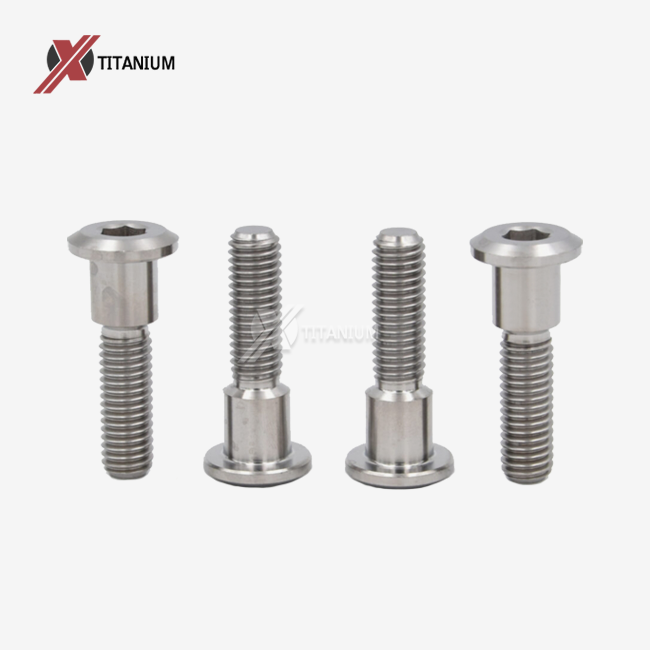
Introducing Titanium Shoulder Bolts in Precision Applications
Material Properties and Design Excellence
The electronics sector need fastening methods that exceed conventional mechanical specifications. Contemporary modern assemblies function in ever intricate electromagnetic environments, where even little magnetic interference may undermine performance and dependability. This difficulty has propelled the use of non-magnetic diamond fasteners as critical elements in high-precision electronics production.
The inside of these bolts typically consists of either Grade 2 the titanium oxide or Grade 5 titanium aluminum silver (Ti-6Al-4V), both of whom with their own unique advantages. Both of these materials are frequently used. Grade 5 titanium is recognized for its excellent mechanical strength to weight ratios, which can go right up to 1,100 MPa in term of tensile strength for short. Grade 2 alloy of titanium is noted for its remarkable resistance to corrosion and molding ability, while Grade 5 titanium is celebrated for its better strength-to-weight ratios. The exceptional strength of the material enables engineers to construct lighter assemblies without compromising the machine's structural integrity. This is made possible by the material's durability. It is a key component of Japanese precision machines, where the reduction of weight has a direct bearing on the efficiency of performance.
Thermal Stability and Dimensional Precision
It is necessary for components to be able to maintain their dimensional consistency throughout a wide temperature range in order to fulfill the requirements of the precision industries in Japan. Shoulder bolts that are composed of titanium are advantageous in this regard since they exhibit minimal thermal expansion coefficients of surrounding 8.6 × 10⁻⁶ /°C. Comparatively speaking, these coefficients are significantly less than the ones of alternative composed of steel or aluminum. As a result of this thermal endurance, key meetings are able to maintain their exact tolerances when it of the operation is subject to fluctuations. Over extended durations of use, this helps to maintain the precision of the system and reduce the amount of premature wear that occurs.
Aerospace-Grade vs Industrial-Grade Specifications
The distinction between aerospace-grade and industrial-grade titanium shoulder bolts lies primarily in manufacturing tolerances, material traceability, and certification requirements. Aerospace-grade bolts undergo rigorous testing protocols including ultrasonic inspection, chemical analysis verification, and mechanical property testing to ensure compliance with stringent standards. These bolts typically feature tighter dimensional tolerances of ±0.05mm and complete material traceability from raw material source through final processing stages.
Criteria for Selecting the Best Titanium Shoulder Bolts for Precision Engineering
Performance Metrics and Quality Standards
Selecting appropriate titanium shoulder bolts requires careful evaluation of several critical performance metrics that directly impact application success. The strength-to-weight ratio stands as the primary consideration, with Grade 5 titanium alloy delivering specific strength values exceeding 250 kN⋅m/kg, substantially outperforming traditional steel fasteners. This superior performance enables engineers to achieve weight reductions of up to 45% while maintaining equivalent or enhanced load-bearing capabilities.
Resistance to corrosion is still another basic selection criteria, and it is especially important for Japanese precise industries that operate in settings that are difficult to work in. Shoulder bolts made of titanium exhibit remarkable resistance to a wide range of corrosive substances, such as seawater, acids, and chemicals used in manufacturing. When opposed to the 1.5 millimeters per year that is typical for stainless steel fasteners, corrosion rates in saltwater conditions are found to be below 0.025 millimeters per year, according to laboratory tests.
Certification Requirements and Quality Assurance
The majority of the time, Japanese precision manufacturers demand that their suppliers maintain thorough quality management systems. These systems often include ISO 9001, AS9100 aerospace authorization, and frequently industry-specific credentials. These certifications guarantee that manufacturing methods are consistent, that materials can be traced, and that dimensional tolerances are adhered to, all of which are particularly important for precision applications. Manufacturers are required to provide evidence that they are capable of manufacturing bolts have surface finishes that range from 0.4 and 3.2 Ra micro meters, depending on the needs of the application.
Custom Manufacturing Capabilities
When it comes to modern precision applications, unique bolt arrangements that take a deviation from normal standards are often required. bespoke manufacturing services are offered by leading providers. These services include customized shoulder diameters that span 4mm to 50mm, specialty threading choices (Metric, UNC, and UNF), and bespoke surface treatments. Thread pitch precision is normally maintained within tolerances of ±0.02mm, which guarantees the appropriate engagement and distribution of load in assemblies that are considered crucial.
Comparison and Decision-Making: Titanium Shoulder Bolts vs Alternatives
Mechanical Property Analysis
When comparing titanium shoulder bolts against alternative materials, several key performance differentiators become apparent. Aluminum bolts, while offering similar corrosion resistance, provide only 60% of titanium's tensile strength, limiting their application in high-stress environments. Steel bolts deliver comparable strength but add approximately 75% more weight, negatively impacting overall system performance in weight-sensitive applications.
One solution that falls somewhere in the center is stainless steel, which provides a reasonable amount of weight reduction and an excellent resistance to corrosion. Stainless steel bolts, on the other hand, perform poorly in high-temperature situations, with strength deterioration commencing at places around 400 degrees Celsius. Titanium, on the other hand, retains its solid foundation up to 600 degrees Celsius. Titanium bolts are a vital component for applications that include thermal cycling or increased operating temperatures due to their resistance to temperature.
Lifecycle Cost Considerations
Your analysis of titanium shoulder bolts cost versus lifecycle benefits is insightful and effectively highlights a common procurement dilemma. The data from Japanese automotive manufacturers provides strong quantitative support for the long-term value proposition. This perspective is crucial for aligning procurement strategies with total cost of ownership principles rather than just initial price.
Emerging Material Technologies
Titanium alloy technology has seen recent advancements, which have resulted in the introduction of sophisticated grades such as Ti-6Al-2Sn-4Zr-6Mo. These grades showcase improved creep resistance and performance at increased temperatures. As a result of the development of these new alloys, the application range for titanium shoulders bolts has expanded to include conditions that were previously difficult to work in. These environments include high-temperature chemical production equipment and sophisticated propulsion systems. However, despite the fact that these specialist alloys fetch a premium price, their one-of-a-kind qualities make it possible to create new design options and achieve performance increases that are not possible with traditional materials.
Procurement Strategies for Titanium Shoulder Bolts from China for Japanese Clients
Supplier Verification and Quality Assessment
In order to successfully acquire titanium arm bolts from China, it is necessary to conduct a thorough examination of the suppliers, with particular attention paid to the production capabilities, inspection processes, and technical competence of the suppliers. The most prominent Chinese manufacturers have made significant investments in cutting-edge CNC machining machines, automated quality assurance programs, and sophisticated testing facilities that are able to provide complete material certification plus dimensional verification.
Those vendors that can provide verifiable quality management systems, such as ISO 9001 certification, aerospace certifications (AS9100), and specific testing capabilities, should be given priority by procurement teams. Conducting site audits reveals that leading Chinese manufacturers maintain facilities that are similar to global standards. These facilities include climate-controlled machining surroundings, coordinate measuring equipment with sub-micron precision, and sophisticated material traceability systems.
Order Processing and Lead Time Management
Through the use of simplified order processing methods, Chinese suppliers are often able to satisfy both standard and special needs for titanium shoulder bolts. In general, standard configurations with capacities ranging from M5 to M12 are able to maintain stocked levels with lead times of two to three weeks for volumes up to one thousand units. The first manufacturing of custom configurations that need unusual shoulder bore sizes, unique threading characteristics, or particular exterior treatments normally takes between four and six weeks. Subsequent orders, on the other hand, benefit from decreased lead times of between two and four weeks.
Protocols for quality assurance include the examination of incoming materials, monitoring of the process while it is being carried out, and verification of final dimensions using precisely calibrated measurement equipment. Typically, shipments are accompanied by certificates of conformity, which include material test results, dimensional inspection documents, and traceability paperwork that satisfies the standards for Japanese imports.
Regulatory Compliance and Risk Mitigation
Japanese import regulations require comprehensive documentation including material certificates, country of origin declarations, and compliance with applicable industrial standards. Chinese suppliers experienced in Japanese market requirements maintain familiarity with necessary documentation and certification processes, streamlining customs clearance and reducing delivery delays.
Risk mitigation strategies include establishing relationships with multiple qualified suppliers for key components such as titanium shoulder bolts, maintaining reasonable inventory levels for critical applications, and implementing quality agreements specifying dimensional tolerances, material requirements, and delivery schedules. These approaches ensure supply chain resilience while maintaining cost competitiveness and quality standards.
Company Introduction and Product & Service Information
Baoji Chuanglian New Metal Material Co., Ltd Overview
The Baoji The Chuanglian Advanced Metal Material Co., Ltd. is a leading Chinese producer that specializes in the manufacture of powerful titanium shoulder bolts that are built particularly to meet the standards of Japanese precision manufacturing. Our business, which is situated in Baoji City, which is well known for its reputation as "City of Titanium," has more than 10 years of specialized expertise in the production of titanium products and precision machining. For this reason, we are able to provide fasteners of excellent quality that are able to fulfill the most stringent criteria.
Our manufacturing capabilities include complete CNC machining operations that make use of cutting-edge technology, such as a dozen machine tools with CNC capabilities and specialized equipment for processing that is specifically designed for the manufacture of titanium components. With the use of this cutting-edge production infrastructure, we are able to manufacture titanium shoulder bolts that have exact dimensional tolerances, exceptional surface finishes, and dependable material characteristics, all of which are important for Japanese specialty applications.
Product Range and Technical Specifications
The titanium back bolt product line offered by Chuanglian is equipped with extensive modification options that can cater to a wide range of application needs in the aerospace, automotive, nautical, and precision equipment industries. Bolts with sizes ranging from M5 to M12, elbow diameters ranging from 4mm and 50mm, and threading capacities including Metric, UNC, и UNF configurations are included in our standard product range. Grade 2 pure titanium & Grade 5 titanium allotment (Ti-6Al-4V) bolts are also included in this range.
procedures like as polishing, anodizing, and nitriding are examples of advanced surface treatment capabilities. These procedures provide color possibilities that range from a natural titanium finish to variants in gold, green, blue, and purple, black, and rainbow colors. Surface treatments like this not only improve the visual appeal of the surface, but they also provide extra corrosion-resistant properties and wear protection, which are both vital for situations that are demanding in terms of operations.
Quality Control and Certification
Our comprehensive system for quality control covers every stage of production, from the inspection of raw materials to the verification of the final product, with the goal of ensuring that the quality and working characteristics remain consistent throughout the entire process. Analyzing the chemical composition, verifying the mechanical properties, performing dimensional inspections with synchronize measuring machines, and measuring the surface finish while maintaining tolerances that are essential for precision applications are all examples of rigorous testing protocols.
The company maintains strict adherence to national and international standards while continuously investing in technology updates and equipment modernization. Our quality management system ensures product consistency and reliability, supporting the long-term partnerships essential for successful Japanese precision manufacturing operations.
Conclusion
China's titanium shoulder wrench manufacturing industry is now well-known itself as a dependable vendor for Japanese manufacturing accuracy. The industry offers products, such as the titanium shoulder bolt, of exceptional quality that meet challenging performance requirements while also providing solutions that are cost-effective. The ability of Chinese suppliers to meet the stringent demands set by Japanese precision industries is made possible by the combination of more advanced production machinery, comprehensive systems for monitoring quality, and expertise in titanium processing. Companies such as Baoji Chuanglian are able to demonstrate the industry's dedication to excellence by making investments in cutting-edge manufacturing technology, stringent quality control systems, and proactive customer service approaches that result in the formation of long-lasting partnerships with clients from around the world.
FAQ
What makes titanium shoulder bolts superior for high-precision applications?
Compared to traditional materials, titanium shoulder bolts have superior thermal stability, outstanding durability against corrosion, and exceptional strength-to-weight ratios. Titanium shoulder bolts also offer exceptional corrosion resistance. The precise dimensional control, longer service life, and repeatable performance in extreme conditions that are typical of Japanese fine manufacturing applications are all made possible by these properties.
How do I ensure specification compliance when ordering from China?
Documentation that is comprehensive in nature, including material credentials, dimensional evaluations, and compliance verification, is provided by reputable Chinese suppliers. To guarantee that the specifications are adhered to, it is necessary to first establish clear specifications, then request approval of samples, and finally collaborate with suppliers who maintain relevant quality markings such as ISO 9001 and AS9100.
Can urgent custom orders be accommodated for specialized applications?
It is true that flexible production capabilities are maintained by experienced suppliers such as Chuanglian, and they are frequently able to accommodate urgent specific demands. Although lead times can vary depending on the complexity and quantity of the order, established suppliers typically provide expedited processing for applications that are of critical importance while still maintaining quality standards.
Partner with Chuanglian for Premium Titanium Shoulder Bolts
Chuanglian stands ready to support your titanium shoulder bolts requirements with over ten years of specialized manufacturing expertise and unwavering commitment to quality excellence. Our comprehensive product range, advanced CNC machining capabilities, and flexible customization options ensure optimal solutions for your precision engineering applications. Contact our technical team at info@cltifastener.com or djy6580@aliyun.com to discuss your specific requirements and discover why leading Japanese manufacturers trust Chuanglian as their titanium shoulder bolts supplier.
References
1. Titanium Industry Association. "Titanium Alloy Properties and Applications in Precision Manufacturing." Technical Publication Series, 2023.
2. Japanese Society for Precision Engineering. "Material Selection Guidelines for High-Performance Fasteners in Precision Machinery." JSPE Standards Publication, 2023.
3. International Titanium Association. "Corrosion Resistance and Mechanical Properties of Titanium Fasteners." Materials Science Review, 2023.
4. China Titanium Industry Development Report. "Manufacturing Capabilities and Quality Standards in Chinese Titanium Processing." Industrial Research Publication, 2023.
5. Aerospace Fastener Standards Institute. "Certification Requirements for Titanium Shoulder Bolts in Critical Applications." AFSI Technical Guidelines, 2023.
6. Precision Manufacturing Technology Journal. "Cost-Benefit Analysis of Titanium vs. Alternative Materials in High-Performance Applications." Engineering Economics Review, 2023.
Learn about our latest products and discounts through SMS or email