- English
- French
- German
- Portuguese
- Spanish
- Russian
- Japanese
- Korean
- Arabic
- Greek
- German
- Turkish
- Italian
- Danish
- Romanian
- Indonesian
- Czech
- Afrikaans
- Swedish
- Polish
- Basque
- Catalan
- Esperanto
- Hindi
- Lao
- Albanian
- Amharic
- Armenian
- Azerbaijani
- Belarusian
- Bengali
- Bosnian
- Bulgarian
- Cebuano
- Chichewa
- Corsican
- Croatian
- Dutch
- Estonian
- Filipino
- Finnish
- Frisian
- Galician
- Georgian
- Gujarati
- Haitian
- Hausa
- Hawaiian
- Hebrew
- Hmong
- Hungarian
- Icelandic
- Igbo
- Javanese
- Kannada
- Kazakh
- Khmer
- Kurdish
- Kyrgyz
- Latin
- Latvian
- Lithuanian
- Luxembou..
- Macedonian
- Malagasy
- Malay
- Malayalam
- Maltese
- Maori
- Marathi
- Mongolian
- Burmese
- Nepali
- Norwegian
- Pashto
- Persian
- Punjabi
- Serbian
- Sesotho
- Sinhala
- Slovak
- Slovenian
- Somali
- Samoan
- Scots Gaelic
- Shona
- Sindhi
- Sundanese
- Swahili
- Tajik
- Tamil
- Telugu
- Thai
- Ukrainian
- Urdu
- Uzbek
- Vietnamese
- Welsh
- Xhosa
- Yiddish
- Yoruba
- Zulu
Choosing Titanium Alloy Materials for Harsh Environments
One of the most important choices in modern manufacturing and engineering is choosing the right titanium alloy materials for use in harsh settings. In the fields of aircraft, chemical processing, naval engineering, and the production of medical devices, Titanium Alloy compositions, especially those made for harsh conditions, offer unmatched performance. It is impossible to use regular materials in some situations because these special ones are so good at resisting rust, being strong for their weight, and lasting a long time even at very high or very low temperatures. When procurement workers and engineers know the subtle differences between titanium grades and how they work in different environments, they can make decisions that will lead to long-term business success and cost-effectiveness.
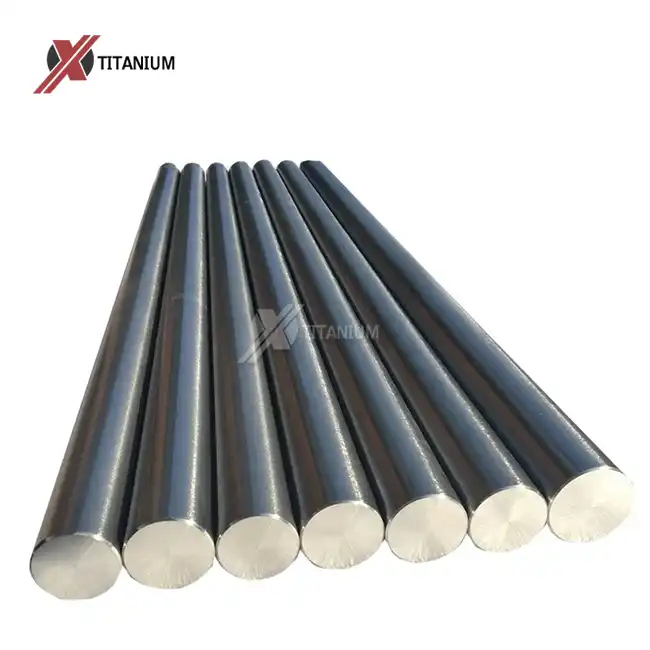
Understanding Titanium Alloys for Harsh Environments
Titanium alloys are complex metal mixtures made of pure titanium mixed with alloying elements like molybdenum, zirconium, aluminum, and vanadium to make products with better chemical and mechanical qualities. Unlike pure titanium that you can buy in stores, these engineered alloys create dual-phase microstructures that give them better performance traits that are made for tough industrial uses.
Chemical Composition and Microstructure
Titanium alloys are very useful because their chemical makeup can be carefully controlled to make clear alpha, beta, or alpha-beta phase structures. The most common titanium alloy, Grade 5 titanium (Ti-6Al-4V), is made up of 6% aluminum and 4% vanadium. This creates an alpha-beta structure that makes the metal very strong and resistant to rust. The tensile strength of this composition is higher than 895 MPa, but it has a density about 45% lower than steel. This meets important weight reduction needs in aircraft and automotive uses.
Palladium is added to grade 7 titanium to make it more resistant to rust in reducing acid settings. This makes it very useful for chemical processing tasks where regular stainless steels break down quickly. The palladium content, which is usually between 0.1 and 0.25%, makes a protected layer on the surface that hydrochloric and sulphuric acids can't damage. This makes the part last a lot longer.
Key Properties for Harsh Environment Applications
Titanium alloys work better than most materials in harsh environments because they have amazing performance qualities. Their high strength-to-weight ratio makes them ideal for structural uses where weight reduction directly affects operating efficiency, like in airplane parts where every pound saved means better fuel economy.
When used in harsh environments, corrosion protection may be the most important quality. Titanium alloys create a steady, self-healing oxide layer that protects against stress corrosion cracking caused by chloride, which is a common way for things to break in sea and chemical processing settings. This oxide layer starts to grow back on its own when it gets broken, protecting the part for its whole useful life.
Temperature stability means that titanium alloys can keep their mechanical traits over a wide range of temperatures, from very cold environments in spacecraft to very hot environments in chemical reactors. Up to 400°C, Grade 5 titanium keeps its useful strength qualities. Specialized high-temperature alloys, like Ti-6242, can work well at temperatures close to 500°C.
Comparison with Alternative Materials
Compared to stainless steel, titanium metals are better at resisting corrosion in chloride conditions. They are also just as strong, but they are a lot lighter. Seawater causes pitting and crevice corrosion in stainless steel 316L, which is often used in marine applications. However, titanium metals are almost completely unaffected by long-term contact to seawater.
Even though aluminum alloys are light, they are not strong enough or resistant to rust enough for many hard environment uses. Titanium alloys have about twice the specific strength of aluminum alloys and are much more resistant to rust, especially in settings that are acidic or high in chlorine, where aluminum breaks down quickly.
How to Choose the Right Titanium Alloy Grade for Your Application?
To choose the best titanium alloy grade, you need to carefully think about the surroundings, the technical needs, and the working limitations that are unique to each application. Different businesses have different problems that need certain qualities from materials. Choosing the right grade is therefore very important for how well and how long a part works.
Industry-Specific Requirements and Environmental Challenges
Strength-to-weight improvement and wear protection under cyclic loading situations are important in aerospace uses. Extreme temperature changes must not affect parts like rotor blades, structural frames, and bolts, but they must also stay the same size. High-quality Grade 5 titanium is used in most aircraft uses because it has a great mix of strength, flexibility, and weldability.
When chemicals are being processed, they need to be able to fight corrosion against certain aggressive surfaces better than others. Grade 7 titanium works best in settings with reducing acids, while Grade 12 titanium (which contains molybdenum and nickel) is better at resisting crevice rust in solutions with chloride. These special grades keep pressure tanks, heat exchangers, and pipe systems from failing in terrible ways, which could have major safety and environmental effects if they fail due to corrosion.
Materials used in marine and offshore settings need to be able to fight both general corrosion and localized attack processes like pitting and crevice corrosion. When you mix seawater's high chloride content, changing oxygen levels, and mechanical loads, you get very tough situations where titanium alloys clearly perform better than other materials.
Essential Selection Criteria
For each application, the mechanical strength needs to match the working pressures and safety factors that are needed. When titanium is annealed, grade 5 has a yield strength of 880 MPa, which makes it good for high-stress structural uses. Commercially pure grades, on the other hand, have lower strengths but are better at being shaped into complex forms and thin-walled parts.
When something is loaded and unloaded over and over, like in airplane parts and rotating gear, fatigue resistance becomes very important. Titanium metals have better fatigue performance than steel because they can achieve a smooth surface finish and fine grain structure. This is especially true in corrosive settings where fatigue cracks often start at corrosion sites.
Fabrication compatibility affects both the cost of making something and how well it works in the long run. There are different types of titanium that need different ways to be welded and heated, while others can be worked on using normal methods. Knowing these working needs when choosing materials keeps production from being held up, which costs a lot of money, and makes sure that quality is always the same.
Comparative Overview of Popular Grades
Grade 2 commercially pure titanium is very good at resisting rust and being shaped, which makes it perfect for chemical handling equipment that needs to be moderately strong. Because it is so good at cold forming, it can be used to make complicated shapes and still prevent corrosion as well as higher-grade metals.
Grade 5 (Ti-6Al-4V) is the workhorse of titanium alloys. It has the best mix of strength, resistance to corrosion, and ease of processing for use in aircraft and industry. It is the best choice for important applications that need proven performance because it has a large collection of mechanical properties and well-known processing methods.
Palladium additions to Grade 7 make it more resistant to rust in reducing environments. This makes it very useful for chemical processing tasks that use hydrochloric acid or other harsh reducing media, where standard titanium grades might experience localized attack.
Procurement and Sourcing Strategies for Titanium Alloys
To buy titanium alloy effectively, you need to know about the skills of suppliers, quality systems, and market factors that affect price and supply. Because handling titanium is so specialized, the supply base is made up of people with a lot of technical knowledge and strict quality control, rather than people competing on price.
Supplier Evaluation and Quality Standards
Reliable titanium providers keep thorough quality control systems that make sure materials can be tracked from the time they are raw materials to the time they are finished being processed. For aerospace applications, suppliers must be certified to AS9100 standards. For medical applications, suppliers must be certified to ISO 13485 standards and meet biocompatibility testing requirements.
Material certifications are important proof of a substance's chemical make-up, mechanical qualities, and processing past. Mill test certificates, heat treatment records, and the results of non-destructive testing make sure that the material meets the requirements of the standard and allow tracking throughout the service life of the component.
Both supply dependability and transportation costs are affected by where things are located. When it comes to local projects, North American suppliers are closer, while European sellers may have access to special grades or processing skills. Asian providers are getting better at offering low prices on normal grades, but for important uses, quality checks become even more important.
Product Forms and Customization Options
Titanium metals come in a lot of different shapes and sizes, such as bars, plates, sheets, pipes, and special forgings. Standard mill goods are cheaper for uses that can work with the sizes and specs that are available. Custom processing, on the other hand, lets you get the best results for certain uses, but it costs more at first.
Bulk buying can save you a lot of money on big tasks or production needs that happen all the time. But titanium's unique processing needs and small market size make inventory management very important to keep materials from becoming obsolete and to make sure they are always available.
Different providers offer very different custom fabrication services. Some only make basic mill goods, while others do full machining and assembling. By knowing about these skills when choosing a supplier, the overall cost and time of the supply chain can be optimized.
Pricing Insights and Market Factors
Titanium alloy prices depend on both the cost of the raw materials and the difficulty of the processing. Standard grades in mill forms usually cost $15 to $30 per pound, while specialized grades or custom processing cost $50 to $100 per pound. When you look at the total lifecycle costs, which include corrosion protection and longer service life, these prices stay the same compared to the performance benefits.
Titanium is the fourth most common structural metal, so market instability is mostly caused by problems in the supply chain rather than a lack of base materials. But because titanium production needs specialized processing tools and scientific know-how, there are limits on how much can be made, which affects prices and delivery times.
When compared to other materials, titanium metals often have a better total cost of ownership, even though they cost more at first. For important uses, the higher price is often worth it because of the longer service life, lower upkeep needs, and lack of protection coatings.
Case Studies: Successful Applications of Titanium Alloys in Harsh Conditions
In harsh settings, real-life uses of titanium alloys show how useful they are, teaching us important things about choosing the right materials and how well they work. These case studies show how choosing the right materials can help your business and save you money.
Aerospace Applications: Enhanced Durability and Weight Reduction
A big airplane company switched from steel bolts to Grade 5 titanium alloy screws for wing assembly jobs. This cut the weight by 45% and made the parts more resistant to rust. The titanium screws got rid of the need for protective coatings and shortened the time between maintenance checks from 5,000 to 10,000 flight hours. This saved a lot of money on running costs, even though the materials were more expensive at first.
Applications in engine parts show off titanium's ability to withstand high temperatures. Grade 5 titanium turbine blades are more resistant to creep and more stable at high temperatures than steel blades of the same size. This means that they can be used at higher temperatures and with better engine performance. When you combine the ability to lower temperature with weight reduction, you get better fuel economy and longer component life.
For military airplane structural uses, materials must be able to handle harsh weather conditions like salt spray, changing temperatures, and mechanical stress. When used in bulkhead building, titanium alloy plates offer the same level of corrosion protection as protective coating systems without the need for coating maintenance and the downtime that comes with it.
Medical Implants: Superior Biocompatibility and Corrosion Resistance
Grade 23 titanium (Extra Low Interstitial Ti-6Al-4V) is used by orthopedic implant makers for hip and knee replacement parts because it is very biocompatible and doesn't wear down easily. The lower intermediate percentage makes the material more flexible and less likely to break, which are important qualities for implants that are loaded and unloaded millions of times every day.
Titanium is used in dentistry because it can osseointegrate, which means it can join directly with bone tissue without forming scar tissue first. In 10-year studies, titanium tooth implants have success rates higher than 95%, which is a lot better than other materials because they are biocompatible and don't rust.
Titanium's nonmagnetic and sterilization-resistant qualities make it useful for making surgical instruments. Titanium instruments keep their mechanical qualities even after being put through many autoclave cycles, and they are also better at resisting rust from cleaning chemicals than stainless steel instruments.
Chemical Processing Equipment: Long-term Cost Savings
In hydrochloric acid service, a chemical processing plant switched from stainless steel heat exchanger tubes to Grade 7 titanium ones. This made the tubes last longer, from 18 months to over 10 years. Even though they cost more at first, the titanium tubes cut down on total running costs and got rid of the need for scheduled maintenance shutdowns.
In the making of chlor-alkali, titanium cladding is used on pressure vessels to protect them from corrosion while keeping the structural qualities of carbon steel substrates. This method uses the ability of titanium to prevent corrosion with the low cost of common building materials, making efficiency and cost the best they can be.
Components for pumps and valves that are made from titanium metals work better in harsh chemical conditions. A petrochemical plant said that titanium pumps had no corrosion-related problems in five years of work in sulfuric acid, while stainless steel pumps needed repair every three months.
Conclusion
To choose the right titanium alloy materials for harsh settings, you need to know a lot about the properties of the materials, the needs of the application, and the skills of the suppliers. Titanium alloys have great performance qualities, such as being very resistant to rust, having great strength-to-weight ratios, and lasting a very long time. These qualities make them essential for important uses in the medical, chemical processing, aircraft, and chemical processing industries. To choose the right material, you need to carefully look at the conditions in the surroundings, the technical needs, and the cost factors that are unique to each application. Buying high-quality titanium alloys pays off in the long run by increasing efficiency, extending service life, and requiring less upkeep. This is called "total lifecycle economics," and it explains why the higher material costs are worth it.
FAQ
What advantages do titanium alloys offer over stainless steel in harsh environments?
Titanium metals are better at resisting rust in chloride conditions, don't cause stress corrosion cracking, and are just as strong but 45% less dense. Unlike stainless steel, titanium metals always have a protective oxide layer on them, so they don't need coats or cathodic protection systems.
How do heat treatments affect titanium alloy properties?
By improving the microstructure and releasing leftover pressures, heat treatment methods can make titanium alloys work much better. Solution cleaning and aging can make steel up to 20% stronger compared to mill-annealed conditions, while annealing processes make steel more flexible and relieve stress.
What certifications should I look for in aerospace-grade titanium suppliers?
For aerospace uses, suppliers must be approved to AS9100 quality standards and have material certifications that meet AMS standards. Look for providers that can do a wide range of tests, such as chemical analysis, mechanical testing, and non-destructive examination, and that have clear systems for keeping track of their products.
Can titanium alloys be welded using conventional techniques?
Titanium metals need to be welded using special techniques that use inert gas protection to keep the atmosphere from getting contaminated. Gas Tungsten Arc Welding (GTAW) with very pure argon gives the best results, but electron beam and friction stir welding are better for some jobs.
How do I determine the most cost-effective titanium grade for my application?
Consider total lifetime costs including material price, processing needs, service life standards, and maintenance costs. Grade 2 has a cheaper starting cost for applications that need moderate strength, while Grade 5 has better performance for applications that need high stress, even though the materials cost more.
Partner with Chuanglian for Your Titanium Alloy Requirements
With more than ten years of experience in handling and making titanium, Baoji Chuanglian New Metal Material Co., Ltd. is a trusted Titanium Alloy manufacturer ready to help you with your titanium alloy needs. Titanium metal bars, plates, pipes, fasteners, and special machined parts are all in our wide range of products. These are made for harsh environments in the aircraft, chemical processing, marine, and medical industries. Our plant, which is in Baoji City, known as the 'City of Titanium,' has strict quality control systems in place from the raw materials to the finished products.
This makes sure that the products always work well and are reliable. Our experienced engineering team can help you choose the best titanium alloy options for your needs by giving you expert advice and application support. Get in touch with our experts right away at info@cltifastener.com or djy6580@aliyun.com to talk about your project and find out why top companies around the world choose Chuanglian as their titanium alloy provider of choice.
References
1. Peters, M., Kumpfert, J., Ward, C.H., & Leyens, C. (2003). Titanium alloys for aerospace applications. Advanced Engineering Materials, 5(6), 419-427.
2. Schutz, R.W., & Thomas, D.E. (1987). Corrosion of titanium and titanium alloys. Metals Handbook, 9th Edition, Volume 13, Corrosion, ASM International, 669-706.
3. Boyer, R.R. (1996). An overview on the use of titanium in the aerospace industry. Materials Science and Engineering: A, 213(1-2), 103-114.
4. Donachie, M.J. (2000). Titanium: A Technical Guide, 2nd Edition. ASM International, Materials Park, OH.
5. Leyens, C., & Peters, M. (Eds.). (2003). Titanium and Titanium Alloys: Fundamentals and Applications. Wiley-VCH, Weinheim, Germany.
6. American Society for Testing and Materials. (2019). Standard Specification for Titanium and Titanium Alloy Strip, Sheet, and Plate. ASTM B265-19, West Conshohocken, PA.
_1748247519019.webp)
Learn about our latest products and discounts through SMS or email