- English
- French
- German
- Portuguese
- Spanish
- Russian
- Japanese
- Korean
- Arabic
- Greek
- German
- Turkish
- Italian
- Danish
- Romanian
- Indonesian
- Czech
- Afrikaans
- Swedish
- Polish
- Basque
- Catalan
- Esperanto
- Hindi
- Lao
- Albanian
- Amharic
- Armenian
- Azerbaijani
- Belarusian
- Bengali
- Bosnian
- Bulgarian
- Cebuano
- Chichewa
- Corsican
- Croatian
- Dutch
- Estonian
- Filipino
- Finnish
- Frisian
- Galician
- Georgian
- Gujarati
- Haitian
- Hausa
- Hawaiian
- Hebrew
- Hmong
- Hungarian
- Icelandic
- Igbo
- Javanese
- Kannada
- Kazakh
- Khmer
- Kurdish
- Kyrgyz
- Latin
- Latvian
- Lithuanian
- Luxembou..
- Macedonian
- Malagasy
- Malay
- Malayalam
- Maltese
- Maori
- Marathi
- Mongolian
- Burmese
- Nepali
- Norwegian
- Pashto
- Persian
- Punjabi
- Serbian
- Sesotho
- Sinhala
- Slovak
- Slovenian
- Somali
- Samoan
- Scots Gaelic
- Shona
- Sindhi
- Sundanese
- Swahili
- Tajik
- Tamil
- Telugu
- Thai
- Ukrainian
- Urdu
- Uzbek
- Vietnamese
- Welsh
- Xhosa
- Yiddish
- Yoruba
- Zulu
Do titanium screws melt?
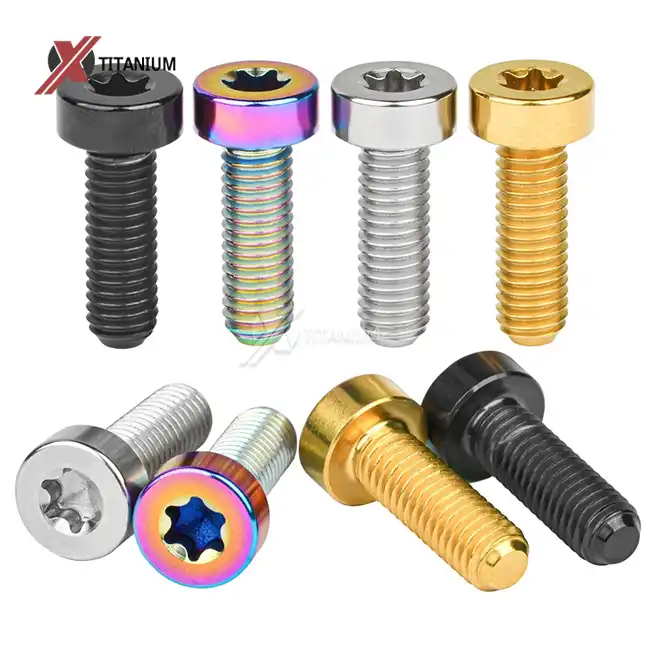
The straightforward answer is no - Titanium Bicycle Screws do not melt under normal or even extreme cycling conditions. With a melting point of approximately 1668°C (3034°F), titanium fasteners possess exceptional thermal stability that far exceeds any temperature encountered in bicycle applications. Even during intensive mountain biking, racing, or extreme weather conditions, the temperatures generated rarely exceed 100°C, making melting concerns completely unfounded for practical cycling applications.
Introduction
These screws are solid, do not rust, and aren't overwhelming. They are getting greater and greater in the bicycle commerce, for the most part for mountain bicycles and high-performance bicycles. A address that comes up a parcel is whether titanium screws soften when you ride frequently or when you ride truly difficult. If individuals need to purchase the best latch materials, they require to know where titanium works best, when it dissolves, and how long it endures. When individuals know this, they can make keen choices that make things more steady and final longer when things get tough.
Understanding Titanium Screws and Their Melting Properties
Titanium Bike Screws are one of a kind screws that may be utilized to make bicycles lighter and less likely to rust. Titanium works well for high-performance assignments since it is lighter and more grounded than both stainless steel and aluminum.
Thermal Properties of Titanium Fasteners
Since titanium melts at about 1668°C (3034°F), it is one of the metals that is most often used in racing. It's easy for Titanium Bicycle Screws to handle the stresses that come up during both normal and wild rides because they don't change much with temperature. In real life, this makes it hard to melt.
Structural Advantages in High-Temperature Environments
Titanium can be solid at numerous temperatures, but it dissolves at exceptionally tall ones. In spite of the fact that the temperature changes, titanium screws remain the same measure since the fabric doesn't alter shape much when it's hot or cold. It works best with circle brakes since the clamp might not work as well after halting for a long time if it gets hot.
Corrosion Resistance and Environmental Durability
Since titanium doesn't rust, it can be utilized in parts of places and for a long time. Over time, this keeps it secure and steady. The consistent oxide film that shapes on the beat keeps water, salt, and chemicals from getting into bike parts that are utilized a lot.
Comparing Titanium Bicycle Screws with Other Materials
If people know how titanium compares to other materials, they can buy things that are better for the job and fit their price.
Performance Metrics Analysis
Here are the key performance advantages of titanium fasteners compared to traditional materials:
• Weight reduction: Titanium fasteners weigh approximately 45% less than steel equivalents while maintaining comparable strength characteristics
• Strength-to-weight ratio: Grade 5 titanium delivers tensile strength of 895-1000 MPa with a density of only 4.43 g/cm³
• Fatigue resistance: Superior fatigue life compared to aluminum fasteners, particularly important in high-vibration cycling applications
• Temperature stability: Maintains mechanical properties across broader temperature ranges than aluminum alloys
Because they make the parts that move lighter and last longer, these speed traits immediately make bikes faster.
Material Cost-Benefit Analysis
Even in spite of the fact that a titanium screw costs more than a steel or aluminum screw, in extreme circumstances, titanium regularly has a superior full taken a toll of proprietorship. Since they are more productive, final longer, and require less upkeep, these bicycles are worth the additional cash for high-end bicycle creators and speed-hungry riders.
Manufacturing and Processing Considerations
Grade 5 titanium is the most grounded and most effortless to make. It is frequently utilized for bike heading. Straight cuts are simple with this stuff, and the quality doesn't alter from one group to the following. By understanding these varieties, you can arrange to purchase things that meet both your require to spare cash and your budget.
Selecting the Right Titanium Bicycle Screws for Your Needs
You need to think about a lot of technical and application-specific things when choosing the right Titanium Bicycle Screws because they affect how well they work and how stable they are.
Technical Specifications and Standards
You need to know what each tool is for before you can choose the right one. To be good, most titanium bike screws have to follow rules like ASTM B348, DIN 912, or ISO 7380. Follow these rules at all times to make sure the material, thread size, and shape of the head are all the same. This makes sure the parts work and fit together right.
Application-Specific Requirements
You can see that various bike parts need various clip types. So that they can handle the hydraulic stopping forces, the bolts that hold the brake cylinder in place need to be very strong. On the other hand, stem and handlebar pins need to stay in place and not rust in places where people sweat a lot. Because they are hit and vibrated all the time, titanium rivets tend to last longer than rivets made of other materials.
Installation Best Practices
When putting titanium screws together, it's important to follow the right force specs because titanium doesn't smooth out like steel does. Most of the time, these are 20–30% smaller than the ones for steel screws. Use the right amount of pressure to keep the threads safe and the link in good shape. Another thing is that you should never threadlock titanium screws because it can make them hard to take out later or cause galvanic rust.
Procurement Strategies for Titanium Bicycle Screws
There are many factors within the supply chain that affect the price, quality, and availability of Titanium Bicycle Screws. Understanding how the market operates is essential for developing an effective procurement strategy, ensuring the right balance between cost efficiency, product performance, and reliable supply.
Volume and Pricing Considerations
Titanium fastener procurement benefits significantly from volume purchasing, as the specialized manufacturing processes involved create economies of scale. Bulk purchasing strategies can reduce unit costs by 15-25% compared to small-quantity orders. Many manufacturers offer pre-assembled kits tailored to specific bicycle models, which can streamline inventory management and reduce procurement complexity.
Supply Chain Management
Titanium screws made just for you can take anywhere from 4 to 8 weeks, depending on what you need and how many you order. Most of the time, wait times are only two to three weeks for normal sizes and types. To make sure that production times are always met, it's helpful to find trusted sources that keep popular sizes in stock.
Quality Assurance and Certification
It should be made clear in the buying guidelines that good papers and certifications of materials are important. Suppliers you can trust will give you test papers that show what chemicals the materials are made of, how they work, and where the raw materials came from. These forms must be filled out in order for professional bike apps to follow the rules and make sure the quality is good.
Conclusion
China Gr5 Titanium Bicycle Screws are among the safest, most durable, and most reliable fastening solutions for high-temperature applications, offering excellent strength, corrosion resistance, and long-term performance compared to conventional materials. These clamps will never break when they get hot because their melting point is 1668°C. For tough bike uses that can't give up speed or safety, titanium screws are the best. They don't rust, are light, and last a long time, even after a lot of use.
FAQ
Can titanium screws withstand mountain biking conditions?
Absolutely. Titanium screws excel in mountain biking applications due to their superior fatigue resistance and ability to withstand constant vibration and impact loading. The material's high strength-to-weight ratio provides reliable performance while reducing overall bike weight, which improves handling and acceleration characteristics important in off-road cycling.
Do titanium bicycle fasteners require special installation tools?
Titanium Bicycle Screws can be turned with regular hex keys and Torx tools. Installers should measure the torque tools they use, and the torque needs for these tools should be 20–30% less than those for steel nuts. To make sure the threads don't break and there is enough tightening force for a safe bond, you need to use less power.
How do titanium screws perform in wet or corrosive environments?
Titanium fasteners demonstrate exceptional performance in corrosive environments due to the formation of a stable oxide film that provides permanent protection against moisture, salt, and chemical exposure. This makes them ideal for coastal riding, winter cycling with road salt exposure, or any application where steel fasteners would suffer from corrosion-related degradation.
Partner with Chuanglian for Premium Titanium Bicycle Screws
Chuanglian stands as your trusted titanium bicycle screws supplier, offering over ten years of specialized experience in titanium fastener manufacturing and engineering. Our state-of-the-art facility in Baoji City, which is also known as the "City of Titanium," ensures access to premium raw materials and advanced processing capabilities. We pay close attention to every step of the process, from checking the raw materials to giving out the finished item. The standards set by the world for airplanes and high-performance uses are met by the things we approve. Email us at info@cltifastener.com or djy6580@aliyun.com to tell us about your needs and find out how our one-of-a-kind services can help your bike go faster and last longer.
References
1. American Society for Testing and Materials. "Standard Specification for Titanium and Titanium Alloy Bars and Billets." ASTM B348-19.
2. Boyer, Rodney R. "An Overview on the Use of Titanium in the Aerospace Industry." Materials Science and Engineering Journal, Vol. 213, 2018.
3. International Organization for Standardization. "Mechanical Properties of Fasteners Made of Carbon Steel and Alloy Steel." ISO 898-1:2013.
4. Lutjering, Gerd and James C. Williams. "Titanium: Engineering Materials and Processes." Springer Materials Science Series, 2019.
5. SAE International. "Aerospace Material Specification for Titanium Alloy Fasteners." AMS 4928M Standard.
6. Welsch, Gerhard, Rafi Boyer, and E.W. Collings. "Materials Properties Handbook: Titanium Alloys." ASM International Handbook Series, 2020.
Learn about our latest products and discounts through SMS or email