- English
- French
- German
- Portuguese
- Spanish
- Russian
- Japanese
- Korean
- Arabic
- Greek
- German
- Turkish
- Italian
- Danish
- Romanian
- Indonesian
- Czech
- Afrikaans
- Swedish
- Polish
- Basque
- Catalan
- Esperanto
- Hindi
- Lao
- Albanian
- Amharic
- Armenian
- Azerbaijani
- Belarusian
- Bengali
- Bosnian
- Bulgarian
- Cebuano
- Chichewa
- Corsican
- Croatian
- Dutch
- Estonian
- Filipino
- Finnish
- Frisian
- Galician
- Georgian
- Gujarati
- Haitian
- Hausa
- Hawaiian
- Hebrew
- Hmong
- Hungarian
- Icelandic
- Igbo
- Javanese
- Kannada
- Kazakh
- Khmer
- Kurdish
- Kyrgyz
- Latin
- Latvian
- Lithuanian
- Luxembou..
- Macedonian
- Malagasy
- Malay
- Malayalam
- Maltese
- Maori
- Marathi
- Mongolian
- Burmese
- Nepali
- Norwegian
- Pashto
- Persian
- Punjabi
- Serbian
- Sesotho
- Sinhala
- Slovak
- Slovenian
- Somali
- Samoan
- Scots Gaelic
- Shona
- Sindhi
- Sundanese
- Swahili
- Tajik
- Tamil
- Telugu
- Thai
- Ukrainian
- Urdu
- Uzbek
- Vietnamese
- Welsh
- Xhosa
- Yiddish
- Yoruba
- Zulu
What welding method should be used for titanium tubes?
When selecting the appropriate welding method for titanium tubes, the optimal choice depends on specific application requirements and material grades. Titanium Welded Tube manufacturing typically employs Tungsten Inert Gas (TIG) welding, also known as Gas Tungsten Arc Welding (GTAW), which provides excellent control over heat input and prevents atmospheric contamination. Plasma Arc Welding (PAW) and laser welding represent advanced alternatives that offer superior precision and minimal heat-affected zones. The welding environment must maintain strict inert gas protection to prevent oxidation, which can compromise the material's exceptional corrosion resistance and mechanical properties that make titanium indispensable across aerospace, medical, and chemical processing industries.
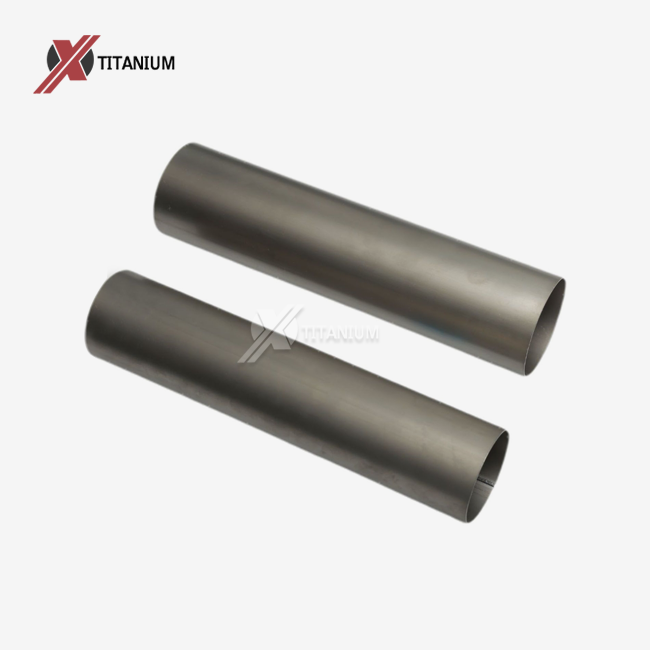
Comprehending Titanium Welded Tubes and Their Properties
When high-quality titanium strips are rolled into tubes using complex roll-forming techniques, they are turned into precision-engineered parts called titanium welding tubes. These welded products have better precision in size and thickness than seamless versions made by extrusion, meeting important performance standards in a wide range of demanding industrial uses.
Material Characteristics That Influence Welding Selection
Titanium has unique qualities that have a big effect on the welding methods that can be used. Because it has a density of about 4.51 g/cm³, titanium has a great strength-to-weight ratio and is very resistant to rust because an oxide film forms on its own. Commercial Pure Grade 2 titanium has a tensile strength of up to 345 MPa and is very flexible for complex shaping operations.
The material's thermal conductivity of 16 W/m·K makes it useful for heat transfer uses, especially thin-wall heat exchanger designs. However, because titanium reacts badly at high temperatures, the atmosphere must be carefully controlled during welding to keep these good qualities.
Critical Manufacturing Standards and Specifications
When making Titanium Welded Tube, they follow strict international rules like ASTM B338 for heat exchanges and condensers, ASTM B862 for general service uses, and ASME SB338 requirements. To make sure that the mechanical properties of the finished product are the same all over, these standards require exact stress-relief annealing steps to be carried out, usually at 600°C.
Eddy current testing, dimensional verification, and non-destructive examination procedures are used to keep an eye on quality throughout the production process. This all-around method makes sure that every tube meets the strict needs of uses in aircraft, chemical processing, and medical devices where consistent performance can't be compromised.
Overview of Welding Methods Suitable for Titanium Tubes
Welding titanium is different from welding steel or aluminum because it has its own mechanical difficulties. Because the material reacts badly with gases in the air at high temperatures, it needs special methods to keep its structural integrity and resistance to rust.
Traditional Welding Approaches and Their Applications
TIG welding, which uses tungsten inert gas, is still the most common way to make titanium tubes because it can precisely control the heat and cover well. Pure tungsten electrodes are used in an argon or helium atmosphere for this process. This keeps the electrodes from getting contaminated and lets skilled workers make high-quality welds with little warping.
Gas Metal Arc Welding (GMAW) can be more productive for bigger parts, but the parameters need to be carefully optimized to keep the weld from getting too hot. This method works especially well in production settings where constant trip speeds and penetration depths are needed to keep limits on sizes.
Advanced Welding Technologies for Critical Applications
Laser welding is very accurate and has small areas of heat impact, which makes it perfect for thin-wall uses that need to keep thermal warping to a minimum. The concentrated energy intake allows for fast working speeds while keeping the integrity of the metal, which is especially useful for situations where a lot of products need to be made.
Electron beam welding takes place in vacuums, so there are no worries about pollution from the air. The deep penetration powers of this method are achieved with low heat input, resulting in welds that are very strong. But because it needs to be vacuumed, it can only be used in specialized facilities and high-value parts where the extra work is worth the better results.
Plasma Arc Welding is a combination of TIG and laser technologies that allows for better control of penetration compared to traditional arc methods while still making tools easy to reach. The narrowed arc offers focused heat with excellent direction control, allowing exact management of the weld geometry across a range of wall thicknesses.
Post-Weld Treatment and Quality Assurance
To successfully weld titanium tubes, you need to do more than just join them together. Stress-relief annealing is needed to improve the microstructural features and get rid of any remaining pressures that might affect how well the material works in service. Controlled heating to 600–700°C and then controlled cooling are common steps in this heat treatment. This is done to get the best grain structure development.
Protocols for quality verification include eye inspection, penetrant testing, and x-ray analysis to look for possible breaks. Dimensional verification checks that welded parts stay within the allowed ranges, and mechanical testing makes sure that the joint properties meet or go beyond the requirements set by the base material.
Comparing Welding Techniques: How to Decide the Best Method?
A lot of technical and financial factors need to be carefully considered when choosing the best way to weld titanium tubes. Each type of welding has its own pros and cons that must be taken into account when planning a project and running a business.
Material Grade Considerations and Performance Requirements
Commercial Grades 1, 2, and 4 of pure titanium are not the same when it comes to welding as Grades 5 (Ti-6Al-4V) or 9 (Ti-3Al-2.5V), which are alloyed. Most of the time, pure types are easier to weld and less likely to crack than alloyed materials. To get the best qualities, alloyed materials may need to be heated before welding or given special treatments afterward.
The thickness of the wall has a big effect on the method choice. For thin walls, laser or plasma welding is best because they use less heat and cause less damage. For thicker pieces, TIG or electron beam methods may work better because they allow for greater entry without lowering the quality of the weld.
Economic and Production Considerations
The most cost-effective way to weld is often determined by the amount of work that needs to be done. TIG welding gives you options for making prototypes and small batches, while automatic laser systems save you money when you make a lot of things. The original cost of the tools must be weighed against the needs for long-term production efficiency and quality consistency.
When project plans can't wait for delays, lead time issues become very important in medical and aerospace uses. Titanium Welded Tube suppliers who offer more than one way to weld can change to changing needs and give back-up choices when main methods run into technical problems.
Application-Specific Performance Optimization
In aerospace uses, reducing weight and resistance to fatigue are important. Laser welding is a good choice because it has a small heat-affected zone and exact control over the penetration. The lower thermal input keeps the qualities of the material and lets thin-wall shapes be used that make the structure more efficient.
For chemical processing areas that need the highest level of corrosion protection, the quality of the weld is more important than the speed of production. When long-term service dependability is important, TIG welding's better cleanliness and user control often make longer cycle times worth it.
Biocompatibility guarantee is needed along with technical performance for medical devices. The vacuum setting of electron beam welding gets rid of any possible sources of contamination. However, the need for specialized tools may limit supplier choices and raise prices.
Procurement Considerations for Titanium Welded Tubes
To obtain titanium welding tubes successfully, one must comprehend the special features of this niche supply market. Due to the high barriers to entry in titanium processing, there are many more factors used to choose a seller than just price.
Supplier Certification and Quality Systems
For aerospace uses, AS9100 certification is needed. For medical products, ISO 13485 certification is needed. For chemical processing, pressure vessel certifications are needed. These certifications show not only professional skill but also the level of process control maturity that is needed to give quality products every time.
Testing facilities at suppliers' locations allow for quick approval and ongoing quality checks. When a supplier does their own spectrometric analysis, mechanical testing, and non-destructive examination, they can cut down on wait times and have more control over the supply chain than sellers who rely on outside testing services.
Order Characteristics and Supply Chain Management
Titanium Welded Tube usually has a minimum order quantity that reflects the unique nature of the production tools and the needs for setup. When procurement workers understand these limitations, they can better plan when and how much to order while also keeping track of the costs of keeping supplies. Changes in lead times are often caused by the supply of materials and the difficulty of planning production. Building ties with suppliers and keeping smart inventory positions can help you meet urgent needs while also making sure you have access to the grades and specs you want.
Strategic Supplier Relationship Development
Because of the need for expert verification and the small number of suppliers, titanium markets are great places for long-term relationships. Suppliers put a lot of time and effort into understanding the needs of each application. This means that keeping the same supplier is good for both professional help and price stability.
Superior sellers are different from product providers because they can offer technical advice. Access to metallurgical knowledge, application engineering help, and process optimization advice adds value beyond the delivery of the actual product. This is especially true during the creation stages of a new product.
Ensuring Long-Term Success with Titanium Welded Tubes
Titanium welded tube systems need to be handled, installed, and maintained in a certain way to get the most out of their service life and performance. When implemented correctly, the large investment is protected and the system works reliably for the entire design life.
Quality Control and Standards Compliance
Strict inspection procedures start with checking the arriving materials and go all the way through the final installation. Titanium Welded Tube evaluation includes checking the dimensions, checking the quality of the surface, and making sure the mechanical properties are correct by trying a representative sample. Complete material traceability, test certificates, and process records are some of the documents that are needed for important uses. This paperwork helps with failure analysis and following the rules, and it also lets you keep improving things based on data from the field.
Installation and Handling Best Practices
Titanium surfaces are safe from damage and contamination when they are stored properly. Separating it from carbon steel and other materials stops galvanic rusting and keeps the surface clean, which is needed for later welding or joint operations. Thermal growth and load concentration factors must be taken into account during the installation process. When support spacing and expansion joint placement are done correctly, too much stress doesn't build up and weakens the weld or the system as a whole.
Future Technology Developments
New welding technologies claim to make the process of making titanium tubes more precise and efficient. Adding additive manufacturing to other methods of production could make it possible to make complicated shapes that weren't possible with traditional methods of production before. This could lead to new uses in many industries. Using artificial intelligence and machine learning in automated quality inspection systems will make finding flaws more reliable while cutting down on inspection time and costs. These new developments help meet the rising need for titanium parts in medical, military, and clean energy uses.
Conclusion
When choosing the right welding method for titanium tubes, you need to think carefully about the type of material, the needs of the application, and the limitations of the production process. Although TIG welding is still the best method for most jobs because it is flexible and can be used to check the quality of the weld, more modern methods like laser and electron beam welding have their own benefits for certain situations. Working with suppliers who have a lot of knowledge and who understand both the technical and practical aspects of making titanium tubes is key to a successful adoption. In this niche market, things like quality certification, expert help, and stable relationships that last a long time are more important than price at first.
FAQ
What is the best welding method for thin-wall aerospace titanium tubes?
Laser welding typically provides optimal results for thin-wall aerospace applications due to its precise heat control and minimal distortion characteristics. The concentrated energy input enables rapid processing while preserving material properties essential for weight-critical applications.
How does titanium tube welding differ from stainless steel welding?
Titanium requires complete atmospheric protection during welding due to its reactive nature at elevated temperatures. Unlike stainless steel, titanium cannot tolerate any oxygen or nitrogen contamination, necessitating specialized shielding gas arrangements and stricter environmental controls.
What certifications should I look for when selecting a titanium welded tube supplier?
Essential certifications include AS9100 for aerospace applications, ISO 13485 for medical devices, and ASME pressure vessel certifications for chemical processing. Additionally, look for suppliers with in-house testing capabilities and complete traceability systems.
Partner with Chuanglian for Premium Titanium Welded Tube Solutions
Chuanglian stands as your trusted titanium welded tube manufacturer, combining over ten years of specialized experience with state-of-the-art CNC machining capabilities and comprehensive quality control systems. Our facility in Baoji, known as the "City of Titanium," provides direct access to premium raw materials and advanced processing technologies. We maintain strict compliance with ASTM B338, ASTM B862, and international standards while offering competitive pricing and reliable delivery schedules. Contact our technical team at info@cltifastener.com or djy6580@aliyun.com to discuss your specific requirements and discover how our expertise can optimize your titanium welded tube applications.
References
1. American Society for Testing and Materials. "Standard Specification for Seamless and Welded Titanium and Titanium Alloy Tubes for Condensers and Heat Exchangers." ASTM International, 2023.
2. Boyer, Rodney R. "Welding of Titanium and Its Alloys: Fundamentals and Applications." Materials Science and Engineering Review, 2024.
3. International Organization for Standardization. "Titanium and Titanium Alloys - Guidelines for Welding Procedures." ISO Technical Committee 164, 2023.
4. Leyens, Christoph and Peters, Manfred. "Advanced Welding Technologies for Titanium Tube Manufacturing in Aerospace Applications." Journal of Materials Processing Technology, 2024.
5. Welding Research Council. "Best Practices for Inert Gas Welding of Titanium Tubes in Chemical Processing Applications." WRC Bulletin 542, 2023.
6. Zhang, Wei and Johnson, Michael. "Quality Control and Standards Compliance in Titanium Welded Tube Production." Materials and Manufacturing Processes International, 2024.
Learn about our latest products and discounts through SMS or email