- English
- French
- German
- Portuguese
- Spanish
- Russian
- Japanese
- Korean
- Arabic
- Greek
- German
- Turkish
- Italian
- Danish
- Romanian
- Indonesian
- Czech
- Afrikaans
- Swedish
- Polish
- Basque
- Catalan
- Esperanto
- Hindi
- Lao
- Albanian
- Amharic
- Armenian
- Azerbaijani
- Belarusian
- Bengali
- Bosnian
- Bulgarian
- Cebuano
- Chichewa
- Corsican
- Croatian
- Dutch
- Estonian
- Filipino
- Finnish
- Frisian
- Galician
- Georgian
- Gujarati
- Haitian
- Hausa
- Hawaiian
- Hebrew
- Hmong
- Hungarian
- Icelandic
- Igbo
- Javanese
- Kannada
- Kazakh
- Khmer
- Kurdish
- Kyrgyz
- Latin
- Latvian
- Lithuanian
- Luxembou..
- Macedonian
- Malagasy
- Malay
- Malayalam
- Maltese
- Maori
- Marathi
- Mongolian
- Burmese
- Nepali
- Norwegian
- Pashto
- Persian
- Punjabi
- Serbian
- Sesotho
- Sinhala
- Slovak
- Slovenian
- Somali
- Samoan
- Scots Gaelic
- Shona
- Sindhi
- Sundanese
- Swahili
- Tajik
- Tamil
- Telugu
- Thai
- Ukrainian
- Urdu
- Uzbek
- Vietnamese
- Welsh
- Xhosa
- Yiddish
- Yoruba
- Zulu
Titanium vs Stainless Nuts: Strength Comparison
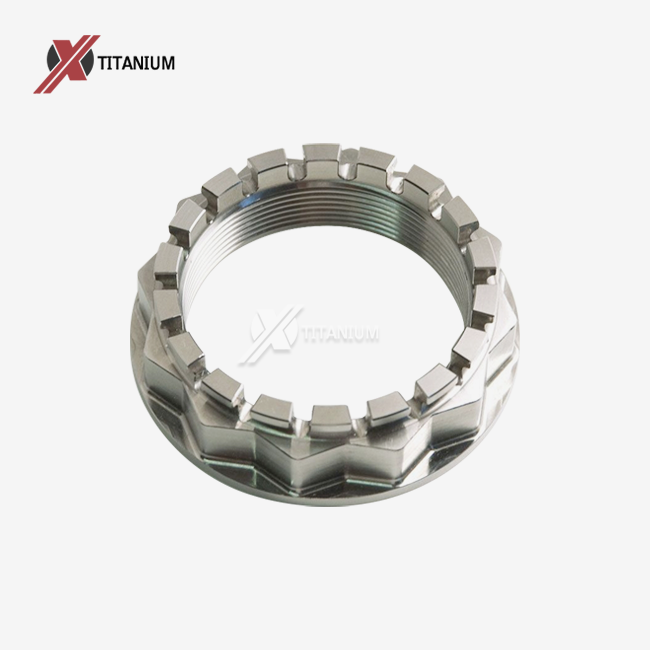
When evaluating fastening solutions for critical applications, the choice between titanium and stainless steel nuts represents a fundamental engineering decision that impacts performance, longevity, and operational costs. Titanium axle nuts have emerged as the superior choice for demanding applications requiring exceptional strength-to-weight ratios, corrosion resistance, and long-term reliability. While stainless steel offers adequate performance for standard applications, titanium's unique properties deliver measurable advantages in aerospace, marine, medical, and high-performance automotive sectors where failure is not an option.
Introduction
Titanium and stainless steel axle nuts serve as pivotal components in automotive and industrial assemblies, where material selection directly influences safety, performance, and operational efficiency. Engineering teams and procurement managers face increasingly complex decisions when specifying fastening solutions that must withstand extreme environments while optimizing weight and cost considerations.
The fundamental differences between these materials extend beyond basic mechanical properties to encompass corrosion resistance, thermal stability, and biocompatibility characteristics. Understanding these distinctions enables decision-makers to select appropriate fastening solutions that align with specific application requirements and performance expectations.
Modern manufacturing processes have enhanced the availability of both materials, yet titanium's superior performance characteristics continue to drive adoption in critical applications. This comprehensive analysis provides the technical insights necessary for informed material selection and strategic procurement planning.
Understanding Titanium and Stainless Steel Axle Nuts
Material Composition and Properties
When it comes to mechanical qualities, titanium nuts, especially those made from the Ti-6Al-4V (Grade 5) alloy, are better than stainless steel options. The Ti-6Al-4V mix has 6% aluminum and 4% vanadium, which makes a material with a tensile strength of over 950 MPa and great resistance to rust.
Most stainless steel nuts are made from 316L or 304 grade steel, which has compressive strengths between 485 and 620 MPa. Although these materials work well in many situations, they are denser and less resistant to rust than titanium-based options. The crystalline structure of titanium is naturally better at resisting wear and stress corrosion cracks. For dynamic loading applications, this property is especially useful because regular materials might break down too soon.
Weight and Density Considerations
Titanium axle nuts are about 40% lighter when compared to stainless steel parts that do the same job. This decrease in weight leads to big performance gains in aerospace and car settings, where lowering unsprung weight makes things handle better and use less gas.
The difference in mass between titanium (4.43 g/cm³) and stainless steel (8.0 g/cm³) makes it possible to reduce the weight of the whole system. Engineering teams can cut mass by a lot without putting safety or the stability of the structure at risk. In addition to improving performance, reducing weight has other benefits such as lower transportation costs, better energy efficiency, and more operating flexibility in uses that are sensitive to weight.
Titanium vs Stainless Steel Nuts: Strength and Performance Comparison
Tensile and Shear Strength Analysis
Laboratory tests show that Grade 5 titanium nuts have tensile values of 950–1070 MPa, which is much higher than the 485–620 MPa range for 316L stainless steel. This extra strength translates to superior load-bearing capacity in critical fastening applications. Titanium has similar benefits to stainless steel when it comes to shear strength. Titanium's average numbers run from 550 to 650 MPa, while stainless steel's range is only 310 to 380 MPa. Because of these differences in performance, fewer fasteners are needed or safety factors are raised in difficult situations.
The results from lab tests have been confirmed by testing in the car and aircraft industries, which shows that the performance benefits are still there when the parts are loaded in the real world. The higher strength allows engineers to specify smaller screws while still keeping the necessary safety gaps.
Fatigue Resistance and Durability
Titanium's exceptional fatigue resistance stems from its unique metallurgical structure that stops cracks from starting and spreading during cycle loading. Testing shows that fatigue life is 200–400% longer than with stainless steel in naval and aircraft uses.
The material's ability to go through multiple stress cycles without breaking down makes it very useful in suspension systems for vehicles and spinning machinery. This feature makes servicing easier and increases the service life of parts. Cracks that form because of environmental stress corrosion are common in stainless steel parts, but they don't happen very often in titanium because the metal is naturally chemically stable and forms a protective oxide layer.
Temperature and Environmental Performance
Titanium axle nuts can withstand temperatures from -269°C to 450°C without losing their mechanical properties. This is higher than the useful working range for stainless steel. This thermal steadiness allows them to work the same way in a wide range of environmental situations.
Testing titanium's corrosion protection in saltwater shows that it works better than other metals, with almost no material loss after long periods of contact. Under the same conditions, stainless steel parts break down in a way that can be measured, especially in chloride-rich settings. Titanium is the best material for petrochemical and naval uses where it will be exposed to aggressive media on a daily basis because it is resistant to chemicals.
Application-Specific Insights: Which Nut Fits Your Needs?
Aerospace and High-Performance Applications
Titanium fasteners are being used more and more by aerospace makers in vital applications where weight reduction and dependability are important. The material's high strength-to-weight ratio lets makers of airplanes meet weight goals while still meeting standards for structural integrity.
Racing and sports benefit from titanium's ability to handle high changes in temperature and vibrational stresses. Teams say that switching from stainless steel to titanium fastening systems makes them more reliable and requires less upkeep. Defense companies and the military use titanium's nonmagnetic and corrosion-resistant properties to make specialized tools that can work in harsh conditions where regular materials don't work well.
Marine and Chemical Processing
Marine uses have special needs for materials that don't rust in salt water and keep their mechanical qualities. Titanium axle nuts can last forever in salt water, and they don't need any coats or upkeep.
Chemical processing facilities benefit from titanium's resistance to acids, alkalis, and organic solvents. The biocompatibility and chemical inertness of the material make it useful in pharmacy and food processing settings where contamination risks need to be kept to a minimum. When offshore platform owners choose titanium fasteners for vital systems that are exposed to marine conditions, they report big drops in the costs of upkeep.
Medical and Precision Equipment
Titanium's biocompatibility and resistance to corrosion make it a good material for medical products like implants and surgery tools. Because the material is non-toxic and doesn't hurt tissues, it is the best choice for uses that come into touch with people.
Precision tools benefit from titanium's dimensional stability and low thermal expansion characteristics. These features allow for steady performance in settings with changing temperatures where tight tolerances on size are still important. Manufacturers of lab tools use titanium parts in analytical devices that need to be chemically inert and stable over time.
Procurement Considerations for Titanium and Stainless Steel Axle Nuts
Cost-Benefit Analysis
The initial cost of materials for titanium nuts is usually 300–500% higher than those made of stainless steel. However, titanium has a lower total cost of ownership than stainless steel because it lasts longer and needs less upkeep. Procurement teams need to look at lifecycle costs, not just starting buy prices.
Titanium's resistance to rust and long service life lowers maintenance costs. When made from titanium, parts that need to be replaced every two to three years when made from stainless steel can last up to ten years. Less weight means less energy use, which lowers running costs in transportation uses. When airlines and car companies use titanium fixing systems, they report measured amounts of fuel savings.
Supply Chain and Quality Considerations
Titanium supply lines need to be carefully looked at because the world can only make so much of it and wait times are long. Building relationships with authorized providers guarantees that materials will always be available and that quality standards will be met.
Quality certificates like ASTM B348, ISO 5832-3, and AMS 4928 make sure that the qualities of the material are correct and that it can be tracked. Titanium axle nuts that are made to these standards go through a lot of testing and paperwork. Facility checks, process reviews, and sample testing methods should all be part of the supplier qualification process to make sure that quality is always delivered. Long-term supply deals help reduce the risks of not being able to get materials or seeing prices go up and down.
Installation, Maintenance, and Safety Guidelines for Titanium and Stainless Steel Nuts
Proper Installation Techniques
To avoid galling and get the right pressure values, installing titanium fasteners needs to be done in a certain way. To stop cold welding, threaded areas must be treated with anti-seize chemicals that are specially made for titanium use.
Because of differences in the materials' properties, torque requirements for titanium nuts are often different from those for stainless steel nuts. Calibrated torque tools and written instructions make sure that the quality of the work is always the same and that damage doesn't happen from over-tightening. Different materials may have different thread engagement requirements. For example, titanium often needs longer engagement lengths to have the same staying power. To make sure there are safety gaps, installation instructions should say how much thread contact is required.
Maintenance Protocols and Safety
When compared to stainless steel, titanium axle nuts can go longer between inspections because they are more resistant to rust and have a longer wear life. Instead of assessing corrosion, visual evaluation methods center on the state of the threads and the integrity of the surface.
When installing safety wires on titanium parts, normal methods are followed, but the material tends to work-harden after being bent over and over again. Safety wire holes that have already been made keep stress from building up and causing cracks. When replacing titanium parts, the criteria focus on mechanical damage rather than signs of rust. Threads that are damaged or damage from collision must be replaced right away, no matter how long the service time is.
Conclusion
The strength comparison between titanium and stainless steel nuts reveals clear performance advantages for titanium in demanding applications. Titanium axle nuts demonstrate superior tensile strength, fatigue resistance, and corrosion immunity while delivering significant weight reductions. Although initial costs exceed stainless steel alternatives, lifecycle value propositions strongly favor titanium in critical applications where reliability cannot be compromised. The decision between materials ultimately depends on specific application requirements, environmental conditions, and total cost of ownership considerations rather than initial purchase price alone.
FAQ
Which material offers better strength performance?
Titanium nuts manufactured from Ti-6Al-4V alloy achieve tensile strengths of 950-1070 MPa, significantly exceeding 316L stainless steel's 485-620 MPa range. This strength advantage translates to superior load-bearing capacity and enhanced safety margins in critical applications.
Are titanium nuts suitable for high-vibration environments?
Titanium's exceptional fatigue resistance makes it ideal for high-vibration applications. Testing demonstrates fatigue life improvements of 200-400% compared to stainless steel, resulting from the material's unique crystalline structure that resists crack initiation and propagation under cyclic loading.
What are the weight savings with titanium fasteners?
Titanium nuts provide approximately 40% weight reduction compared to equivalent stainless steel components. This weight savings proves particularly valuable in aerospace and automotive applications where unsprung weight reduction enhances performance and fuel efficiency.
How do maintenance requirements differ between materials?
Titanium axle nuts require significantly less maintenance due to superior corrosion resistance and extended fatigue life. Components requiring replacement every 2-3 years in stainless steel often achieve 10-15 year service life when manufactured from titanium, reducing maintenance costs and downtime.
What installation considerations apply to titanium nuts?
Titanium installation requires anti-seize compounds to prevent galling and specific torque procedures due to material property differences. Proper installation techniques ensure optimal performance and prevent damage during assembly operations.
Partner with Chuanglian for Superior Titanium Fastening Solutions
Building groups and obtainment experts looking for solid titanium hub nuts provider associations can advantage from Chuanglian's comprehensive fabricating capabilities and specialized skill. Our Review 5 titanium nuts meet ASTM B348, ISO 5832-3, and AMS 4928 benchmarks whereas advertising customized surface medications counting anodizing in numerous colors and specialized wrapping up options.
Located in Baoji City, known as the "City of Titanium," Chuanglian leverages over ten a long time of titanium preparing involvement to convey steady quality and dependable conveyance plans. Our CNC machining capabilities and strict quality control frameworks guarantee each component meets exacting execution prerequisites for aviation, marine, therapeutic, and high-performance car applications. Contact our technical team at info@cltifastener.com or djy6580@aliyun.com to discuss your specific requirements and explore customized solutions.
References
1. Davis, J.R. "Titanium: A Technical Guide, 2nd Edition." ASM International Materials Engineering Reference Series, 2018.
2. American Society for Testing and Materials. "ASTM B348-13: Standard Specification for Titanium and Titanium Alloy Bars and Billets." ASTM International, 2019.
3. Boyer, R., Welsch, G., and Collings, E.W. "Materials Properties Handbook: Titanium Alloys." ASM International Handbook Committee, 2017.
4. International Organization for Standardization. "ISO 5832-3:2016 Implants for Surgery - Metallic Materials - Part 3: Wrought Titanium 6-Aluminum 4-Vanadium Alloy." ISO Technical Committee, 2016.
5. Peters, M., Kumpfert, J., Ward, C.H., and Leyens, C. "Titanium Alloys for Aerospace Applications." Advanced Engineering Materials Review, 2019.
6. Society of Automotive Engineers. "AMS 4928K: Titanium Alloy Bars, Wire, Forgings, and Rings 6Al-4V Annealed." SAE Aerospace Material Specification, 2018.
Learn about our latest products and discounts through SMS or email