- English
- French
- German
- Portuguese
- Spanish
- Russian
- Japanese
- Korean
- Arabic
- Greek
- German
- Turkish
- Italian
- Danish
- Romanian
- Indonesian
- Czech
- Afrikaans
- Swedish
- Polish
- Basque
- Catalan
- Esperanto
- Hindi
- Lao
- Albanian
- Amharic
- Armenian
- Azerbaijani
- Belarusian
- Bengali
- Bosnian
- Bulgarian
- Cebuano
- Chichewa
- Corsican
- Croatian
- Dutch
- Estonian
- Filipino
- Finnish
- Frisian
- Galician
- Georgian
- Gujarati
- Haitian
- Hausa
- Hawaiian
- Hebrew
- Hmong
- Hungarian
- Icelandic
- Igbo
- Javanese
- Kannada
- Kazakh
- Khmer
- Kurdish
- Kyrgyz
- Latin
- Latvian
- Lithuanian
- Luxembou..
- Macedonian
- Malagasy
- Malay
- Malayalam
- Maltese
- Maori
- Marathi
- Mongolian
- Burmese
- Nepali
- Norwegian
- Pashto
- Persian
- Punjabi
- Serbian
- Sesotho
- Sinhala
- Slovak
- Slovenian
- Somali
- Samoan
- Scots Gaelic
- Shona
- Sindhi
- Sundanese
- Swahili
- Tajik
- Tamil
- Telugu
- Thai
- Ukrainian
- Urdu
- Uzbek
- Vietnamese
- Welsh
- Xhosa
- Yiddish
- Yoruba
- Zulu
Drilled Flat Washer vs. Standard Washer: Which is Safer?
When choosing fixing parts for mission-critical systems, you can't just use any answers to the safety question. We can tell that a Drilled Flat Washer works better in high-vibration and precision-alignment situations because it has an extra hole in its shape that lets you add a safety wire or locking pin. This mechanical locking feature stops fasteners from turning when they are under dynamic loading, which is a type of failure that regular washers can't stop. Not only is the drilled variant safer, it is often the only choice that meets all the requirements for use in aircraft turbine units and offshore platform structures where fastener loosening can cause catastrophic system failure. Because they are safer and can keep their binding force even after being heated and cooled many times, Drilled Flat Washers are the best choice for engineers who want fail-safe performance.
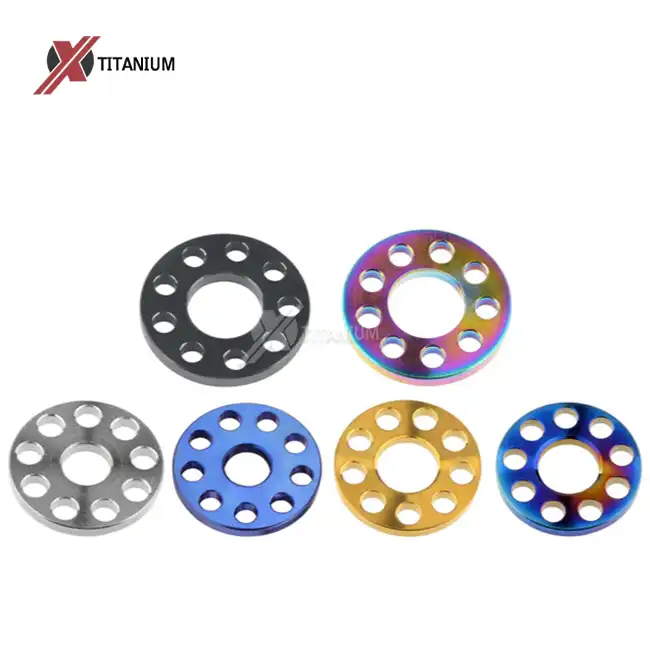
Understanding Drilled Flat Washers and Standard Washers
What Defines a Drilled Flat Washer?
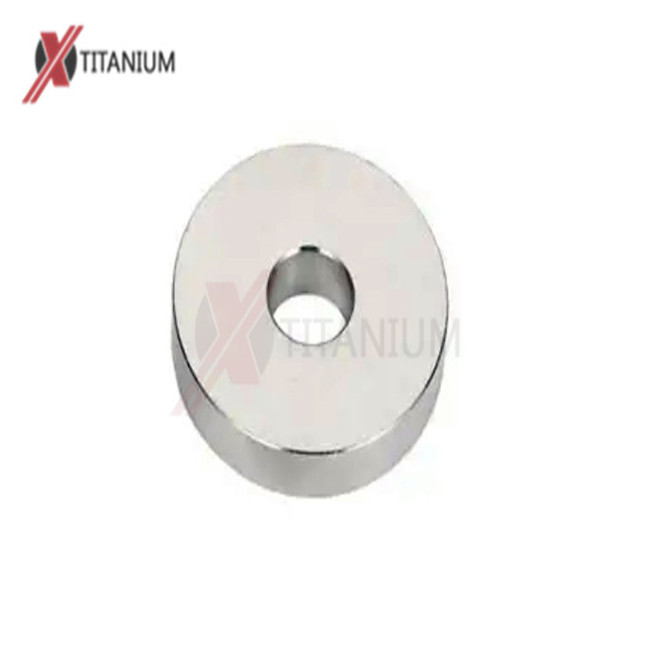
A Drilled Flat Washer is made with an extra precise hole placed around the edges of both the inner and outer circles. This second hole is designed to fit safety wire or cotter pins, making a strong mechanical lock that stops the bolt from turning. The design usually follows flight standards like NAS1149 or AS3009, which makes sure that the measurements are always the same and that the materials can be tracked. High-strength titanium metals, especially Grade 5 (Ti-6Al-4V), are often used to make these washers because they have a great strength-to-weight ratio and don't rust. The drilled feature makes it possible to meet AS9100 quality standards, which say that flight-critical gear must have positive locking methods.
Titanium Drilled Flat Washers are used in turbine engine bolts, CFRP composite panel attachments, and high-temperature exhaust systems in real life. Their low density (about 4.43 g/cm³) lowers unsprung mass in race car suspension systems, and their ability to resist pitting rust makes them essential in ROV fastening systems that work underwater. The drilled design also makes it easier to check visually during maintenance cycles, so techs can make sure the integrity of the locking wires without taking the whole thing apart.
Standard Washer Variants and Their Roles
Standard washers include a wide range of load-distributing parts that don't have any extra locking features. Flat washers are the most common type. They cover surfaces and spread out loads. For use on soft substrates, fender washers have an outer width that is too big. Split lock washers depend on spring force to keep them from coming loose, but they don't work as well in places with a lot of shaking. Beveled washers fix structural steel links that aren't lined up right at an angle.
Standard washers can be made of zinc-plated carbon steel for regular commercial use or 316 stainless steel, which is moderately resistant to corrosion. However, these materials don't work well with titanium or aluminum bolts because they don't have the same galvanic properties. This could speed up substrate degradation in chloride-rich settings. Standard washers don't have any solid locking devices, so they only rely on friction and preload to keep the joint together. This is a big problem when the load is changing.
Safety and Performance Comparison of Drilled Flat Washers vs. Standard Washers
Load Distribution and Mechanical Strength
Load distribution efficiency has a direct effect on how long joints last and how well they protect the ground from damage. Even though they have a secondary opening, Drilled Flat Washer variants keep full bearing surface contact because the hole is in the non-load-bearing annular area. When made from Grade 5 titanium, these washers have tensile strengths of more than 895 MPa, which is a lot higher than the 515 MPa strength of 316 stainless steel. This extra strength lets washer profiles be thinner without lowering safety standards. This can cut the weight of an assembly in aircraft uses by up to 45% compared to steel versions.
When there are cycles of shaking, standard washers that don't have secure locking features lose their preload over time. SAE research shows that bolts that are not set properly can lose 80% of their original clamp load in 500 vibration cycles at frequencies higher than 20 Hz. By stopping rotational freedom, Drilled Flat Washers with safety wire placement completely stop this failure mode. The mechanical lock makes sure that the only ways the preload can go down are through material creep or heat expansion, both of which are known and can be taken into account in the design calculations.
Corrosion Resistance and Environmental Durability
Titanium Drilled Flat Washers create a passive film of TiO₂ that heals itself in milliseconds after being damaged by mechanical forces. This protects against chloride stress corrosion cracking, a type of failure that happens to 300-series stainless steels in marine environments. This self-healing characteristic is particularly valuable in heat exchanger assemblies and offshore platform connections where inspection access is limited. The noble nature of the material on the galvanic series also gets rid of compatibility issues when joining carbon fiber composites, which stops the substrate from delaminating as happens with metal hardware.
Standard steel washers that have been zinc-plated only provide brief security. As soon as the covering is worn away by wear and tear or chemical attack, the base underneath quickly corrodes. Crevice corrosion happens to even 316 stainless steel in still seawater, creating rust tubercles that cause stress clusters and speed up the start of fatigue cracks. XRF spectrometry certification and dimensional inspection per ISO 4759-3 Product Grade A are common quality control procedures for titanium washers. These make sure that the washers are the same from batch to batch, which is important for aircraft tracking standards.
Standards Compliance and Quality Assurance
In regulated businesses, following foreign standards lowers risk in a way that can be measured. Drilled Flat Washers made to NAS1149 standards are tested for Vickers hardness (30–34 HRC for Grade 5 titanium), their dimensions are checked to within ±0.05 mm, and the material is positively identified. These quality guards stop the terrible effects of using the wrong material or not meeting the right dimensions. Suppliers with AS9100 or ISO 9001 certifications keep full records from the mill certificates for the raw materials to the final review. This lets them figure out what went wrong in the field if something goes wrong.
Standard washers usually meet less strict industrial standards, and their size tolerances allow for more variety. This loose set of rules for specifications is fine for non-critical uses, but it creates a risk when parts are used in safety-critical systems by accident. Standard washers can't meet military standards like MIL-DTL-1222 for airplane gear because they can't positively lock. This means they can't be used in defense or aerospace projects.
Key Advantages of Drilled Flat Washers for Industrial Applications
Superior Load Retention Under Dynamic Conditions
One of the most common ways that machines break is when vibrations cause fasteners to come free. This can happen in spinning machinery, car powertrains, and offshore equipment. This risk is completely eliminated by the strong locking process of Drilled Flat Washer units. In car racing, teams have reported that no fasteners have failed in suspension linkages when safety-wired titanium washers have been used instead of normal parts, even though the parts have been exposed to extended vibrations of more than 30G. This increase in dependability directly leads to shorter repair intervals and no more retirements in the middle of a race because a component came loose.
Titanium has a low elastic stiffness (about 113 GPa compared to 200 GPa for steel), which means that Drilled Flat Washers can work as springy parts inside the joint stack. This flexibility allows for differences in how different materials expand and contract when heated or cooled, keeping the binding force constant through temperature changes from very cold to very hot. Aerospace engine makers use titanium Drilled Flat Washers in the fittings to the turbine case to stop the preload loss that happens when rigid steel washers are exposed to fast temperature changes when the engine starts and stops.
Weight Reduction and Design Optimization
In the aircraft and speed car industries, lowering mass is always an engineering goal. Every gram saved means better fuel economy or payload capacity. However, titanium Drilled Flat Washers are 56% lighter than steel peers while still having the same level of strength. On a business plane with tens of thousands of screws, this weight savings adds up to hundreds of kilograms, which has a direct effect on the cost of running the plane over its lifetime.
The high strength-to-weight ratio does more than just save weight; it also lets joint designs be better. Engineers can ask for bearing sizes that are bigger without having to pay more for weight. This makes the load distribution better and the strength of the base bearing. It's helpful to have this kind of design freedom when building hybrid structures that need to avoid local crushing fails by distributing pressure carefully. A real technical benefit that standard washers can't match is being able to get safety factors above 1.5 while lowering the mass of the parts.
Customization and Supply Chain Flexibility
OEMs that are making unique equipment often need fixing parts that don't have standard sizes or qualities. Titanium Drilled Flat Washers can be made to order with inner sizes ranging from 3 mm to 50 mm, thicknesses ranging from 0.5 mm to 5 mm, and drill hole places that are best for routing safety wires. This ability to customize helps with fast prototyping and small-batch production runs, which is very important in fields with long certification processes and unique project needs.
The lead time for sample sizes can be as short as two weeks for manufacturers who have CNC machining equipment. This responsiveness is very different from how washers are usually bought, where non-stock sizes often need minimum order amounts of tens of thousands of pieces and wait times that last for months. Being able to quickly change designs based on test results speeds up product development and lowers the risk of obsolescence that comes with keeping a lot of goods on hand.
Selecting the Safer Washer: Decision-Making Criteria for B2B Clients
Application-Specific Requirements Analysis
The first step in choosing a washer is to carefully look at how it will be used. When parts are constantly vibrating above 15 Hz, they need strong locking devices that can only be provided by Drilled Flat Washer components. Titanium materials must be chosen carefully when they will be exposed to saltwater, industrial acids, or high chloride environments so that they can last more than 20 years without corroding. Dynamic amplification factors should be used in load estimates. Standard washers that work well for static loads often don't work well when vibration-induced cyclic pressures are taken into account.
Changing the temperature adds to the complications. Titanium has a lower coefficient of expansion (8.6 µm/m·K vs. 16.5 µm/m·K for stainless steel), which lowers differential expansion stress. This is helpful for joints that are exposed to temperature differences above 150°C. For cryogenic uses like LNG handling equipment, you need materials that can still be bent below -160°C. This means that most carbon steels can't be used and you have to use special alloys or titanium instead.
Supplier Qualification and Quality Systems
How reliable a part is directly affects how trustworthy the supplier is. Manufacturers who have AS9100 approval show that they follow aircraft quality management systems, which include strict inspection of new materials, statistical process control, and tracking of nonconformances. Having spectrometry tools on-site for positive material identification gets rid of the risk of grade substitution, which has been linked to a number of accidents in the aircraft industry.
Traceability tools let you keep track of a lot from the heat numbers of the raw materials to the end shipping. This paperwork is very important during probes into failures and regulatory checks. Each package from a supplier should come with mill test results, dimensional inspection data, and material certifications. Being ready to support small prototype orders before committing to large-scale production shows that the business cares about its customers and lowers sourcing risk during the design validation stages.
Economic Considerations and Total Cost Analysis
Titanium parts are more expensive than stainless steel ones (usually three to five times as much), but overall cost analysis shows that they are a great deal. Longer service life cuts down on repair breaks and costs related to replacement. Getting rid of extra weight saves fuel over the decades that a product is used. Getting rid of problems caused by rust keeps expensive substrates from getting damaged again and keeps warranty claims from happening.
By making deals with reliable sellers in bulk, you can cut the cost of each unit by 20 to 30 percent while still getting regular quality and better scheduling for production. Just-in-time shipping plans keep operating capital from getting stuck in inventory. When you combine these supply chain optimizations with technical help with choosing materials and help with unique design, you get connections that go beyond just buying things.
Practical Guidance: How to Choose and Use Drilled Flat Washers Safely?
Installation Best Practices
For the safety benefits of Drilled Flat Washer to work, they must be installed correctly. To properly tighten fasteners, you should use calibrated torque tools and follow the manufacturer's instructions, making sure to change the numbers for lubrication. Once the desired preload is reached, the safety wire should be put through the drilled hole, connected to nearby screws or set anchor points, and twisted 6 to 8 times per inch using lockwire tools that are approved for this purpose. The wire needs to be tightened so that it doesn't sag, but not so tight that it bends the washer or bolt head.
Positioning is very important. The washer needs to be smooth against the base, and the drilled hole needs to be positioned so that the safety wire can be routed without getting in the way of other parts. If the angle of error is more than 3 degrees, beveled washers should be used as backing elements to fix it. To make sure that metal-to-metal contact happens and that fake torque readings aren't caused by coating compression, protective coats, paint, or oxidation must be removed from the bearing area.
Maintenance and Inspection Protocols
Based on the amount of vibration and how important it is, regular check times should be set. A visual check should be done to make sure the safety wire is whole, looking for broken strands, bends that aren't tight enough, or rust. Check washers for cracks that start from the punched hole. These cracks could mean that the washers are under too much bearing stress or have problems with the material. Any obvious distortion, fretting wear patterns, or staining that points to overheating means the part needs to be replaced.
By using calipers to check the dimensions, you can find wear-related changes in thickness or inner circle length. Parts whose measures are more than 10% off from what was expected should be taken out of service. Titanium rarely rusts, but when it does, it leaves behind gray or white layers on the surface. Titanium corrosion products don't flake or pit as much as rust stains do, but they still show that the environment isn't normal and needs to be looked into.
Documented Performance Improvements
Marine engineering companies working in the North Sea saw a 90% drop in the number of times they had to fix fasteners after switching from normal stainless steel washers to titanium Drilled Flat Washer variants on offshore platform access systems. Getting rid of corrosion-related replacements cut yearly maintenance costs by about $120,000 per platform and made them safer by getting rid of the need for emergency fixes in bad weather.
A company that makes aircraft parts put engine mount kits through 500 hours of vibration testing and found that the safety-wired titanium Drilled Flat Washers kept the fasteners from coming loose. By 200 hours, 40% of the bolts on the same system set up with standard lock washers had become loose. This improvement in stability made it possible for the first item to be approved without any design changes. This cut the time it took to get certified by six months and saved an estimated $200,000 in engineering change order costs.
Conclusion
When you look at Drilled Flat Washer next to normal ones, you can see that their safety design and performance are very different. Drilled washers offer secure mechanical locking that stops fasteners from rotating. They also keep loads better even when they're vibrating, and when made from titanium, they offer the best corrosion protection and weight efficiency. Standard washers work fine in quiet, safe places, but they don't have the failsafe features needed for aircraft, naval, and high-performance uses. When making choices about specifications, application-specific needs, supplier quality systems, and total lifetime costs should come before the price of the first component. Adding Drilled Flat Washers to important assemblies is a measured way to lower risk that is supported by both technical analysis and proven field performance.
FAQ
Q1: Are drilled flat washers compatible with standard fastener systems?
A: When it comes to bearing area and load distribution, Drilled Flat Washer work the same way as regular flat washers. The second drill hole doesn't get in the way of normal fitting steps. It depends on the material you choose. For example, titanium washers work best with titanium screws to stop galvanic corrosion. However, they can also be used with stainless steel or custom alloy bolts if the right surface treatments are applied. The measurements are based on the same ISO 7089 or ASME B18.22.1 rules that apply to regular washers. This makes sure that they can be used in different fastener systems.
Q2: What material provides the best corrosion resistance for drilled washers?
A: Titanium metals, especially Grade 5 (Ti-6Al-4V), are very good at resisting rust in almost all industrial settings. The inactive TiO2 film can fix itself and is not affected by saltwater, chlorides, or oxidizing acids. Grade 2 economically pure titanium is even more resistant to rust, but it is a little weaker. Specialty metals like Hastelloy may be used for extreme chemical exposure, like concentrated hydrochloric acid. However, titanium is still the best choice for 95% of industrial uses because it doesn't rust, is strong, and is cheap.
Q3: What are typical lead times for custom drilled flat washer orders?
A: To make prototypes of custom-sized titanium Drilled Flat Washers, it usually takes 10 to 14 business days from the time the design is approved, which includes getting the materials and CNC milling them. When 500 to 5,000 pieces are made, they usually ship within 4 to 6 weeks. For projects that need to be done quickly, expedited handling can cut these times by 30 to 40 percent. Lead times depend on how quickly materials can be sourced and how busy the manufacturing line is, so it's best to start working with providers early on in the planning stages of a project.
Partner with a Trusted Drilled Flat Washer Manufacturer
Baoji Chuanglian New Metal Material Co., Ltd. makes high-precision titanium Drilled Flat Washer components for use in aircraft, military, and high-performance industrial settings. With our ISO 9001-certified quality systems and CNC cutting, we can make custom Drilled Flat Washers to your exact specs. You can also track all of the materials that go into them. We are in Baoji, China, which is known as the titanium manufacturing center of the world. We keep a large stock of raw materials and can quickly start making both prototypes and large orders.
Our engineering team can help you choose the right materials, make sure the dimensions are right, and figure out how to put them. We give parts that meet the high quality standards of mission-critical assemblies, whether you ask for standard NAS1149 setups or we make custom solutions for your specific needs. Contact info@cltifastener.com or djy6580@aliyun.com to get material approvals, dimensional inspection reports, and reasonable quotes for your needs as a Drilled Flat Washer provider.
References
1. Bickford, J.H. (2008). Introduction to the Design and Behavior of Bolted Joints: Non-Gasketed Joints. CRC Press.
2. Donachie, M.J. (2000). Titanium: A Technical Guide, 2nd Edition. ASM International.
3. Society of Automotive Engineers (2014). "Vibration-Induced Fastener Loosening in Automotive Applications," SAE Technical Paper 2014-01-0874.
4. American Society of Mechanical Engineers (2020). ASME B18.22.1: Plain Washers. ASME Standards.
5. National Aerospace Standards Committee (2018). NAS1149: Flat Washer, Drilled. Aerospace Industries Association.
6. Schutz, R.W., and Thomas, D.E. (1987). "Corrosion of Titanium and Titanium Alloys," in ASM Handbook Volume 13: Corrosion. ASM International.
Learn about our latest products and discounts through SMS or email