- English
- French
- German
- Portuguese
- Spanish
- Russian
- Japanese
- Korean
- Arabic
- Greek
- German
- Turkish
- Italian
- Danish
- Romanian
- Indonesian
- Czech
- Afrikaans
- Swedish
- Polish
- Basque
- Catalan
- Esperanto
- Hindi
- Lao
- Albanian
- Amharic
- Armenian
- Azerbaijani
- Belarusian
- Bengali
- Bosnian
- Bulgarian
- Cebuano
- Chichewa
- Corsican
- Croatian
- Dutch
- Estonian
- Filipino
- Finnish
- Frisian
- Galician
- Georgian
- Gujarati
- Haitian
- Hausa
- Hawaiian
- Hebrew
- Hmong
- Hungarian
- Icelandic
- Igbo
- Javanese
- Kannada
- Kazakh
- Khmer
- Kurdish
- Kyrgyz
- Latin
- Latvian
- Lithuanian
- Luxembou..
- Macedonian
- Malagasy
- Malay
- Malayalam
- Maltese
- Maori
- Marathi
- Mongolian
- Burmese
- Nepali
- Norwegian
- Pashto
- Persian
- Punjabi
- Serbian
- Sesotho
- Sinhala
- Slovak
- Slovenian
- Somali
- Samoan
- Scots Gaelic
- Shona
- Sindhi
- Sundanese
- Swahili
- Tajik
- Tamil
- Telugu
- Thai
- Ukrainian
- Urdu
- Uzbek
- Vietnamese
- Welsh
- Xhosa
- Yiddish
- Yoruba
- Zulu
Titanium vs Stainless Steel: Which One Should You Choose?
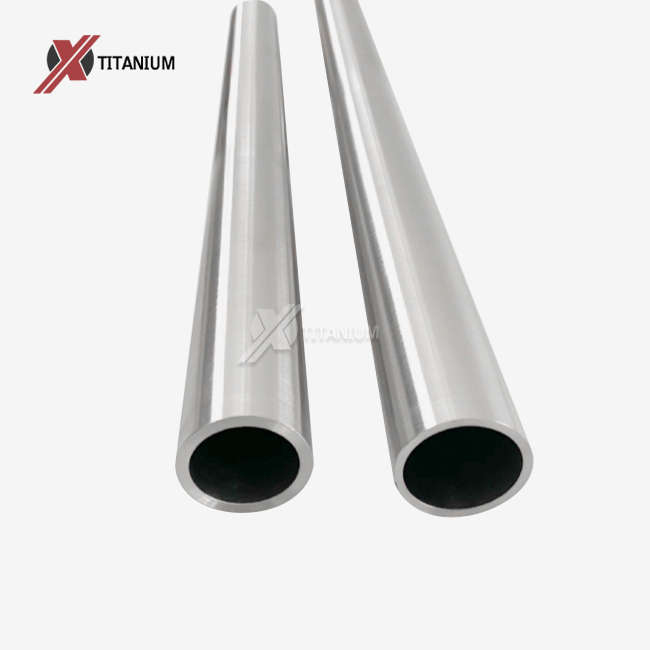
When your engineering project needs to work perfectly in harsh conditions, choosing between titanium alloy pipe and stainless steel tubing is very important. titanium alloy pipe works great in places where stainless steel fails, like in underwater oil shafts that have to deal with sulfide stress cracking, in aircraft hydraulic lines that need to be strong but light, and in chemical heat exchanges that have to work under strong chloride attack. Price isn't the only thing that matters; the choice also depends on the total lifetime value, which means weighing the initial investment against the risks of operating downtime, maintenance needs, and replacement times that can destroy the project's economics.
Understanding the Core Material Properties
The molecular level is where material efficiency starts. Stainless steel's corrosion protection comes mostly from the chromium that forms a passive oxide layer. Common types like 316L have 16–18% chromium, 10–14% nickel, and 2–3% molybdenum. This mixture protects well in slightly corrosive conditions, but it can fail when the chloride content goes above 200 ppm or the working temperature goes above 60°C. In seawater uses, localized pitting starts quickly and usually leads to through-wall failure within 18 to 24 months of constant contact.
Titanium alloy pipe engineering is very different from other types of pipe engineering. Titanium, 6% aluminum, and 4% vanadium are mixed in Grade 5 (Ti-6Al-4V), which makes a dual-phase microstructure with a tensile strength of over 900 MPa and a density of only 4.43 g/cm³, which is about 60% lighter than steel. Grade 9 (Ti-3Al-2.5V) is better at being cold shaped for complicated routing shapes without lowering its resistance to rust. Stress corrosion cracking caused by chloride can't happen at all because a solid layer of titanium dioxide forms on the surface on its own. This is true even in concentrated brine solutions at high temperatures.
Chemical Composition and Grade Classification
Pure titanium that is sold in stores has between 99.2% and 99.7% titanium and small amounts of air, iron, and nitrogen. By alloying, these basic qualities are changed into solutions that are tailored to a specific purpose. Alpha alloys, such as Ti-5Al-2.5Sn, can be welded and are tough even at -253°C, which is why they are essential for systems that move liquid natural gas. Beta metals with molybdenum and vanadium are the strongest, but they need to be carefully heated and cooled before they can be used. Most business uses alpha-beta metals because they are easy to work with and have good mechanical properties.
There are three types of stainless steel: austenitic (300 series), ferritic (400 series), and duplex. Austenitic 316L is most commonly used in chemical processes because it is corrosion-resistant and easy to shape. Duplex types, such as 2205, are stronger and can handle more chloride. But even the best grades of stainless steel can't match titanium alloy pipe resistance to certain types of failure, such as hydrogen embrittlement in sour gas service.
Mechanical Strength and Structural Integrity
Tensile strength isn't the only thing that shows how well something works. Grade 5 titanium alloy pipe has a yield strength of about 880 MPa and an extension of more than 10%. This lets thin-wall designs be used, which make the system 40–50% lighter than with schedule 40 stainless steel. This strength-to-weight advantage directly leads to less structural loading in offshore bases and less fuel use in airplane hydraulic systems.
In settings with cyclic stress, fatigue resistance is very important. Titanium has a higher fatigue limit than stainless steel—about 50% of ultimate tensile strength compared to 35% for stainless steel—which makes parts last longer in places where vibrations are common, like turbine bypass pipes. Titanium alloy pipe metals stay the same size at high temperatures because they don't creep, while stainless steel would gradually change shape under long-term stress.
Evaluating Performance in Industrial Applications
The theory comes to life when the things are put to use in real life. We look at performance results that have already been recorded in tough industry areas where choosing the right materials has a direct effect on keeping operations running.
Aerospace Hydraulic Systems
Hydraulic systems in airplanes work at 3,000 to 5,000 PSI, and the temperature can range from -54°C at high altitude to 200°C near the engines. Less weight directly leads to better fuel efficiency—every kilogram saved saves commercial airplanes about $3,000 in fuel costs over their lives. For these systems, major airframe makers started using Grade 9 titanium alloy pipe many years ago. Some setups have been in use for over 30 years without being replaced.
titanium alloy pipe tubing was found to be 682 kg lighter than stainless steel systems that were used for the same hydraulic flow on the Boeing 787. This reduction in weight made it possible to carry 2,840 kg more or go 185 nautical miles farther. The extra cost of materials was paid for by savings on fuel alone in the first 18 months of running.
Offshore Oil and Gas Infrastructure
Subsea production systems may be exposed to the harshest rusting conditions that man-made buildings can handle. There are 19,000 parts per million of chloride in seawater, carbon dioxide dissolved in water makes it acidic (pH = 4-5), and high levels of hydrogen sulfide in sour gas fields cause catastrophic cracking. In these situations, stainless steel umbilical tube usually breaks after 3 to 7 years, needing to be replaced completely, which costs $15 to $40 million per surgery.
A company in the North Sea replaced production shafts with Grade 7 titanium alloy pipe that contains palladium to make it more resistant to crevice rust. After 12 years of constant service in seawater at 95°C with occasional exposure to hydrogen sulfide, the check showed that there were no pits, no measured loss of wall thickness, and the full mechanical properties had been retained. The work is still being used; it's getting close to 20 years old and is expected to last longer than 40 years.
Chemical Process Heat Exchangers
In the process of making pure terephthalic acid, acetic acid, terephthalic acid, and a bromide catalyst are heated to 250°C and come into contact with heat exchanger tubing. The first plant designs that used 316L stainless steel had tubes break every 14 to 18 months, which meant that the whole group had to be replaced. Changeouts caused an average of 8–12 days of lost production each year, which cost $2.3 million in lost production plus $450,000 in new materials and labor.
Failures caused by rust were stopped when seamless Grade 2 commercially pure titanium alloy pipe tubing was used. The same heat exchanger bundles have been used for more than 15 years without being replaced. Regular checks have shown that the surface conditions are mostly the same as when they were first installed. The 240% rise in capital costs was paid for within 32 months by cutting down on downtime and repair costs.
Cost and Procurement Considerations for B2B Clients
The total cost of ownership over the lifetime of a component is included in financial analysis, not just the buying price. Purchasing managers have to look at things like the cost of materials, the skills of suppliers, the variability of wait times, and the framework for quality assurance.
Pricing Dynamics and Budget Planning
Titanium alloy pipe usually costs 3–8 times more per kilogram than stainless steel that is the same size and quality. The exact price depends on the grade, the amount, and the size requirements. Due to the difficulty of making, Grade 9 seamless tubes with smaller sizes (6–25 mm OD) costs more. The price differences aren't as big for welded pipe with a diameter of more than 100 mm. As of right now, the price of Grade 5 seamless pipe on the market is between $45 and $65 per kilogram for small orders. Discounts are possible for orders over 500 kg.
Budget planning should take lifetime economics into account instead of just focused on the original capital outlay. A chemical company looked at the differences between titanium alloy pipe and stainless steel for the pipes inside reactor vessels. They found that even though titanium was 380% more expensive, the total cost of ownership for the titanium system was 23% lower over 20 years. Money saved by not having to repair things as often, spending less on upkeep, and not having to stop production.
Lead Times and Supply Chain Reliability
Stainless steel pipe can be made in a lot of different sizes, and shipping times are usually between 4 and 8 weeks for normal sizes. titanium alloy pipe specialized production base is mostly concentrated in a few places, mostly China, Russia, and the US. Lead times for making titanium alloy pipe range from 8 to 16 weeks for normal grades and sizes, and from 20 to 26 weeks for special sizes or alloys that aren't used very often.
As part of evaluating a supplier, you should check their industrial certifications, such as AS9100 for aircraft uses and ISO 9001 for general quality management, as well as their ability to test specific materials. We keep a specialized inventory of titanium billets at our Baoji plant, which cuts down on wait times for grades that are often asked for. Our production method includes cold rolling, hot rolling, annealing, and pickling steps. These allow us to deliver finished pipes with exact dimensions and surface finishes that can be bright polished, pickled, or sanded, depending on what the customer wants.
Quality Assurance and Testing Protocols
Material tracking is very important when parts are used in safety-critical situations. Every batch of titanium alloy pipe we make is tested for toughness, bendability, hydraulic pressure, and a full chemical analysis that meets ASTM B338, ASTM B861, and ISO 5832-2 standards. Mill test results show the structure of the grains, their mechanical qualities, and how well they meet certain composition ranges for elements like oxygen, aluminum, vanadium, iron, and impurities in the interstices.
Material guarantees are also given by suppliers of stainless steel, though because 316L is used so often, control isn't always as strict. Specifications for buying things should clearly say that they need to be tested for good material identification, dimensions, and pressure at 1.5 times the highest allowed working pressure. Third-party inspection services can make sure that compliance is met before a package goes out, which lowers the chance that non-compliant material will get to your location.
Making the Right Choice: Decision-Support Framework for Procurement Managers
Structured decision technique uses objective criteria evaluation instead of emotional opinion. This framework helps buying teams choose materials in a way that fits the needs of the project and the level of risk that the company is willing to take.
Defining Project-Specific Requirements
Start by writing down the conditions that will affect how well the material works. These should include the highest and lowest temperatures, the maximum and minimum pressures inside, the contact to the outside environment, the fluid chemistry (including pH and salt content), and how long you expect it to last. In aerospace uses, reducing weight and resistance to wear are very important. Chemical handling focuses on resistance to corrosion and safety at high temperatures. Marine engineering needs to be able to handle saltwater and biofouling.
Material choices are often based on how much they weigh. Find the difference in mass between the titanium alloy pipe and the stainless steel for the way your pipes are going to be shaped. Titanium's higher density can be economically justified even at a higher price if it leads to measurable practical benefits like better car economy, less structural loading, or higher payload capacity.
Corrosion Environment Assessment
The key level for stainless steel to work is its chloride content. When temperatures are mild and ppm levels are below 200, austenitic steel works well. If the chloride level goes above 500 ppm, especially if the temperature is above 40°C, there is a high chance of localized rust that quickly leads to failure. titanium alloy pipe is completely resistant to all concentrations of chloride. It stays strong in salty solutions that are fully saturated for weeks, while stainless steel breaks down in just a few weeks.
Extreme pH levels also help the titanium alloy pipe to be chosen. Strong acids below pH 3 and alkaline solutions above pH 11 can damage the inactive layer of stainless steel, which can lead to general rust or intergranular attack. Titanium that is grade 2 and sold in stores can stand up to strong hydrochloric acid, sulfuric acid, and caustic liquids that would dissolve stainless steel. Hydrofluoric acid and strong reducing acids are the only ones where neither material works well enough without special coats.
Decision Matrix Application
Construct a weighted scoring matrix incorporating performance criteria relevant to your application. Assign relative importance weights based on project priorities, then score each material option objectively. Sample criteria include: corrosion resistance (weight 30%), mechanical strength (20%), weight constraints (15%), initial cost (15%), maintenance requirements (10%), supplier reliability (5%), and lead time compatibility (5%).
titanium alloy pipe usually gets the best grades for resistance to rust, strength-to-weight ratio, and sturdiness over time. Stainless steel has benefits in terms of starting cost, supplier access, and how easy it is to make. Instead of making assumptions about what is more or less important, the weighted total shows you which material fits your project needs the best.
Conclusion
The choice of material affects the results of an industrial project in many ways, including how reliable it is, how much upkeep it needs, how much it costs over its lifetime, and the safety limits. Titanium alloy pipe has unbeatable performance when it comes to resistance to rust, weight reduction, and long service life. Stainless steel is still a good choice for moderate-duty jobs where the environment doesn't change much and there aren't many other materials that can be used. To be successful at procurement, you need to look at more than just prices. You need to look at the total cost of ownership, the supplier's skills, and the long-term effects on operations. Strategic material choices made during the planning part of a project keep it from failing in ways that cost a lot of money later on.
FAQ
What makes Grade 5 titanium different from Grade 9 for pipe applications?
Grade 5 (Ti-6Al-4V) is the strongest; its tensile strength is about 900 MPa, which makes it perfect for high-pressure systems used in aircraft structures. Grade 9 (Ti-3Al-2.5V) is better at being cold formed, so it can be bent in complex ways without having to be heated first. It also has great resistance to rust. Because Grade 9 is about 15% cheaper than Grade 5, it is the best choice for hydraulic tubing where formability is more important than pure strength.
Can titanium alloy pipe be welded to stainless steel components?
When you directly join titanium alloy pipe and stainless steel together, you make intermetallic mixtures that are weak and break easily when stressed. For example, explosion bonding or mechanical coupling with dissimilar metal separation are specific methods that are needed for transition joints. To keep compatibility issues to a minimum, most system designs keep the same material throughout the pressure border parts.
How does delivery time compare between titanium and stainless steel suppliers?
Most providers can ship standard stainless steel pipe in 4 to 8 weeks. It takes 8 to 16 weeks to get standard-sized titanium alloy pipe in popular grades like Grade 2 or Grade 5. Custom metals or shapes that aren't common may take 20 weeks or more. Working with makers that keep inventory on hand, like our Baoji plant, can cut down on lead times for options that are asked for a lot.
Partner with Chuanglian for Your Titanium Alloy Pipe Requirements
Choosing the right titanium alloy pipe supplier has a direct effect on the time it takes to finish the project, the quality of the results, and the security of your long-term relationship. The Baoji Chuanglian New Metal Material Co., Ltd. has been handling titanium for more than ten years and has a wide range of manufacturing skills, from choosing the raw materials to checking the finished products. Our plant in Baoji, which is known around the world as the "City of Titanium," gives us direct access to high-quality titanium billets and a full range of manufacturing skills. titanium alloy pipe in grades Ti-6Al-4V, Ti-5Al-2.5Sn, and Ti-6Al-2Sn-4Zr-6Mo is made by us.
The sizes range from 6mm to 200mm, and they are approved to meet ASTM B338, ASTM B861, and ISO 5832-2 standards. Each package comes with full mill test records that show that the materials were hardened, bent, and checked for hydrostatic pressure. Get in touch with our expert team at info@cltifastener.com or djy6580@aliyun.com to talk about your needs with a qualified titanium alloy pipe source who knows what is needed in marine engineering, chemical processing, and aerospace.
References
1. Boyer, R., Welsch, G., & Collings, E.W. (1994). Materials Properties Handbook: Titanium Alloys. ASM International, Materials Park, Ohio.
2. Schutz, R.W. & Watkins, H.B. (1998). "Recent Developments in Titanium Alloy Application in the Energy Industry." Materials Science and Engineering A, Volume 243, Issues 1-2, Pages 305-315.
3. American Society for Testing and Materials. (2020). ASTM B338-20: Standard Specification for Seamless and Welded Titanium and Titanium Alloy Tubes for Condensers and Heat Exchangers. ASTM International, West Conshohocken, Pennsylvania.
4. Peters, M., Kumpfert, J., Ward, C.H., & Leyens, C. (2003). "Titanium Alloys for Aerospace Applications." Advanced Engineering Materials, Volume 5, Issue 6, Pages 419-427.
5. Sedriks, A.J. (1996). Corrosion of Stainless Steels, Second Edition. John Wiley & Sons, New York.
6. Donachie, M.J. (2000). Titanium: A Technical Guide, Second Edition. ASM International, Materials Park, Ohio.
_1751274537597.webp)
Learn about our latest products and discounts through SMS or email