- English
- French
- German
- Portuguese
- Spanish
- Russian
- Japanese
- Korean
- Arabic
- Greek
- German
- Turkish
- Italian
- Danish
- Romanian
- Indonesian
- Czech
- Afrikaans
- Swedish
- Polish
- Basque
- Catalan
- Esperanto
- Hindi
- Lao
- Albanian
- Amharic
- Armenian
- Azerbaijani
- Belarusian
- Bengali
- Bosnian
- Bulgarian
- Cebuano
- Chichewa
- Corsican
- Croatian
- Dutch
- Estonian
- Filipino
- Finnish
- Frisian
- Galician
- Georgian
- Gujarati
- Haitian
- Hausa
- Hawaiian
- Hebrew
- Hmong
- Hungarian
- Icelandic
- Igbo
- Javanese
- Kannada
- Kazakh
- Khmer
- Kurdish
- Kyrgyz
- Latin
- Latvian
- Lithuanian
- Luxembou..
- Macedonian
- Malagasy
- Malay
- Malayalam
- Maltese
- Maori
- Marathi
- Mongolian
- Burmese
- Nepali
- Norwegian
- Pashto
- Persian
- Punjabi
- Serbian
- Sesotho
- Sinhala
- Slovak
- Slovenian
- Somali
- Samoan
- Scots Gaelic
- Shona
- Sindhi
- Sundanese
- Swahili
- Tajik
- Tamil
- Telugu
- Thai
- Ukrainian
- Urdu
- Uzbek
- Vietnamese
- Welsh
- Xhosa
- Yiddish
- Yoruba
- Zulu
Essential Tips for Sourcing Titanium Jam Nuts
To find high-quality titanium jam nuts, you need to know what makes them special, find dependable sources, and use smart purchasing methods. These special low-profile fasteners are needed for aircraft, marine, and high-performance uses because they are very strong for their weight and don't rust. To find good suppliers, you need to look at the grades of the materials, make sure the suppliers are certified, and build long-term relationships with companies that know how important it is to have fine fitting parts in tough industrial settings.
Understanding Titanium Jam Nuts – Key Properties and Benefits
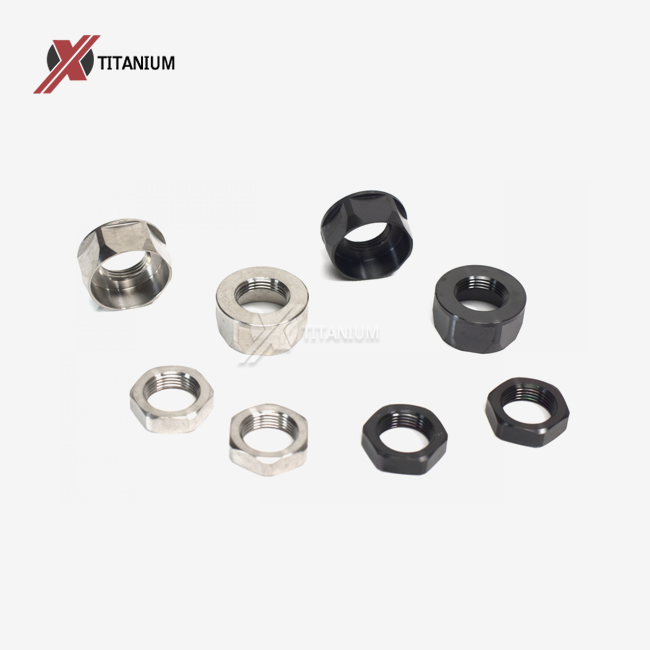
Titanium jam nuts are a special kind of fastener that is made to work in places where regular steel fasteners don't work well. These low-profile hexagonal nuts are made from high-quality titanium metals and can be used as both secondary locking devices and space-saving fasteners in systems with limited clearance.
Material Composition and Grades
Most of the time, Grade 2 commercially pure titanium and Grade 5 Ti-6Al-4V metal are used to make fine titanium jam nuts. Grade 2 is good at resisting rust and being shaped, so it can be used in naval and chemical processing settings. But Grade 5 titanium has better mechanical properties and a Rockwell C30 hardness grade. It is very strong and can be used in aircraft and racing where resistance to vibration is important.
The chemical make-up of Ti-6Al-4V is 6% aluminum and 4% vanadium. This makes a material with a tensile strength of about 130,000 psi while still being very light, which is what makes titanium so valuable. This mix makes a strength-to-weight ratio that is about 40% higher than steel. This lets engineers lower the overall weight of a unit without affecting its strength.
Performance Characteristics in Extreme Environments
Titanium jam nuts work great in places where steel screws would break down quickly because of corrosion. They are very resistant to seawater, acids, and industrial chemicals because they make a protective oxide layer that fixes itself when it gets broken. Because they don't rust, these materials are essential for chemical processing plants, offshore platforms, and underwater equipment that can't be easily accessed for upkeep.
Stability at room temperature is another important benefit. Aluminum screws lose their strength when they get hot, but titanium stays the same mechanical qualities at a lot of different temperatures. This temperature stability is very important for exhaust systems in cars, engine parts in spacecraft, and heat exchanges in factories that use heat often.
Comparative Analysis Against Alternative Materials
Several performance measures clearly show that titanium jam nuts are better than traditional binding materials. Stainless steel versions are about 75% heavier and have lower wear resistance under repetitive loads, but they are better at resisting corrosion. Even though aluminum options are light, they don't have the mechanical power needed for high-stress situations and can rust when mixed with metals that aren't the same.
In harsh conditions, brass and bronze jam nuts, which are often used in naval settings, can lose their zinc and crack from stress corrosion. Even though nylon lock nuts are good at stopping vibrations, they can't handle the high and low temperatures and chemicals that are common in industrial settings. Because of these problems, titanium screws are more expensive, even though they last longer and are more valuable overall.
How to Choose the Right Titanium Jam Nut for Your Needs?
To choose the right titanium jam nuts, you need to carefully look at their technical specs, the surroundings, and the needs of the application. As part of the decision-making process, performance traits are weighed against costs, and industry norms and certifications must be followed.
Technical Specification Requirements
Thread specs are the most important thing to look at when choosing a jam nut. Metric threads (M3 through M36), UNC (Unified National Coarse), and UNF (Unified National Fine) types are all standard choices. Custom thread sizes are available for specific uses where normal screws can't meet the engagement or clearance needs.
When making precision parts, where tolerances add up and affect how they work, accuracy in the dimensions becomes very important. When compared to made options, CNC machined titanium jam nuts are more consistent in size, so they fit and work well across production batches. The hexagonal drive design needs to be able to fit standard tools and have enough grip area for applying the right amount of force.
Material Grade Selection Strategy
The choice of grade relies on how well technical needs and environmental concerns are balanced. Grade 2 titanium is good for things like naval rigging gear and chemical processing equipment where resistance to corrosion is more important than ultimate strength. Because Grade 2 is not as hard, there is less chance of thread galling when it is being installed or taken off.
When maximum strength is needed, Grade 5 Ti-6Al-4V is a must. This is especially true in aircraft situations where safety is paramount. Grade 5 has become age-hardened, which makes it more resistant to fatigue under cyclic loads. This makes it perfect for engine bearings, landing gear parts, and structural sections that are vibrated.
Surface Treatment and Finishing Options
Surface processes have a big effect on how well titanium jam nuts work and how they look. Polished finishes make the surface smoother, which lowers the amount of stress that could cause wear cracks. Anodizing makes controlled metal layers that make things more resistant to rust and give them unique colors that make them easy to find in an assembly.
Specialized surface processes, such as nitriding, make the surface harder, which reduces wear in situations where parts are put together and taken apart a lot. Color choices like natural titanium, gold, blue, green, purple, black, and rainbow finishes make it easier to find parts and improve the look of uses that people will see. The right surface treatment is chosen based on how the surface will be used, how it will be exposed to the surroundings, and personal taste.
Sourcing Strategies for Titanium Jam Nuts: Finding Reliable Suppliers
To make good buying plans for titanium jam nuts, you need to know how the global supply chain works, check out the skills of potential suppliers, and form relationships that guarantee consistent quality and delivery performance. Because processing titanium is so specialized, there aren't many qualified suppliers. This makes choosing the right seller a very important part of a successful purchase.
Geographic Distribution and Manufacturing Hubs
Most of the places that make titanium fasteners are in areas that already have strong aircraft and chemical processing businesses. The United States still has a lot of production capacity, especially for aerospace-grade screws that need to be subject to strict quality rules and have paperwork showing where they came from. European providers often focus on marine and offshore uses and have decades of experience dealing with problems that come up in harsh environments.
China has become a major center for making titanium parts because it has low prices and a system for keeping quality standards called ISO approval programs. The many titanium mining plants in China's Shaanxi province, especially around Baoji City, which is known as the "City of Titanium," make it easy to get raw materials and skilled processing help.
Supplier Qualification Criteria
Quality management methods are the basis for finding titanium fasteners with confidence. AS9100 certification shows compliance in the aerospace business, while ISO 9001 certification shows competence in quality control in general. ISO 13485 approval is needed for medical devices to make sure they are biocompatible and follow the rules for inserted devices.
Certain technical standards must be met by the manufacturing skills. CNC cutting makes sure that the dimensions are correct and the surface is smooth, and heat treatment facilities make sure that the metal is properly conditioned. Spectrometers for checking the material and coordinate measuring machines for checking the dimensions are examples of testing and inspection equipment that shows a strong commitment to quality assurance.
Supplier Verification and Due Diligence
To establish a supplier's trustworthiness, you need to look at more than just their licenses and capability statements. Referrals from customers in related fields show how well and quickly something works in the real world. Site audits, which can be done by the company itself or by a third party, check the quality control and production methods.
Because ties between aerospace and industrial supply companies last for a long time, figuring out their financial security becomes even more important. Suppliers who are having money problems might lower the quality of their work or take longer to give it, which could stop important projects from going as planned. Credit reports, yearly financial statements, and study on the image of an industry can help you find possible risks before they affect your buying activities.
Ordering and Procurement Best Practices
Strategic planning, clear communication, and strong quality assurance methods are needed to set up effective buying processes for titanium jam nuts. Because titanium parts are very valuable and are used in very important ways, buying processes and supply chain management need to be very carefully thought out.
Order Planning and Volume Considerations
Accurate demand forecasts based on project timelines and product turnover rates is the first step to good order planning. Titanium parts usually have long lead times, so buying plans need to be planned ahead of time to account for both regular restocking needs and project-specific needs. Economic order amounts need to find a balance between carrying costs and bulk discounts, while also making sure there is enough safety stock in case demand comes up out of the blue.
Small-batch orders usually cost more because of the setup costs and minimum production runs. By combining needs from several projects or teams, you can get volume savings while keeping your inventory levels at an acceptable level. Annual blanket orders with planned drops let suppliers see how much production they have going on and help buyers get good prices.
Communication and Documentation Requirements
Not having clear technology specs can lead to confusion and delivery delays that cost a lot of money. Purchase orders should have clear models, standards for material approval, and conditions for acceptance. To avoid misunderstandings, it's important to be clear about thread specs, dimensional limits, surface finish requirements, and any special testing needs.
For military and medical uses where following the rules is important, traceability paperwork becomes very important. For quality checks and regulatory entries, you need a paper trail that includes material certificates, dimensional inspection records, and chemical makeup analyses. Setting clear standards for paperwork up front keeps the receiving inspection and quality verification processes from being held up.
Risk Management and Contingency Planning
When working with specialized titanium parts, problems in the supply chain can really mess up production plans. Getting backup suppliers, even if they charge more, is a protection policy in case the main source fails. Keeping strategic stock levels of important screws in stock balances the cost of bringing them against the risk of having to shut down production.
Due to the critical nature of many titanium fastener uses, quality slips pose big risks. Problems are found before they get to the production lines by incoming checking processes that check dimensions and test materials. Setting up clear quality deals with providers, which include corrective action plans and cost responsibility matrices, gives you options when quality problems happen.
Conclusion
To find titanium jam nuts that work, you need to take a thorough method that balances technical needs with the realities of the supply chain. Understanding the features of the materials, putting in place strict methods for qualifying suppliers, and keeping up strong quality controls are all ways to make sure that these important fixing parts are always available. Because processing titanium is so specialized, ties with suppliers are very important. Qualified makers have the skills and tools to constantly meet the strict requirements of aerospace, marine, and industrial sectors.
FAQ
Q1: What advantages do titanium jam nuts offer over steel alternatives?
A: Titanium jam nuts are better at resisting rust, can cut weight by up to 40%, and don't wear out easily when loaded and unloaded many times. Their inactive oxide layer keeps them from breaking down in places like seawater, acids, and chemicals where steel screws would break quickly. Because they are strong for their weight, they are important for aerospace uses where saving weight has a direct effect on fuel economy and performance.
Q2: How can I verify the authenticity of titanium jam nuts?
A: Material approval papers, spectrographic analysis, and density tests can all be used to prove that titanium fasteners are real. Good sources give mill certificates that show how the material was made and how it was connected to the original titanium ingot. Visual study of the surface finish and correctness of measurements is another way to tell the difference between real and fake goods.
Q3: What are typical lead times for custom titanium jam nuts?
A: Standard titanium jam nuts take two to four weeks to make and ship, but special designs can take up to eight weeks, based on how complicated they are. Lead times are affected by things like the supply of materials, the needs for cutting, surface treatments, and quality testing methods. Planning buying tasks well ahead of when they are needed helps make sure that things are delivered on time.
Q4: Which titanium grade should I choose for marine applications?
A: For most nautical uses, Grade 2 commercially pure titanium is very resistant to rust. Grade 5 Ti-6Al-4V, on the other hand, is stronger when mechanical loads are high. Both grades are good at resisting corrosion from seawater, but Grade 5 is better for high-performance marine gear and Grade 2 is better for moderate-stress uses.
Partner with Chuanglian for Premium Titanium Jam Nuts Manufacturing
Chuanglian is an expert at using CNC machines to carefully make titanium jam nuts from Grade 2 and Grade 5 materials. They can be fully customized to fit metric, UNC, or UNF thread designs. Our factory in Baoji City has been processing titanium for more than ten years, so we can make parts that meet the needs of aerospace, marine, and industry customers. All of our parts come with full material traceability and quality paperwork.
As a titanium jam nuts seller, we can offer sizes from M3 to M36, special surface treatments like polishing and anodizing, and a wide range of colors, from natural titanium to rainbow finishes. You can email our tech team at info@cltifastener.com or djy6580@aliyun.com to talk about your unique needs and get quotes for your next project.
References
1. Boyer, R.R., "An Overview on the Use of Titanium in the Aerospace Industry," Materials Science and Engineering: A, 2016.
2. Donachie, Matthew J., "Titanium: A Technical Guide, 2nd Edition," ASM International, 2000.
3. Peters, M., et al., "Titanium Alloys for Aerospace Applications," Advanced Engineering Materials, 2003.
4. Rack, H.J. and Qazi, J.I., "Titanium Alloys for Biomedical Applications," Materials Science and Engineering, 2006.
5. Veiga, C., et al., "Properties and Applications of Titanium Alloys: A Brief Review," Reviews on Advanced Materials Science, 2012.
6. Williams, J.C. and Boyer, R.R., "Opportunities and Issues in the Application of Titanium Alloys for Aerospace Components," Metals, 2020.
Learn about our latest products and discounts through SMS or email