- English
- French
- German
- Portuguese
- Spanish
- Russian
- Japanese
- Korean
- Arabic
- Greek
- German
- Turkish
- Italian
- Danish
- Romanian
- Indonesian
- Czech
- Afrikaans
- Swedish
- Polish
- Basque
- Catalan
- Esperanto
- Hindi
- Lao
- Albanian
- Amharic
- Armenian
- Azerbaijani
- Belarusian
- Bengali
- Bosnian
- Bulgarian
- Cebuano
- Chichewa
- Corsican
- Croatian
- Dutch
- Estonian
- Filipino
- Finnish
- Frisian
- Galician
- Georgian
- Gujarati
- Haitian
- Hausa
- Hawaiian
- Hebrew
- Hmong
- Hungarian
- Icelandic
- Igbo
- Javanese
- Kannada
- Kazakh
- Khmer
- Kurdish
- Kyrgyz
- Latin
- Latvian
- Lithuanian
- Luxembou..
- Macedonian
- Malagasy
- Malay
- Malayalam
- Maltese
- Maori
- Marathi
- Mongolian
- Burmese
- Nepali
- Norwegian
- Pashto
- Persian
- Punjabi
- Serbian
- Sesotho
- Sinhala
- Slovak
- Slovenian
- Somali
- Samoan
- Scots Gaelic
- Shona
- Sindhi
- Sundanese
- Swahili
- Tajik
- Tamil
- Telugu
- Thai
- Ukrainian
- Urdu
- Uzbek
- Vietnamese
- Welsh
- Xhosa
- Yiddish
- Yoruba
- Zulu
Gr5 Titanium Brake Caliper Pad Pin vs Stainless Steel: Which Wins?
A Gr5 titanium brake caliper pad pin wins when low weight, corrosion resistance, and premium positioning matter. Stainless steel wins when price, availability, and OEM compliance come first. Grade 5 titanium (Ti-6Al-4V) has a density of about 4.43 g/cm³, which is roughly 40–45% lower than many stainless steels, and it does not rust. Stainless steel costs less, wears well, and often matches the original specification. I wrote this guide for aftermarket brake brands that must choose a material, confirm fit, and control risk before ordering. Below, I compare both options and explain how Chuanglian supports custom orders.
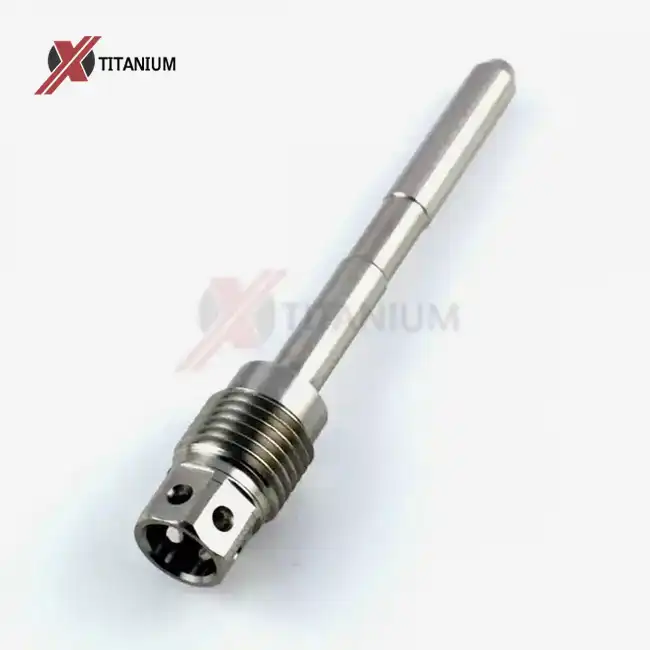
What Is a Gr5 Titanium Brake Caliper Pad Pin?
What the Pin Does Inside the Caliper
The Gr5 titanium brake caliper pad pin lets the brake pads move as they wear down and keeps them in place inside the caliper. It works with the caliper's body, its springs, and its holding clips. Buyers often get brake hardware mixed up, so I make the terms clear. A Gr5 titanium brake caliper pad pin is not the same as a guide pin, an axle fastener, or a bolt for mounting a caliper. Every one of those parts does something different. In many calipers, the pin takes the shear and bearing force off the pad when you stop. To make it easy for the pad to move, the surface must also be clean and smooth. It may take longer to change the pads if the pin is bent, damaged, or stuck. The brakes may also feel bad.
Grade 5 Titanium Composition and Standards
Ti-6Al-4V, which is another name for Grade 5 titanium, is mostly titanium with 6% aluminum and 4% vanadium. Tensile strength must be at least 895 MPa for Grade 5, and yield strength must be at least 828 MPa. From those numbers, it looks like the metal is very strong for how heavy it is. A thin oxide film forms on the surface to protect it from many things, such as road salt and many acidic or alkaline cleaners. I always tell people who buy something to ask for a material certificate. This way, the grade on the paper will match the grade on the bar that goes into the machine shop. Don't forget to ask for the results of the science and tool tests.
Chuanglian Product Overview
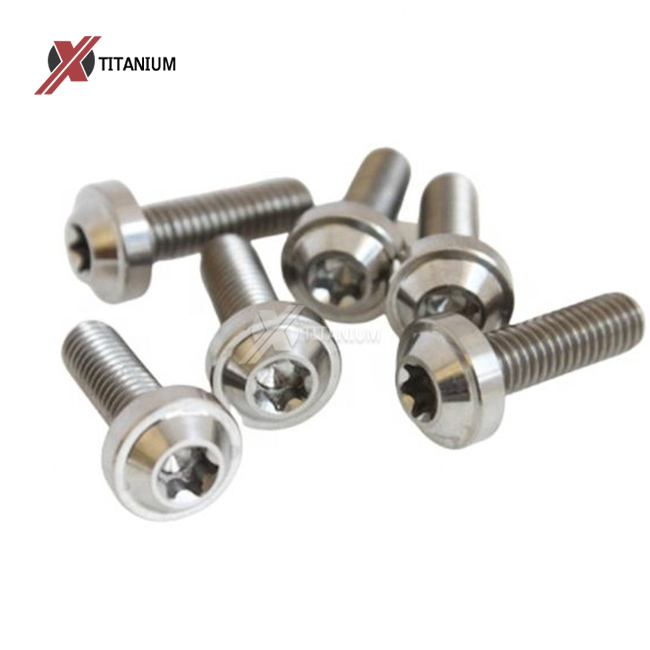
Each Gr5 titanium brake caliper pad pin is made from Ti-6Al-4V by CNC tools. You can change the width and length, and if you need OEM service, you can get it. You can smooth, anodize, or nitride the surface, and it comes in gold, blue, green, purple, black, rainbow, and natural titanium. Also, the pins don't rust much, even in salty and acidic places, and they work well technically. "City of Titanium" is what it's called, and our business is in Baoji City. Titanium is something we've been studying and making for more than ten years. Picking the material, CNC cutting, finishing, and quality control all have their own checks that need to be done.
Gr5 Titanium vs Stainless Steel: Material Property Comparison
Weight and Density
The best thing about titanium is how dense it is. Steels like 304 and 316 weigh about 8 g/cm³, while 17-4 PH weighs about 7.8 g/cm³. Ti-6Al-4V weighs about 4.43 g/cm³. A Gr5 titanium brake caliper pad pin with that shape has about 40–45% less mass because of that gap. One pin isn't very big, so the savings on each part aren't very big. The price is written on a full set of brake gear made of Gr5 titanium brake caliper pad pins, bolts, and other parts. People who are careful to save every gram also use it in race and lightweight builds. The pin size is set by the caliper bore, so they can't just make it thinner to save weight.
Strength, Stiffness, and Wear
ASTM B348 says that Grade 5 titanium must have a yield strength of at least 828 MPa. If you heat 304 stainless steel and let it cool, ASTM A276 says that it must have a minimum yield strength of 205 MPa. Strong grades of stainless steel go much higher, though, so strength alone isn't enough to decide. When it comes to elasticity, titanium is not as strong as austenitic stainless steel (193 GPa vs. 114 GPa). This means that a Gr5 titanium brake caliper pad pin bends more when the same amount of weight is put on it. It also wears down metal faster when it slips. Because of this, it's important to clean the shank and finish it with nitride or anodize. The pad ear slides along that part.
Corrosion, Heat, and Galling
The oxide film on a Gr5 titanium brake caliper pad pin doesn't mix with water, road salt, or wheel cleaner, so it doesn't rust. Plus, many kinds of stainless steel don't rust. But 304 and, less often, 316 can get pits when they touch salty water. Titanium is better at keeping heat in than 304 because it only conducts about 6.7 W/m·K of heat, while 304 conducts 16 W/m·K. In other words, heat moves more slowly along the pin. Titanium can get stuck when you put weight on it. It's called galling. It can be lessened by treating the surface, putting it on carefully, and using an anti-seize compound. Remember to clean and grease the bore of a metal caliper so that galvanic rust doesn't damage it.
Gr5 Titanium Brake Caliper Pad Pin vs Stainless Steel: Which Performs Better?
Why There Is No Universal Winner
Each caliper, rider, and setting has a different effect on performance. Every bike has different needs. A track bike on dry days needs different things than a commuter bike when the roads are salty in the winter. Heat cycles, pad movement, contamination, the quality of the fitting, the state of the retaining clip, and surface wear can all shorten the service life. Grade 5 titanium grades don't all last longer or be harder than stainless steel grades.
In fact, a Gr5 titanium brake caliper pad pin that isn't finished well can break before a stainless steel pin that is. Books on brake engineering say that heat and load are the most important things to consider when designing. So, I think of material choice as a question of how to use something rather than a rating. Every time the pads are changed, no matter what kind of material it is, look at the pin for signs of twisting, pitting, holes, distortion, or extra space.
When Titanium Is the Better Choice
A Gr5 titanium brake caliper pad pin can be used in high-performance motorcycles, sport systems, high-end aftermarket lines, and cars that are used in wet, coastal, salty, or off-road conditions. It's simple to switch pads because the pin doesn't rust into the hole because it is corrosion-proof. The weight savings and colored finishes help a set match, and the titanium bolts help the set stand out on the shelf. It can also be used for small-batch OEM projects that need specific lengths, head styles, or grooves, as well as for spare parts that are no longer being made. It's more important to be able to machine to a model than to have order stock at that point. Update kit makers can market these pins as high-end because riders can easily tell them apart based on color and weight.
When Stainless Steel Makes More Sense
Stainless steel is still the best choice for everyday use on the road, replacement programs with lots of parts, buyers who want to save money, and calipers that say they should be made of stainless steel. It costs less, is easier to find, and works well with slide pads. A weighted decision grid might help you decide what to do. There are systems that give points for things like suitability, safety, weight, service life, price, lead time, and source quality. In that case, give the most weight to functional fit and technical approval. Claim-making and material tastes should be the least important things. It's easy to see why Gr5 titanium brake caliper pad pins cost more per bit if they do better on that test. If stainless steel gets a better score, you should use that caliper.
How to Choose the Right Gr5 Titanium Brake Caliper Pad Pin
Confirm Caliper Fit and Dimensions
Start by figuring out what kind of car it is, what kind of caliper it is, where the brakes are, and what they will be used for. Gr5 titanium brake caliper pad pins for calipers like Brembo, Nissin, and Tokico come in different lengths and widths, so you should sort your list by caliper model before getting a quote. If you want to give a model, CAD file, example, or checked reference number, don't just say the length. Some of the most important details are the working length, diameter, head size, location of the retaining hole, grooves, chamfers, radii, and tolerances. A lot of buyers want H8/f7 room between the pin and the hole. The bottom line should be on the picture. Do a test fit on a real caliper before you place your first order to make sure the fit is right.
Select Surface Treatment and Color
The Gr5 titanium brake caliper pad pin will slide easily, not get stuck, and look good on the shelf if you treat its surface. As you clean, the shank gets smooth, which makes it easy for the pad to move. A process called anodizing gives things their color, and nitriding gives titanium its hard surface layer. This is Chuanglian's Gr5 titanium brake caliper pad pin. It comes in gold, blue, green, purple, black, and rainbow. I believe you should choose the treatment based on what it's meant to do. A race pin might need a surface that is harder to slide on, while a street riders' upgrade kit might do better with color. You should ask your provider which parts of the pin will get the finish so that the finish doesn't change how it fits.
Verify Quality Records
It's important for brake parts to look good and pass paper tests. Ask for a certificate of the material that shows how the chemistry measures up to the standards set by ASTM B348 Grade 5. Also, ask to see a measurement of the shank's diameter, length, head, and the parts that hold it in place. Inspecting the first item in the first batch can help with later sales, and being able to track each batch lets you find the source of any problem. Here at Chuanglian, we check the whole process, from the raw materials to the finished item. If the pin that holds the brake pads in place breaks or bends, it can move the pad out of place. This is the most important thing to do.
Buying Gr5 Titanium Brake Caliper Pad Pins for B2B Procurement
Standard, Replacement, Custom, and OEM Categories
B2B buyers should divide into four groups because they each need a different level of expert control. Plain Gr5 titanium brake caliper pad pins are all the same size and can be used with catalog lines. The first thing that is checked is that the replacement pins will fit in the caliper that is already there. The length, width, head style, and slots of the pins are all made to fit your picture. OEM programs make it necessary to brand, package, and fill out papers.
They can make things in any length, width, or style, and if you need it, they can do OEM service. The price is based on the type of material, how hard it is to work with, how many items are ordered, how the surface is treated, and how the items are packed. Since most multi-model lines only make a few of each size, putting your SKUs into these groups before you ask for quotes will help both of you.
What to Include in Your RFQ
It takes less time to get quotes when you send a full request. I look for these first.
- Drawing, sample, or reference number: Send a drawing, CAD file, sample, or OEM reference with the caliper model and brake position. We check length, diameter, head style, retaining holes, grooves, and the tolerance you need, so the first sample matches your caliper. Clear data here prevents most fit problems before machining starts.
- Finish, color, and branding: State polishing, anodizing, or nitriding, plus a color from natural titanium, gold, blue, green, purple, black, or rainbow. Tell us where the finish must stop on the pin, and add any logo or branding request clearly in writing, so we can confirm what is possible before production starts.
- Quantity, packaging, and delivery: Share your first-order quantity per size, your expected annual demand, packaging needs, inspection documents, and destination. Multi-model lines often have small quantities per size, so a clear forecast lets us plan material and machine time and give a realistic delivery schedule for each size on your list.
A complete package like this removes most back-and-forth and moves your project into sampling faster.
How a Qualified Titanium Supplier Supports the Project
When it comes to projects, a good supplier helps with everything from reading the application to placing repeat orders. The people on our team look over sketches, samples, and reference numbers before they start to machine at Chuanglian. We use twelve CNC tools to make fine parts. Our Gr5 titanium brake caliper pad pins have been bought by well-known companies all over the world and have been used without any problems for many years. We follow local, national, and foreign rules at work, and we're always adding new tools to meet customer wants. We also make titanium fasteners and other parts, so brands can get all the parts they need for upgrade kits in one place. Brands can easily find what they need this way.
Conclusion
A Gr5 titanium brake caliper pad pin and a stainless steel pin both have their best times. Titanium is about 40–45% less dense than steel. It has a minimum yield strength of 828 MPa under ASTM B348, is resistant to corrosion well, and heat moves more slowly. You should treat the surface well, though, so that galling and wear don't happen. Stainless steel usually works just as well, costs less, and is simple to find. The best choice depends on how well the caliper fits, where it will be used, how safe it is, and how much money you have. A weighted comparison that puts fit and engineering approval at the top of the list will give you the most accurate result. Titanium is better when it's wet, salty, race-related, expensive, or on a special kit. On the other hand, stainless steel is better for replacements that are done a lot and for everyday use on the road.
FAQ
Q1: Is a Gr5 titanium brake caliper pad pin strong enough to replace a stainless steel pin?
A: Yes, most of the time. This is because Grade 5 titanium has a minimum yield strength of 828 MPa. Strength is important, but it's not the only thing. Techs must agree to the straight swap and check the measures, load, temperature, and preservation features for the Gr5 titanium brake caliper pad pin.
Q2: Does titanium cause corrosion on an aluminum caliper?
A: Ti-6Al-4V and stainless steel are more valuable than aluminum, so water and salt can damage the caliper near either pin. That chance is smaller if the hole is clean and the pin surface has been worked on.
Q3: Which finishes and colors does Chuanglian offer?
A: We are able to polish, anodize, and nitride your things. You can get them in gold, blue, green, purple, black, rainbow, and natural titanium. You can change the finishes, lengths, and widths.
Q4: What should I send with an inquiry?
A: Send a model, CAD file, example, or reference number, along with the material, finish, number of items, how they should be packed, and where they need to go.
Request a Quote for Gr5 Titanium Brake Caliper Pad Pin from Chuanglian
The Baoji-based company Chuanglian makes Gr5 titanium brake caliper pad pins. They've had twelve CNC machines for more than ten years and have worked with titanium for that long. Once you send us your drawing, CAD file, or example, we'll look at fit, finish, and number. You can email info@cltifastener.com or djy6580@aliyun.com to find out more. Before we start making it, we make sure you know the length, width, color, and finish you want.
References
1. ASTM B348/B348M, Standard Specification for Titanium and Titanium Alloy Bars and Billets, ASTM International, 2019
2. Materials Properties Handbook: Titanium Alloys, ASM International, 1994
3. Titanium: A Technical Guide, 2nd Edition, ASM International, 2000
4. Titanium and Titanium Alloys: Fundamentals and Applications, Wiley-VCH, 2003
5. ASM Handbook, Volume 13B: Corrosion: Materials, ASM International, 2005
6. Brake Design and Safety, 3rd Edition, SAE International, 2011
Learn about our latest products and discounts through SMS or email