- English
- French
- German
- Portuguese
- Spanish
- Russian
- Japanese
- Korean
- Arabic
- Greek
- German
- Turkish
- Italian
- Danish
- Romanian
- Indonesian
- Czech
- Afrikaans
- Swedish
- Polish
- Basque
- Catalan
- Esperanto
- Hindi
- Lao
- Albanian
- Amharic
- Armenian
- Azerbaijani
- Belarusian
- Bengali
- Bosnian
- Bulgarian
- Cebuano
- Chichewa
- Corsican
- Croatian
- Dutch
- Estonian
- Filipino
- Finnish
- Frisian
- Galician
- Georgian
- Gujarati
- Haitian
- Hausa
- Hawaiian
- Hebrew
- Hmong
- Hungarian
- Icelandic
- Igbo
- Javanese
- Kannada
- Kazakh
- Khmer
- Kurdish
- Kyrgyz
- Latin
- Latvian
- Lithuanian
- Luxembou..
- Macedonian
- Malagasy
- Malay
- Malayalam
- Maltese
- Maori
- Marathi
- Mongolian
- Burmese
- Nepali
- Norwegian
- Pashto
- Persian
- Punjabi
- Serbian
- Sesotho
- Sinhala
- Slovak
- Slovenian
- Somali
- Samoan
- Scots Gaelic
- Shona
- Sindhi
- Sundanese
- Swahili
- Tajik
- Tamil
- Telugu
- Thai
- Ukrainian
- Urdu
- Uzbek
- Vietnamese
- Welsh
- Xhosa
- Yiddish
- Yoruba
- Zulu
Top Uses and Benefits of Gr5 Titanium Motorcycle Bolts in Racing
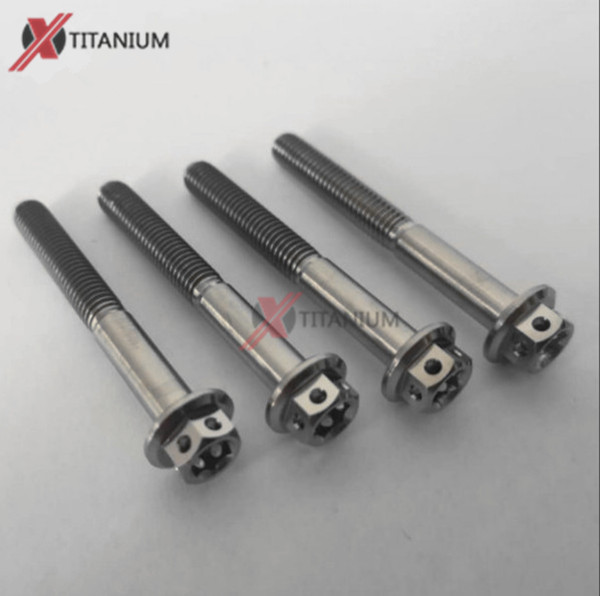
Gr5 titanium motorcycle bolts help racers cut weight, resist corrosion, and keep fasteners strong under vibration and heat. With a density of 4.43 g/cm³, Ti-6Al-4V weighs about 44% less than carbon steel. That makes it a smart choice for fairings, engine covers, brackets, rear sets, and instrument mounts. Anodized colors add a clean brand look, and the material handles repeated race-day removal when you apply anti-seize. Brake, axle, and suspension joints need engineering approval first. Below, I explain the uses, benefits, specifications, and sourcing steps that matter to brands building a titanium fastener line.
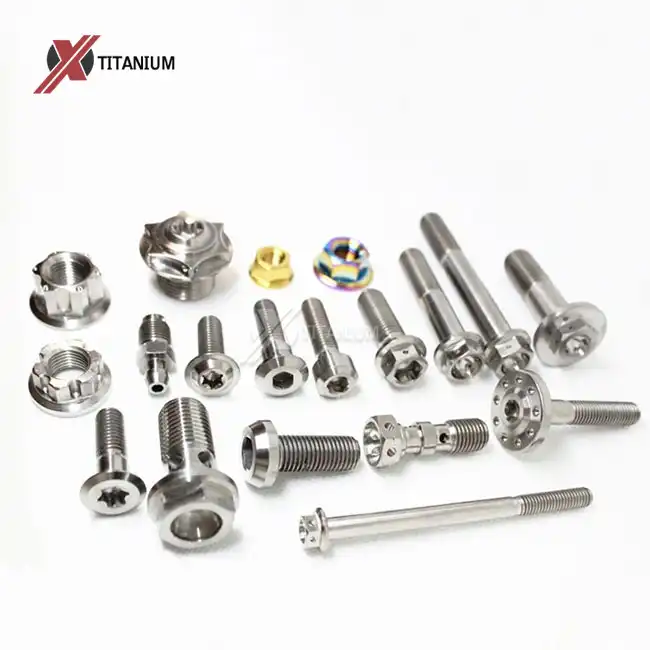
Gr5 Titanium Motorcycle Bolt Benefits for Racing Applications
Weight Savings Where They Matter
Every gram matters on a race bike, and fasteners add up faster than most people think. Steel is about 7.85 g/cm³ dense, while titanium is 4.43 g/cm³ dense. In other words, the same bolt weighs 44% less. A set of bolts for fairings, covers, and brackets saves more weight than a single bolt. In places that aren't sprung or are turning, there is more gain because there is less mass there. This helps the suspension follow the road. That's why I always tell people to compare the old part to the new one before giving them a number.
Corrosion Resistance and Easy Servicing
Rain, cleaning agents, and road salt can all damage race bikes while they are being moved. The bolt doesn't rust like steel does because Ti-6Al-4V makes a thin, stable oxide film. It is important for teams that pull panels every weekend to keep the head clean so that the tool fits well and the thread stays free of rust scale. Gr5 titanium motorcycle bolts can also handle saltwater and a lot of different acids and bases. The fact that it's not magnetic is another thing that some builders like about it.
Strength and Heat Tolerance
ASTM B348 says that Grade 5 bar must have a tensile strength of at least 895 MPa and a yield strength of at least 825 MPa. ISO 898-1 says that class 8.8 steel bolts can't be stronger than 800 MPa. Class 10.9 steel, on the other hand, is stronger at 1,040 MPa. Even at temperatures as high as 400°C (752°F), Ti-6Al-4V stays strong. This is hot enough for most bracket and cover holes. But being strong doesn't make the choice clear on its own. Just as important are how the joints are made and how long they last when they're tired, so I start with the numbers.
Top Uses of Gr5 Titanium Motorcycle Bolts in Racing
Fairing, Windscreen, and Bodywork Hardware
Fixing the gear should be the first thing you do. There isn't much weight on it; the load is low, and the finish looks good because you can see the bolt head. Gr5 titanium motorcycle bolts also don't rust like steel heads do after a few wet rides. We have sizes that start at M6 and can also make them to fit other widths. Keep in mind that you are clamping plastic or carbon panels, so don't just feel how tight they are. To avoid this, read the motorcycle manual and stick to the power number. A washer under the head keeps the panel safe and spreads the load on the clamp.
Engine Covers, Brackets, Rear Sets, and Instrument Mounts
Iron is used to make these parts, which works well since they only have to handle light loads and shocks. Cover bolts, bracket bolts, rear-set hardware, and dash mounts are often taken off, so it's good that they are light and don't rust. Sometimes heads have a flange or a socket. You should match the style and thread pitch of the original head. When nuts are screwed into aluminum cases, titanium is better than aluminum. In other words, the aluminum can rust. An anti-seize screen puts up a wall and stops galling too.
Brakes, Axles, and Suspension: Approval First
Our bolts can be used on brake calipers, rotors, and suspension mounts. Gr5 titanium motorcycle bolts are often used in these places by racers. But over time, these joints are put through a lot of stress. If they break, it could be dangerous. I treat them like engineered parts. Before you swap anything, make sure you know the thread class, preload, and fatigue standards. You can either look at the OEM instructions or talk to a race engineer. Ask the supplier if the threads are rolled or cut. The way they wear over time is different depending on which type they are. Gr5 titanium motorcycle bolts aren't the best choice for these jobs just because they're light or look good.
Gr5 Titanium vs. Steel, Stainless Steel, and Aluminum Motorcycle Bolts
Titanium vs. High-Strength Steel
Steel is still cheaper and stronger than aluminum. It's about 200 GPa, while Ti-6Al-4V's is about 114 GPa. This means that the same load makes a Gr5 titanium motorcycle bolt stretch more. At the lowest level of tensile strength, Class 10.9 steel is also stronger than Gr5 titanium motorcycle bolts. Because of this, I only use high-strength steel on OEM-engineered parts that are going to be loaded with a lot of weight. Gr5 titanium motorcycle bolts are better for places where the load isn't too heavy and the bolt comes off a lot because they are lighter and don't rust.
Titanium vs. Stainless Steel
Many street bikes can use steel nuts because they don't rust and are less expensive. They are about 8 g/cm³ dense, so they are the same weight as carbon steel. By ISO 3506, normal A2-70 steel has a tensile strength of 700 MPa, which is not as strong as Gr5 titanium motorcycle bolts. Steep steel is a good choice if most of your customers ride on the street and are careful with their money. Gr5 titanium motorcycle bolts are a good material for people who want to look classy and lose weight.
Titanium vs. Aluminum
Another fact is that nuts made of metal are even lighter. Metal 7075 is very dense (2.81 g/cm³), but at 570 MPa, it can usually keep its shape. It also wears faster than steel, so hex sockets round off and threads strip after being taken off many times. In other words, metal can only be used for looks and trim. While Gr5 titanium motorcycle bolts cost more, they make the thread stronger and lasts longer at the cost of a little extra weight. Most of the time, Gr5 titanium motorcycle bolts are better for parts that you tighten and remove all season.
Technical Specifications, Selection, and Installation
Specification Checklist
First, the right standard shall be met. Our Gr5 titanium motorcycle bolts are made to a special standard by CNC cutting Ti-6Al-4V. They come in sizes from M6 to M12, and you can also ask for other sizes. You should show the diameter, the thread pitch (fine or coarse), the length, the thread engagement, the type of head and washer, and any safety wire holes on your drawing. The tolerances and thread class should be added to an ASTM B348 composition data certificate that you ask for. That being said, the OEM guidebook or your technical model is always the most important thing. A size chart can help you plan ahead.
Finish and Color Selection
These are the metal colors we offer: natural titanium, gold, blue, green, purple, black, and rainbow. We also polish, anodize, and nitride them. Anodized metal can have different shades because the color is based on how thick the oxide film is. I believe you should agree on a master sample and then use that to compare each lot. It can be less likely to wear down or get galled if the surface is nitrided. Before you order a lot of them, ask your seller how a certain finish changes the way the threads fit. Then, make sure it works on some sample parts.
Installation and Verification
Gr5 titanium motorcycle bolts can get stuck when fitted dry, so clean the threads and hole and then use a good anti-seize. Set the force for threads that have been oiled instead of one that is made from steel. Use safety wire or thread locker if it says to. After that, look at the result. Weigh the old and new parts on a known scale. Check the threads with gages, and after each track practice, keep track of how much they've loosened, how much torque they've kept, and how much the surface has worn down. For each order, write down the lot number to make sure the results are always the same.
Procurement Guide for Global B2B Buyers
Documents and Samples to Request
You should get the same things from all of your suppliers: test results, inspection reports, lot numbers, and material certificates. Ask for samples of something before you buy a lot of it. Then, use your own bikes to test the fit, finish, and thread feel. We can package things one at a time or in bulk, and our MOQ can be changed if the customer wants it. Talk about how to keep your drawings secret before you show them to other people. To make sure that all of our parts and documents are in the right place at Chuanglian, we carefully check everything from the raw materials to the finished goods.
Building a Titanium Line as a Brand
Most of the time, aftermarket brands do best with a few specific kits, like back set hardware, fairing sets, and cover sets. The metal should be the same color as your brand, and you should use your own measurements to back up every weight claim. A range of Gr5 titanium motorcycle bolts will make your brand stand out in a catalog that mostly only has steel ones. If you get titanium parts from a specialized base instead of cutting them locally, the cost per unit may be less. If you compare prices for the same specs, though, you can see how much they really cost.
Why Work With Chuanglian
The place where Chuanglian lives is Baoji. We've been working with and studying titanium on twelve CNC machines for more than ten years. The place is called the "City of Titanium." Gr5 titanium motorcycle bolts from our company are used in medicine, space travel, petrochemicals, the marine industry, and racing. They were bought by well-known businesses from all over the world. There are checks on everything, from the raw materials to the finished result. We can handle one-of-a-kind models, different finish choices, and repeat orders because of that background.
Conclusion
When buyers pick and choose which Gr5 titanium motorcycle bolts to use, they perform best for racing. As long as the temperature stays reasonable, they stay strong, and they don't rust. This makes them good for making fairings, covers, brackets, rear sets, and indicator mounts. Gr5 titanium motorcycle bolts are a good choice over steel, stainless steel, and aluminum because they are light and strong at the same time. They cost more than steel, though, and can gall without anti-seize. An engineer has to sign off on safety-related joints like brakes, axles, and suspension. With the right specifications, approved finishes, oiled installation, and testing that is tracked by lot number, you can get consistent results. It's also safer for brands to buy Gr5 titanium motorcycle bolts if they have clear paperwork and test samples.
FAQ
Q1: Can Gr5 titanium bolts replace steel bolts everywhere?
A: Gr5 titanium motorcycle bolts don't work well with the hood, cover, or clamp spots. For the brake, axle, steering, and suspension joints, the OEM directions or a race engineer must first give the go-ahead.
Q2: Do I need anti-seize on titanium threads?
A: Yes, a lot of the time. Gr5 titanium motorcycle bolts can get gummed up, so use a good anti-seize and set the force for threads that are oily instead of steel that is dry.
Q3: How much weight will I save?
A: Gr5 titanium motorcycle bolts are 4.43 g/cm³ heavier than carbon steel, which is 7.85 g/cm³. This means that a Gr5 titanium motorcycle bolt weighs 44% less than a carbon steel bolt. How much you save will depend on how many bolts you change.
Q4: How can I confirm a bolt is genuine Gr5?
A: As per ASTM B348, ask for a certificate that says the material is made of Ti-6Al-4V. Then, test a piece to be sure.
Request a Gr5 Titanium Motorcycle Bolt Sourcing Proposal from Chuanglian
Chuanglian makes Gr5 titanium motorcycle bolts in Baoji. These bolts can be polished, anodized, or nitrided to make them look like rainbow, gold, blue, green, purple, or black. Also, they can make bolts from M6 to M12. Send your drawing, the number of items you need, and the due date to info@cltifastener.com or djy6580@aliyun.com, and we'll let you know where to get the materials.
References
1. ASTM International, Standard Specification for Titanium and Titanium Alloy Bars and Billets (ASTM B348), 2019
2. Boyer, R. R., An Overview on the Use of Titanium in the Aerospace Industry, Materials Science and Engineering A, 1996
3. Donachie, M. J., Titanium: A Technical Guide, ASM International, 2000
4. Leyens, C. and Peters, M., Titanium and Titanium Alloys: Fundamentals and Applications, Wiley-VCH, 2003
5. International Organization for Standardization, ISO 898-1: Mechanical Properties of Fasteners Made of Carbon Steel and Alloy Steel, 2013
6. Bickford, J. H., An Introduction to the Design and Behavior of Bolted Joints, CRC Press, 2007
Learn about our latest products and discounts through SMS or email