- English
- French
- German
- Portuguese
- Spanish
- Russian
- Japanese
- Korean
- Arabic
- Greek
- German
- Turkish
- Italian
- Danish
- Romanian
- Indonesian
- Czech
- Afrikaans
- Swedish
- Polish
- Basque
- Catalan
- Esperanto
- Hindi
- Lao
- Albanian
- Amharic
- Armenian
- Azerbaijani
- Belarusian
- Bengali
- Bosnian
- Bulgarian
- Cebuano
- Chichewa
- Corsican
- Croatian
- Dutch
- Estonian
- Filipino
- Finnish
- Frisian
- Galician
- Georgian
- Gujarati
- Haitian
- Hausa
- Hawaiian
- Hebrew
- Hmong
- Hungarian
- Icelandic
- Igbo
- Javanese
- Kannada
- Kazakh
- Khmer
- Kurdish
- Kyrgyz
- Latin
- Latvian
- Lithuanian
- Luxembou..
- Macedonian
- Malagasy
- Malay
- Malayalam
- Maltese
- Maori
- Marathi
- Mongolian
- Burmese
- Nepali
- Norwegian
- Pashto
- Persian
- Punjabi
- Serbian
- Sesotho
- Sinhala
- Slovak
- Slovenian
- Somali
- Samoan
- Scots Gaelic
- Shona
- Sindhi
- Sundanese
- Swahili
- Tajik
- Tamil
- Telugu
- Thai
- Ukrainian
- Urdu
- Uzbek
- Vietnamese
- Welsh
- Xhosa
- Yiddish
- Yoruba
- Zulu
Why Bicycle Titanium Spokes Improve Weight and Ride Performance
Bicycle titanium spokes improve weight and ride performance because titanium alloy has a lower density and a lower elastic modulus than steel. Grade 5 (Ti-6Al-4V) measures about 4.43 g/cm³, while steel measures roughly 7.8 to 7.9 g/cm³, so a spoke of the same size carries about 44% less mass. Less rotating weight is easier to accelerate. The lower stiffness of the metal also damps some road vibration, and its natural oxide film resists rust in wet and salty conditions. In this guide, I explain how these benefits work and what wheel brands should check before buying.
What Are Bicycle Titanium Spokes?
Material and Specifications
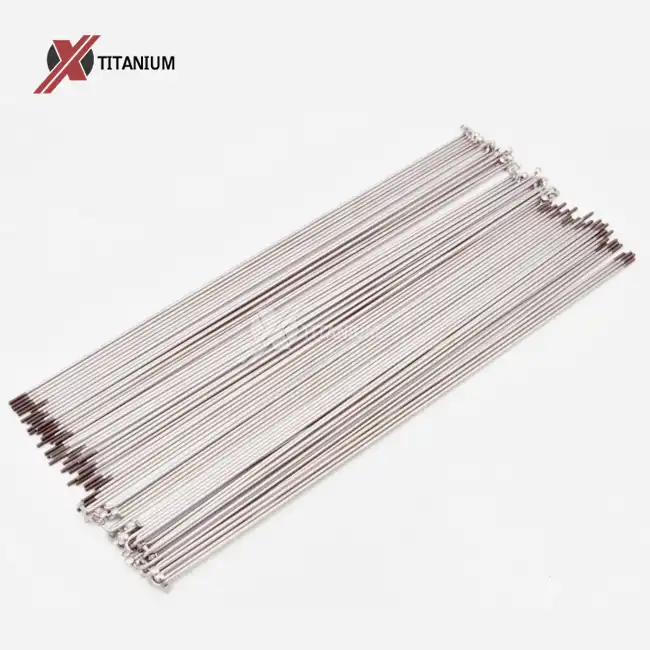
Bicycle titanium spokes are very accurate parts that hold the wheel in place and link the hub to the rim. Ours are made of Ti-6Al-4V, a Grade 5 titanium alloy that is strong but light because it contains 6% aluminum and 4% vanadium. Based on your drawing, we use a CNC machine to make each spoke. Round tubes can be made in any length between 100 mm and 300 mm and come in 1.8 mm, 2.0 mm, 2.2 mm, and 2.5 mm widths. With 900 to 1050 MPa of force, you can pull them apart. They also weigh about 40% less than stainless steel spokes. They work on race bikes, road bikes, and mountain bikes.
How Chuanglian Makes Them?
The first step is to pick titanium that is made for use in spacecraft. Next, CNC cutting makes sure each spoke is the same size and shape. Precision-rolled threads are used, which shape the metal by pressing it instead of cutting it. This helps the wear efficiency and keeps the grain moving. After that, polishing, anodizing, or nitriding are used to treat the surface. Adding nitrides makes the surface tough, and adding anodes coats it with color. Rainbow, blue, green, purple, black, and natural titanium are the colors you can pick from. After that, a quality check is done on each spoke. This is our tenth year making titanium in Baoji, which is known as the "City of Titanium." Our checks are done at every stage, from the raw materials to the finished item.
Details Wheel Builders Check
When making wheels, they don't just look at the alloy name. They check the diameter, the maximum length, the style of the head, the accuracy of the threads, the finish on the surface, the batch records, and the accuracy of the threads. You should know the style of hub you want before you place your order because J-bend and straight-pull spokes are used in different ways. It is important that a J-bend spoke is well formed because the bend puts stress in one place. Send your question along with a picture of the hub, the rim's ERD, the number of spokes, and the amount of comfort you need. Then, we check to see what we can machine from your drawing and what inspection data you want sent with the package. Having clear goals from the start can help test and sample go faster and last longer.
How Titanium Spokes Improve Weight and Ride Performance?
Lower Density Cuts Rotating Weight
Density is what makes the weight edge. Steel weighs 7.8 to 7.9 g/cm³ and Ti-6Al-4V weighs 4.43 g/cm³, according to figures from ASM materials data. That means a steel spoke of the same size weighs about 44% more than a bicycle titanium spoke of the same size. The spokes on our list are about 40% lighter than the stainless steel spokes. Wheels have spokes between the hub and rim. The spokes' mass moves with the wheel. People can feel the difference when they speed up or go uphill because there is less inertia. You should compare a sample set to the wheels you already have to get an idea of how much you can save in the end.
Lower Elastic Modulus Softens the Ride
It takes about 114 GPa of force to stretch Ti-6Al-4V, while it takes about 200 GPa of force to stretch steel. When the load stays the same, a spoke with less stiffness can handle small movements before they reach the rim and rider. This is because it can stretch more. In dirt, on rough roads and tracks, that can make the wheel feel more bendy. To be faster or stronger, a wheel doesn't need to be less stiff. It's still the hub flange width, spoke count, lacing pattern, and rim depth that determine how stiff the sidewalls are. The spokes will be matched by a skilled wheel builder, and you can try out the whole system on a sample wheel before you decide to make it.
Corrosion Resistance in Wet and Salty Conditions
TiO2 forms a thin, steady oxide film when it comes in contact with air. This film keeps water and salt from getting to the metal. It stays strong and shiny in the rain, on snowy roads, and in the air near the coast because of this. Also, acids and bases don't change our spokes. This is important because plain steel spokes can rust over time when riding on gravel, in the mountains, or when it's wet. Even though titanium doesn't rust, the rims, hubs, and nipples can still wear out, so make sure you check the whole wheel. Make sure that the spokes are paired with the right thread compound to avoid galling and galvanic issues. This is especially important if the nipples are made of aluminum.
Titanium Spokes vs. Steel, Aluminum, and Carbon Spokes
Titanium vs. Stainless and Conventional Steel
Stainless steel is still popular for a good reason. Most wheel builders already know how much stress they can put on it, and it builds consistently. It also costs less per spoke. Conventional steel is even less expensive than stainless steel, but it needs more defense against rust. Bicycle titanium spokes cost more, but they are lighter and do not rust on their own. Titanium also does different things on the build stand. Steel wheels with the same number of spokes may feel different from titanium wheels because titanium is not as stiff. Also, the amount of force that works best for this type of wheel is different. You should not follow the stress numbers for stainless steel as a rule. Instead, use them as a guide. Talk to your source about how to properly tighten that spoke.
Titanium vs. Aluminum and Carbon Spokes
Because aluminum is not as dense as titanium, aluminum spokes are lighter. But with aluminum spokes, you need to be very careful with the threads and how well they handle fatigue. Carbon spokes are often unique to each wheel design and need to be serviced in a certain way. However, they can be stiff and light. In this group, titanium is in the middle. Builders can use the spoke keys, truing stands, and tension meters they are used to because it is made of metal. Because it can be polished, anodized, or nitrided, brands can choose the color and strength of the surface. Titanium is a good choice for many wheel lines because it is light, doesn't rust, and can be serviced normally.
Where Titanium Fits in Premium Wheel Lines
It's good for custom, high-end road, dirt, and mountain wheels that care a lot about weight, finish, and brand story. You can tell the difference between anodized colors and other colors on the shelf and in pictures. People who have never seen a titanium spoke before can learn more about them this way. People who ride gravel and bikepack in the US often have to deal with mud, rain, and road salt, so it's important that their gear doesn't rust. For cheap, low-cost, or entry-level wheels, stainless steel might be a better choice. Pick a brand based on the story you want it to tell, the price, and the weight you want to reach. If the build gives measurable benefits, titanium spokes can support higher prices.
Are Bicycle Titanium Spokes Durable, and How Do You Build and Maintain Them?
Strength and Fatigue
With 900 to 1050 MPa of force, we can separate our bicycle titanium spokes. But static power doesn't tell the whole story. The spoke loads and unloads many times every time the wheel turns, so wear life is more important. Pay attention to the thread and the bend. The grain flow is kept safe by rolled threads, and the stress is spread out by a clean, well-formed bend. You should use the test methods for wheels and rims in ISO 4210-7 to make sure that your own wheel design is correct. What happens depends on how heavy the rider is, the surface, how the rim and hub are designed, and how well they were put together. This is why a model wheel is better than a single number as proof.
Tension and Wheel Building
If you want to make good titanium wheels, you must begin with the right measurements. Check the ERD of the rim, the shape of the hub, the features of the spoke holes, and the spoke length figure. Then, make a test wheel before you buy a lot of them. Check each spoke's thread, bend, straightness, and the state of its surface. Don't cross-thread and use the right thread compound because titanium can gall. Use a stress meter that has been checked to make sure it works right, and stay within the range given for that spoke. The book "The Bicycle Wheel" by Jobst Brandt explains why a wheel can't settle too soon even when tension and stress are both eased. After the first rides, make sure the tension is right, the wheels are true, and there is no runout.
Maintenance and Replacement
You should take care of the whole wheel. If the bike makes strange noises, moves, or has loose nipples, bent spokes, or broken threads, check it out after a crash or a hard ride. Clean the rims, hubs, and nipples of salt and mud. They will still age even if the spokes don't rust. You need to get a new spoke with the same length, diameter, head style, and thread if the old one has a crack, a kink, or broken threads. Loss of tension or breaking over and over again could mean that there is something wrong with the way the wheel was made, not just a bad spoke. The brand should keep extra spokes and specs sheets for each model of wheel so that service teams and customers can fix wheels without having to guess.
How to Choose and Buy from a Bicycle Titanium Spokes Manufacturer
Match Spokes to Bike Type and Wheel Data
Start with the bike and the person riding it. The most important things for road wheels are generally how heavy they are and how stiff they are. For gravel and mountain wheels, on the other hand, wear and tear and contact are more important. Bring together the ERD, hub model, flange size, spoke count, lacing pattern, rider weight, and terrain of the rim. Then choose a diameter between 1.8 mm, 2.0 mm, 2.2 mm, or 2.5 mm. To find out how long the bicycle titanium spokes should be, use the length of the rim and hub measurements instead of its official size. Lengths range from 100 mm to 300 mm. If you make more than one wheel model, a clear specification sheet for each one will help you keep track of your SKUs.
Weigh Price Against Value
To decide if titanium is worth it, you should think about how much the whole job is worth. Keep track of things like how much weight is saved, how well it resists corrosion, how long it lasts, the work that goes into building wheels, tests, the inventory of spare parts, and any other special placements. Next, use a single table to look at the budget, yearly output, MOQ, lead time, and goal weight side by side. Tests of the sample should be used to decide on the final approval. Test the fit, how the tension behaves, and how well it works on the road with a short pilot order before committing to a monthly supply. A high unit price is an easy business choice with this method. Stainless steel is still a good choice if your products need to be cheap or very stiff.
Evaluate the Supplier and Build a Checklist
Find a supplier that has worked with titanium before and has a quality system you can check. Chuanglian is a bicycle titanium spokes manufacturer and exporter in Baoji. They've been working with and researching titanium for more than ten years, and they have twelve CNC machines. We check every step, from the raw products to the finished product. Before you put in your order, make sure you know the grade, the length, the thickness, the color, the thread, the packing, and the finish. In bulk packaging, there are 1000 pieces in a box. If you need different packaging, just let us know. Don't forget to ask about samples, MOQ, wait time, and how many extra parts are in stock. First, ask for a sample. Next, test it on a prototype wheel. Finally, give the batch the green light.
Conclusion
Because Ti-6Al-4V is less dense and less stiff when stretched than steel, bicycle titanium spokes are lighter and easier to ride. The oxide film on the titanium spokes also keeps them from rusting in salty and wet places. Titanium costs more than stainless steel and needs to be tensed in a different way. It is different for carbon and aluminum spokes in terms of thread, wear, and service life. The best way to find out if something will last is to try samples. Rolled threads, a clean bend, the right tension, careful building, and regular checks of the whole wheel are what make something last. The price and specs should match the brand, the type of bike, and the load. Buyers can tell if titanium is a good fit for a wheel line by looking at wheel data, sample quality, and source checking steps early on.
FAQ
Q1: How much lighter are titanium spokes than stainless steel?
A: Our product data lists about 40% less weight than stainless steel spokes of comparable size. The final wheelset saving still depends on the amount of spokes, the gauge, the length, and the nipples. Check out a model set of bicycle titanium spokes to see how much you can save in the long run.
Q2: Are titanium spokes strong enough for mountain bikes?
A: Our Grade 5 spokes can hold 900 to 1050 MPa of force when stretched, and they can be used on mountain bikes. Check out a sample first, since the rim, hub, lacing, tension, and surface can all change how strong a wheel is.
Q3: Can I use aluminum nipples with titanium spokes?
A: Yes, but make sure the threads fit well and that you use the right thread compound to avoid galling and galvanic corrosion. Check the mix with a practice wheel to make sure it works.
Q4: How do I choose the right spoke length?
A: To figure it out, you'll need to know the ERD of the rim, the lengths of the hub's flange, the number of spokes, and the lacing pattern. You can choose from lengths of 100 mm to 300 mm, and we can make them to fit your needs. What you send us about your wheel, we'll look over with you.
Q5: What colors and finishes are available?
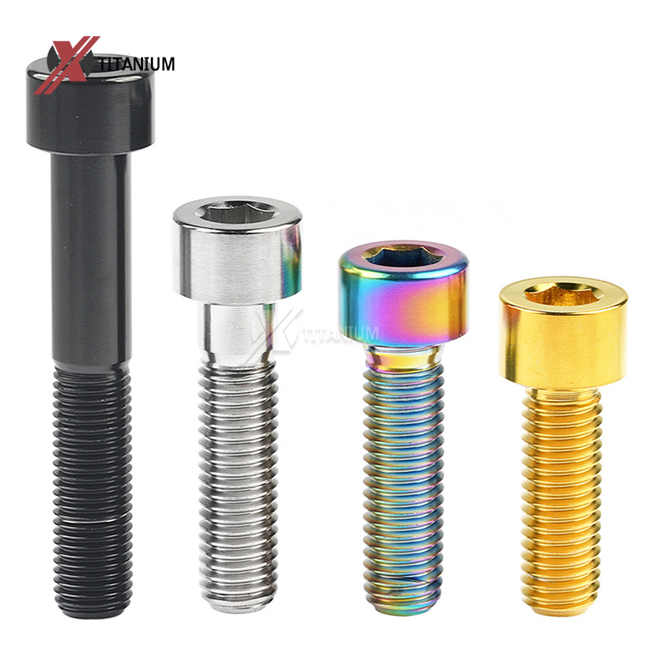
A: You can nitride, anodize, or polish the metal after that. You can get it in gold, blue, green, purple, black, rainbow, and natural titanium. If you tell us when you're done, we'll make sure everything goes as planned.
Request Bicycle Titanium Spokes from Chuanglian
Baoji is where Chuanglian makes bicycle titanium spokes. For any length you need, they can CNC machine, polish, anodize, nitride, and make Grade 5 titanium spokes just for you. Please email info@cltifastener.com or djy6580@aliyun.com with the wheel's name, the number you want to order, and the finish. We'll take a look at your drawing and give you a price quote for your sample or large order.
References
1. ASM International, Materials Properties Handbook: Titanium Alloys, 1994.
2. Leyens, C. and Peters, M., Titanium and Titanium Alloys: Fundamentals and Applications, Wiley-VCH, 2003.
3. Donachie, M. J., Titanium: A Technical Guide, 2nd Edition, ASM International, 2000.
4. Brandt, J., The Bicycle Wheel, 3rd Edition, Avocet, 1993.
5. ISO, ISO 4210-7: Cycles – Safety Requirements for Bicycles – Part 7: Wheels and Rims Test Methods, 2014.
6. ASTM International, ASTM B348: Standard Specification for Titanium and Titanium Alloy Bars and Billets, 2019.
Learn about our latest products and discounts through SMS or email