- English
- French
- German
- Portuguese
- Spanish
- Russian
- Japanese
- Korean
- Arabic
- Greek
- German
- Turkish
- Italian
- Danish
- Romanian
- Indonesian
- Czech
- Afrikaans
- Swedish
- Polish
- Basque
- Catalan
- Esperanto
- Hindi
- Lao
- Albanian
- Amharic
- Armenian
- Azerbaijani
- Belarusian
- Bengali
- Bosnian
- Bulgarian
- Cebuano
- Chichewa
- Corsican
- Croatian
- Dutch
- Estonian
- Filipino
- Finnish
- Frisian
- Galician
- Georgian
- Gujarati
- Haitian
- Hausa
- Hawaiian
- Hebrew
- Hmong
- Hungarian
- Icelandic
- Igbo
- Javanese
- Kannada
- Kazakh
- Khmer
- Kurdish
- Kyrgyz
- Latin
- Latvian
- Lithuanian
- Luxembou..
- Macedonian
- Malagasy
- Malay
- Malayalam
- Maltese
- Maori
- Marathi
- Mongolian
- Burmese
- Nepali
- Norwegian
- Pashto
- Persian
- Punjabi
- Serbian
- Sesotho
- Sinhala
- Slovak
- Slovenian
- Somali
- Samoan
- Scots Gaelic
- Shona
- Sindhi
- Sundanese
- Swahili
- Tajik
- Tamil
- Telugu
- Thai
- Ukrainian
- Urdu
- Uzbek
- Vietnamese
- Welsh
- Xhosa
- Yiddish
- Yoruba
- Zulu
Gr5 Titanium Motorcycle Bolts vs Steel: Which Is Best for OEMs
When OEMs need lighter bolts that won't rust and look better, they should choose Gr5 titanium motorcycle bolts. If the joint is safety-critical and is going to be under a lot of stress, steel is better. In grade 5, titanium is about 40% to 45% less dense than steel. However, it is not as stiff as high-strength steel. A mixed plan sounds good to me. Use Ti-6Al-4V fasteners on frames, covers, and other parts. Keep the steel that has been checked at the points where the brakes, axle, and suspension meet. The next parts will show you how to pick a supplier, compare the two materials, and talk about the risks.
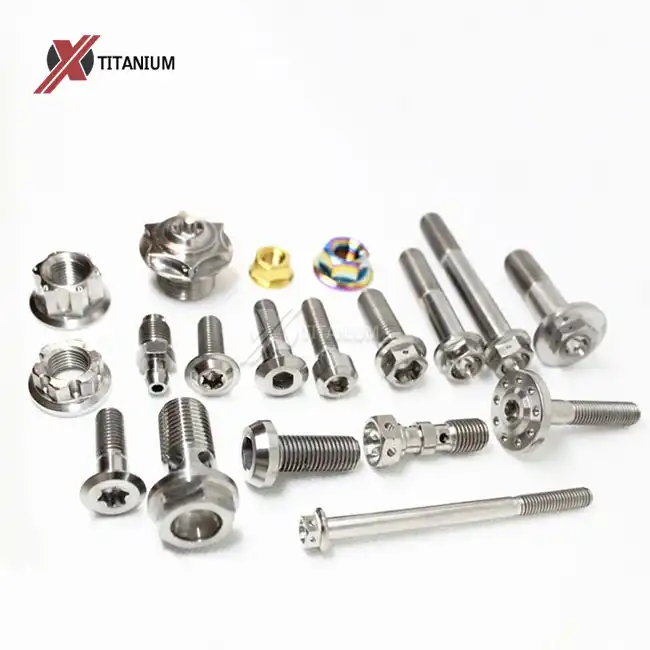
What Are Gr5 Titanium Motorcycle Bolts, and Why Do OEMs Compare Them With Steel?
Before you start, it's helpful to know what the argument is about and why the numbers are being compared.
Why Material Choice Reaches Beyond Weight
There's more to forms of fastener matter than just the number on the scale. Steps for putting things together, service intervals, unit cost, and brand positioning are all changed. It also changes the resistance to corrosion. To show performance and quality on a high-end aftermarket line, a titanium set can be used. However, just because it looks good doesn't mean it fits better. A lot of joints are still made of steel because there are already suppliers, torque data, and validation records for it. Before they do anything else, we tell aftermarket brands to think about which joints would really benefit from titanium. It's fair to compare the two in this way, and both the rider and the brand's reputations are safe.
What Ti-6Al-4V Contains and How It Behaves
An alpha-beta alloy called Gr5 is made up of titanium, about 6% aluminum, and 4% vanadium. It is also known as Ti-6Al-4V. ASTM B348 says that Grade 5 bar needs to have a tensile strength of at least 895 MPa. Steel has a density of about 7.85 g/cm³, while the alloy has a density of 4.43 g/cm³. It also creates a strong oxide film that can handle rain, road salt, and humidity. This metal alloy is what our Gr5 titanium motorcycle bolts are made of. They can be polished, anodized, or nitrided. To make sure the values match the drawing, check the part's final strength against its size, shape, and how it was made.
How Grade 5 Differs From Grade 2 Titanium
Tin that is grade 2 is pure enough to be used in business. It's not as hard or strong as performance fasteners, so it's better for simple tasks and trim parts. Grade 5 gets stronger by having aluminum and vanadium added to it. For performance bolts, this makes it the best choice. The two grades look the same at first glance. Chemical tests, hardness tests, and a material certificate will give you the real answer. A magnet test can tell if steel is trying to look like titanium, but it can't say what grade it is because not all titanium alloys are magnetic. That grade on the certificate should match the grade on the order. For each lot, ask for proof.
Gr5 Titanium Motorcycle Bolts vs Steel and Stainless Steel: Performance Compared
There are different points of view based on things like weight, strength, stiffness, and how corrosion works.
Weight and Strength
The main benefit of Gr5 titanium motorcycle bolts is that it helps you lose weight. Steel is about 40% to 45% denser than titanium. This means that a bolt of the same size weighs a lot more. The steel class makes a difference in how strong something is. The tensile strength of bolts is given by ISO 898-1 as follows: class 8.8 has a strength of 800 MPa, class 10.9 has a strength of 1040 MPa, and class 12.9 has a strength of 1220 MPa. According to ASTM B348 rules, grade 5 titanium has a stress level of at least 895 MPa for bars. Its stress level is between 8.8 and 10.9 MPa. When it comes to strength-to-weight, titanium is stronger than high-strength steel. The most money is saved when teams keep track of every gram for race builds.
Stiffness and Fatigue
Iron is about 200 GPa strong, while Ti-6Al-4V is only about 114 GPa strong. Titanium bolts stretch more when the load stays the same. This changes how stiff the joint is and how well the preload stays in place when the joint shakes. Because motorcycles are always shaking, it's important how you act when you're tired. When it comes to fatigue life, thread form, root radius, surface finish, and heat treatment all play a role. Instead of testing the part itself, you can't use published data for a general material. In this case, steel usually wins because there is proof from decades of use. Before approving production, your engineers should check the real joint for vibration and preload retention if they want to do a swap.
Titanium vs Stainless Steel Bolts
Stainless steel is a close second when it comes to hardware that is left out in the open. As per ISO 3506-1, A2-70 stainless bolts must have a tensile strength of at least 700 MPa. This titanium is not as heavy as Grade 5 titanium. It weighs about the same as carbon steel. Because it costs less, is easier to find, and installers know how to use it, stainless is better for general trim and high-volume lines. Aluminum is stronger, lighter, and more resistant to salt spray and many chemicals. It can also be anodized in colors other than black, rainbow, blue, and green. Iron may not be the best choice if you only want to save a little weight and save money. Titanium is worth the cost if the bolt makes it stand out.
Application-Based Selection: Which Fastener Material Fits Each Motorcycle Component?
It's better to pick by part than by reputation of the material.
Where Titanium Usually Fits
For joints that need to be light, not rust, and look good, titanium is a good choice for low- to moderate-load joints. Fairing bolts, windshield screws, tail sections, engine cover bolts, and some accessories are all everyday examples of this. As long as the fairing bolt is tight, it won't need much preload. It sits in rain and road spray for years. A bolt made of anodized titanium can handle that without any trouble. You can buy color-matched kits for the bolts on the bike because you see them every time you look at it. The engineering review is simpler because the loads aren't too heavy. It's also simple to explain to customers how the weight and looks gains work.
Where Extra Review Is Required
Making changes to the rearsets, footpeg brackets, or exhaust mounts should only be done after making sure they can handle vibrations, rider loads, and possible impacts. It's important to have heat near exhaust parts. In our specs, it says that the service temperature can reach up to 752°F (400°C). Designers should compare this number to the actual temperature of the joint. You should never choose bolts for the brake caliper, the axle, the rotor, or the suspension based on how heavy they are. The preload needs to be controlled, the fatigue needs to be evaluated, and the lot needs to be tracked. All of these things must be approved by the component designer or a qualified engineer. We machine the bolts for the brake, chassis, and engine programs. Then, your engineers check each joint to make sure it's okay.
A Hybrid Material Plan
More than one method works best for many brands when using Gr5 titanium motorcycle bolts. Titanium should be used for everything from helmets and fairings to performance parts that have been tested. For the brakes, frame, and suspension, use high-strength steel that has been tried and tested and found to work. This plan cuts down on risk, keeps the premium story, and doesn't waste money on titanium that doesn't help. You can start with a titanium kit for one line of products, see what people think, and then add to it. A staged rollout is good if you get the same order over and over because you can change the sizes and finishes as you learn more about sales.
Common Risks When Replacing Steel Bolts With Gr5 Titanium Motorcycle Bolts
A swap looks simple on paper, but it's hard to do because of three things.
Thread Galling
It's called galling, and it happens when thread surfaces stick together when they rub against and tear material. When you drive fast, when it's hot, or when the threads are crossed, titanium is more likely to get it. Use an approved anti-seize compound, drive slowly or by hand, and keep the threads that fit together clean and free of damage. These are the three things that will lower the risk. Taking care of the surface also helps. Not only does nitriding make the surface layer harder, but we also polish and anodize Gr5 parts as part of our service. There is still work to be done on the joint even though it has been treated. Make sure the finish and lubricant work well together in a real joint, and write down the steps you took.
Torque and Preload
Don't just use the torque value from a steel bolt on a titanium bolt; check it first. There are different lubricants, coatings, washers, and thread conditions that can change the relationship between the torque that is applied and the clamp load. The joint acts differently because titanium is less stiff. With anti-seize, the preload can be higher than it would be with a dry steel bolt of the same amount of torque. Use a calibrated torque wrench to check the preload on some sample joints to make sure the value is right. Then print out the customer guide, which has the official torque, type of oil, and way to tighten. Being clear with your end users will keep them safe and cut down on warranty claims.
Galvanic Contact
Ti is the best metal when it comes to galvanic series. Titanium that is wet and salty can make aluminum or magnesium rust faster than they would on their own. Titanium can damage aluminum threads, but not as often as stainless steel can. Some things that can help lower it are coatings, anti-seize paste, anodized bolts, and insulating washers. See how each joint works in real life, like when you ride along the coast or on winter roads with salt on them. A good place to start is with engine cases, aluminum frames, and magnesium covers, since most of the time they come with hardware.
OEM Procurement Guide: How to Specify and Compare Titanium Bolt Suppliers
You can make steady production out of a good choice of materials and a supplier that has been checked out.
Define the Goal and the RFQ Details
First, choose what's most important to you for Gr5 titanium motorcycle bolts: weight, corrosion resistance, racing use, looks, durability, or making your product stand out. Then write the question, which should include Grade 5 Ti-6Al-4V, diameter, thread pitch, length, head style, drive type, finish, color, quantity, packaging, and document needs. We have sizes from M6 to M12 in stock, but we can also make sizes just the way you want them. If your joint needs something different, just send us a picture of it. Not just the price per unit, add up the whole amount. A lot of things are thought about, like the minimum order quantity, the number of steps needed for installation, the warranty risk, and the tools that will be used. Chuanglian's MOQs can be changed based on what the customer wants.
Customization and Finish Options
They can help you build your brand and make things the way you want them to be. And then we polish, anodize, or nitride the Gr5 parts that we make on a CNC machine to make them look good. Some of the colors that can be anodized are blue, green, purple, black, gold, and rainbow. You can still get the natural titanium finish. You can pack things all at once or all at once. Anodized metal comes in different shades that depend on how the surface is prepared and how the process is managed. This is why color matching is important. Choose a "master" sample to check against each batch. Before you buy, make sure you know about logos, kits made just for motorcycles, and private-label packaging. These details change how long it takes to make the tools and how long the lead time is.
Verify the Supplier Before Mass Production
Find out where the materials come from and how they are cut, threaded, finished, inspected, and recorded. For proof that the item is real, request material test certificates, dimensional inspection reports, and the ability to keep track of individual lots. The place where Chuanglian lives is Baoji. People call it the "City of Titanium." Our company has twelve CNC machines and has been working with titanium for more than ten years. From the raw materials to the finished product, we check each step of the way. Still, use proof to decide which supplier to work with. Order samples and make sure they fit and work right. Also, go over your records and think about getting an audit. Finally, do a small trial lot to make sure the batch can be used again. You have to sign an NDA before you can share drawings.
Conclusion
In some ways, both Gr5 titanium motorcycle bolts and steel bolts are good. It doesn't rust, is about 40% to 45% lighter than steel, and comes in a lot of different anodized colors. ASTM B348 says that Grade 5 bar has a minimum tensile strength of 895 MPa. This is more than class 8.8 steel but less than class 10.9. There are pros and cons to both steel and stainless steel when it comes to stiffness, cost, availability, and well-established validation data. You need to check the preload, galling, galvanic contact, and torque before the swap. Fairings, covers, and other parts made of titanium last the longest. But an engineer has to sign off on the brake, axle, and suspension joints. With clear specifications, material documents, and sample checks, OEMs can find a hybrid plan that strikes a good balance between weight, durability, and cost.
FAQ
Q1: Is Gr5 titanium stronger than steel?
A: It depends on the steel class. Grade 5 titanium exceeds class 8.8 steel on minimum tensile strength but trails class 10.9. Titanium wins on strength-to-weight, while high-strength steel wins on absolute strength and stiffness.
Q2: Can I use steel torque values on titanium bolts?
A: No. Lubricant, coatings, and thread condition change preload. Validate torque on sample joints and publish the verified value.
Q3: Where should OEMs use titanium first?
A: Start with fairings, engine covers, and accessories. Brake, axle, and suspension fasteners need engineering approval.
Q4: Which documents should I request for bulk orders?
A: Ask for material test certificates, dimensional inspection reports, and lot traceability. Tell us your requirements, and we will review them.
Request a Gr5 Titanium Motorcycle Bolt Specification Review from Chuanglian
The city of Baoji is known as the "City of Titanium." Chuanglian makes Gr5 titanium motorcycle bolts and also polishes, anodizes, and nitrides seven-color custom CNC parts. To get a quote and have your needs looked over, email info@cltifastener.com or djy6580@aliyun.com your drawings, sizes, annual volume, and finish needs.
References
1. ASTM B348/B348M, Standard Specification for Titanium and Titanium Alloy Bars and Billets, ASTM International, 2019
2. ISO 898-1, Mechanical Properties of Fasteners Made of Carbon Steel and Alloy Steel: Bolts, Screws and Studs with Specified Property Classes, International Organization for Standardization, 2013
3. ISO 3506-1, Fasteners: Mechanical Properties of Corrosion-Resistant Stainless Steel Fasteners, Bolts, Screws and Studs, International Organization for Standardization, 2020
4. Materials Properties Handbook: Titanium Alloys, ASM International, 1994
5. Titanium: A Technical Guide, 2nd Edition, ASM International, 2000
6. Titanium and Titanium Alloys: Fundamentals and Applications, Wiley-VCH, 2003
Learn about our latest products and discounts through SMS or email