- English
- French
- German
- Portuguese
- Spanish
- Russian
- Japanese
- Korean
- Arabic
- Greek
- German
- Turkish
- Italian
- Danish
- Romanian
- Indonesian
- Czech
- Afrikaans
- Swedish
- Polish
- Basque
- Catalan
- Esperanto
- Hindi
- Lao
- Albanian
- Amharic
- Armenian
- Azerbaijani
- Belarusian
- Bengali
- Bosnian
- Bulgarian
- Cebuano
- Chichewa
- Corsican
- Croatian
- Dutch
- Estonian
- Filipino
- Finnish
- Frisian
- Galician
- Georgian
- Gujarati
- Haitian
- Hausa
- Hawaiian
- Hebrew
- Hmong
- Hungarian
- Icelandic
- Igbo
- Javanese
- Kannada
- Kazakh
- Khmer
- Kurdish
- Kyrgyz
- Latin
- Latvian
- Lithuanian
- Luxembou..
- Macedonian
- Malagasy
- Malay
- Malayalam
- Maltese
- Maori
- Marathi
- Mongolian
- Burmese
- Nepali
- Norwegian
- Pashto
- Persian
- Punjabi
- Serbian
- Sesotho
- Sinhala
- Slovak
- Slovenian
- Somali
- Samoan
- Scots Gaelic
- Shona
- Sindhi
- Sundanese
- Swahili
- Tajik
- Tamil
- Telugu
- Thai
- Ukrainian
- Urdu
- Uzbek
- Vietnamese
- Welsh
- Xhosa
- Yiddish
- Yoruba
- Zulu
How to Compare Titanium Motorcycle Bolt Suppliers on Quality
Proof, not price, tells me how good a titanium motorcycle bolt supplier is. I compare the exact grade, like Grade 5 (Ti-6Al-4V), to a batch certificate. After that, I check the mechanical data, the accuracy of the threads, and the consistency of the finish. Then I check samples, ask for records of inspections, and make sure they have made motorcycle parts before. I use a weighted scorecard to compare total cost, lead time, and support in the end. People who use this method don't have to deal with delays that cost a lot of money, mixed grades, or bad fits. I'll explain each step in easy language below.
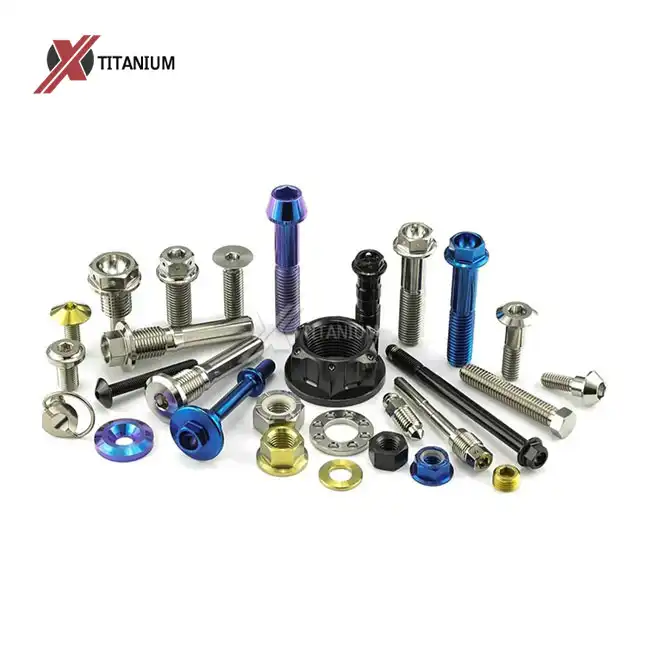
Why Supplier Quality Matters More Than Price?
Where Titanium Motorcycle Bolts Are Used?
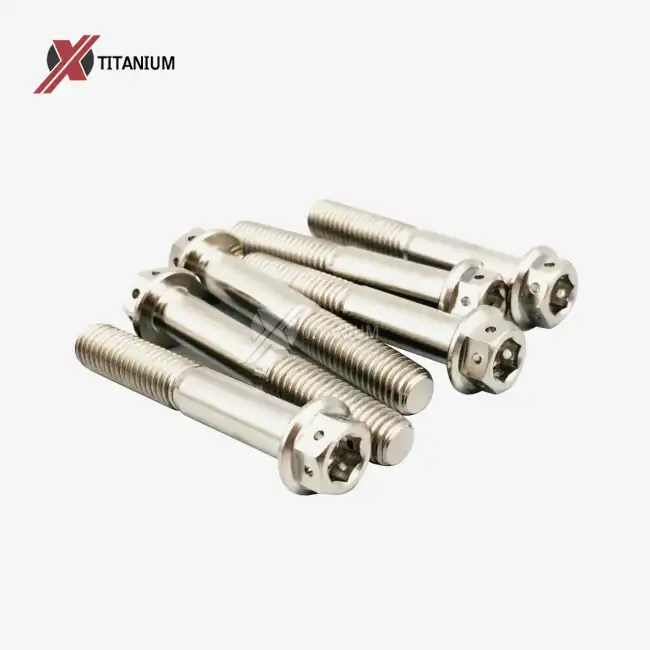
TiN bolts are used in custom builds, race bikes, off-road motorcycles, touring bikes, and high-performance sports bikes. Sizes like M6 and M8 are usually used for things like fairing, engine cover, brake caliper, axle pinch, and rearset fasteners. Titanium is used since it is light and doesn't rust. Ti-6Al-4V is only 4.43 g/cm³ dense, while carbon steel is about 7.85 g/cm³ dense. This means that a titanium bolt of the same size weighs 44% less. When the finishes are colored, it looks like it cost more. Before you talk about price, you should look at how well the bolt works. These benefits only matter if it does the job.
Why Not All Titanium Bolts Perform the Same?
It's possible for a "titanium" bolt to be Grade 2, Grade 5, or a different metal. According to ASTM B348 Grade 2 must have a tensile strength of at least 345 MPa and Grade 5 must have a tensile strength of at least 895 MPa. That gap is important on a part that holds a brake caliper or an axle clamp. It has a different thread fit, head shape, and finish. If the last batch threads in smoothly, the next batch might bind or strip. When I look for a titanium motorcycle bolt supplier, I want to see that more than one batch of their work turns out the same. A good sample by itself doesn't tell you much about a big order.
What a Dependable Supplier Provides?
You can keep track of grades with a reliable supplier, and they also offer controlled machining, inspection records, customization, stable lead times, and help with exporting. We are Baoji Chuanglian New Metal Material Co., Ltd., and we make and sell things in Baoji, which is known as the "City of Titanium." For more than ten years, we have researched and worked with titanium machines. We have twelve CNC machines that we use. We have Grade 5 (Ti-6Al-4V) and Grade 2 bolts in 10 mm to 200 mm long and M4 to M30 in size. As a normal part of the work process, the grade is checked and the drawings are looked over. The next steps are getting a quote, getting a sample, getting approval for the first item, making it, doing the final inspection, and getting export paperwork.
Compare Material Grades, Traceability, and Manufacturing Quality
Check Grade 5 and Grade 2 Certificates
Ask a titanium motorcycle bolt supplier for a certificate that lists the material's grade, standard, chemical make-up, mechanical properties, and heat or lot number. Grade 5 (Ti-6Al-4V) should be used for strong, heavy-duty points. Grade 2 titanium is extremely pure and can be used in business. It is best for parts that don't need to hold a lot of weight, like covers, brackets, and fairing fasteners. The two grades are not interchangeable. Then, make sure the certificate you get comes from the right batch and not just any file. If the supplier can't link your bolts to a lot number, I think that's a risk. We only use certified titanium and make sure to follow ASTM, ISO, and DIN standards as well as your own needs.
Review Dimensions, Threads, and Tolerances
It depends on how well the bolt was made to see if it fits. Look at the drawing to see how the length, head shape, shank diameter, under-head radius, drive size, and thread pitch compare. Tolerance classes for metric threads are set by ISO 965-1. Gages can be used to check that the class written on the purchase order is correct. To cut titanium without getting burrs and broken threads, you need tools that are very sharp and set up in a steady way. Before making a lot of them, make sure the first one is checked out and that the drawings have been approved. We use CNC machines to make bolts that are exactly what you want. We heat treat them and check them at every step of the way.
Inspect Surface Finish Consistency
Finish changes how something works and how it looks. Natural titanium, gold, blue, green, purple, black, and rainbow are the colors we offer. We can polish, anodize, or nitride the surface. With the same light on each sample, check to see if the colors are the same from one piece to the next being supplied. Make sure you look at the threads and contact surfaces too. The threads may not fit the same way if a finish builds up on them. Finish is not the same as mechanical quality, just because something is bright doesn't mean it's strong. Each supplier should be asked how they make sure that colors don't change from one batch to the next and how they pack finished bolts so that they don't get scratched.
Assess Mechanical Performance and Application Safety
Request Strength and Hardness Data
For Grade 5, ASTM B348 says that the tensile strength must be at least 895 MPa and the yield strength must be at least 825 MPa. Just so you know, 1000 MPa is the nominal tensile strength of ISO 898-1 property class 10.9 steel. It's never a direct swap for me because grade 5 titanium is like that class but not the same. Get information from your suppliers about how hard, tensile, yield, and stretchy your batch is. Ask for information on how the part wears down when it is vibrated a lot. I'd also like to know how the heat treatment is dealt with. A brochure number isn't as useful as real-life information.
Plan for Galling and Galvanic Corrosion
Titanium can gall, which means that the threads can seize up or tear when they are pulled tight. It's more dangerous when a titanium bolt goes into aluminum. Use anti-seize compound, clean the threads, and check the torque. When aluminum and titanium touch in salty or wet conditions, the aluminum side can start to rust. Titanium itself doesn't rust very easily. It's important to check the torque values with the engineers or the company that made the motorcycle because anti-seize can change friction as well. A good supplier will walk you through these steps and tell you how to install them. Our Gr5 bolts can handle salt, acids, and bases, so you can use them at sea or in the winter.
Separate Decorative Bolts From Safety-Critical Bolts
Each bolt comes with its own set of risks. The fairing, cover, and bracket bolts are only lightly loaded. Engineers have to let you use certain fasteners on the brakes, axle, suspension, engine, and chassis. Don't change them just to lose weight or look different. As a responsible titanium motorcycle bolt supplier, they will give you technical advice, but when it comes to safety-critical parts, they will let your OEM specification or engineering team make the final call. Tell us what torque, load, and temperature you need at the start of the project. TiN is useful for builds because it is not magnetic and stays strong even when it's very hot. Having those traits is not the same as taking tests.
Compare Testing, Certification, and Motorcycle Experience
Ask for Quality Documents
There are records that show if a process is managed or just trusts what it sees. Ask for conformity certificates, approved drawings, the ability to track a lot, material test certificates, and information on how the goods should be packed. Check the gages, the materials that come in, the work that is being done, how to handle products that don't meet standards, and the training for the people who will be doing the work. If you write down each answer in a table, you can compare suppliers side by side. Find out what certifications the supplier has and ask to see copies of them as well. We check every step of the process, from the raw materials to the finished product, and make sure we follow all national, international, and industry standards. We'll talk about the reports your team needs before you place an order.
Test Samples Before Bulk Orders
A sample order is better than a catalog for showing more. Check the grade with spectrometry or testing by a third party. Then, measure the important parts and make sure the threads fit together. Finally, check the finish and attach the bolt to the real motorcycle. If the order is big, a third-party inspector can look at the size, the type of material, the packaging, and the limits that were agreed upon. Use the same checks on each sample from each supplier to make sure the results are the same. The approved sample can be used to help you measure other lots. Another thing that this process shows is what a supplier does when a measurement is off. It tells you a lot about the service.
Confirm Motorcycle-Specific Experience
It's not the same to be good at general machining and motorcycle fasteners when choosing a titanium motorcycle bolt supplier. Talk to the supplier to find out if they make bolts for the engine, the fairing, the brake caliper, the axle pinch, and the rearset for some other market besides OEM. You should look for companies that do their own CNC milling and turning, thread machining, finishing, and inspections. Talk to the supplier about what they need to make the work fit your needs. This could be different kinds of drives, colored finishes, drawings, CAD files, samples, flange designs, or holes for safety wires. Make it clear who owns the design, how privacy is protected, and what steps subcontractors are given. Our work with titanium is also used in medicine, space travel, racing, and the boating business.
Compare Commercial Terms and Build a Supplier Scorecard
Look at Total Landed Cost
Any low price quote might not tell you about a different grade, a weaker finish, bad packaging, or a lighter inspection. Check the minimum order quantity (MOQ) for both standard and custom items. You should also look at the lead time for samples, the cost of tools, the production capacity, the lead time for repeat orders, the cost of packaging, freight, duties, and replacements. Bolts should have labels with their size and grade on them, and those labels should not be scratched. Find out what Incoterms are, how to track shipments, and what the supplier does with goods that don't work for you. Response time and production updates are also important to keep an eye on because they can change when you launch. All of these things show that the cheapest quote isn't always the cheapest choice.
Weigh OEM, Aftermarket, and Direct Factory Suppliers
OEM suppliers often keep good records and keep a close eye on specifications. However, they may need larger minimum orders and more time to approve them. It's up to you to make sure the grade and fit, since aftermarket suppliers tend to have bigger catalogs, faster shipping, more style choices, and smaller quantities. If the factory can back up what they say, you can talk to the engineers more directly, make changes, and have more control over production. You can ask any supplier for pictures, a virtual tour, and a list of the steps that they were hired to do. This is how you can tell the difference between a real business that makes things and one that just sells them. Quality, service, and how easy it is to get to should be more important than location.
Score Suppliers and Avoid Common Mistakes
Make a scorecard with points for things like the authenticity of the material, its ability to be tracked, its dimensional accuracy, the quality of the thread, its mechanical data, its finish, its documents, its customization, its experience, its minimum order quantity (MOQ), its lead time, its logistics, and its communication. Choose weights that make sense for your business. For OEMs, range and packaging are important. For racing teams, Grade 5 availability and quick customization are important. For retailers, M6 and M8 stock with low MOQs are important. After that, make a test order. Many times, people choose incorrectly based on price, get Grade 2 and Grade 5 mixed up, or believe that color indicates how strong something is. Another thing people do is leave off the purchase order the grade, tolerance, finish, inspection level, and packaging.
Conclusion
If you want to find the best titanium motorcycle bolt suppliers, facts are more important than prices. Based on ASTM B348, Grade 2 and Grade 5 are not at all the same level of strength. This means that the correct grade is very important. Also, the certificates for each batch must be the same. Fit is based on size, thread tolerances, and how consistent the finish is. Strength data, galling control, and engineering review are used to make sure that brake, axle, and chassis parts are safe to use. People who have done motorcycles before, good records, and sample tests can all tell you if a process is controlled or not. Because they use a weighted scorecard, a trial order, and the total landed cost, these checks are a fair way to compare things. One with the most proof is not the least risky; it is the one with the lowest quote.
FAQ
Q1: Is Grade 5 always better than Grade 2?
A: Not at all. Grade 5 has a higher minimum tensile strength than ASTM B348 (895 MPa vs. 345 MPa), which means it is better for parts that will be stronger. Grade 2 is for brackets and covers that don't need to hold a lot of weight. Pick the right grade for the job.
Q2: Which documents should I request before ordering?
A: Find out what the item is made of, how big it is, if it meets safety standards, and how to package it. Also, make sure you get a material certificate with a lot number. Check to see how they match the sample you get.
Q3: Can I replace every steel bolt with titanium?
A: No, engineers need to first look at the bolts that hold the brakes, axle, suspension, engine, and shell together. It's also important to watch out for torque, anti-seize, and thread engagement.
Q4: Does Chuanglian make custom sizes and colors?
A: Yes. We have sizes from M4 to M30 and lengths from 10 mm to 200 mm. There are different shades of gold, blue, green, purple, black, and rainbow.
Request a Titanium Motorcycle Bolt Supplier Evaluation From Chuanglian
There may be a titanium motorcycle bolt supplier that can help you. In Baoji, which is also called the "City of Titanium," Chuanglian makes custom Gr5 (Ti-6Al-4V) bolts that can be polished, anodized, or nitrided to finish them. Please send your drawings, sizes, finish, and quantity of titanium motorcycle bolts to info@cltifastener.com or djy6580@aliyun.com if you want to order them from us. We'll take a look and get back to you.
References
1. ASTM International, Standard Specification for Titanium and Titanium Alloy Bars and Billets (ASTM B348), 2019
2. International Organization for Standardization, ISO 898-1: Mechanical Properties of Fasteners Made of Carbon Steel and Alloy Steel, Part 1, 2013
3. International Organization for Standardization, ISO 965-1: ISO General Purpose Metric Screw Threads, Tolerances, Part 1, 2013
4. Donachie, M. J., Titanium: A Technical Guide, 2nd Edition, ASM International, 2000
5. Boyer, R., Welsch, G., and Collings, E. W., Materials Properties Handbook: Titanium Alloys, ASM International, 1994
6. Leyens, C. and Peters, M., Titanium and Titanium Alloys: Fundamentals and Applications, Wiley-VCH, 2003
Learn about our latest products and discounts through SMS or email