- English
- French
- German
- Portuguese
- Spanish
- Russian
- Japanese
- Korean
- Arabic
- Greek
- German
- Turkish
- Italian
- Danish
- Romanian
- Indonesian
- Czech
- Afrikaans
- Swedish
- Polish
- Basque
- Catalan
- Esperanto
- Hindi
- Lao
- Albanian
- Amharic
- Armenian
- Azerbaijani
- Belarusian
- Bengali
- Bosnian
- Bulgarian
- Cebuano
- Chichewa
- Corsican
- Croatian
- Dutch
- Estonian
- Filipino
- Finnish
- Frisian
- Galician
- Georgian
- Gujarati
- Haitian
- Hausa
- Hawaiian
- Hebrew
- Hmong
- Hungarian
- Icelandic
- Igbo
- Javanese
- Kannada
- Kazakh
- Khmer
- Kurdish
- Kyrgyz
- Latin
- Latvian
- Lithuanian
- Luxembou..
- Macedonian
- Malagasy
- Malay
- Malayalam
- Maltese
- Maori
- Marathi
- Mongolian
- Burmese
- Nepali
- Norwegian
- Pashto
- Persian
- Punjabi
- Serbian
- Sesotho
- Sinhala
- Slovak
- Slovenian
- Somali
- Samoan
- Scots Gaelic
- Shona
- Sindhi
- Sundanese
- Swahili
- Tajik
- Tamil
- Telugu
- Thai
- Ukrainian
- Urdu
- Uzbek
- Vietnamese
- Welsh
- Xhosa
- Yiddish
- Yoruba
- Zulu
How do titanium anode plates improve electroplating efficiency?
Electroplating operations worldwide face persistent challenges: inconsistent coating quality, excessive energy consumption, and frequent equipment replacement cycles. Titanium anode plates—engineered electrodes consisting of commercially pure titanium substrates coated with electrocatalytic layers like Mixed Metal Oxide (MMO), Ruthenium-Iridium, or Platinum—address these issues directly. These dimensionally stable anodes maintain consistent inter-electrode gaps throughout operation, preventing voltage fluctuations that plague traditional graphite or lead alternatives. By eliminating anode dissolution and optimizing current distribution, titanium-based solutions reduce energy consumption by 10-20% while extending service life to 2-10 years, delivering measurable improvements in both operational efficiency and product quality.
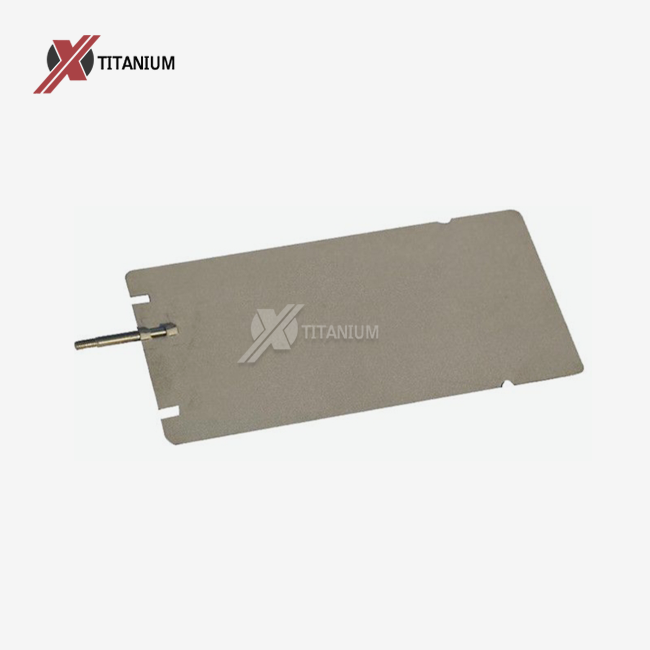
Understanding Titanium Anode Plates and Their Role in Electroplating
Titanium anode plates and their role in electroplating: what you need to know. Modern electroplating needs accuracy that old anode materials just can't provide. Titanium anode technology is a big change in how electrochemical processes consistently cast metal in shapes that aren't simple.
The Engineering Foundation of Titanium Anodes
Commercially pure titanium (Gr1 or Gr2 according to ASTM B265) is used as the structure base for these electrodes. Before getting any special surface treatments, the base material goes through cold rolling, hot rolling, and heating to get its mechanical properties just right. Pickling and acid cleaning get the base surface ready for the coating to stick to. They do this by making tiny anchor points that are needed for the coating to stay stable over time.
The really new thing is the electrocatalytic coats that are put on using heat breakdown or electrodeposition methods. In Mixed Metal Oxide (MMO) formulas, ruthenium, iridium, tantalum, and other precious metals are mixed in exact amounts that are designed to work with certain electrical processes. The thickness of these layers is usually between 2 and 10 µm, which is just the right amount to keep the electrical efficiency while still giving strong protection against tough electrolyte conditions. Important performance qualities depend on the makeup of the coating. For example, Ru-Ir blends work well in chlorine evolution applications, while Pt coatings are best for precious metal electroplating where electrolyte purity is very important.
How Titanium Anodes Transform Electrochemical Performance?
Unlike graphite anodes that wear out and release bits into soldering baths or lead anodes that add heavy metals to solutions, titanium-based electrodes stay the same size over their entire working life. This steadiness means that the distance between the cathode and anode stays the same. This stops the voltage shift that leads to uneven plating thickness and lost energy.
The electrocatalytic layers lower overpotential, which is the extra energy needed to drive electrochemical processes above and beyond what is needed in theory. When the overpotential is lower, less energy is wasted as heat and more is used to cast metal. Current levels between 100 and 2000 A/m² stay the same across the anode surface. This creates a smooth electric field distribution that stops the edge effects and burns that happen with cheaper anodes.
Titanium electrodes are also different from other options because they can withstand high temperatures. These anodes work reliably from -10°C to 80°C, so they can meet a wide range of process needs without losing performance. This thermal stability is very useful in situations where the temperature changes a lot or where higher working conditions are needed for faster deposition rates.
Key Factors Affecting Electroplating Efficiency and How Titanium Anode Plates Address Them?
What makes electroplating less effective and how titanium anode plates help with that. Electroplating works best when several factors are optimized at the same time using titanium anode technology. This makes the whole process better by working together.
Superior Corrosion Resistance Extends Equipment Lifespan
Better corrosion resistance makes equipment last longer. Electrodes are often attacked by acidic fluids, oxidizing agents, and chloride ions in places where chemicals are processed. Traditional anode materials decay in a predictable way: graphite flakes break down into the bath, lead forms shielding oxide layers, and even platinum, which is thought to be very noble, wears away over time.
The inactive oxide layer of titanium, which is strengthened by noble metal coats, can handle strong acids, alkalis, and halogen-rich solutions without breaking down. During quality control, tests for hardness, bending, and hydraulic pressure show that the structure is still strong even after years of constant use. This longevity gets rid of the ongoing costs and production delays that come with replacing anodes all the time. It also stops contamination events that lower the quality of the product and need expensive water repair.
Enhanced Current Efficiency Maximizes Metal Utilization
Better current efficiency makes the best use of metal. Current efficiency, or the amount of electricity that places metal instead of causing side reactions, has a direct effect on both output and running costs. When current efficiency is low, energy is wasted and harmful byproducts are made, such as hydrogen gas or dissolved oxygen that damage the surface.
When anode coats are made correctly, they have electrocatalytic qualities that direct current along the electrochemical paths that are wanted. These surfaces get current efficiencies of over 95% in optimized systems by lowering the activation energy hurdles for target reactions and stopping competing processes. Each amp-hour deposits more metal, which lowers both the amount of energy used and the amount of raw materials lost when metal ions dissolve and take part in side processes that don't produce anything.
Simplified Maintenance Reduces Operational Disruption
Less operational disruption is caused by simpler maintenance. Frequent repair windows can't work with production plans, but old anode systems need constant care. Graphite anodes need to be checked for cracks and breaking on a regular basis, and lead anodes need to be cleaned on a regular basis to get rid of passivating oxide films. As weathering progresses, both types of anodes need to be adjusted geometrically to keep the right cathode spacing.
Titanium electrodes that are made with the right covering specs and are used within the limits that are advised need very little maintenance. Rinsing the covering every so often gets rid of any salts that have built up, and a direct check proves that it is still intact. However, because the technology is dimensionally stable, any changes that have to do with shape can't be made. When maintenance is planned ahead of time instead of being reactive, downtime goes down, workers move to tasks that add value, and production regularity gets better.
Comparison: Titanium Anode Plates vs. Other Common Anode Materials
Titanium anode plates vs. other common anode materials side by side. For procurement choices to be made, there needs to be a clear way to compare the success of different platforms. Engineers and buying managers can make sure that the materials they choose are in line with practical goals if they know how titanium-based systems compare to well-known options.
Titanium vs. Graphite: Durability Meets Consistency
Titanium and graphite: How Durable and Consistent Are They? When used in low-demand situations, graphite anodes are cheap and work well enough, but they are easily broken and oxidized, which makes them difficult to use. When graphite is used, carbon particles get into coating pools and contaminate layers. This means that filter systems are needed, which are more complicated and cost more. The material tends to wear away randomly, which causes differences in spacing that make metal parts of different thicknesses.
Titanium wires get rid of all of these worries. The inactive base doesn't break down or shed particles, so the bath stays clean for as long as it's used. The starting cost is higher than graphite options, but the total cost of ownership changes a lot when you consider how often you have to replace it, the money you save on energy costs because of stable electrical properties, and the cost of contamination.
Titanium vs. Lead: Environmental and Performance Advantages
Titanium vs. Lead: Better for the environment and performance. Lead anodes have been used for a long time because they are cheap and conduct electricity well enough in some situations. More and more, regulations are limiting the use of lead because of worries about its toxins, and its performance problems become clear in modern processes that need a lot of power. Because lead tends to form protective oxide layers, it needs to be treated with acid on a frequent basis. Its poor physical stability under current load makes upkeep difficult.
In addition to helping with legal compliance, titanium technology also improves efficiency in a way that can be measured. Higher conductivity lets things work at lower volts, which cuts energy use by tens of percent. Since poisonous metals don't dissolve, there are no environmental compliance risks, and workers are safe from contact dangers that make lead-based operations more difficult.
Titanium vs. Platinum: Balancing Performance and Economics
Titanium vs. Platinum: Finding the Right Balance Between Price and Performance. Platinum is great for specific uses because it is very conductive and can catalyze reactions. This is especially true in precious metal electroplating, where even a small amount of contamination is not acceptable. Platinum, on the other hand, is very expensive and can only be used when nothing else is available.
Platinum-clad titanium anodes close the performance gap by mixing the electrochemical benefits of Pt with the low cost of titanium. The surface qualities of a thin layer of Pt on top of a titanium base are almost the same as those of pure Pt, but they cost a lot less. This mixed method improves the cost-benefit balance in ways that solid Pt can't for uses that need platinum's special properties.
Applications and Case Studies Demonstrating Improved Efficiency
Advantages in theory only matter if they are proven to work in the real world. Many different types of businesses have seen real gains after switching to titanium anode plates.
Electronics Manufacturing: Precision at Scale
Making electronics: Precision on a Large Scale. Copper coating with thickness limits measured in micrometers is needed to make printed circuit boards (PCBs). Manufacturers of parts say that moving from graphite electrodes to MMO-coated titanium electrodes cut the difference in thickness across panel areas by 40%. The refusal rates went down from 3.2% to 0.8% because of the better regularity, and the steady flow of current allowed line speeds to go up by 15% without affecting the quality. Anode stability is directly linked to uniform coating thickness, which is something that can't be done with electrode materials that are meant to be used up quickly.
Automotive Components: Durability Under Demanding Conditions
Automotive Parts: How Long They Last in Tough Conditions. Decorative gold coating for car trim pieces needs a lot of throwing power to cover complicated shapes evenly. One of the biggest suppliers to the car industry found that titanium anodes with special Ru-Ir layers increased bath life by 60% compared to lead options. Getting rid of lead contamination lowered the number of rejects during pre-treatment, and lower working volts cut their annual power costs across their plate line by $47,000. At first, it was thought that the anodes would need to be replaced after 18 months. However, they were still in use after 36 months with no noticeable loss in performance.
Medical Device Finishing: Purity and Traceability
Purity and Traceability in Medical Device Finishing. Medical implant makers have to follow strict rules about the quality of their materials and keep lots of records. Titanium electrodes with Pt coats allow for clean processing, which is necessary for safe surface treatments. One company that makes hip implants said that getting rid of all anode-sourced pollution made quality control procedures easier and cut the cost of checking each part by 22%. Because the coating on anodes was steady and could be tracked, it made regulatory paperwork easier because different batches of electrodes didn't need as many validation tests.
The ability to customize meets the unique needs of these different industries. Manufacturers can choose board sizes, covering types, current density ratings, and mounting arrangements that work with the tools they already have and their own specific process chemistry. With standard specs and wait times of 3–4 weeks, along with volume price structures that make production more cost-effective, this level of freedom makes integration into existing operations possible for a wide range of companies, from OEMs to contract plating houses.
Best Practices for Maintaining and Maximizing the Lifespan of Titanium Anode Plates
To get the most out of its working life, even the most durable titanium anode plates need to be properly managed. Setting up routine repair plans saves the initial investment and makes sure that the system always works well.
Routine Inspection Protocols
Protocols for routine inspections. Visual inspection once a month finds possible problems before they affect production. Inspectors should look for changes in the color of the coating, which could mean that an area is burning because of an uneven flow of current or a problem with the electrical link. Electrolyte crystallization leaves behind white or colored residues on the surface that raise electrical resistance if they are allowed to build up. Damage to the covering that can be seen, like chips, cracks, or delamination, needs to be fixed right away because the titanium base will passivate and lose its ability to carry electricity.
Recording what was found during inspections makes a performance history that helps figure out when to change the anode and what process variables affect its life. Tracking voltage readings at a steady current density shows slow changes in performance that point to nearing end-of-life conditions.
Cleaning and Chemical Management
Taking care of chemicals and cleaning. Cleaning surfaces on a regular basis gets rid of built-up deposits without hurting delicate coats. Rinsing with deionized water after shutting down stops salt crystals from forming as the electrolyte that is still present disappears. Mineral layers can be removed by cleaning more thoroughly with diluted acid solutions (5–10% strength, depending on the type of coating). However, you should not use harsh mechanical scrubbing or gritty materials to protect the coating.
Bath chemistry care saves the life of the anode in a roundabout way by stopping conditions that speed up the coating's breakdown. Keeping the pH levels in the right ranges, stopping the buildup of impurities through carbon filtration or selective precipitation, and changing the amounts of additives according to the manufacturer's instructions can all help keep the electrode's integrity.
Storage and Handling Procedures
How to Store and Handle Things. The consistency of the layer is maintained by using the right storage methods during repair breaks or between programs. Anodes should be rinsed well, dried fully, and kept in places with low humidity to keep mounting hardware or substrate edges that may not have full coating covering from rusting. Putting anodes on top of each other without any room between them can damage the layer from metal-to-metal contact. Adding foam or plastic gaps stops this mechanical wear.
The steps for installation are just as important as the steps for keeping. To keep surfaces from getting damaged by localized heating, electrical links must offer full-contact, low-resistance paths. To make sure mechanical steadiness without putting too much stress on surfaces, mounting tools should be tightened to the stated torque values. Making sure there is the right distance between the anode and cathode before turning on the systems stops current density irregularities that hurt the quality of the plating and shorten the life of the electrodes.
Conclusion
In conclusion, titanium anode plates improve electroplating efficiency in more ways than just saving energy. It also makes operations more stable, improves product quality, and lowers total costs. The mix of stable dimensions, better resistance to rust, and improved electrochemical performance solves the main problems that have limited standard anode materials. Electronics, cars, medical devices, and specialized manufacturing are just some of the fields that have seen improvements in output, regularity, and profits after switching to titanium-based electrodes that meet the right specifications. When used with the right upkeep procedures and in well-controlled processes, these anodes improve performance enough to make the initial investment worth it through better operations and longer service life.
FAQ
What about titanium anode plates makes them better than other materials?
Titanium anodes are more efficient than graphite or lead anodes because they are stable in size and keep electrode spacing constant. This stops the voltage drop that happens with graphite or lead anodes. The electrocatalytic layers lower the overpotential needs, which means that processes can happen at lower voltages and lose less heat. Titanium surfaces don't dissolve or shed particles like disposable electrodes do. This means that they don't cause quality problems or high costs for water cleanup. When switching from older anode materials, gains in efficiency of 10 to 20 percent are regularly recorded.
How long do titanium anode plates typically last in electroplating operations?
Service life depends on how they are used, but titanium anodes that are well taken care of can usually last between 2 and 10 years of continued use. Current density, battery chemistry, working temperature, and covering makeup are some of the things that affect how long something lasts. In mild salt conditions, MMO-coated anodes can last for more than five years. Platinum-clad versions used for valuable metal plating can last for ten years. The fact that the dimensions don't change during this time period is very different from disposable electrodes, which need to be replaced every couple of months.
Can titanium anode plates be customized for specific electroplating processes?
You can change the size of the base, the coatings (Ru-Ir, Pt, Mixed Metal Oxides), the surface finishing (bright, polished, pickled), and the mounting arrangements. Engineers can set the maximum and minimum current densities, working temperature ranges, and standards for electrolyte compatibility. Chuanglian and other manufacturers work directly with customers to make sure that the specs of the electrodes match the process chemistry, tank shape, and flow needs. This customized method guarantees the best performance in a wide range of situations, from making PCBs to chrome finishing for decoration.
Partner with Chuanglian for High-Performance Titanium Anode Plates
Choosing the right titanium anode plate provider has a direct effect on the long-term success of your electroplating business. Baoji Chuanglian New Metal Material Co., Ltd. has been working with titanium and rare metals for more than ten years and brings that knowledge to every job. Our factory is in China's "City of Titanium," and we make special titanium electrodes with Ru-Ir, Pt, and MMO coatings. We use high-tech quality control systems that check for hardness, bendability, and strict checking routines.
Our anodes go through surface processes like grinding, acid cleaning, and sanding that are specific to your application. This makes sure that the coating sticks well and works well. Whether you need electrodes for treating valuable metals, making PCBs, or industrial electrochemistry, our engineering team can help you match the right specs to your needs. You can talk to an expert titanium anode plate maker by emailing our sourcing specialists at info@cltifastener.com or djy6580@aliyun.com.
References
1. Trasatti, S. (2000). "Electrocatalysis: Understanding the Success of DSA®." Electrochimica Acta, 45(15-16), 2377-2385.
2. Chen, G. (2004). "Electrochemical Technologies in Wastewater Treatment." Separation and Purification Technology, 38(1), 11-41.
3. Comninellis, C., & Vercesi, G.P. (1991). "Characterization of DSA-Type Oxygen Evolving Electrodes: Choice of Base Metal." Journal of Applied Electrochemistry, 21(4), 335-345.
4. Panić, V.V., et al. (2010). "The Effect of the Addition of Colloidal Iridium Oxide into Sol-Gel Mixture for Preparation of Ti/TiO2-RuO2-IrO2 Anode on Its Electrochemical Properties." International Journal of Electrochemical Science, 5(10), 1488-1500.
5. Bogdanowicz, R., et al. (2014). "Novel Functionalization of Boron-Doped Diamond by Microwave Pulsed-Plasma Polymerized Allylamine Film." Journal of Physical Chemistry C, 118(16), 8014-8025.
6. Martelli, G.N., Ornelas, R., & Faita, G. (1994). "Deactivation Mechanisms of Oxygen Evolving Anodes at High Current Densities." Electrochimica Acta, 39(11-12), 1551-1558.
Learn about our latest products and discounts through SMS or email