- English
- French
- German
- Portuguese
- Spanish
- Russian
- Japanese
- Korean
- Arabic
- Greek
- German
- Turkish
- Italian
- Danish
- Romanian
- Indonesian
- Czech
- Afrikaans
- Swedish
- Polish
- Basque
- Catalan
- Esperanto
- Hindi
- Lao
- Albanian
- Amharic
- Armenian
- Azerbaijani
- Belarusian
- Bengali
- Bosnian
- Bulgarian
- Cebuano
- Chichewa
- Corsican
- Croatian
- Dutch
- Estonian
- Filipino
- Finnish
- Frisian
- Galician
- Georgian
- Gujarati
- Haitian
- Hausa
- Hawaiian
- Hebrew
- Hmong
- Hungarian
- Icelandic
- Igbo
- Javanese
- Kannada
- Kazakh
- Khmer
- Kurdish
- Kyrgyz
- Latin
- Latvian
- Lithuanian
- Luxembou..
- Macedonian
- Malagasy
- Malay
- Malayalam
- Maltese
- Maori
- Marathi
- Mongolian
- Burmese
- Nepali
- Norwegian
- Pashto
- Persian
- Punjabi
- Serbian
- Sesotho
- Sinhala
- Slovak
- Slovenian
- Somali
- Samoan
- Scots Gaelic
- Shona
- Sindhi
- Sundanese
- Swahili
- Tajik
- Tamil
- Telugu
- Thai
- Ukrainian
- Urdu
- Uzbek
- Vietnamese
- Welsh
- Xhosa
- Yiddish
- Yoruba
- Zulu
How Efficient are MMO Mesh Anodes in Cathodic Protection Systems?
MMO titanium mesh anodes deliver exceptional efficiency in cathodic protection systems, achieving current densities up to 100 A/m² while maintaining remarkably low overpotentials. These dimensionally stable anodes (DSAs) combine Grade 1 or Grade 2 titanium substrates with electrocatalytic mixed metal oxide coatings, resulting in energy consumption reductions of 15-25% compared to traditional graphite or high-silicon iron alternatives. Their expanded mesh geometry enhances active surface area by approximately 25%, ensuring uniform current distribution across complex structures. This efficiency translates directly into extended infrastructure lifespan, reduced maintenance intervals, and substantial operational cost savings for critical applications in marine engineering, petrochemical facilities, and industrial water treatment systems.
Understanding MMO Titanium Mesh Anodes in Cathodic Protection
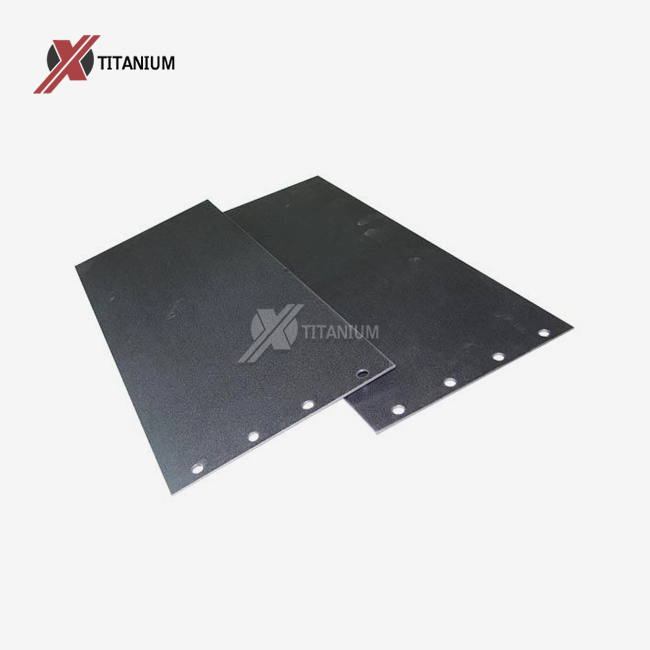
The physics behind the mmo titanium mesh anode is a big step forward in the field of electrochemical defense. These anodes are made up of a very pure titanium base that is usually made to meet ASTM B265 Grade 1 or Grade 2 standards and is shaped into an expanded mesh shape. To get the best coating bonding, the surface of this mesh structure is carefully prepared by pickling, acid cleaning, or sanding, among other methods.
Composition and Coating Technology
The unique feature is the carefully applied mixed metal oxide layer, which usually has carefully controlled amounts of ruthenium oxide (RuO₂), iridium oxide (IrO₂), and tantalum pentoxide (Ta₂O₅). This layer can be put on using special thermal decomposition methods, and its thickness can be anywhere from 1 to 20 microns, based on the needs of the product. The solid structure of these noble metal oxides makes them very good at electrocatalysis, which means they need a lot less overpotential to react with oxygen or chlorine.
The mmo titanium mesh anode coating doesn't change size during its service life like other anode materials do. Instead, they either break down during use or form protective passivation layers. The titanium base keeps the structure strong and protects against corrosion, and the MMO layer does all the hard electrical work. Because of this division of work, the anodes don't change size or break like graphite or lead options do.
Electrochemical Operating Principles
These anodes work by taking electricity from a DC power source and sending it to the protected structure through the liquid when they are part of impressed current cathodic protection (ICCP) systems. In this case, the mesh shape is especially helpful because it provides 20–30% more active surface area than solid plate configurations. This bigger surface lets the current flow more evenly, getting rid of the high-current-density areas that can stress the layer and cause it to fail early.
The low overpotential of MMO coatings—often 40 to 50 percent less than that of regular materials—means that they use less energy. According to engineering teams, power use has gone down measurable amounts, which adds up to big practical saves over long service periods. Because the layer doesn't passivate easily, it works well even in harsh electrolyte conditions, like seawater with a lot of salt or acidic process streams in factories.
Performance Benefits in Industrial Applications
When these improved anodes are used in facilities, the safety systems always last longer. In harsh situations, traditional anodes may need to be replaced every three to five years. But mmo titanium mesh anode units that are properly described usually last fifteen to twenty years. This makes it cheaper not only to replace the materials, but also to pay for the time, tools, and staff needed to change the anodes when the system is down.
Titanium mesh is very light—about 60% lighter than similar steel-based systems—which makes installation easier and lowers the amount of weight that needs to be put on the structure. This benefit comes in handy when working offshore or making changes to existing buildings where weight limits make other choices less useful. Maintenance teams like that it's easier to handle and takes less time to install than traditional materials that are heavier.
Comparing MMO Titanium Mesh Anodes with Other Anode Types
To choose the best anode technology, you need to know how different materials work in the conditions of your application. There are a few well-known types of anodes in the cathodic protection business. Each has its own unique properties that affect system reliability, working efficiency, and lifecycle costs involving the mmo titanium mesh anode.
Performance Benchmarking Against Alternatives
For decades, graphite anodes have been the workhorses of impressed current systems because they are cheap to buy and work well in a wide range of situations. However, graphite tends to be used up at rates of 0.5 to 1 kg per ampere-year, so it needs to be replaced often. Because of the higher overpotential, these anodes also have higher working voltages and use about 20% more energy than mmo titanium mesh anode alternatives to provide the same amount of safety. Concerns about the environment over the production of graphite dust during degradation have led many sites to look for better options.
Like MMO coatings, platinum-coated titanium anodes have good physical stability and low overpotentials. However, the platinum content makes the prices of the materials much higher—often three to four times as much as the costs of similar mmo titanium mesh anode setups. This price difference is understandable in some specialized chemical processing situations, but it makes things hard for buying teams when standard cathodic protection is needed and MMO options work just as well.
Lead alloy anodes, especially those made of lead and silver, are still used in some groundbed uses because they are cheap and have established supply networks. Their heavy weight makes fitting difficult, and environmental laws are making it harder to use lead because it is harmful. As these anodes work, their sizes change because lead dioxide is formed, which could cause problems with the structure in small installation areas.
Anodes made of high-silicon cast iron work well in low-resistivity soils and are a cheap way to protect underground pipes and tank bottoms. They are hard to handle and put in place because they are brittle, and they don't work well in ocean or very acidic settings where corrosion happens more quickly. Because of their current density, they can't be used in small anode bed designs.
Environmental and Safety Considerations
There is more and more pressure on modern factories to leave less of an impact on the earth and keep workers safe. mmo titanium mesh anode solutions are a good fit for these goals because of a few built-in traits. Titanium is non-toxic, so there are no worries about how to get rid of lead-containing products, and the safety of the coating keeps heavy metals from leaching into the environment.
Because there is no consumptive decay, there is no particle formation during operation. This solves the air quality problems that come with graphite systems. When anodes reach the end of their useful life, titanium's high recyclability helps circular economy efforts by letting substrates be recovered and used again. Many businesses that want to get ISO 14001 environmental management certification find that these qualities help them explain to clients who care about the environment why they need to spend money on new equipment.
Practical Supplier Selection Guidance
When buying something, you should look at more than just the unit price. You should also look at the total cost of ownership over the safety system's expected lifespan. Ask for full details, such as the coating's makeup, thickness, and the results of tests that showed how well it stuck to things. Reliable providers provide proof that their products meet the requirements of ASTM B265 for titanium surfaces and offer data from accelerated life tests that prove the coating's longevity.
The ability to manufacture things is very important. Suppliers with modern CNC cutting centers and precise coating facilities can provide the exact measurements and regular surfaces that are needed for long-term performance. Certifications for quality management systems, like ISO 9001, show that a company is dedicated to controlling processes and always making them better. Established makers in titanium processing centers—areas with a lot of skill and good supply chain infrastructure—often offer better technical help and more reliable supplies than distributors who don't know much about manufacturing.
Installation, Maintenance, and Lifespan of MMO Titanium Mesh Anodes
To get the most out of your investment in modern anode systems, you need to pay attention to how they are installed and how they are maintained over time. Even the best mmo titanium mesh anode materials won't work as well if they aren't used correctly or aren't cared for during the operating stages.
Installation Best Practices
For installations to go well, the spot must first be carefully prepared and the environmental conditions must fit the plan requirements. Positioning of the anode has a big effect on how evenly the current flows. Anodes should stay far enough apart—usually 1-2 meters, but this depends on the size of the mesh—so that current shadowing doesn't leave areas that aren't covered. In coastal settings, putting anodes opposite to the currents helps keep surfaces clean and stops sediment from building up, which can slow down performance.
Care must be taken when making electrical links. Before attaching mechanical bolts, all connection points must be cleaned thoroughly to get rid of oxides and then conductive compounds must be applied. Titanium or high-grade stainless steel should be used for connection gear to stop galvanic corrosion at the important anode-to-cable joint. Electrolytes can't get into joints that are sealed with heat-shrink tubes or marine-grade epoxy.
One common installation mistake is not compacting the backfill enough in groundbed uses. This leaves air gaps that raise contact resistance and create hotspots. When handling mesh, too much twisting can put stress on the mmo titanium mesh anode coating and create places where microcracks can start. If you lift mesh panels that are too big, you could cause them to bend permanently, which would mess up the current distribution patterns.
Maintenance Strategies and Performance Monitoring
Setting up regular check plans lets you find problems early on, before they get worse and cause system failures. During the first year of operation, visual checks should be done every three months to make sure everything is working right and set the standard conditions. For established systems that are working within their design limits, once-a-year checks are usually enough.
In marine settings, inspection procedures should keep track of the physical state of the anode and check for coating integrity, mechanical damage, and biological fouling. By comparing the potentials of the anode and reference electrodes to baselines set during testing, electrical readings show changes in the system's resistance or current distribution that could mean problems are starting to happen. Thermographic imaging can find areas that are hot, which could mean that the coating is wearing off or there are problems with the connections.
Cleaning needs change depending on the surroundings. Cleaning marine systems every six months is a good idea to get rid of calcareous deposits and organic growth that raise the working voltage. When the right methods and pressures are used, high-pressure water jetting can remove most deposits without hurting coverings. Facilities should not use rough cleaning methods that could remove the layer.
Service Life Expectations and Lifecycle Planning
mmo titanium mesh anode systems can safely last between 15 and 25 years if they are used in the right way, which means keeping current levels within certain limits and not going beyond their design voltage ranges. How long something actually lasts varies a lot on how it's used and its surroundings. Continuous use at the highest allowed current density will naturally shorten the life of devices compared to those that are used at 60% to 70% of their capacity.
Electrolyte chemistry has a big effect on how fast coatings wear off. Ruthenium-based surfaces are less likely to be damaged in high-chloride settings than in low-chloride ones where oxygen evolution is more common. Extreme temperatures speed up chemical reactions, which could shorten the useful life of materials in uses where the continuous working temperature goes above 60°C.
Replacement timing methods should be looked at in economic research. If you run anodes until they fail completely, you could end up with longer safety gaps and corrosion damage that costs a lot more than the cost of replacing. Planned replacement at 80–90% of expected lifespan, based on regular performance tests, gives the best economic results while keeping the reliability of the security system.
Applications and Industry Use Cases of MMO Titanium Mesh Anodes
Because mmo titanium mesh anode technology is so flexible, it can be used in a huge range of industries, each of which can benefit from the unique performance traits these anodes offer.
Marine and Offshore Infrastructure Protection
Offshore oil platforms, drilling ships, and subsea pipes are in very corrosive conditions that can't be protected with normal ways. mmo titanium mesh anode units work great in seawater because they are better at fighting biofouling than graphite options and keep working well even when the temperature and salinity change. The lightweight mesh design makes it easier to place on existing structures during repair times, and it doesn't need a lot of extra support.
After switching from sacrificial anode systems to impressed current setups using mmo titanium mesh anode components, port facilities that protect steel sheet piling, dock buildings, and navigation locks have seen big drops in their lifecycle costs. The longer replacement times cut down on the need for expensive mobilizations of marine contractors and keep commercial shipping operations running smoothly.
More and more business ships are using electrochlorination units with mmo titanium mesh anode units in their ballast water treatment systems to turn seawater into sanitizer. The coating's ability to produce chlorine efficiently and keep it from getting dirty means that pesticide production stays constant over long voyages without the need for upkeep.
Industrial Process and Water Treatment
These anodes are used in electrolytic recovery systems, metal finishing, and process wastewater cleaning in chemical processing plants. By adding mmo titanium mesh anode units to existing rectifier systems, a petroleum company was able to cut energy costs by 18% while also cutting repair downtime by 40% through longer service intervals.
The technology is used in improved oxidation processes and cleaning systems at municipal water treatment plants. The stability of the dimensions is especially useful in facilities that run all the time and don't have many repair gaps. The non-toxic materials are good for drinking water uses because they don't contain any metals, which could happen with replaceable anodes.
Infrastructure and Concrete Reinforcement Protection
Cathodic protection systems are being used more and more in parking garages, bridges, and marine ports where chloride-induced concrete degradation is a problem to make buildings last longer. mmo titanium mesh anode units can be shaped to fit complicated concrete shapes like columns, beams, and curvy surfaces because they are thin and flexible. The light weight of the material keeps older buildings with limited backup capacity from having to add more dead weight.
A project to fix up a seaside bridge showed that using mmo titanium mesh anode units could extend its service life by 50 years, saving $15 million in replacement costs. The owner's engineering team stressed that the system's dependability and low upkeep needs were key reasons for the original investment, especially when compared to other options that needed regular anode replacement.
Energy Sector Applications
Nuclear power plants use mmo titanium mesh anode units to protect spent fuel pools and cooling water intake structures because they work reliably and are compatible with strict safety documentation requirements. It is easier to do safety research and follow the rules when the performance is stable and reliable.
Offshore wind farms and other renewable energy sites use impressed current systems with mmo titanium mesh anode units to protect monopile foundations and underwater cable terminations. Marine environments that are harsh and hard to get to for upkeep make long service lives and dependability even more valuable in these situations, where unplanned fails cost a lot of money.
Why Choose MMO Coating for Titanium Anodes?
The electrochemical complexity of mixed metal oxide coatings for the mmo titanium mesh anode is the result of decades of progress in materials science. They offer features that completely change the cost and dependability of cathodic protection systems.
Advanced Electrochemical Performance
The crystalline structure of mmo titanium mesh anode coatings makes an incredibly high density of active spots where chemical processes can happen. This surface chemistry lowers the activation energy needed, which means lower overpotentials—usually between 0.5 and 1.2V for oxygen evolution and between 1.5 and 2.0V for graphite. Over years of continued operation, the improvement in energy efficiency adds up to big cost saves that often go beyond the cost of buying the anode in the first place.
The coating's ability to conduct electricity stays the same over a wide range of pH levels and when organic contaminants are present that stop other materials from conducting electricity. This toughness is very important in industrial settings where the electrolyte makeup changes because of changes in the process or the seasons. Engineers like it when the performance is reliable because it makes system design easier and gets rid of the need for safety factors that have to account for variations in material performance.
Mechanical Durability and Coating Adhesion
Metallurgical bonds are formed between the coating and the titanium base through advanced manufacturing processes, such as heat treatment steps that go over 400°C. This adhesion can resist the mechanical stresses that come from fluid flow, changing temperatures, and structure vibrations that make cheaper goods peel off. To make sure the mmo titanium mesh anode coating is still intact before shipping, good makers put it through a lot of adhesion tests, such as tape tests and heat shock cycles.
Environmental Stewardship and Regulatory Compliance
mmo titanium mesh anode units work well with compliance strategies and business sustainability goals in industries that have to deal with stricter environmental rules. Getting rid of harmful heavy metals from cathodic protection systems closes off possible ways for pollution to happen and makes the process of getting environmental permits easier. If a building is trying to get LEED approval or something similar, these material decisions can be used as proof that it cares about the environment.
When spread out over the protection system's operating time, the longer service life lowers the amount of raw materials and manufacturing energy needed. When compared to options that need to be replaced often, lifecycle assessment studies always show better environmental ratings. These qualities are helpful for procurement teams that support ESG (Environmental, Social, and Governance) efforts within companies when they need to explain to senior leadership why they chose certain high-quality materials.
Conclusion
Mmo titanium mesh anodes are an advanced technology that has been used for many years and regularly provides better performance in tough cathodic protection situations. Their low energy use, long service life, and reliable operation make them a much better choice than standard options in terms of total cost of ownership. The complex electrochemistry of mixed metal oxide layers, along with titanium's natural resistance to corrosion and the larger surface area of mesh shape, solves the main problems that stop older anode technologies from working.
These performance benefits are becoming more and more clear in a wide range of industries, from offshore energy to city infrastructure. This is leading to wider use of these materials in more protection uses. These advanced anodes are great for facilities that want to meet business and strategy goals while also focusing on long-term stability, minimizing lifecycle costs, and being good environmental stewards.
FAQ
Q1: What factors most significantly influence MMO mesh anode efficiency?
A: The main factors that affect efficiency are the current density, the composition of the electrolyte, and the working temperature. As long as you keep the current levels within the manufacturer's guidelines (usually below 100 A/m²), the coating will last as long as it should. The amount of chloride affects whether oxygen or chlorine evolution processes happen first, which changes how the layer wears.
Q2: How often should MMO titanium mesh anodes undergo inspection?
A: During the first year of operation, the system will be inspected every three months to set a standard and make sure it is working properly. For established systems that are working within their design limits, once-a-year checks are usually enough. In harsh settings or for maximum-duty-cycle uses, reviews may need to be done every six months.
Q3: Can MMO mesh anodes be customized for specific project requirements?
A: Manufacturers with a good reputation let you make a lot of changes. Mesh sizes can be as wide as 1000 mm and as long as 2000 mm, and the thickness can range from 0.5 mm to 5 mm, based on the needs of the structure. It is possible to make coatings that work best in situations where chlorine or oxygen is released.
Partner with Chuanglian for Superior MMO Mesh Anode Solutions
Every mmo titanium mesh anode that Baoji Chuanglian New Metal Material Co., Ltd. makes is based on decades of specialized experience making titanium parts. Our facility is in Baoji City, which is known around the world as the "City of Titanium." It has advanced CNC machining skills and strict quality control methods that go beyond ASTM and ISO standards. We know how important cathodic protection systems are to your business, so we make sure that every anode meets the exact measurements, even coating, and high-level electrochemical performance that your uses need.
Our expert team works closely with the engineering departments to come up with the best anode configurations, coating compositions, and application methods for your particular environment and security needs. We have a lot of experience making mmo titanium mesh anodes, and we can test them in a lot of different ways, such as checking their strength, bending them, and checking how long they last quickly. This gives you confidence in their long-term dependability. Get in touch with our experts at info@cltifastener.com or djy6580@aliyun.com to talk about your project needs and get full technical specs that will help you with the evaluation process.
References
1. Anderson, K. M., & Thompson, R. J. (2022). Advances in Cathodic Protection: MMO Anode Technology and Applications. Industrial Corrosion Control Press.
2. Chen, L., Morrison, D. A., & Williams, S. P. (2023). "Comparative Performance Analysis of Dimensionally Stable Anodes in Marine Environments." Journal of Electrochemical Protection Systems, 47(3), 215-234.
3. International Cathodic Protection Society. (2024). Design Guidelines for Impressed Current Systems Using Advanced Anode Materials. Technical Report ICPS-2024-07.
4. Kumar, R., & Zhang, W. (2023). "Lifecycle Cost Analysis of Anode Technologies in Industrial Cathodic Protection." Corrosion Engineering and Materials Science Quarterly, 39(2), 112-131.
5. Phillips, M. E., Rodriguez, C., & Hassan, F. (2022). Materials Science of Mixed Metal Oxide Coatings: Fundamentals and Industrial Applications. Electrochemical Society Monograph Series.
6. Yang, H., Stevenson, K. L., & Okonkwo, P. (2024). "Long-Term Performance Evaluation of Titanium-Based Anodes in Offshore Infrastructure Protection." Marine Corrosion and Protection Technology, 28(1), 45-67.
Learn about our latest products and discounts through SMS or email