- English
- French
- German
- Portuguese
- Spanish
- Russian
- Japanese
- Korean
- Arabic
- Greek
- German
- Turkish
- Italian
- Danish
- Romanian
- Indonesian
- Czech
- Afrikaans
- Swedish
- Polish
- Basque
- Catalan
- Esperanto
- Hindi
- Lao
- Albanian
- Amharic
- Armenian
- Azerbaijani
- Belarusian
- Bengali
- Bosnian
- Bulgarian
- Cebuano
- Chichewa
- Corsican
- Croatian
- Dutch
- Estonian
- Filipino
- Finnish
- Frisian
- Galician
- Georgian
- Gujarati
- Haitian
- Hausa
- Hawaiian
- Hebrew
- Hmong
- Hungarian
- Icelandic
- Igbo
- Javanese
- Kannada
- Kazakh
- Khmer
- Kurdish
- Kyrgyz
- Latin
- Latvian
- Lithuanian
- Luxembou..
- Macedonian
- Malagasy
- Malay
- Malayalam
- Maltese
- Maori
- Marathi
- Mongolian
- Burmese
- Nepali
- Norwegian
- Pashto
- Persian
- Punjabi
- Serbian
- Sesotho
- Sinhala
- Slovak
- Slovenian
- Somali
- Samoan
- Scots Gaelic
- Shona
- Sindhi
- Sundanese
- Swahili
- Tajik
- Tamil
- Telugu
- Thai
- Ukrainian
- Urdu
- Uzbek
- Vietnamese
- Welsh
- Xhosa
- Yiddish
- Yoruba
- Zulu
How Do Titanium Exhaust Bolts Improve Heat Resistance and Longevity?
A titanium exhaust bolt improves heat resistance and longevity by combining three traits: a Ti-6Al-4V alloy that holds strength through repeated heating cycles, a natural oxide film that resists rust, and a weight about 40% lower than steel bolts of comparable strength. As a titanium fastener manufacturer, I see these traits reduce seized threads, cut weight, and extend service intervals. The benefit has limits, though. Temperature, exposure time, thread treatment, and joint design decide the final result. This guide explains how the bolts work, where they fit, and how to specify them correctly.


Why Exhaust Fasteners Fail and Where Titanium Fits
Why Exhaust Fastener Performance Matters
The exhaust flanges are located in a rough area of a car. Heavy heat, repeated heating and cooling, engine vibration, water, road salt, and exhaust condensate can all damage bolts. This can lead to rust, thread galling, loosening, and loss of holding force over time. Fatigue cracks may then appear. Also, a stuck bolt makes it necessary to drill in order to remove the header. A broken fastener can lead to a loose pipe, an exhaust leak, or a guarantee claim for a company that makes motorbike exhaust. So, buyers look at the grade of the material, its ability to handle high temperatures, its strength, its weight, its thread fit, how it will be installed, and its cost all at the same time. In some places, stainless steel or Inconel works better, and I'll talk about those below.
What Is a Titanium Exhaust Bolt?
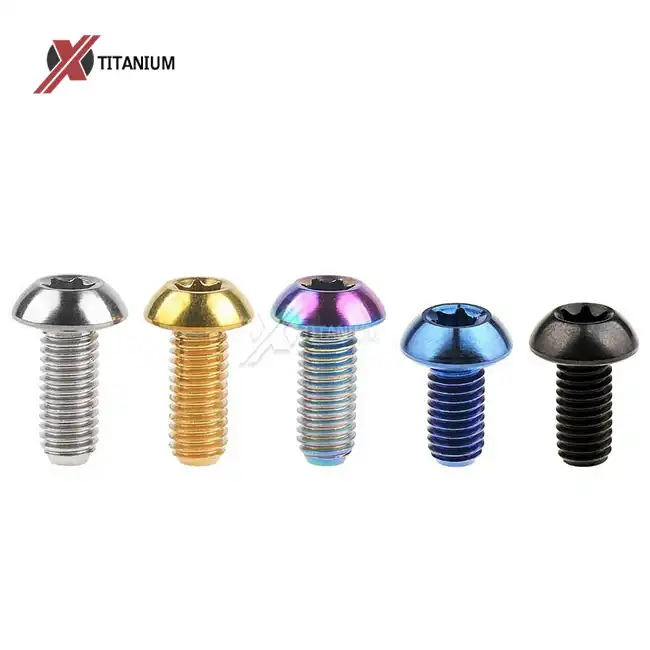
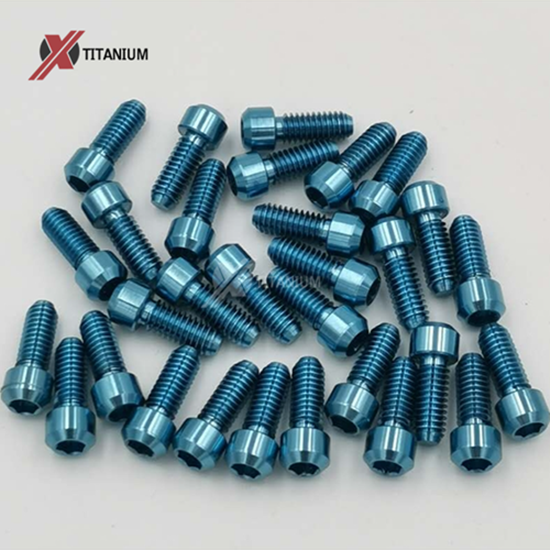
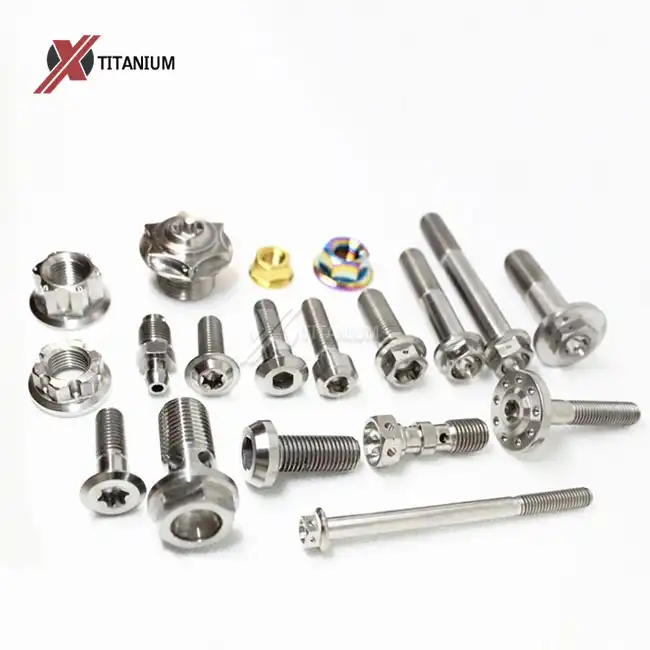
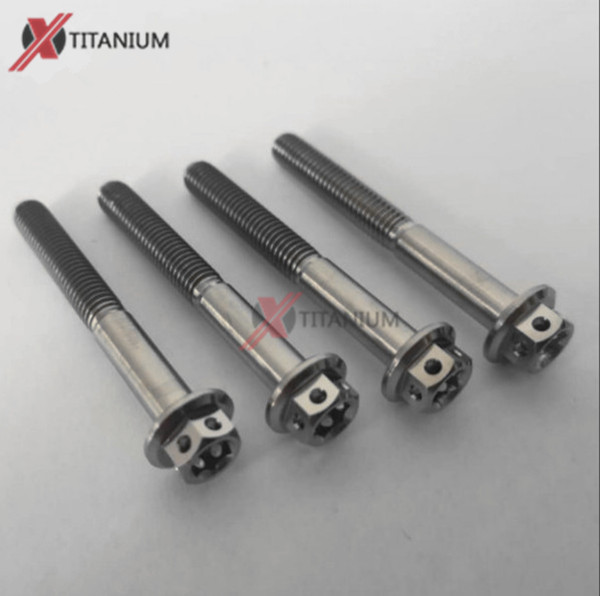
This is the short version of the description. A titanium exhaust bolt is a type of fastener made from commercially pure titanium or a titanium alloy. It is used on motorcycles, race cars, and performance vehicles to hold exhaust manifolds, headers, flanges, and turbo connections in place. Flange bolts, studs, nuts, kits, and special parts are all common forms. We at Chuanglian make ours on CNC machines from Grade 5 titanium (Ti-6Al-4V). They come in sizes from M6 to M36, and we can also make them to order. Some surface treatments are nitriding, polishing, and anodizing. You can get it in natural titanium, gold, blue, green, purple, black, and rainbow colors. Our standard is made to order, so the length and shape of the head will be based on your drawing.
Grade 2 vs. Grade 5 Titanium
Next is grade choice. Grade 2 titanium is clean enough for business use. It doesn't rust and is easy to shape, so it's good for lower-load assemblies. When you add about 6% aluminum and 4% vanadium to Grade 5, it makes it much stronger. This is why it is usually used for load-bearing exhaust flanges. The yield strength of our Gr5 bolts is 1,100 MPa, and their tensile strength is 1,200 MPa. They are also 350 HV hard. ASTM B348 says that Grade 5 bar stock must have a minimum tensile strength of 895 MPa. The numbers for finished bolts depend on tests and heat treatment, so make sure you get certificates for each batch. Before making a choice, you should think about the load, temperature, vibration, and the mentioned working limits.
How Titanium Exhaust Bolts Improve Heat Resistance and Longevity
Strength Under Heat and Thermal Cycling
Heat is what puts the most stress on an exhaust joint using a titanium exhaust bolt. Parts get bigger when they're hot and smaller when they're cool. Each repeat can open a bolt or lower the pressure. It takes about 9 µm/m·K for Ti-6Al-4V to expand, which is about half the rate at which austenitic stainless steel does, which is 17 µm/m·K. Because of this, a titanium bolt changes length less than a stainless bolt. Even with a stainless steel plate, the difference still changes the preload, so it needs to be tested. The temperature range in our specification is up to 500°C (932°F). Titanium alloys become less strong as the temperature rises, and the surface starts to oxidize above about 500–600°C. I think that 500°C is the upper limit, and I suggest that you test it at the real temperatures of your flanges.
Corrosion Resistance and Anti-Seize Behavior
Many exhaust bolts break because of corrosion. Titanium makes a thin, stable oxide film that protects the surface from rain, road salt, and exhaust condensate. Because titanium doesn't rust like steel does, it's generally easy to take off during service. For riders near the coast, our Gr5 bolts can also stand up to seawater, acids, and chlorides. One thing that is not the same as galling resistance is corrosion resistance. When titanium threads are run dry, they can cold-weld under load, so I always use a high-temperature anti-seize compound on installations. Our nitriding choice makes the surface harder, which can help threads last longer. Check it with your own set of flanges and nuts before giving the go-ahead.
Weight, Heat Transfer, and Service Life
Our Gr5 bolts are about 40% lighter than steel bolts that are the same strength. On one bike, a set of flange bolts only saves a few grams. But when paired with a titanium header or muffler, the savings add up, and the joint doesn't have to deal with as much vibration. Ti-6Al-4V moves heat at a rate of about 7 W/m·K, while 304 stainless steel moves heat at a rate of about 16 W/m·K. The bolt moves less heat through it to cooler parts it touches. In some joint designs, that helps, but it can't take the place of proper heat shielding. As long as the threads are clean and the torque is right, Gr5 also has good fatigue resistance when used in high-vibration situations.
Titanium Exhaust Bolts vs. Stainless Steel and Inconel
Material Comparison at a Glance
Buying teams should check things against how they work in real situations, not against what the company says they can do. The major changes are shown in the table below.
| Factor | Titanium Grade 5 | Stainless Steel | Inconel 718 |
|---|---|---|---|
| Density | About 4.4 g/cm³ | About 8.0 g/cm³ | About 8.2 g/cm³ |
| Corrosion resistance | Strong | Good, grade dependent | Strong |
| Heat capability | Up to 500°C per our specification | Adequate for many standard systems | Commonly used to about 650°C |
| Galling risk | Higher; anti-seize required | Moderate; anti-seize advised | Moderate; anti-seize advised |
| Cost | Higher than stainless | Lowest | Higher than stainless |
Titanium is better for weight, but Inconel is better for long-term heat.
Where Stainless Steel and Inconel Win
Stainless steel works well for a lot of basic devices instead of a titanium exhaust bolt. There is less of it, it ships from stock almost everyplace, and it can handle normal exhaust heat. Some buyers switch from titanium to stainless steel to meet a price goal. This is a smart choice for products where weight doesn't matter. Inconel keeps its strength and resistance to oxidation better in harsh, high-temperature areas that stay that way, like where the turbocharger and manifold connections are made. Titanium is not a good choice if your flange is often exposed to temperatures above 500°C. Instead, I would suggest Inconel or another high-temperature alloy. When you match products honestly, you protect your business from broken fasteners and build a relationship that will last.
When Titanium Justifies the Premium
Titanium is worth the price when the end user cares about weight, resistance to rust, looks good, and can be used. It's clear that aftermarket silencer brands are a good fit. Titanium bolts are the same weight and finish as a titanium header or muffler, which is why riders pay more for them. Titanium is also better for cars that get serviced often because the bolts don't rust and usually come out clean after rain and salt seasons. Aerospace and racing programs already call for fasteners made of Ti-6Al-4V, which shows that the alloy has a track record of working well in tough conditions. Stainless steel is often a better choice for commuter-grade systems that need to stay within a tight budget.
Choosing, Installing, and Applying Titanium Exhaust Bolts
How to Choose the Right Titanium Exhaust Bolt
Here are some things you need to know about the operating conditions: maximum temperature, exposure time, load, vibration, and corrosion exposure. Then check the sizes. For M8 or M10 bolts, most motorbike exhaust flanges are used. Check the diameter, thread pitch, length, head style, shank length, thread engagement, washers, nuts, and hole shape of the flange. Every type of bolt, stud, flange bolt, socket-head bolt, and full kit is best for a different type of assembly. It is safer to use natural or polished finishes on hot rail areas instead of anodized ones because the colors can change when heated enough. Before giving the go-ahead, test any colored finish. Ask for material certificates, inspection data, and traceability at all times. These will show that the part is real Ti-6Al-4V.
Installation Guide
The joint is protected by the right placement. Before tightening, check the seal, clean the threads, and make sure the flange is in the right place. Use a high-temperature anti-seize compound on the threads to make them less frictional and easier to take off later. Oil changes the connection between torque and preload, so don't use a dry-thread torque value. Instead, use the torque value from your provider or engineering team. Tighten in stages with a calibrated wrench, and on flanges with more than one bolt, follow a cross pattern. Check again for leaks, rust, flange movement, and thread damage after the first heat cycles. Do not try to push a bolt that won't move. Take a break, clean the threads, and look them over.
Application Guide
Motorcycle headers and slip-on flanges work well with a titanium exhaust bolt because the small, light fasteners can handle vibration and regular maintenance. Temperatures near cylinder heads and catalytic converters need to be looked at more closely in header and flange applications for cars. When it comes to racing systems, there are extra needs for lowering weight, tracking, special design, and quick service.
The most care needs to be taken with turbo exhaust manifolds because the temperatures and duty cycles in the area can be higher than what a Grade 5 bolt can handle. I think engineering validation should come first for any important joint. Our titanium goods are also used in the medical, aircraft, petrochemical, and naval industries. This means we have experience with high-stress and corrosive environments in areas other than exhaust work.
Buying Guide for Titanium Exhaust Bolts
Write a Clear Purchasing Specification
A clear specification cuts down on mistakes and delays in getting quotes. Write down the type of alloy, its size, shape, thread type, length, head style, number, nuts, washers, finish, working temperature, packaging, labeling, and any paperwork that is needed. Custom, wholesale, bulk, and OEM programs all have different lead times and minimum order quantities, so keep standard items separate from them. As a custom standard, we machine to your drawing, which can include different lengths and head styles. A step-by-step process is best for OEM exhaust programs: a technical review, samples, testing in heat and on the road, a small trial batch, and then repeat orders. We can quickly confirm grade, finish, and surface treatment when we have accurate drawings and temperature data.
Evaluate the Supplier
Check to see if a supplier can machine, control materials, make sure threads are straight, have an inspection system, treat surfaces, have a large capacity, a short lead time, experience exporting, and a low minimum order quantity. Chuanglian is based in Baoji, which is known as the "City of Titanium," and has been researching and working with titanium for more than ten years. We use twelve CNC machines and check every step of the process, from the raw materials to the end product. ISO 9001 and AMS 4928 are two of the standards we offer. Before you commit to a large order, ask any seller for examples, material certificates, inspection reports, and help with installation. To get the best deal, look at more than just the unit price. A broken or stuck bolt costs more than the savings.
Are Titanium Exhaust Bolts Worth It? A Quick Decision Guide
Follow these four steps. To begin, write down the temperature range, thermal cycles, vibration, corrosion exposure, and exact position of the bolts. Second, make a list of your top priorities, such as resistance to heat, strength, weight, corrosion protection, appearance, usability, cost, and supply. Third, don't just look at the bolt when you compare titanium, stainless steel, and Inconel. Look at the whole joint as well. Fourth, check a sample to make sure the measurements, torque, anti-seize, nuts, washers, tightening order, and inspection are correct. Titanium is worth the higher price if the benefits of being light and easy to work on outweigh the cost. If the exhaust temperatures stay above 500°C all the time or if cost is the main factor, pick a different alloy.
Conclusion
Titanium exhaust bolts last longer and are stronger because they are made of Ti-6Al-4V, which has a corrosion-resistant oxide film, is lighter, and doesn't conduct heat as well. Grade 5 is good for rings that hold weight, while Grade 2 is better for smaller loads. For temperatures up to 500°C, our lists of specifications include areas that are hot and never cool, like turbo pipes. These areas may need Inconel, while goods that need to save money may choose stainless steel. The results rely on how well the threads fit, how much torque is used, the finish chosen, and the material documents being checked. Hot surfaces are safer for hot flanges when the surface is natural or polished instead of anodized, because the colors can change. To find out if titanium is worth the price, it is best to weigh the whole joint instead of just the bolt.
FAQ
Q1: Can a titanium exhaust bolt handle 600°C?
A: Not usually. Our lists of Grade 5 specs use up to 500°C. Above that, strength loss and surface oxidation get worse, so for areas that are constantly hot, I suggest testing Inconel or thinking about using it.
Q2: Do titanium exhaust bolts need anti-seize?
A: Yes. A high-temperature anti-seize ingredient makes galling less likely. The torque-to-preload relationship changes when lubricant is added, so follow torque instructions that are written for threads that have been oiled.
Q3: Which sizes do you supply?
A: Our range goes from M6 to M36, and we can also make sizes to order. This range includes common ring sizes like M8 and M10. Send sketches of the length and shape of the head.
Q4: Is Grade 5 better than Grade 2 for exhaust use?
A: Because it is stronger, Grade 5 is good for load-bearing exhaust flanges. Grade 2 is easier to shape and doesn't rust, but it can't hold as much weight.
Request a Titanium Exhaust Bolt Specification and Quote
In Baoji, which is known as the "City of Titanium," Chuanglian makes titanium exhaust bolts. They have more than ten years of experience working with titanium, CNC equipment, and quality checks that happen from the raw material to the finished product. Email us at info@cltifastener.com or djy6580@aliyun.com with your drawings, sizes, lengths, finish, and working temperature. We'll look them over and get back to you with a price for a sample run.
References
1. Titanium: A Technical Guide, 2nd Edition (ASM International), 2000
2. Materials Properties Handbook: Titanium Alloys (ASM International), 1994
3. Titanium and Titanium Alloys: Fundamentals and Applications (Wiley-VCH), 2003
4. ASTM B348/B348M, Standard Specification for Titanium and Titanium Alloy Bars and Billets (ASTM International), 2019
5. Machinery's Handbook, 31st Edition (Industrial Press), 2020
6. Shigley's Mechanical Engineering Design, 11th Edition (McGraw-Hill Education), 2020
Learn about our latest products and discounts through SMS or email