- English
- French
- German
- Portuguese
- Spanish
- Russian
- Japanese
- Korean
- Arabic
- Greek
- German
- Turkish
- Italian
- Danish
- Romanian
- Indonesian
- Czech
- Afrikaans
- Swedish
- Polish
- Basque
- Catalan
- Esperanto
- Hindi
- Lao
- Albanian
- Amharic
- Armenian
- Azerbaijani
- Belarusian
- Bengali
- Bosnian
- Bulgarian
- Cebuano
- Chichewa
- Corsican
- Croatian
- Dutch
- Estonian
- Filipino
- Finnish
- Frisian
- Galician
- Georgian
- Gujarati
- Haitian
- Hausa
- Hawaiian
- Hebrew
- Hmong
- Hungarian
- Icelandic
- Igbo
- Javanese
- Kannada
- Kazakh
- Khmer
- Kurdish
- Kyrgyz
- Latin
- Latvian
- Lithuanian
- Luxembou..
- Macedonian
- Malagasy
- Malay
- Malayalam
- Maltese
- Maori
- Marathi
- Mongolian
- Burmese
- Nepali
- Norwegian
- Pashto
- Persian
- Punjabi
- Serbian
- Sesotho
- Sinhala
- Slovak
- Slovenian
- Somali
- Samoan
- Scots Gaelic
- Shona
- Sindhi
- Sundanese
- Swahili
- Tajik
- Tamil
- Telugu
- Thai
- Ukrainian
- Urdu
- Uzbek
- Vietnamese
- Welsh
- Xhosa
- Yiddish
- Yoruba
- Zulu
Can Titanium Self Tapping Screws Prevent Motorcycle Panel Damage?
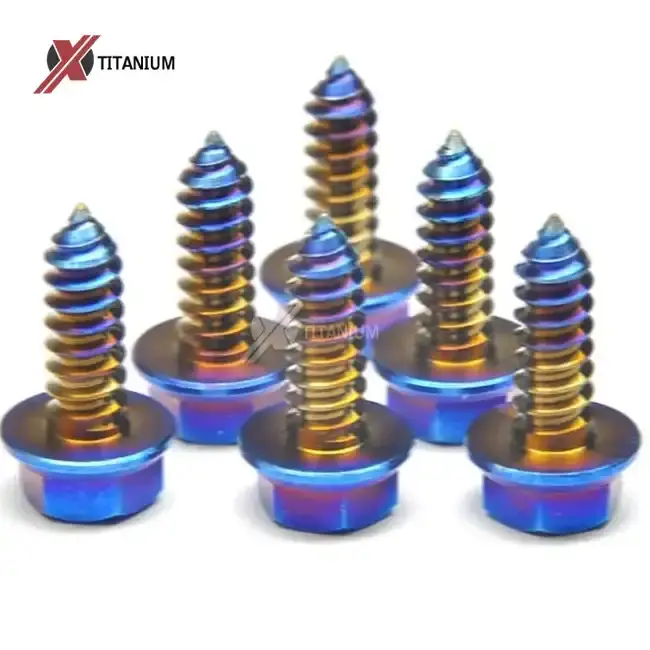
Yes, but only as part of a well-matched joint. A titanium self tapping screw for motorcycle panels resists rust, weighs more than 40 percent less than a steel screw of the same size, and forms clean threads when its diameter, pitch, and point suit the plastic. Those traits lower the risk of rust stains, seized hardware, and stress cracks around the mounting hole. Titanium cannot fix an oversized pilot hole, heavy torque, or cross-threading, though. In this guide, I explain where titanium helps, where it does not, and how buyers can select, install, and test these screws to protect fairings, fenders, and side covers.
Why Motorcycle Panels Crack and Fasteners Fail?
Damage Usually Starts at the Mounting Hole
Most of the damage I see on panels starts with a simple screw swap. It is replaced with a new one that is longer or thicker after the old one is taken out because it is rusty. It starts to shake, the hole gets bigger, and the plastic boss breaks. The engine will then work on that weak spot every mile. There are also rust spots on the steel heads, fairings that are twisted from being too loosely tightened, and gears that stop working when the drive is being taken apart. Not only is the panel to blame, but so are the screws that were used or the way they were put together. Repair shops, distributors, and buyers should all see the screw as an important part of the joint. This is because a low-cost part can cost a lot to return.
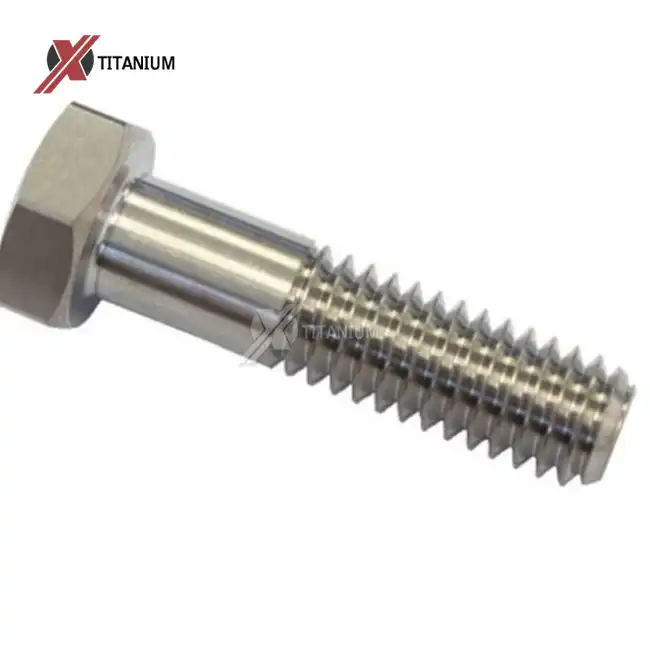
What a Titanium Self-Tapping Screw Is
There is already a hole in composite, thin sheet metal, or plastic for a titanium self-tapping screw for motorcycle. The screw makes its own thread in the hole. There are two main kinds. When screws make threads, they move stuff around to shape the thread. When screws cut threads, they take out a small piece of stuff. The type of head, the drive, the thread profile, the point shape, the shank width, and the surface finish can all change how well it works. Picking a drill by how it looks is never a good idea. It is also very important what kind of panel it is and how thick it is. Fairings, trim, hooks, and covers that aren't solid are all popular uses. You can't use these screws instead of the safety bolts on frames and other parts that need to be strong. An engineer has to approve any change like that.
Grade 5 and Grade 2 Titanium
Two kinds of titanium show up in parts quotes. Grade 2 is clean enough to use for work. Metal that doesn't rust quickly is best for light-duty gear because it's not very strong. There is about 4% vanadium and 6% aluminum in Grade 5, which is also written as Ti-6Al-4V. The minimum tensile strength for Grade 5 bar is 895 MPa, and the minimum tensile strength for Grade 2 bar is 345 MPa. Each is set by ASTM B348. Our Gr5 screws are 950 MPa strong when pulled apart, and they are 36 HRC hard. The screw can cut more while making threads because it is harder. Grade 5 steel is lighter than carbon steel, which has a density of about 7.85 g/cm³.
What Titanium Can and Cannot Do for Panel Protection
Where Titanium Helps: Corrosion, Weight, and Thread Design
Because it makes a stable oxide film on top, it can handle rain, road salt, and air from the coast. Screws are less likely to freeze or rust, which makes it easy for panels to be taken off during service. Second, you'll have less weight, which is good for speed builds. The third is the color of the thread. The screw spreads the load over more plastic, which makes the hole edge less stressed, when the panel's diameter, pitch, point, and head bearing surface are all the same. Because of these traits, many of the things that damage or crack panels are less likely to happen. So, a good titanium self tapping screw for motorcycle keeps the panel clean, is easy to take off, and is the right size.
Where Titanium Cannot Help
It's not possible to fix a bad fit with cloth. There won't be enough plastic to hold the thread if the pilot hole is too big. If the screw is too tight, it will tear the hole or break the head. If you cross-thread, use old, weak plastic, are out of line, or fix places that aren't supported, the screw will crack no matter what kind it is. Fasteners that don't have locking mechanisms can come loose from vibrations that happen all the time. Some of the things that affect how well a panel is protected are the shape of the screws, how the hole is prepared, how the panel is tightened, the materials around it, and how it is used. It has titanium in it, but that doesn't mean you don't need to work hard. It's just one good option among many; it doesn't mean nothing bad will happen.
Titanium vs. Stainless Steel and Aluminum
Titanium isn't always the best thing to buy. Steel made of stainless steel is easier to find, doesn't cost as much, and works well for fixing things that need to be fixed often to meet standards. It adds weight because it's dense (about 8 g/cm³), and salty air can still stain the surface. These screws wear out faster and are easy to strip. Be careful when they're near movements. It's easy to work with aluminum screws because they are light and strong. Each titanium piece costs more, but it has a nice finish, is light, and doesn't rust. Because of this, it's a good choice for parts that will be seen, performance builds, and markets near the coast. It's important for distributors to see the full cost, which includes returns, complaints about rust, and repairs that need to be done over and over again.
Selecting, Installing, and Protecting Titanium Fasteners
Choose Size, Head Style, and Panel Match
You shouldn't guess at M4 or M5 when choosing a titanium self tapping screw for motorcycle bodywork. Instead, you should look at the original fastener. Check the manufacturer's instructions to make sure the head size, pitch, point shape, thread diameter, and total length are all correct. Pressure and space on the surface are different depending on the type of head. The panel can be loaded in a number of ways, including with button, low-profile, flanged, and countersunk heads. The force is spread out over a bigger area by flanged heads. A panel could be made of ABS, polypropylene, polycarbonate, composite, or thin metal. Make sure it works with that material. Finally, look over the design several times to make sure it considers things like shaking, moisture, removal many times, and distance from exhaust parts.
Install Without Damaging the Panel
First, look for cracks, holes that are too big, and things that aren't lined up right in the panel, hole, clips, and inserts. Make sure the pilot hole is the right size, depth, and thread engagement before you choose the screw. First, put the panel in order. Then, manually turn the screw so it goes in straight and doesn't cross-thread. Check the torque value that came with your bike and use a low-speed tool or a hand driver to change the torque. Not more than what makes the panel and head seats feel safe. Make sure the panel is still tight, lined up, and free of stress marks after the first ride. The panel doesn't crack for no reason because of the extra time at this point.
Prevent Galling, Loosening, and Galvanic Problems
Galling is the name for adhesive wear that sticks to titanium threads and can seize them. It happens more often when threads are dry, dirty, or moving quickly. A thread lube or anti-seize substance might help, but make sure it works with the plastic, the temperature, the torque, and any inserts. Adding more torque won't stop the vibration. Thread-locking compound, flanged heads, captive nuts, or threaded inserts should be used instead. Titanium is more noble than aluminum, so when it gets wet or salty, the aluminum part may rust faster. It is less likely to happen with isolation cleaners, barrier substances, and drainage routes. Look at open parts in situations that are like the ones they will be used in.
Sourcing, Testing, and Application Fit
Testing and Quality Verification
People from other companies who want to buy should look at both the screw and the finished joint. Ask for proof of the grade of the material, its chemical make-up, tensile data, a physical inspection, thread measures, and the ability to find the batch that was used to make the item. Also, check the panel's material and width for things like how hard it is to install, how well it holds up against pull-out and strip-out, cracking, repeated installation, shaking, and rust.
Compare the results to the approved original bolt to get an idea of where to start. Chuanglian checks every step of the process, from the raw materials to the finished product, as part of our system for making sure the quality is good. That's another thing we need from you before you order a lot of them. Thread quality that stays the same is important because it affects how well a screw taps.
Application Recommendations by Component
What you value changes depending on where you are. There must be the right number of pilot holes in the fairings and body parts, as well as heads that spread the load. Water, salt, and shifts can damage light frames and license plate holders, so check the wire room and locking needs. There are parts of engine covers that are only there to look good and parts that have to meet the manufacturer's torque or sealing requirements. There must be tests on the temperature, thermal expansion, and finish stability of a titanium self tapping screw for motorcycle before it can be used near the exhaust. Frames and other building parts should keep the nuts that came with them. A self-tapping screw shouldn't be used to change hardware that is important for safety or structure unless it has been approved by an expert.
Chuanglian Specifications and RFQ Details
Baoji Chuanglian New Metal Material Co., Ltd. sits in Baoji, the City of Titanium, and brings more than ten years of titanium machining experience and a dozen CNC machine tools to each order. Here are the core specifications of our screws:
| Item | Specification |
|---|---|
| Material | Titanium Grade 5 (Ti-6Al-4V) |
| Standards | ASTM B348, ISO 5832-3; customized |
| Thread type | Self-tapping |
| Diameter | M4 to M12 |
| Length | Customized, 10 mm to 50 mm |
| Tensile strength | 950 MPa |
| Hardness | 36 HRC |
| Processing | CNC machined |
| Surface treatment | Polishing, anodizing, nitriding |
| Colors | Ti nature, gold, blue, green, purple, black, rainbow |
For an accurate quotation, send the diameter, length, thread pitch, head and drive style, finish, application location, quantity, packaging, and documentation needs. These details let your team compare quotes on equal terms and decide whether a drawing review or samples should come first.
Conclusion
Titanium self tapping screw for motorcycle can help protect motorbike panels, but only in well-thought-out joints. It's lighter, doesn't rust, and is strong enough to make threads out of. This means there is less stress at the hole, less rust, and gear that won't move. It can't fix pilot holes that are too big, cross-threading, high torque, plastic that is easy to break, or locking mechanisms that are missing. For most repairs, stainless steel is still the cheaper choice. Aluminum, on the other hand, is best for low-load decorative parts. To get the right result, you need to use the right size bolt compared to the original, the right head style, start by hand, use controlled force, avoid seizing, and do galvanic checks. A screw works as it should after being checked on a real panel and its paperwork being looked over. Titanium works best for bodywork that will be exposed, used for performance, or near the coast. It should never be used instead of nuts to hold things together.
FAQ
Q1: Can titanium self-tapping screws replace every motorcycle bolt?
A: Not at all. Small pieces of metal, plastic, and composite panels like those on fairings and fenders are all things that they can work with. Unless experts say otherwise, the right nuts must be used on frames, motor mounts, and other places where safety is important. Because they are stronger, Grade 5 screws are better than Grade 2 screws.
Q2: Why choose Grade 5 instead of Grade 2?
A: Grade 5 is better. The minimum tensile strength for Grade 5 bar is 895 MPa, and the minimum tensile strength for Grade 2 bar is 345 MPa. Each is set by ASTM B348. A screw can cut more while it makes threads because it is stronger. Grade 2 is still good for metal that doesn't need to be very strong but does need to fight rust.
Q3: What should I send for a bulk quote?
A: Send the type of motorcycle, where it will be mounted, its diameter, length, pitch, head style, finish, number, instructions for how it should be packed, and any drawings or samples you have. We can figure out how to make things better with the help of estimated monthly volume. Afterward, we talk with you about the materials and prototypes you made.
Q4: Does titanium cause galvanic corrosion with aluminum clips?
A: Titanium self-tapping screw for motorcycle is more noble than aluminum, so aluminum rusts faster when it gets wet and salty. Not as likely with an isolating compound or washer, and a thread lubricant keeps things from getting stuck.
Request a Titanium Self Tapping Screw for Motorcycle Quote from Chuanglian
A titanium self-tapping screw for motorcycle manufacturer called Chuanglian is found in Baoji, the "City of Titanium." Gr5 (Ti-6Al-4V) screws come in lengths ranging from 10 mm to 50 mm and sizes ranging from M4 to M12. You can polish, anodize, or nitride the finishes. If you email info@cltifastener.com or djy6580@aliyun.com your picture, example, or the size you need, we'll talk about the material, try out the prototype, and make a lot of them.
References
1. ASM Handbook, Volume 2: Properties and Selection: Nonferrous Alloys and Special-Purpose Materials, 1990
2. ASTM B348/B348M Standard Specification for Titanium and Titanium Alloy Bars and Billets, 2019
3. Titanium: A Technical Guide, 2nd Edition, 2000
4. Introduction to the Design and Behavior of Bolted Joints, 4th Edition, 2007
5. Titanium Alloys for Aerospace Applications, Advanced Engineering Materials, 2003
6. ASM Handbook, Volume 13: Corrosion, 1987
Learn about our latest products and discounts through SMS or email