- English
- French
- German
- Portuguese
- Spanish
- Russian
- Japanese
- Korean
- Arabic
- Greek
- German
- Turkish
- Italian
- Danish
- Romanian
- Indonesian
- Czech
- Afrikaans
- Swedish
- Polish
- Basque
- Catalan
- Esperanto
- Hindi
- Lao
- Albanian
- Amharic
- Armenian
- Azerbaijani
- Belarusian
- Bengali
- Bosnian
- Bulgarian
- Cebuano
- Chichewa
- Corsican
- Croatian
- Dutch
- Estonian
- Filipino
- Finnish
- Frisian
- Galician
- Georgian
- Gujarati
- Haitian
- Hausa
- Hawaiian
- Hebrew
- Hmong
- Hungarian
- Icelandic
- Igbo
- Javanese
- Kannada
- Kazakh
- Khmer
- Kurdish
- Kyrgyz
- Latin
- Latvian
- Lithuanian
- Luxembou..
- Macedonian
- Malagasy
- Malay
- Malayalam
- Maltese
- Maori
- Marathi
- Mongolian
- Burmese
- Nepali
- Norwegian
- Pashto
- Persian
- Punjabi
- Serbian
- Sesotho
- Sinhala
- Slovak
- Slovenian
- Somali
- Samoan
- Scots Gaelic
- Shona
- Sindhi
- Sundanese
- Swahili
- Tajik
- Tamil
- Telugu
- Thai
- Ukrainian
- Urdu
- Uzbek
- Vietnamese
- Welsh
- Xhosa
- Yiddish
- Yoruba
- Zulu
How strong is titanium wire?
Titanium wire has a very high tensile strength, which can range from 240 to 1170 MPa based on the grade and how it was processed. The strength-to-weight ratio of medical titanium wire made to ASTM F67 and F136 norms is better than that of common materials like stainless steel. Grade 1 commercially pure titanium wire has a tensile strength of 240 MPa and is very flexible. Grade 5 (Ti-6Al-4V) has a tensile strength of over 900 MPa. Because of its extreme strength, biocompatibility, and resistance to rust, titanium wire is essential for medical uses where failure of the material could be life-threatening.
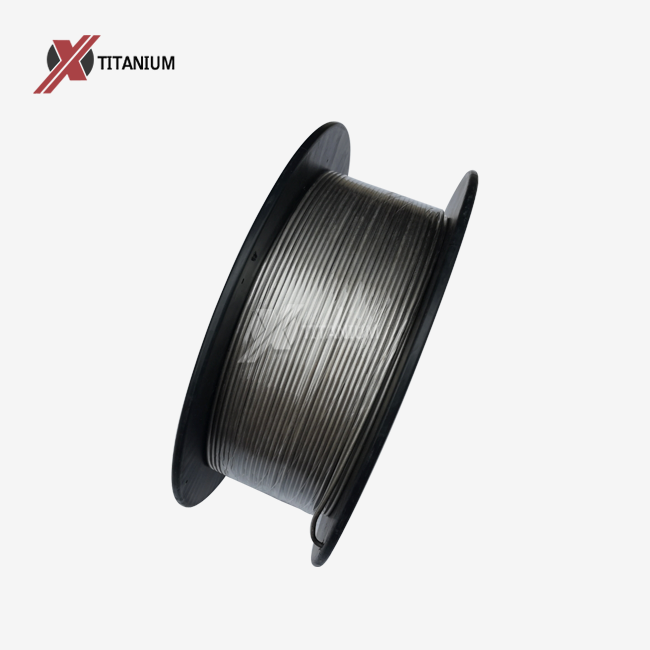
Understanding the Strength and Properties of Medical Titanium Wire
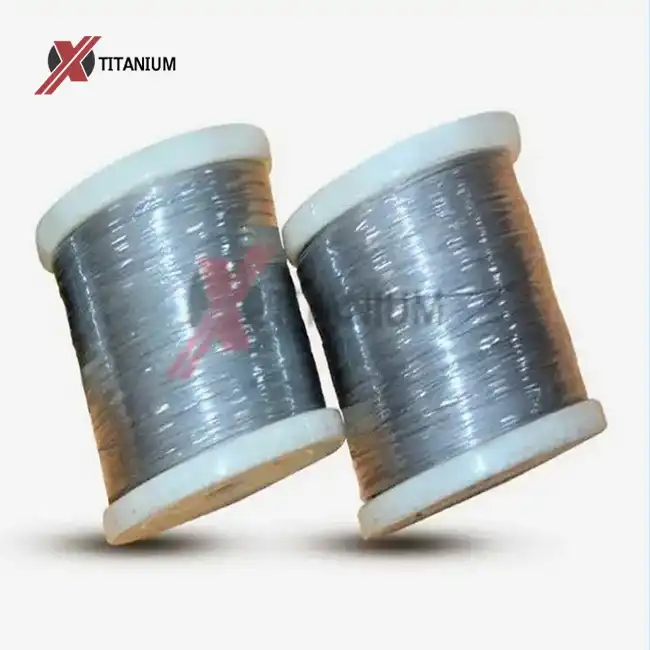
Because it is made for medicinal uses that need high levels of mechanical and biological performance, medical titanium wire is a unique type of metal thread. Depending on the alloy composition, medical-grade titanium wire has very different strengths. Grades 1-4 of commercially pure titanium have moderate strengths and great formability, while titanium alloys like Ti-6Al-4V ELI have much higher strengths.
Tensile Strength and Mechanical Properties
Depending on the type chosen, the tensile strength of medical titanium wire can vary widely. Grade 1 economically pure titanium wire has a minimum tensile strength of 240 MPa, which means it can be used in situations where it needs to be easily shaped and won't rust. At 345 MPa, Grade 2 is the most widely used commercially pure grade. It has higher strength while still being flexible enough for complex shaping processes.
Ti-6Al-4V ELI (Extra Low Interstitial) represents the premium choice for strength-critical medical applications, delivering tensile strengths exceeding 860 MPa. There is 6% aluminum and 4% vanadium in this metal. The solid solution strengthening and precipitation hardening processes make it much stronger. The "ELI" name means that the material has less oxygen, nitrogen, and iron, which makes it more flexible and resistant to wear, which is important for implantable devices.
Factors Influencing Wire Strength
The ultimate strength of medical titanium wire depends on a number of important things. The width of the wire is very important. Wires with smaller sizes are usually stronger because they have fewer flaws and a more uniform grain structure. Work hardening makes wire stronger when it is cold worked during wire drawing, but this must be weighed against the need for flexibility in certain situations.
Heat cleaning methods have a big effect on how strong something is. Ti-6Al-4V metals can be made stronger and more flexible by solution treating them and then letting them age. Stress reduction annealing gets rid of any leftover stresses from making while keeping the strength levels that were wanted. Surface processes like passivation make things less likely to rust without changing their mechanical features.
Biocompatibility and Corrosion Resistance
In addition to being very strong, medical titanium wire is also very biocompatible because it forms a stable oxide layer. This passive oxide film stops ions from getting into biological fluids, so there are no worries about poisoning or inflammation reactions. Titanium's modulus of flexibility (about 110 GPa) is more like human bone than stainless steel's (200 GPa), which means that stress buffering effects that can cause bone loss around implants are less likely to happen.
Comparative Analysis: Titanium Wire vs Other Medical Wire Materials
Procurement workers can make better choices based on application needs and cost when they know how medical titanium wire stacks up against other materials. The comparison goes beyond just measuring strength and includes biocompatibility, resistance to rust, and long-term success in physiological settings.
Strength Comparison with Stainless Steel
In its heated state, 316L stainless steel wire has tensile strengths between 485 and 620 MPa, making it a popular choice for medical uses. This is about the same as some types of titanium, but stainless steel has a higher density (8.0 g/cm³ vs. 4.5 g/cm³ for titanium), so its strength-to-weight ratios are lower. Medical titanium wire is as strong as or stronger than regular wire, but it weighs almost half as much. This is a big benefit for uses that need to be light.
It is better for biological settings for titanium wire to survive fatigue than stainless steel. Titanium is very resistant to rust, which stops pits and stress concentration sites from forming that cause wear cracks. This means that the device will last longer and there is a lower chance that it will fail completely in long-term implant uses.
Performance Against Cobalt-Chrome Alloys
Cobalt-chrome metals are the best materials for medical wires because they can withstand tension stresses of up to 1400 MPa. Even though these metals are stronger than titanium in their raw state, they also have more cons, such as a higher elastic stiffness, a higher density, and the chance of cobalt ions escaping. The stiffness of cobalt-chrome can help protect against stress, and new study shows that long-term exposure to cobalt may be bad for your health.
Medical titanium wire provides an optimal balance of strength, biocompatibility, and mechanical compatibility with human flesh. The lower elastic modulus helps the surrounding bone better absorb stress, which promotes healthy bone growth and lowers the risk of the implant coming free.
Certification Standards and Quality Considerations
Medical-grade titanium wire has to meet strict standards, such as ASTM F67 for widely pure titanium and ASTM F136 for Ti-6Al-4V ELI. These standards spell out the limits of the metal's chemical makeup, its mechanical properties, and the quality of its production. ISO 5832 standards set international equivalents that make sure everything works together and is accepted around the world.
Titanium wire made for commercial use doesn't meet the strict purity standards and lacks the tracking paperwork needed for medical uses. Trace elements that are fine for industrial use can cause bad biological reactions. This is why internal devices must be made with approved medical grades.
Applications and Benefits of Titanium Wire in Medical and Surgical Fields
Strength, biocompatibility, and corrosion resistance are all important for patient results and device life, and these qualities make medical titanium wire ideal for a wide range of medical uses.
Orthopedic Applications
Orthopedic applications represent one of the biggest markets for medical titanium wire. If you break a bone, Kirschner wires (K-wires) made from Grade 2 commercially pure titanium can help fix it temporarily and are very biocompatible for long periods of time. The wire is strong enough to keep the fragments in place, and it's also flexible enough to bend and shape during surgery to fit the needs of the body.
Cerclage wires made from Ti-6Al-4V ELI are very strong and can be used for difficult tasks like fixing a femur fracture or closing a sternotomy. The high strength-to-weight ratio makes it easier on the patient and ensures long-term success. Case studies from major trauma centers show that titanium cerclage wires have better results than stainless steel options, such as lower rates of infection and faster bone healing.
Cardiovascular and Interventional Applications
Guidewire cores are a complex application that needs a perfect mix of strength, flexibility, and torque transfer. Medical titanium wire is very easy to push through vascular tissue that isn't straight, but it's still flexible enough to keep the vessels from getting damaged. Some titanium metals are radiopaque, which makes them easier to see with a fluoroscopic guide.
Manufacturers of cardiovascular devices say that switching from stainless steel to titanium wire cores makes a big difference in how well their devices work. The better resistance to tiredness means that wires break less often during complicated interventional procedures, which increases the success rates of the operations and protects patients.
Dental and Maxillofacial Surgery
Titanium is strong and biocompatible, which makes it a great material for orthodontic archwires. Nickel-titanium (Nitinol) wires, which are made up of about 50% titanium, have shape-memory and superelastic qualities that make it possible to gently move teeth over time. The ability to fight rust is very important in the mouth, where the pH levels change often and enzymes are present.
For prosthodontic uses, titanium wire is used to strengthen implants and build frameworks. The osseointegration features of the material help it connect directly to bone, which makes restorations that are stable and last a long time. Clinical studies show that tooth implants made of titanium have higher survival rates than those made of other materials.
Procurement Guide: Selecting and Buying Medical Titanium Wire
To successfully buy medical titanium wire, you need to know about the complicated requirements for specs, source qualifications, and quality assurance that make medical uses different from industrial uses.
Critical Specifications and Standards
The requirements for buying titanium must make it clear what grade is needed based on the needs of the product. ASTM F67 covers four types of commercially pure titanium. Grade 2, which is strong and easy to shape, is the most popular choice. ASTM F136 recommends Ti-6Al-4V ELI for high-strength uses that need better mechanical qualities.
For medical uses, wire thickness limits are very important, usually needing to be ±0.025mm accurate or better. Surface finish choices include bright annealed, pickled, or ground finishes, but they must be chosen based on the needs of the product. When using a guidewire, where variation can affect performance, straightness limits become very important.
Supplier Evaluation Criteria
Comparing prices isn't the only thing that goes into choosing a supplier. Quality system certifications, manufacturing skills, and legal compliance are also important. Getting ISO 13485 certification shows that you've put in place quality control systems that are meant to work with medical devices. FDA registration and CE marking are signs that a medical device component supplier has been approved by the government.
The supplier's wire drawing tools, heat treatment facilities, and quality control instruments should all be looked at in the manufacturing capability review. Advanced suppliers give extra services that make their products more valuable, like creating custom alloys, applying special finishes, and setting up just-in-time shipping plans that work with the schedules of companies that make medical devices.
Quality Documentation and Traceability
Every package of medical titanium wire must include full paperwork that shows the wire's history from raw materials to final processing. Mill Test Certificates (MTC) that meet EN 10204 3.1 standards allow for chemical research, proof of mechanical properties, and tracking of heat numbers. Certificate of Compliance papers prove that something meets certain ASTM or ISO standards.
Lot tracking tools make it easy to quickly find and separate lots of materials if there are quality problems. Leading suppliers keep computer records that connect material certifications to specific production lots. This makes it easier to do quality checks and report problems to regulators.
Conclusion
Medical titanium wire is very strong, with strengths ranging from 240 MPa for widely pure grades to over 900 MPa for advanced alloys like Ti-6Al-4V ELI. It is also biocompatible and doesn't rust. The material is essential for important medical uses because it is strong for its weight, doesn't wear down easily, and can be mechanically compatible with human flesh. Medical titanium wire regularly beats conventional materials in challenging clinical settings, from joint fixation devices to cardiovascular guidewires. To be successful at procurement, you need to understand the complicated requirements for specs, supplier qualifications, and quality paperwork that protect patients and follow the rules.
FAQ
What makes medical titanium wire stronger than stainless steel alternatives?
Medical titanium wire works better because of its special crystal structure and metal mix, not just because it is stronger when pulled apart. Some types of stainless steel may have a higher pure tensile strength, but titanium has a better strength-to-weight ratio because it is less dense. The material doesn't easily wear down in biological settings, so stress builds up and cracks don't spread, which are two things that usually cause stainless steel wire to break over time.
How do I verify the authenticity and quality of medical titanium wire shipments?
Real medical-grade titanium wire needs to come with Mill Test Certificates that meet EN 10204 3.1 standards and show its chemical make-up, mechanical qualities, and compliance with ASTM F67 or F136 standards. Check to see if the seller has ISO 13485 approval and is registered with the FDA. For important uses, ask for proof that the heat number can be tracked and think about having third-party material verification testing done.
What customization options are available for specialized medical device applications?
Leading makers allow for a lot of customizing, such as precise diameter specs, custom metal compositions, special surface processes, and mechanical qualities that aren't found anywhere else. Some options are controlled atmosphere annealing, which makes the metal more flexible, electropolishing, which makes the surface smoother, and custom packing, which makes it compatible with clean processes. A lot of providers offer technical help for optimizing products for specific uses.
Can medical titanium wire be sterilized using standard hospital methods?
Yes, medical titanium wire works very well with all common ways of sterilization, such as steam autoclaving, ethylene oxide gas, gamma radiation, and electron beam sterilization. The chemical stability of the material keeps it from breaking down during multiple sterilization processes. But make sure that any surface treatments or coats will stay stable under the conditions that are meant to sterilize them.
What factors influence the cost of medical titanium wire procurement?
Some of the things that affect the price are the complexity of the material grade, the need for precise wire diameter measurements, the volume quantities, the surface finish standards, and the need for certification paperwork. Because the metal is more complicated and has better qualities, Ti-6Al-4V ELI costs more than commercially pure grades. Custom specs and small lot sizes tend to make the price per unit go up, while buying in bulk and making long-term supply deals lower prices.
Partner with Chuanglian for Premium Medical Titanium Wire Supply
Chuanglian stands as your trusted medical titanium wire manufacturer with over ten years of specialized experience in precision titanium processing and quality assurance. Our state-of-the-art facility in Baoji, the renowned "City of Titanium," combines advanced CNC machining capabilities with rigorous quality control systems ensuring every shipment meets stringent medical device standards. We provide comprehensive technical consultation, custom alloy development, and reliable global shipping to support your critical medical applications. Contact our expert team at info@cltifastener.com or djy6580@aliyun.com to discuss your specific requirements and receive detailed quotations for bulk procurement opportunities.
References
1. American Society for Testing and Materials. "Standard Specification for Unalloyed Titanium for Surgical Implant Applications (F67-13)." ASTM International, 2013.
2. Niinomi, Mitsuo. "Mechanical Biocompatibilities of Titanium Alloys for Biomedical Applications." Journal of the Mechanical Behavior of Biomedical Materials, Vol. 1, 2008.
3. International Organization for Standardization. "Implants for Surgery - Metallic Materials - Part 3: Wrought Titanium 6-Aluminum 4-Vanadium Alloy (ISO 5832-3)." ISO Standards, 2016.
4. Rack, Henry J. and Qazi, Javad I. "Titanium Alloys for Biomedical Applications." Materials Science and Engineering: C, Vol. 26, 2006.
5. Okazaki, Yoshimitsu and Gotoh, Emiko. "Comparison of Metal Release from Various Metallic Biomaterials in Vitro." Biomaterials, Vol. 26, 2005.
6. Geetha, M., Singh, A.K., Asokamani, R., and Gogia, A.K. "Ti Based Biomaterials: The Ultimate Choice for Orthopaedic Implants - A Review." Progress in Materials Science, Vol. 54, 2009.
Learn about our latest products and discounts through SMS or email